Does Pre-Workout Work? Ingredients, Benefits and Risks
Does pre-workout work? It can, depending on its ingredients and doses. Learn what research says about caffeine, creatine, beta-alanine, citrulline, benefits and risks.

Pre-workout can work, but the answer depends heavily on what is actually inside the product.
“Pre-workout” is not a single supplement. It is a broad category that may contain caffeine, beta-alanine, creatine, citrulline and several other compounds at widely different doses. As a result, two products marketed for the same purpose can have very different effects. (PubMed Central (PMC))
Caffeine has some of the strongest evidence for an immediate performance effect. Creatine and beta-alanine are also evidence-based supplements, but their benefits primarily come from regular use rather than taking them shortly before exercise. (PubMed)
What is a pre-workout supplement?
Multi-ingredient pre-workout supplements are products intended for use before exercise and usually combine ingredients marketed to increase alertness, delay fatigue or support exercise performance.
An analysis of 100 commercial products published in 2019 found beta-alanine, caffeine, citrulline, tyrosine, taurine and creatine among the most common ingredients. Formulations and ingredient amounts varied substantially between products. (PubMed Central (PMC))
This variability is one of the main reasons it is misleading to say that every pre-workout either works or does not work.
Does pre-workout actually improve performance?
Sometimes.
Studies of multi-ingredient products have reported improvements in selected performance tests, energy or fatigue, while other trials have found little or no benefit for certain strength or exercise outcomes. Because each formula is different, results from one product cannot automatically be applied to another. (PubMed)
A more useful question is:
Does this particular formula contain evidence-based ingredients at meaningful doses?
The main pre-workout ingredients
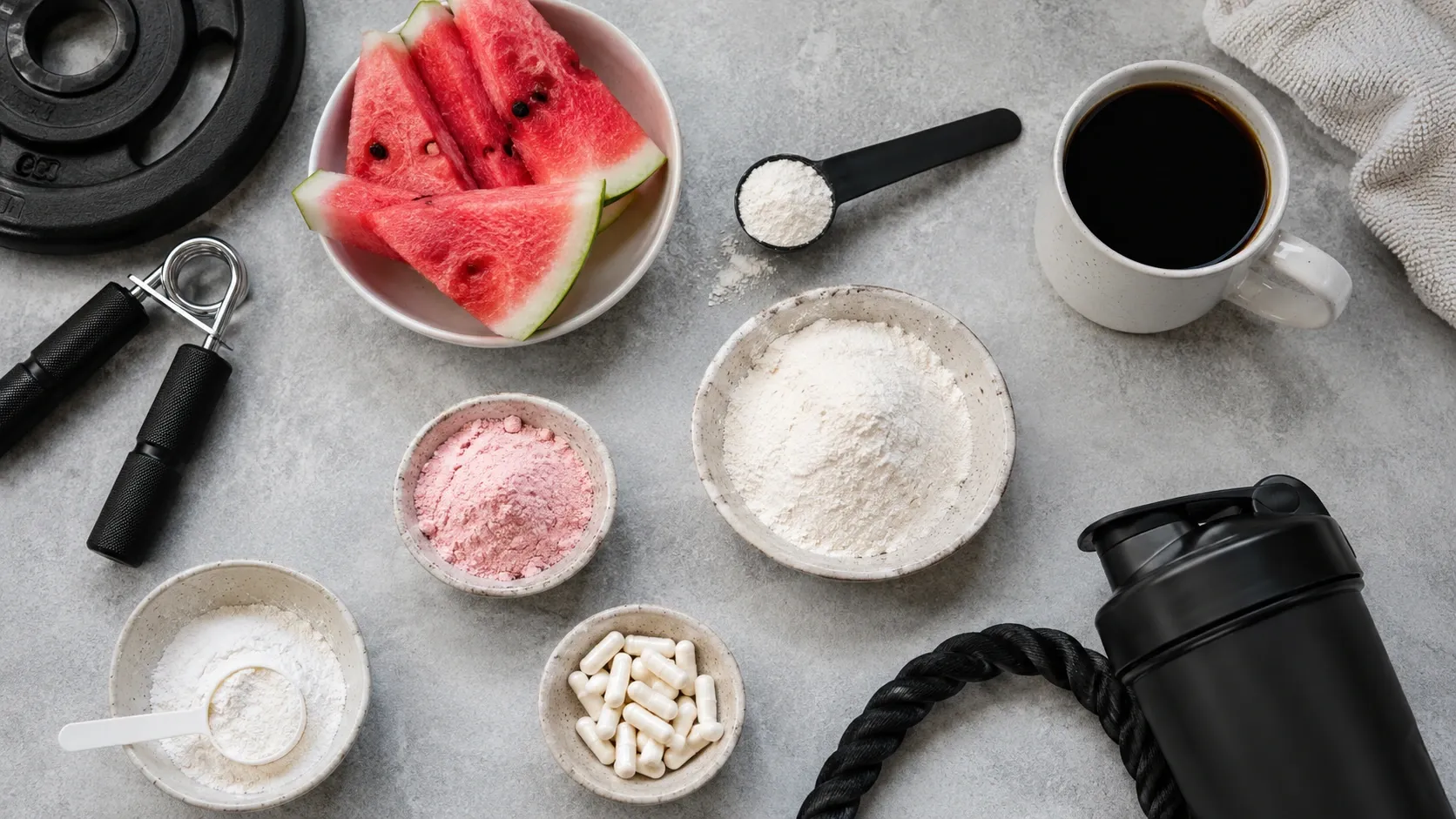
| Ingredient | What research suggests | Typical research approach | Key point |
|---|---|---|---|
| Caffeine | Can enhance alertness and several measures of endurance, strength, power and sport performance | Often 3–6 mg/kg before exercise; lower doses may also work | Acute benefit, but more is not necessarily better |
| Creatine | Strong evidence for repeated high-intensity exercise and training adaptations | Around 3–5 g/day for maintenance | Consistency matters more than pre-workout timing |
| Beta-alanine | May improve some types of intense exercise | Roughly 4–6 g/day for at least 2–4 weeks | Can cause temporary tingling |
| Citrulline malate | May provide a small muscular-endurance benefit | Studies commonly use 6–8 g before exercise | Evidence is less consistent |
These are research protocols, not personalized dosing recommendations. Appropriate use depends on individual health, tolerance, medications and total exposure from other supplements. (PubMed)
Caffeine: the most noticeable ingredient
Caffeine likely accounts for much of the immediate energy or alertness people associate with stimulant-based pre-workouts.
The International Society of Sports Nutrition reports consistent performance benefits with caffeine and identifies 3–6 mg/kg as a commonly supported range, while noting that lower doses can also be effective. Very high doses increase side effects and are not required to obtain an ergogenic effect. (PubMed)
Individual sensitivity varies substantially, so increasing the dose simply to produce a stronger subjective sensation is not necessarily useful. (FDA)
Creatine works — but not because it is taken right before training
Creatine monohydrate is one of the most extensively studied sports supplements. Regular supplementation increases muscle creatine availability and can support repeated high-intensity exercise and training adaptations. (PubMed)
Its presence in a product labelled “pre-workout” can be misleading, however, because its primary benefit does not depend on consuming it immediately before exercise.
For creatine, consistent intake matters far more than precise pre-workout timing. (PubMed)
Beta-alanine and the famous tingling sensation
Beta-alanine increases muscle carnosine concentrations, which can help buffer changes associated with high-intensity exercise.
Evidence-based protocols generally involve daily supplementation for several weeks rather than a single dose immediately before training. Research summarized by the ISSN includes approximately 4–6 g per day for at least 2–4 weeks. (PubMed)
Beta-alanine can also cause temporary tingling known as paresthesia. Feeling that sensation does not indicate that the supplement is producing a better workout.
Citrulline malate: promising, but less consistent
Citrulline malate is commonly marketed to support blood flow, muscular endurance and the exercise “pump.”
A 2021 meta-analysis found a small improvement in repetition performance during strength training when studies using approximately 6–8 g before exercise were pooled. Other analyses and individual studies have produced mixed results, making its evidence less consistent than caffeine or creatine. (PubMed)
Potential benefits of pre-workout
Depending on the formula and individual response, pre-workout may help with:
- alertness and perceived energy;
- perceived fatigue;
- selected power outcomes;
- muscular endurance;
- ability to sustain high-intensity exercise.
However, improvements are not universal. Multi-ingredient trials have produced both positive and neutral results across different exercise tests. (PubMed)
Feeling highly stimulated therefore should not be confused with objectively improving every aspect of performance.
What are the risks?

For many products, the main concern is stimulant exposure, particularly caffeine.
Excessive caffeine can contribute to:
- increased heart rate;
- heart palpitations;
- anxiety;
- jitters;
- sleep disruption;
- headache;
- nausea;
- upset stomach. (FDA)
The FDA cites 400 mg of caffeine per day as an amount not generally associated with negative effects for most adults. This is not a performance target or a universally safe dose. Sensitivity varies according to the individual, medications, medical conditions and other factors. (FDA)
Can evening pre-workout affect sleep?
Yes, particularly if it contains caffeine.
Caffeine can contribute to insomnia and sleep disruption, and sensitivity varies considerably between individuals. (FDA)
Someone training late in the day may therefore prefer a stimulant-free formula rather than using a large dose of caffeine that could interfere with subsequent recovery.
Who should be especially cautious?
People with cardiovascular disease, blood-pressure concerns, strong caffeine sensitivity or medication use should discuss stimulant-containing supplements with a qualified health professional.
People who are pregnant, trying to become pregnant or breastfeeding should also seek individualized guidance regarding caffeine intake. (FDA)
Children and adolescents should not be treated as smaller adults when evaluating stimulant intake. The FDA specifically highlights caffeine-related concerns in younger populations. (FDA)
How to choose a pre-workout
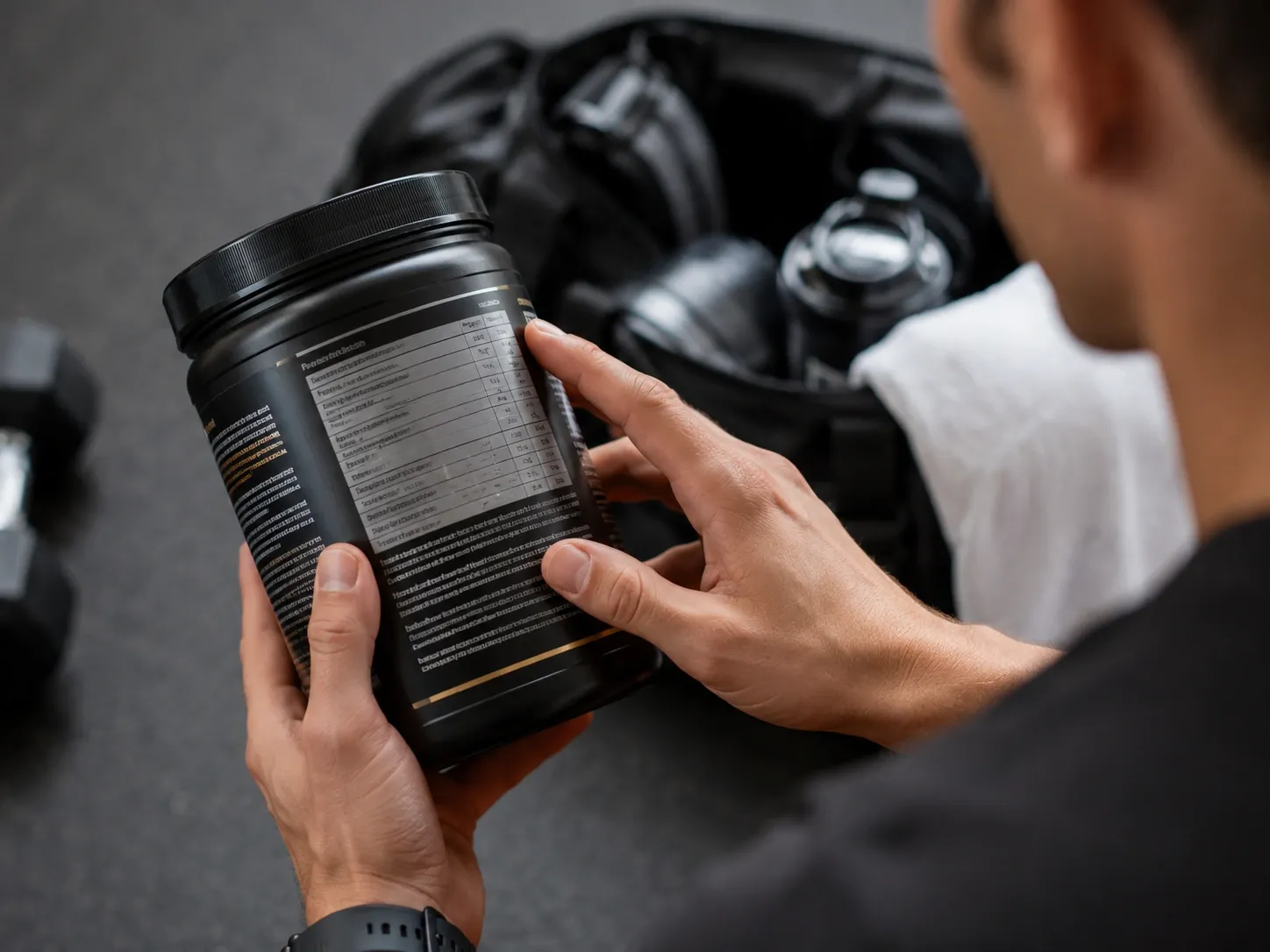
Look beyond the name, flavor and marketing claims.
Check:
- Caffeine per serving: include caffeine from the rest of your diet.
- Clearly disclosed ingredient amounts: transparency makes the formula easier to evaluate.
- Recommended serving size: doubling the serving also increases stimulant and ingredient exposure.
- Proprietary blends: undisclosed individual amounts make evidence-based evaluation difficult.
- Regulatory status: in Brazil, dietary supplements are subject to Anvisa requirements governing ingredients, labeling and product regularization. (PubMed Central (PMC))
A longer ingredient list does not automatically produce a better product. Research on commercial formulas has shown that some frequently included ingredients may be provided at amounts below those used in efficacy studies. (PubMed Central (PMC))
Do you need pre-workout to train effectively?
No.
Pre-workout can be a useful tool for selected people and goals, but it does not replace nutrition, hydration, sleep, appropriate programming or recovery.
You also do not need intense tingling, jitters or a dramatic energy rush for a workout strategy to be effective.
Conclusion
Pre-workout can work, but its value depends on the actual ingredients and doses rather than the words “pre-workout” on the label.
Caffeine has strong evidence for several acute performance outcomes. Creatine and beta-alanine also have solid scientific support, although their main effects depend on consistent intake. Citrulline may offer smaller benefits in selected situations, while evidence for many other ingredients and multi-ingredient combinations remains less certain. (PubMed)
Instead of looking for the product that feels strongest, focus on what is in the formula, how much it contains, what outcome you want and whether the potential benefit justifies the risks.