Does Beetroot Improve Exercise Performance? What Science Says
Beetroot is rich in nitrate, which may produce small performance gains in certain types of exercise. Learn how it works, effective doses, timing and limitations.
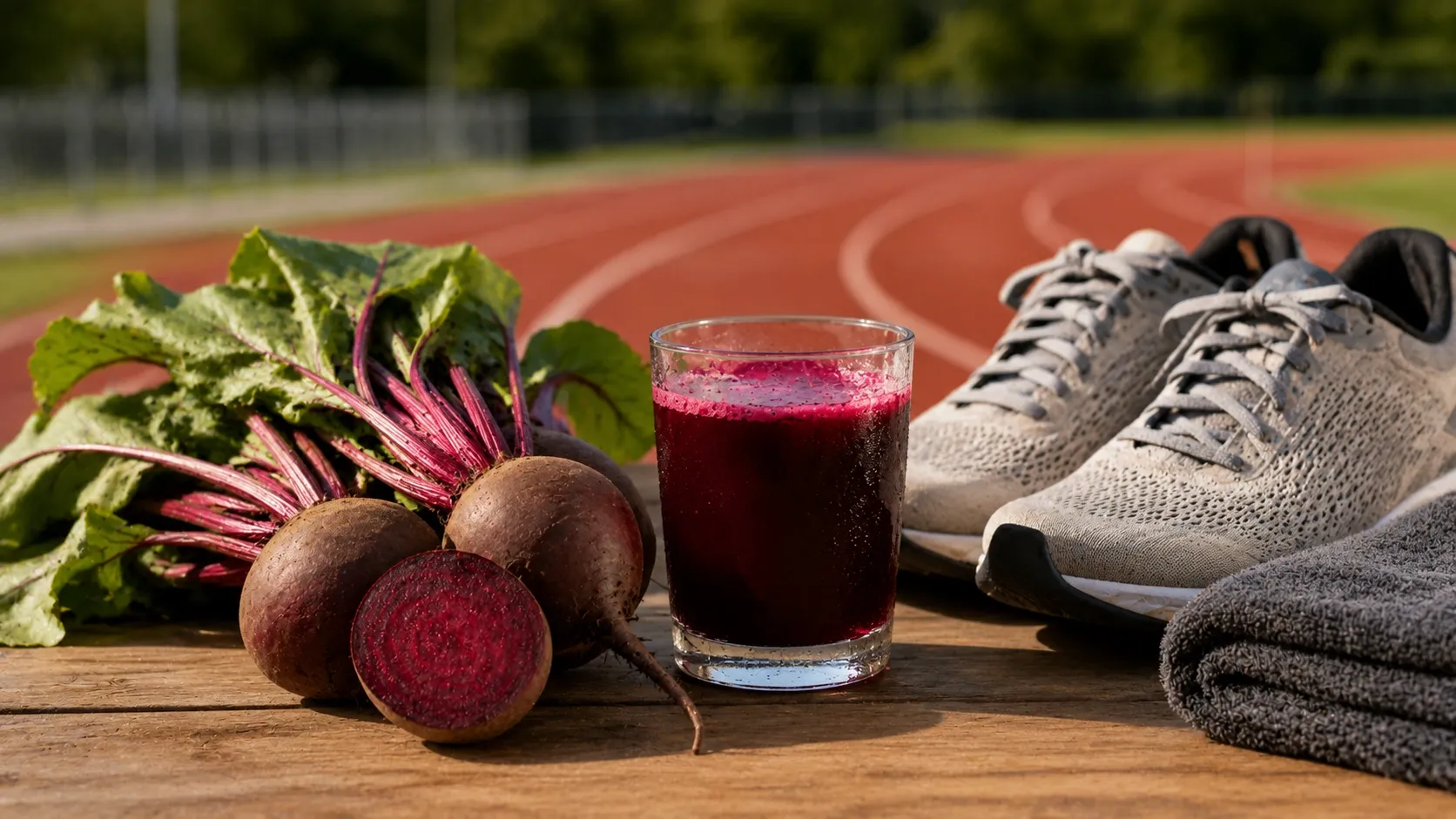
Yes, beetroot can improve certain aspects of exercise performance, but there is an important qualification: research largely attributes the effect to an adequate dose of dietary inorganic nitrate, rather than to beetroot simply being eaten before exercise.
Studies generally show modest rather than dramatic effects. Benefits appear most consistently in some endurance activities, high-intensity efforts lasting several minutes and certain muscular-endurance tasks. Highly trained endurance athletes may experience smaller effects. (PubMed)
In other words, beetroot may be a useful ergogenic strategy, but it is not a substitute for training.
Why might beetroot improve performance?
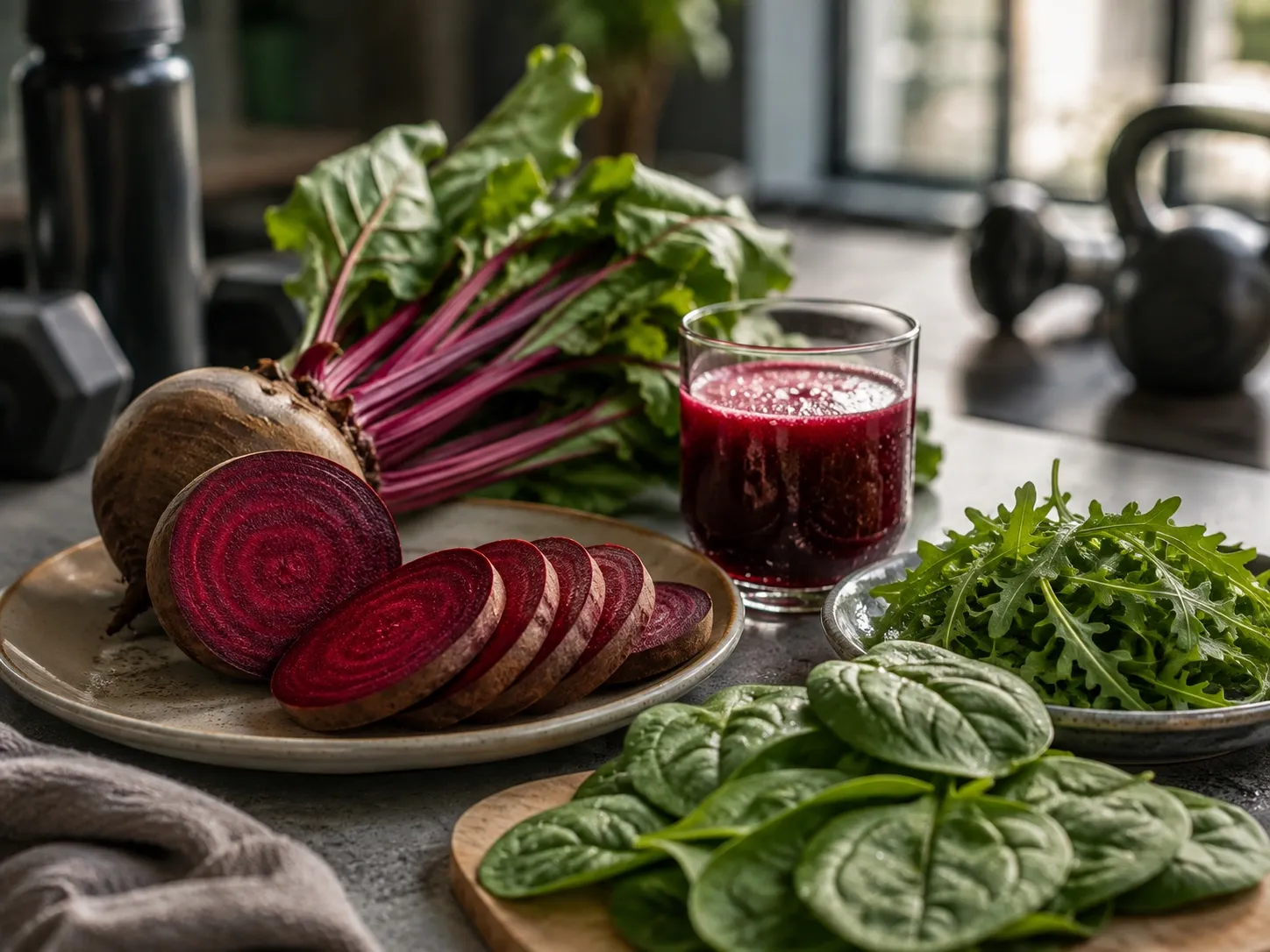
Beetroot is naturally rich in dietary nitrate.
After nitrate is consumed, some of it enters an enterosalivary cycle. Nitrate concentrated in saliva is converted into nitrite by bacteria living in the mouth. Nitrite can subsequently contribute to the formation of nitric oxide, a signaling molecule involved in blood-flow regulation, vascular function and muscle physiology. (AIS)
In simple terms:
nitrate → nitrite → nitric oxide
During exercise, this pathway may influence blood flow, muscle contraction and the energetic cost of movement. Research has shown that dietary nitrate can reduce the oxygen cost of some submaximal exercise tasks, potentially allowing the body to perform a given workload slightly more efficiently. (PubMed)
How much can beetroot improve performance?
Expectations should remain realistic.
A 2022 systematic review with meta-analysis and meta-regression included 123 randomized studies and 1,705 participants. Nitrate supplementation produced an overall performance benefit, but the average effect was small. (PubMed)
The most favorable effects were seen in exercise lasting approximately 2–10 minutes. The Australian Institute of Sport also reports benefits in cycling and running events lasting roughly 4–30 minutes, as well as intermittent exercise resembling the demands of team sports. (PubMed)
A small gain can matter in competitive sport, but it should not be confused with a dramatic improvement in fitness.
What about running and cycling?
Running and cycling are among the most extensively studied exercise modes.
Potential benefits include:
- a lower oxygen cost at a given workload;
- improved exercise tolerance;
- small gains in some performance tests;
- modest improvements in aerobic-capacity measures in some populations.
A meta-analysis published on July 14, 2026 evaluated 38 randomized or crossover studies involving 703 participants. Beetroot juice produced a small average improvement in VO₂max/VO₂peak. (Frontiers)
The response, however, varied substantially with training status.
Recreationally active people may respond better
The 2026 analysis found the largest pooled effect in recreationally active participants, with a smaller benefit among moderately trained individuals. No statistically significant VO₂max/VO₂peak improvement was detected in the highly trained or elite subgroup. (Frontiers)
The Australian Institute of Sport similarly notes that highly trained endurance athletes with VO₂max values above approximately 65 mL/kg/min may be less responsive to nitrate supplementation. (AIS)
This does not prove that an elite athlete cannot benefit. It means the average response appears less predictable at very high fitness levels.
Does beetroot help with strength training?

Research on resistance exercise has expanded in recent years.
A 2024 systematic review and meta-analysis of healthy men found a small positive effect of beetroot-based supplementation on muscular endurance. This can translate into modest improvements in outcomes such as repetitions to failure or exercise time under certain conditions. (PubMed)
The researchers also observed better preservation of strength when strength was measured after a fatiguing task. When muscles were tested in a rested state, however, the improvement was not consistent. (PubMed)
It would therefore be misleading to say that beetroot simply “makes you stronger.”
The evidence more reasonably suggests that dietary nitrate may help maintain muscular performance as fatigue develops.
Does beetroot increase VO₂max?
Possibly, but the average improvement is modest.
The 2026 meta-analysis reported a pooled effect of approximately SMD 0.24 for VO₂max/VO₂peak. After statistical adjustment for possible small-study effects, the estimated benefit became smaller. The authors therefore describe the result as a modest average effect rather than a large increase in aerobic capacity. (Frontiers)
VO₂max is also only one component of endurance performance.
Competition results depend on factors such as economy, pacing, technical skill, training status, glycogen availability, hydration and psychological factors.
What nitrate dose is used for performance?
For practical sports use, the Australian Institute of Sport recommends:
| Strategy | Amount |
|---|---|
| Dietary nitrate | 6–8 mmol |
| Approximate equivalent | 350–500 mg nitrate |
| Timing | 2–3 hours before exercise |
(AIS)
A large 2022 meta-analysis found particularly favorable results with acute doses of about 5–14.9 mmol consumed at least 150 minutes before exercise. A 2026 analysis focusing on VO₂max/VO₂peak found the most consistent effects in the 6.4–12.8 mmol range. (PubMed)
For most practical applications, the AIS range of 6–8 mmol offers a simpler evidence-based starting point.
More is not necessarily better. The AIS reports that doses above roughly 10–12 mmol do not appear consistently more effective than 6–8 mmol. (AIS)
When should beetroot juice be taken?
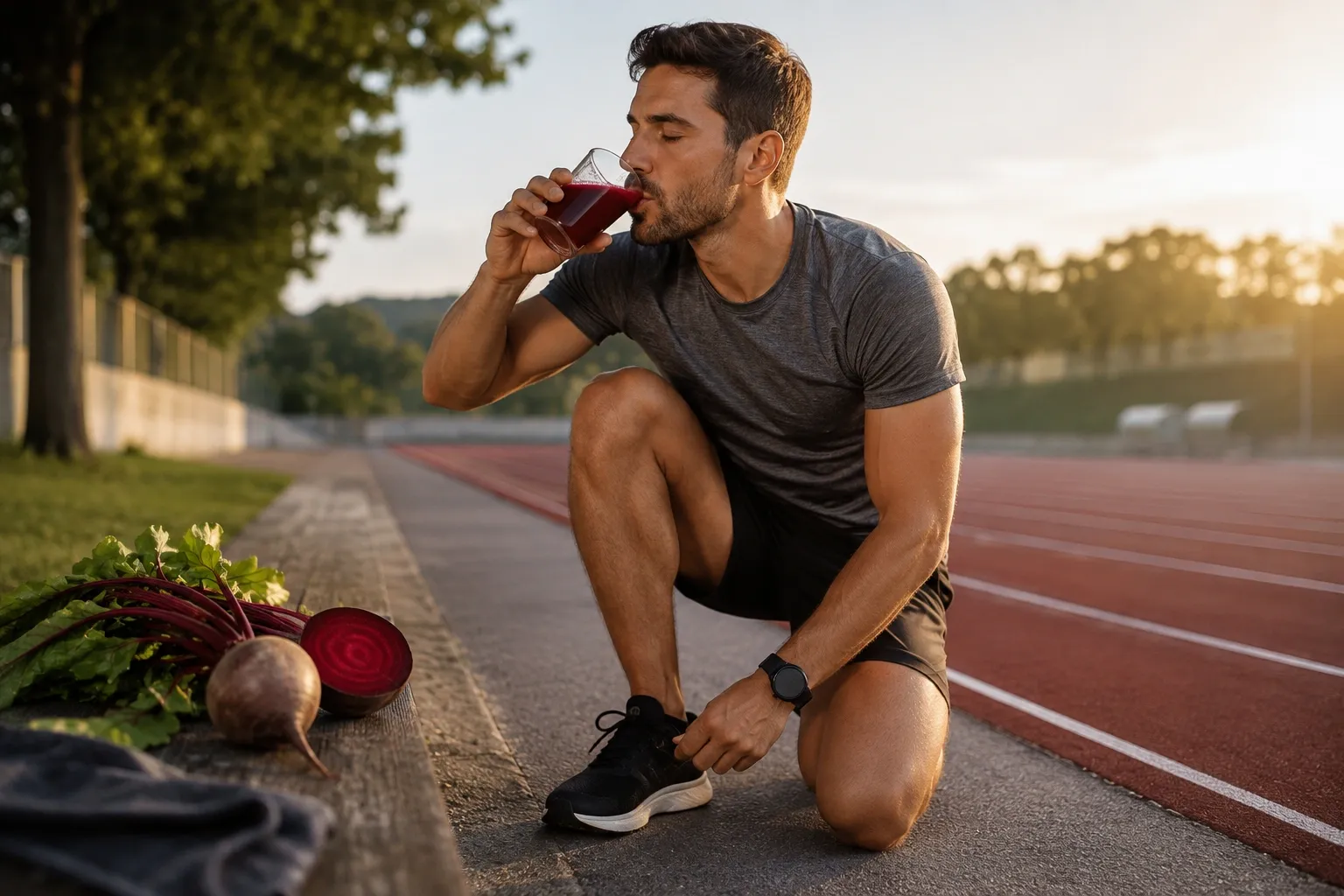
A common evidence-based recommendation is 2–3 hours before exercise.
This timing reflects nitrate metabolism. After absorption, nitrate is concentrated in saliva and converted into nitrite by oral bacteria. Plasma nitrite concentrations typically peak around 2.5 hours after dietary nitrate consumption. (AIS)
Drinking beetroot juice immediately before starting a workout therefore does not match most protocols used in successful studies.
Do you need to take it for several days?
Not necessarily.
Both single-dose strategies and multi-day protocols have produced benefits. The AIS notes that taking approximately 6–8 mmol daily for several days before competition is another possible approach. (AIS)
The 2026 VO₂max/VO₂peak meta-analysis found statistically significant effects with both acute and multi-day supplementation, although results among longer protocols were more variable. (Frontiers)
There is no good reason to assume that concentrated nitrate supplements need to be used continuously for months. The AIS also notes that chronic nitrate-supplement use has been less extensively studied. (AIS)
Is eating whole beetroot equivalent?
Not necessarily.
Nitrate concentration in vegetables varies with factors including soil, climate, growing conditions, storage and preparation. Two similar servings of beetroot may therefore provide different nitrate doses. (AIS)
The AIS specifically notes that homemade beetroot juice, cooked beetroot or other beetroot preparations may not reliably deliver the nitrate quantities used in targeted sports protocols. (AIS)
This does not make whole beetroot a poor food.
It simply separates two different goals:
- eating beetroot as part of a nutritious diet; and
- using a standardized nitrate dose as an ergogenic strategy.
Why can antibacterial mouthwash interfere?
The oral microbiome is an important part of nitrate metabolism.
Bacteria in the mouth convert nitrate into nitrite. Antibacterial mouthwashes can suppress some of these bacteria, potentially reducing nitrite production and the subsequent physiological effects of dietary nitrate. (AIS)
The 2022 meta-analysis also found that practices that disrupted oral bacteria were associated with a smaller ergogenic response to nitrate. (PubMed)
This does not mean oral hygiene is harmful. It simply means athletes using a targeted nitrate protocol may want to avoid antibacterial mouthwash close to supplementation.
Does everyone respond the same way?
No.
Response can be influenced by:
- training status;
- nitrate dose;
- exercise duration;
- exercise modality;
- habitual diet;
- oral microbiota;
- sex;
- supplementation strategy;
- baseline aerobic capacity.
Female participants remain underrepresented in the evidence. In the 2026 VO₂max/VO₂peak meta-analysis, 29 of 38 included studies enrolled only men, while nine included women or mixed samples with relevant data. (Frontiers)
This limits how confidently current findings can be generalized to female athletes.
Are there side effects?
Beetroot juice is generally well tolerated at doses used in sports research, but side effects can occur.
The Australian Institute of Sport notes:
- mild gastrointestinal discomfort, particularly with concentrated products or larger doses;
- temporary pink or red urine;
- temporary red coloration of stool.
The color changes caused by beetroot pigments are considered harmless. (AIS)
Dietary nitrate can also lower blood pressure. People with low blood pressure or those taking blood-pressure-lowering medication should discuss concentrated nitrate supplementation with an appropriate healthcare professional before using it specifically for performance. (AIS)
Is beetroot worth using as a pre-workout?
It can be in the right context.
Dietary nitrate/beetroot juice is included among the Australian Institute of Sport’s Group A performance supplements, reflecting scientific evidence for benefits in specific sports situations. That classification should not be interpreted as a guarantee that every athlete will perform better. (AIS)
It may be particularly relevant for activities involving:
- running;
- cycling;
- several minutes of high-intensity work;
- intermittent exercise;
- certain muscular-endurance sessions.
As with any competition strategy, testing the protocol during training first is preferable to trying it for the first time on race day.
Beetroot or training: which matters more?
Training wins by a very large margin.
The performance effects reported in nitrate meta-analyses are generally small. Small differences can matter in competitive sport, but for recreational exercisers, consistent training, sufficient recovery, appropriate nutrition, sleep and hydration will have a much greater influence on long-term progress. (PubMed)
Beetroot is best viewed as a possible finishing touch, not the foundation of performance.
The other pre-workout aid with real evidence — and a much larger effect than nitrate:
Does Caffeine Improve Workout Performance? What Studies Show
Conclusion
Beetroot can modestly improve exercise performance in certain situations, largely because of its dietary nitrate content.
Evidence is most favorable for selected endurance activities, several-minute high-intensity efforts, intermittent exercise and some measures of muscular endurance. Recreationally active people may show more consistent aerobic benefits than highly trained endurance athletes. (PubMed)
For targeted sports supplementation, the Australian Institute of Sport recommends approximately 6–8 mmol of nitrate — around 350–500 mg — taken 2–3 hours before exercise. (AIS)
That is not the same as simply eating an arbitrary serving of beetroot before a workout because nitrate concentration in whole foods can vary substantially.
The most accurate conclusion is therefore simple: beetroot is not a performance miracle, but a properly dosed nitrate strategy can provide a small advantage in specific circumstances.