Are Carbs Bad for You? What They Do in the Body
Carbohydrates are not inherently unhealthy. Learn how they provide energy, why fiber and food quality matter, and when refined carbs and free sugars deserve attention.

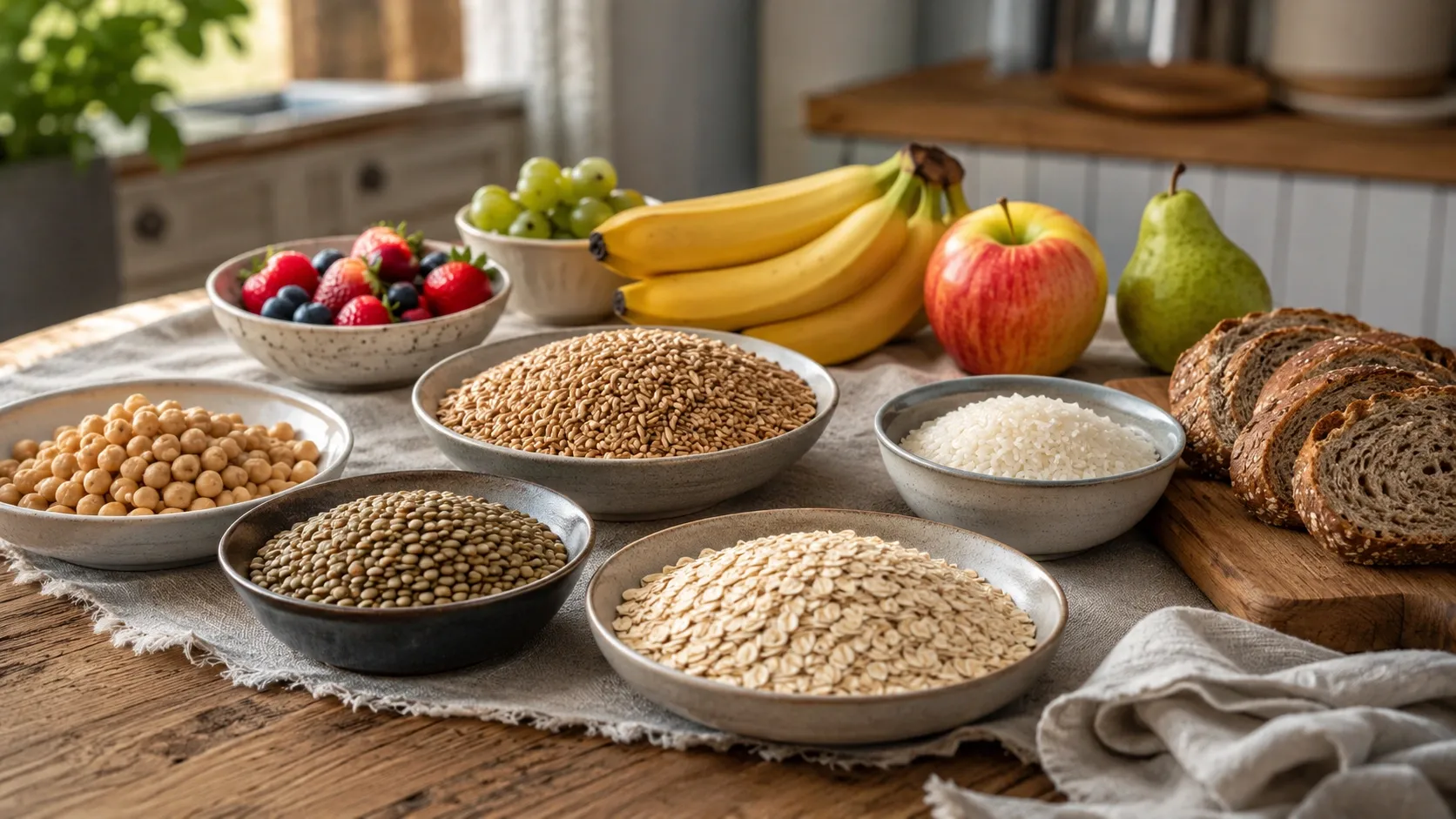
Carbohydrates have developed a complicated reputation. Bread, sweets, sugary drinks, fruit, oats, beans, lentils, rice, and vegetables can all contain carbohydrates, yet their nutritional profiles are far from identical.
The short answer is that carbohydrates are not inherently bad for you. They are one of the major macronutrients in the diet, and many digestible carbohydrates are converted into glucose, which the body can use for energy. What often matters more is where those carbohydrates come from, how processed the food is, and what else the food provides, particularly fiber. (MedlinePlus)
What are carbohydrates?
Carbohydrates include sugars, starches, and fiber. Although they belong to the same broad nutrient category, the body does not process all of them in exactly the same way. (MedlinePlus)
That is why the statement that a food “contains carbs” tells us relatively little about its overall nutritional value.
An apple, lentils, oatmeal, and a sugar-sweetened soft drink all provide carbohydrates, but their fiber content, physical structure, micronutrients, and degree of processing differ substantially.
Current WHO guidance reflects this distinction by recommending that carbohydrates come primarily from whole grains, vegetables, fruits, and pulses. (WHO)
What do carbohydrates do in the body?
During digestion, many carbohydrates are broken down into glucose. Glucose can circulate in the bloodstream and provide energy for the body’s cells, tissues, and organs. Some glucose can also be stored in the liver and muscles for later use. (MedlinePlus)
A rise in blood glucose after eating a carbohydrate-containing meal is therefore not automatically a sign that something harmful is happening.
Dietary fiber behaves differently. It is not digested in the same way as most sugars and starches and contributes important properties to carbohydrate-rich foods. (Harvard T.H. Chan)
Not all carbs are created equal
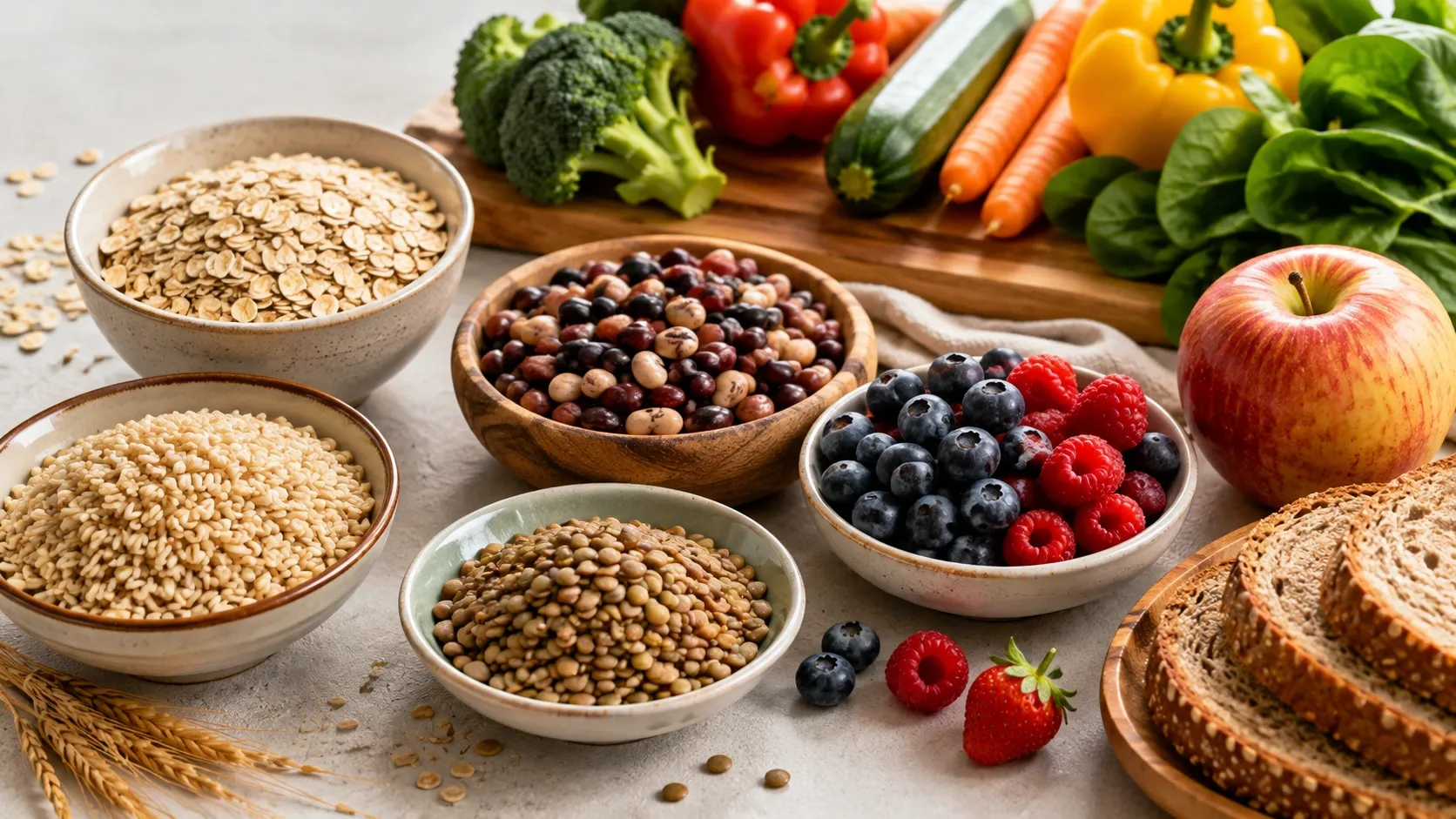
Treating an entire macronutrient as if every food containing it had the same effect is one of the main problems with the “carbs are bad” narrative.
Looking at food quality is more useful.
| Carbohydrate source | General characteristics |
|---|---|
| Whole fruit | Carbohydrates together with fiber, water, and micronutrients |
| Beans and lentils | Starch, fiber, protein, and micronutrients |
| Oats and whole grains | Retain more of the grain structure and provide fiber |
| Rice and other grains | Can form part of balanced meals |
| Minimally processed whole-grain foods | Often provide more fiber than highly refined alternatives |
| Sugar-sweetened drinks | Concentrated source of free sugars with little or no fiber |
| Sweets and highly refined products | Often rich in free sugars or refined starches and relatively low in fiber |
Harvard’s Nutrition Source similarly distinguishes minimally processed whole grains, fruit, vegetables, and beans from highly processed sources such as sugary drinks, pastries, and refined breads. (Harvard T.H. Chan)
Whole versus refined carbohydrates
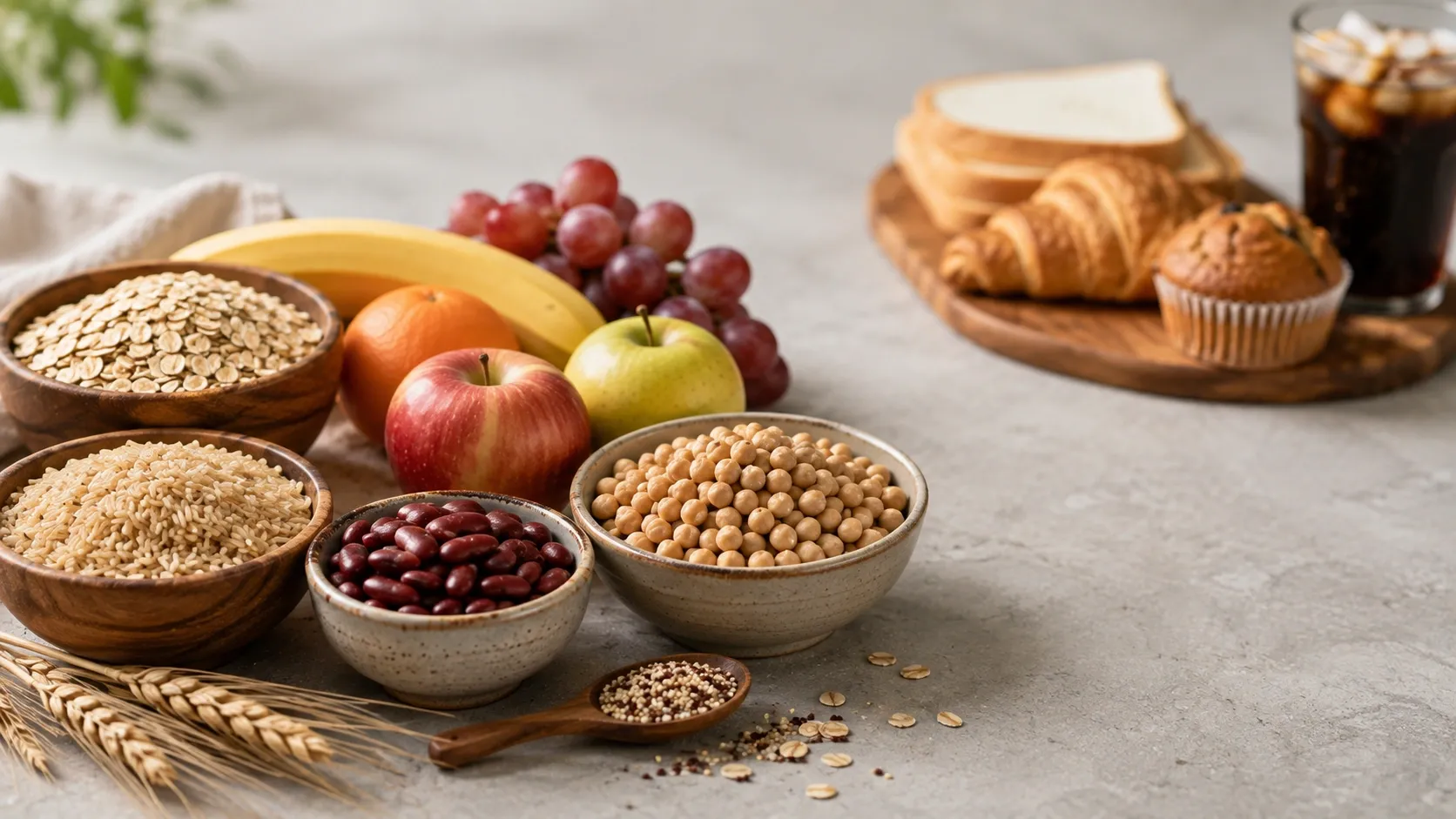
Food processing can change the nutritional characteristics of grains.
Refining may remove portions of the grain that contain fiber and other components. Processing and grinding can also influence how quickly starch is digested and how rapidly blood glucose rises. (Harvard T.H. Chan)
This does not mean that every refined carbohydrate must be banned. Frequency, portion size, and the overall dietary pattern still matter.
A diet centered on whole grains, legumes, vegetables, and fruit is nutritionally different from one in which most carbohydrates come from sugar-sweetened drinks, sweets, and highly refined products. (WHO)
Fiber changes the carbohydrate conversation
Fiber itself is a carbohydrate, which illustrates why grouping all carbohydrates together can be misleading.
A major series of systematic reviews and meta-analyses published in The Lancet found consistent evidence linking higher dietary fiber and whole-grain intake with favorable health outcomes. These findings helped inform international guidance on carbohydrate quality. (PubMed)
WHO recommends that adults consume at least 25 grams of naturally occurring dietary fiber per day and emphasizes whole grains, vegetables, fruits, and pulses as preferred carbohydrate sources. (WHO)
Instead of asking only how many grams of carbohydrates a food contains, it is often more informative to ask what food is providing those carbohydrates and whether it also supplies fiber.
Sugar is a carbohydrate, but not every carbohydrate is “sugar”
Sugars belong to the carbohydrate family, but the words are not interchangeable.
WHO defines free sugars as sugars added to foods or beverages plus sugars naturally present in honey, syrups, fruit juices, and fruit juice concentrates. (WHO)
WHO recommends keeping free sugars below 10% of total daily energy intake and suggests that reducing intake to below 5% may provide additional health benefits. (WHO)
Importantly, these recommendations do not treat the naturally occurring sugar inside whole fruit in the same way as the sugar in soft drinks or fruit juice. (WHO)
Do carbs raise blood sugar?
Digestible carbohydrates can raise blood glucose after a meal. This is part of normal metabolism.
The size and speed of the response vary, however. Processing, physical structure, fiber content, and the rest of the meal can all influence digestion and post-meal glucose responses. (Harvard T.H. Chan)
The glycemic index can help describe some of these differences, but it does not capture everything about a food’s nutritional quality. Portion size, fiber, processing, and the overall dietary pattern still matter. (Harvard T.H. Chan)
Do carbohydrates cause diabetes?
The statement that carbohydrates cause diabetes is too simplistic.
According to the NIDDK, type 2 diabetes develops through several interacting factors, including insulin resistance, genetics, excess body weight, and physical inactivity. Family history, age, and other characteristics can also alter risk. (NIDDK)
Diet remains important, but that is different from blaming an entire macronutrient for a complex disease.
Do you need to cut carbs to lose weight?
Not necessarily.
Some people find lower-carbohydrate diets practical and sustainable. Restricting carbohydrate-containing foods may also reduce overall food choices and, in certain circumstances, make it easier to reduce energy intake.
However, low-carb diets do not have an automatic weight-loss advantage.
A Cochrane systematic review found probably little to no difference in average weight loss between low-carbohydrate and balanced-carbohydrate weight-reducing diets during follow-up of up to two years. Similar conclusions applied to several cardiovascular risk markers assessed in the review. (Cochrane)
The most appropriate dietary strategy therefore depends partly on nutritional quality, individual needs, and whether the approach can be maintained.
Does that mean low-carb diets are bad?
No.
Replacing one nutritional extreme with another would not solve the problem.
Some people prefer eating fewer carbohydrates and can construct a nutritionally adequate diet that way. Specific clinical contexts may also justify more individualized carbohydrate targets.
What current evidence does not support is the claim that everyone must adopt a low-carbohydrate diet to lose weight or remain healthy. (Cochrane)
Food quality still matters regardless of macronutrient distribution.
How to choose better carbohydrate sources

Rather than trying to eliminate carbohydrates altogether, practical improvements include:
- eating beans, lentils, chickpeas, and other pulses;
- choosing whole fruit regularly;
- eating a variety of vegetables;
- choosing whole grains more often;
- including oats and other minimally processed grains;
- limiting sugar-sweetened beverages;
- moderating sweets and highly refined products;
- evaluating the whole food rather than judging it only by its carbohydrate content.
This approach is consistent with current WHO recommendations on carbohydrate quality. (WHO)
Do you need to count carbs?
Most healthy people do not need to turn every meal into a mathematical exercise.
There are important exceptions. Carbohydrate counting may be used as part of diabetes management, particularly in people who use insulin, and individual needs can vary considerably. (NIDDK)
Outside specific clinical situations, focusing on food quality, fiber, variety, and the overall dietary pattern can provide a more practical starting point.
The key questions to ask about carbohydrates
The carbohydrate debate becomes more useful when “Are carbs bad?” is replaced by better questions:
- What food is providing the carbohydrate?
- Does it contain fiber?
- Is it whole fruit or juice?
- Is the grain minimally processed or highly refined?
- What else is included in the meal?
- How frequently is the food consumed?
These questions better reflect the current evidence on carbohydrate quality and health. (WHO)
Conclusion
Carbohydrates do not need to be treated as nutritional villains. They occur naturally in many nutrient-rich foods and play an important role in supplying energy to the body. (MedlinePlus)
The more useful distinction is between carbohydrate sources. Fruit, beans, oats, and whole grains should not be nutritionally equated with sugary drinks, sweets, and highly refined foods simply because all contain carbohydrates.
Current guidance emphasizes quality: favor whole grains, fruits, vegetables, and pulses, obtain sufficient dietary fiber, and limit free sugars. (WHO)
People with diabetes, metabolic conditions, or specific nutritional requirements may need individualized advice about carbohydrate amounts and distribution.