Is Fruit Juice as Healthy as Whole Fruit?
Whole fruit has an advantage over juice because it retains fiber, promotes greater fullness, and makes it harder to consume excess sugars and calories. Here is where 100% fruit juice can fit.
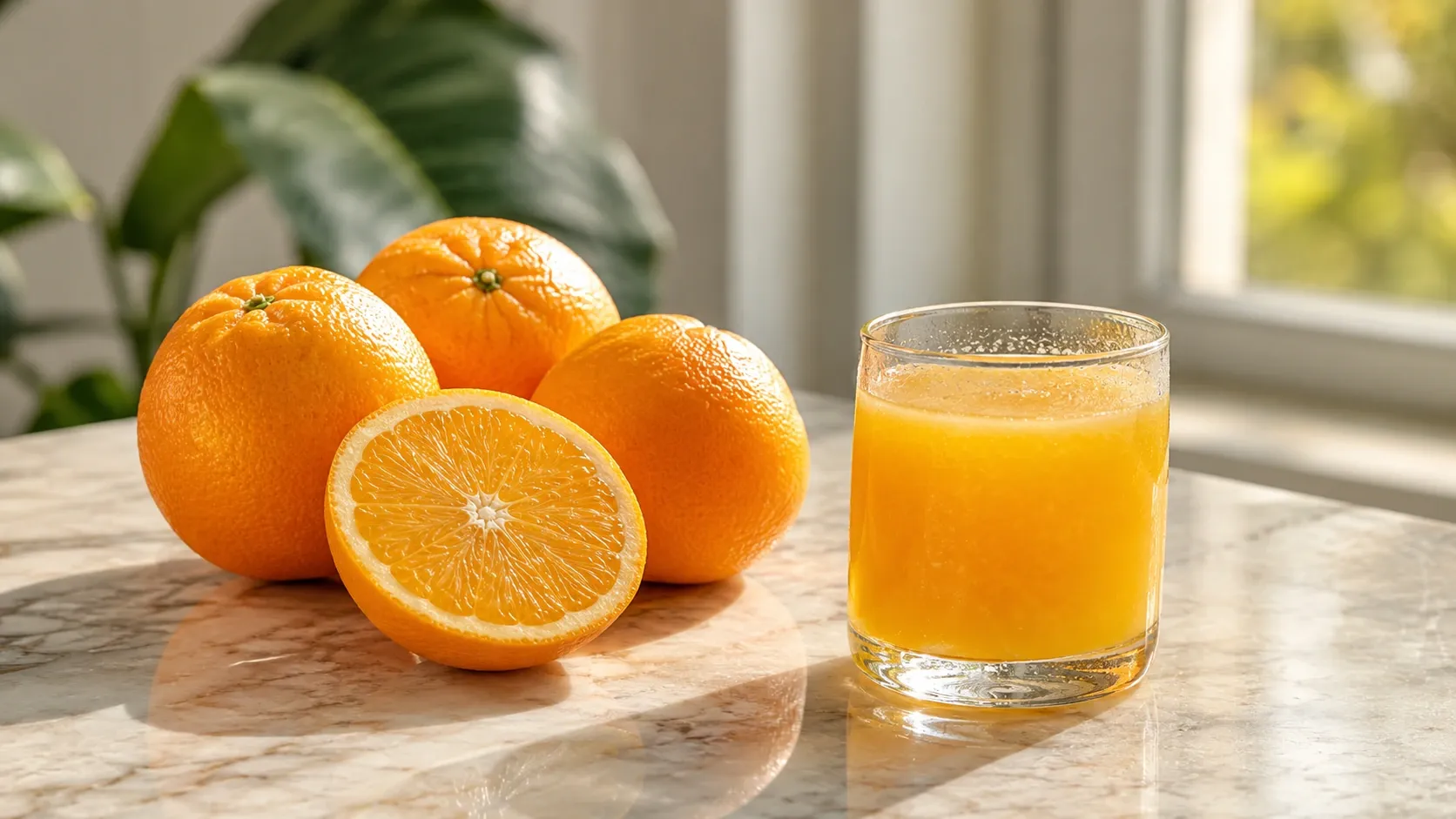
A glass of orange juice and a whole orange may start with the same ingredient, but your body does not experience them in exactly the same way.
Juicing, extracting, or straining fruit changes its physical structure. Fiber is often substantially reduced, no chewing is required, and it becomes much easier to consume the equivalent of several pieces of fruit within a few minutes.
That does not make 100% fruit juice a “bad” food. It can still provide vitamins, minerals, and beneficial plant compounds. But when the choice is between drinking fruit and eating it whole, nutrition guidance generally favors the whole fruit. (The Nutrition Source)
Whole fruit and fruit juice are not nutritionally identical
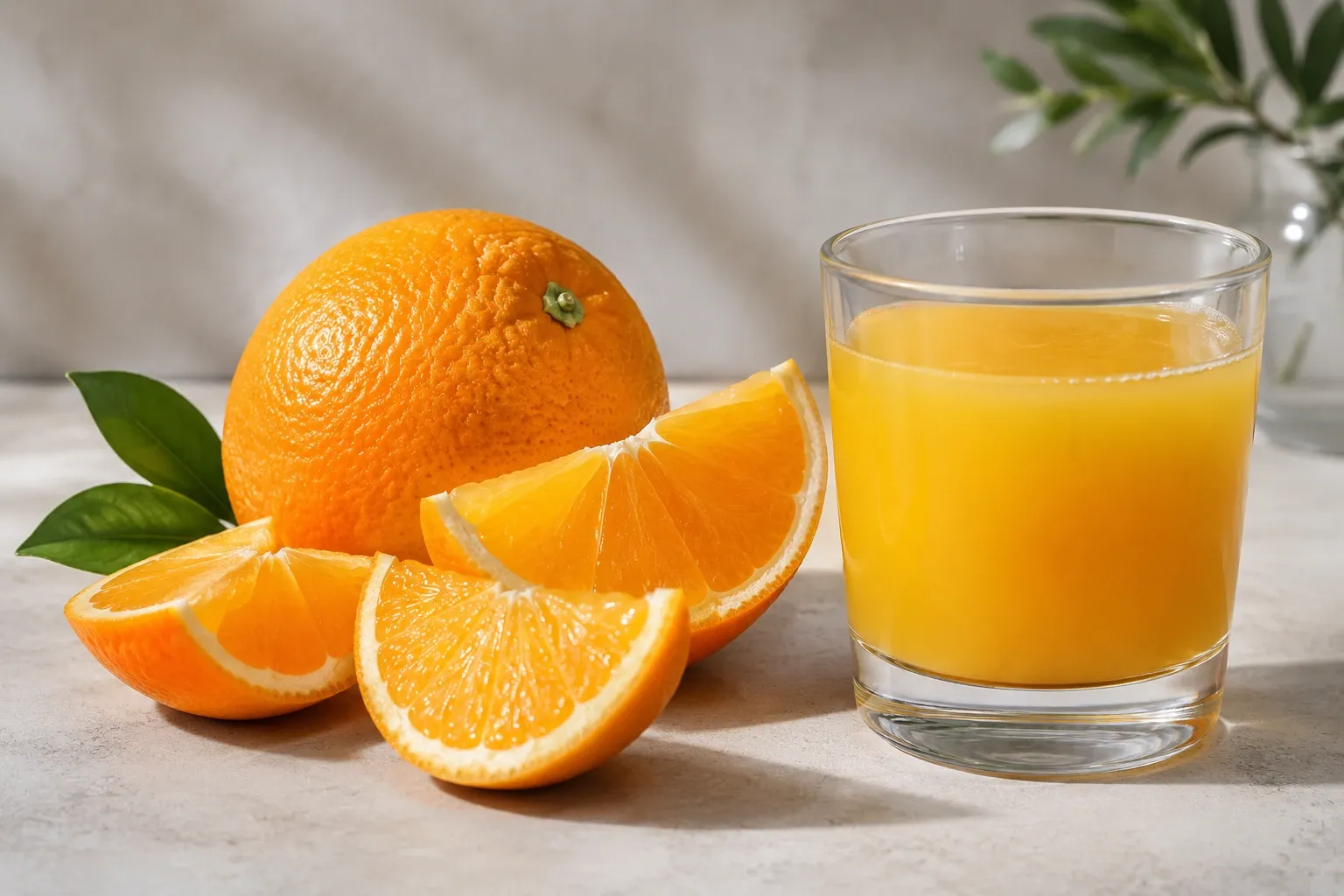
The difference goes beyond vitamin content. An important concept is the food matrix — the physical structure in which a food’s nutrients are contained.
When you eat an orange, for example, you chew the pulp while consuming carbohydrate together with water, fiber, and numerous other components of the fruit.
When juice is extracted or strained, much of that structure is disrupted or removed.
| Feature | Whole fruit | 100% fruit juice |
|---|---|---|
| Fiber | Retained | Usually substantially reduced |
| Chewing required | Yes | No |
| Satiety | Generally higher | Generally lower |
| Easy to consume several fruits quickly | Less so | Yes |
| Vitamins and minerals | Present | Many are retained |
| Sugars classified as free sugars by WHO | No, while contained in intact fruit structure | Yes |
| Preferred everyday choice | Yes | Better consumed in moderation |
Both Harvard and Brazil’s Ministry of Health therefore recommend prioritizing whole fruit over juice. (The Nutrition Source)
What happens to fiber when fruit is juiced?
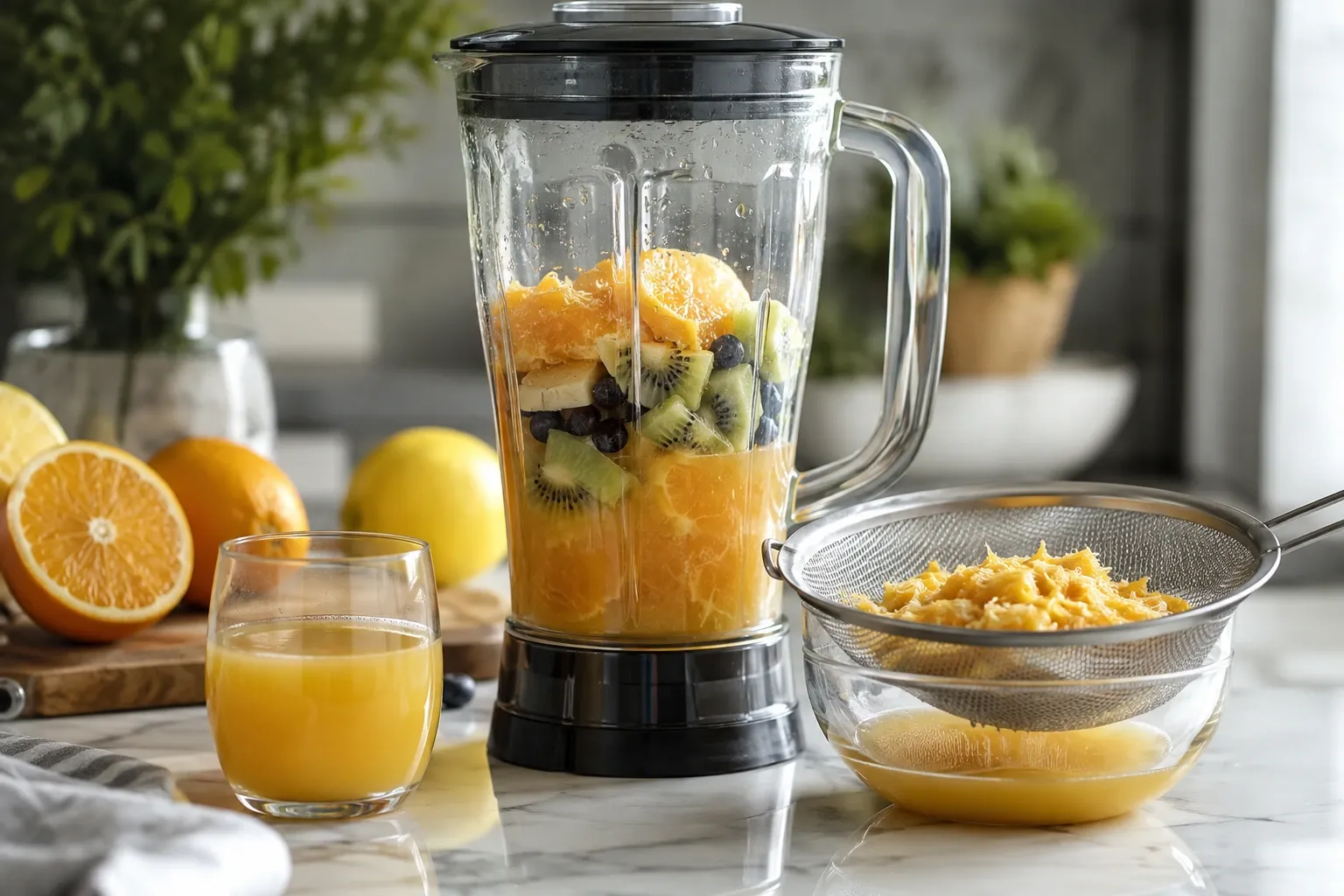
That depends on the preparation method.
A juice extractor that separates the liquid from the pulp removes much of the fiber. Straining a homemade juice has a similar effect.
If the whole edible fruit is blended and the pulp remains in the drink, considerably more fiber is preserved. A whole-fruit smoothie is therefore different from strained juice.
There is still another consideration: drinking fruit is usually quicker than chewing it.
Think about how many oranges may be used to make a large glass of juice. Drinking that glass can take only a few minutes. Eating the same amount as whole oranges would take longer and may make you feel full before finishing.
Is the natural sugar in fruit juice healthy?
There is an important distinction here.
The sugars naturally found in fruit do not chemically turn into a different type of sugar when the fruit is squeezed. Glucose remains glucose, and fructose remains fructose.
What changes is the context in which they are consumed.
In whole fruit, sugars remain embedded in the food’s structure and are consumed with fiber and chewing. In juice, they are more readily available and can be consumed much faster and in larger quantities.
For this reason, the World Health Organization includes sugars naturally present in fruit juices and fruit juice concentrates in its definition of free sugars. WHO recommends limiting free sugars to less than 10% of daily energy intake, with additional potential benefits below 5%. (WHO)
Does fruit juice spike blood sugar?
Removing much of the fiber and turning fruit into a drink generally makes its carbohydrates easier to consume and absorb quickly.
However, this does not mean every person will experience a harmful glucose spike after any amount of juice. Glycemic responses depend on the fruit, portion size, the rest of the meal, metabolic health, and individual differences.
Evidence also needs to be interpreted carefully. Research on 100% fruit juice has not consistently shown that modest consumption worsens glycemic control in healthy people. At the same time, population studies suggest that whole fruit is associated with more favorable type 2 diabetes outcomes than fruit juice. (OUP Academic)
“Fruit juice causes diabetes” is therefore too simplistic. But so is saying that juice provides the same metabolic advantages as whole fruit.
What about weight gain?
One of the main concerns is how easy liquid calories are to consume.
A 2024 systematic review and meta-analysis published in JAMA Pediatrics included 42 eligible studies. Among children, each additional daily serving of 100% fruit juice was associated with a small increase in BMI over time. Findings in adults were less clear, and adjusting for total calorie intake changed the association, suggesting that excess energy may be an important part of the explanation. (JAMA Network)
This does not mean that an occasional small glass of fruit juice causes weight gain.
The practical issue is that juice is easy to overconsume. Routinely adding large glasses to meals can increase overall calorie intake without providing the same fullness as eating the fruit itself.
Does 100% fruit juice have any benefits?
Yes. It can have nutritional value.
Depending on the fruit and processing method, juice may provide vitamin C, potassium, folate, and plant bioactives such as polyphenols.
An umbrella review published in Nutrition Reviews examined meta-analyses of 100% juice and reported neutral findings or potential benefits across several outcomes. The authors concluded that the overall evidence does not support automatically excluding 100% juice from healthy dietary patterns, although the quality and certainty of evidence differ across outcomes. (OUP Academic)
That helps avoid two misleading extremes:
- claiming fruit juice is nutritionally equivalent to whole fruit;
- claiming every amount of 100% fruit juice is inherently harmful.
The available evidence supports neither simplification.
100% fruit juice is not the same as a fruit drink
When buying packaged beverages, the first question is: what is actually inside the product?
Fruit drinks, nectars, juice beverages, and other products can have compositions that differ substantially from 100% juice. Some may contain added sugars, concentrates, flavorings, or other ingredients.
A picture of fruit on the front of the package is not enough. Check the product name, ingredient list, and nutrition information.
Also remember that “no added sugar” does not make juice nutritionally identical to whole fruit. The drink can still contain a considerable amount of naturally occurring free sugars.
Should you stop drinking fruit juice?
For most people, there is no need to turn this into a simple “allowed versus forbidden” rule.
A modest amount of 100% fruit juice can fit into an overall healthy diet. Whole fruit should nevertheless remain the priority.
In practical terms:
- Choose whole fruit most often.
- If you drink juice, choose 100% juice with no added sugar.
- Avoid using large glasses of juice as your main thirst-quenching drink throughout the day.
- Choose water for routine hydration.
- When preparing fruit at home, retaining the pulp preserves more fiber.
- Do not automatically substitute juice for your usual whole-fruit intake.
- If you have diabetes or need to manage blood glucose closely, consider portion size and meal context with individualized professional guidance.
What about smoothies?
A smoothie made with whole fruit is different from extracted juice.
When the edible skin, pulp, and flesh remain, most of the fiber is retained. Harvard therefore considers this type of preparation nutritionally closer to eating the original ingredients. (The Nutrition Source)
That does not automatically make every smoothie healthy.
Using several fruits together with honey, syrups, concentrated juice, ice cream, or other calorie-dense ingredients can turn one drink into a much larger source of energy than expected.
Portion size still matters.
Fruit or juice: which should you choose?
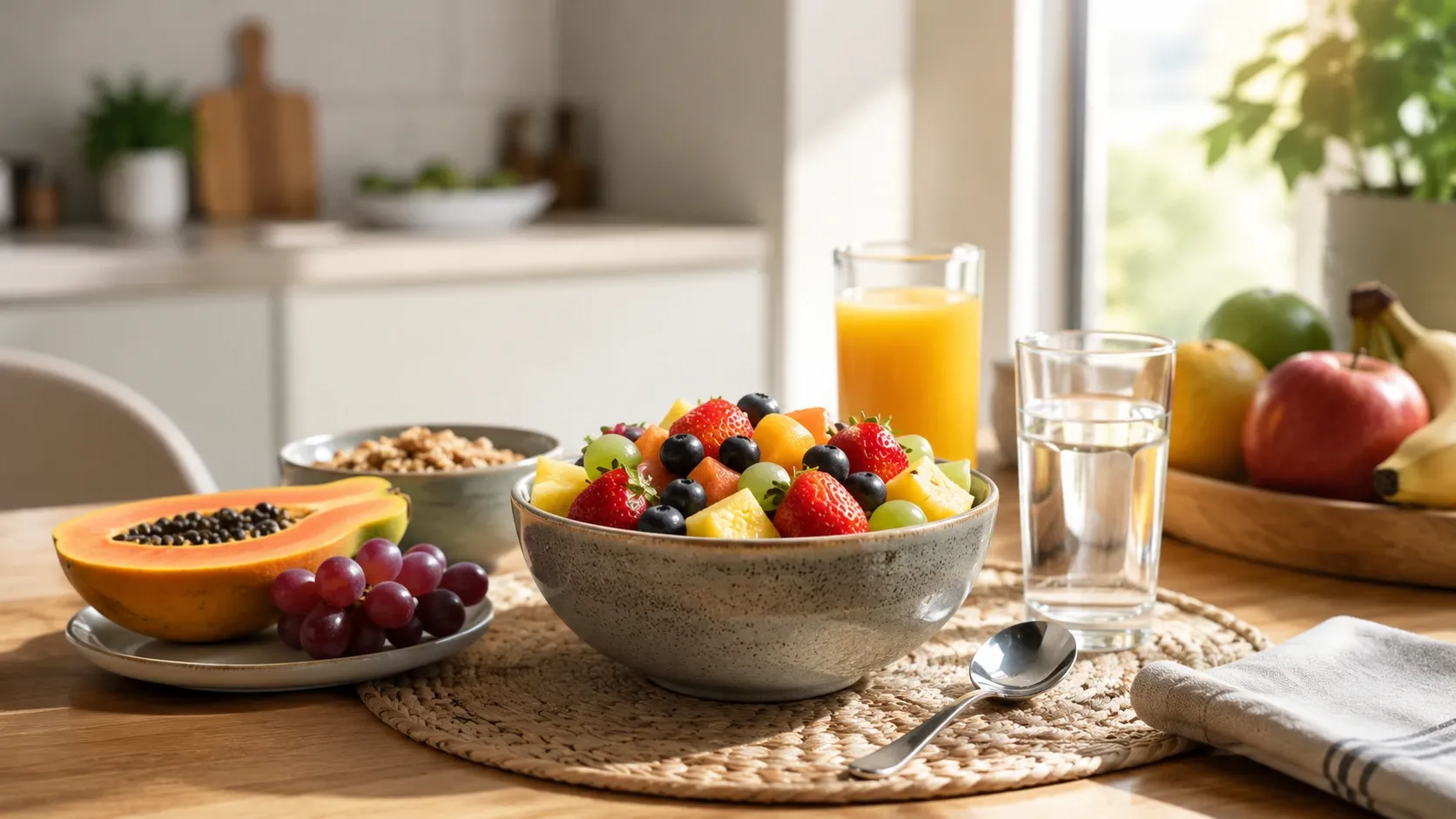
If you are choosing between a whole fruit and juice made from the same fruit, whole fruit is generally the better everyday choice.
It provides nutrients together with more fiber, requires chewing, tends to be more filling, and makes it harder to consume the equivalent of several fruits within a few minutes.
100% fruit juice can still have a place in the diet, but it is better viewed as a modest addition rather than a routine replacement for whole fruit.
Conclusion
Fruit juice and whole fruit share nutrients, but they are not nutritionally equivalent.
When fruit is turned into juice — particularly extracted or strained juice — much of its fiber may be lost, while sugars and calories become easier to consume quickly. This is why major health and nutrition authorities recommend prioritizing whole fruit. (WHO)
That does not mean a small serving of 100% fruit juice needs to be banned. The simplest takeaway is: eat your fruit more often than you drink it.