Potassium: What It Does and the Best Food Sources
Potassium supports normal muscle, nerve and cardiovascular function. Learn how much you need, which foods provide it and when extra potassium may be unsafe.
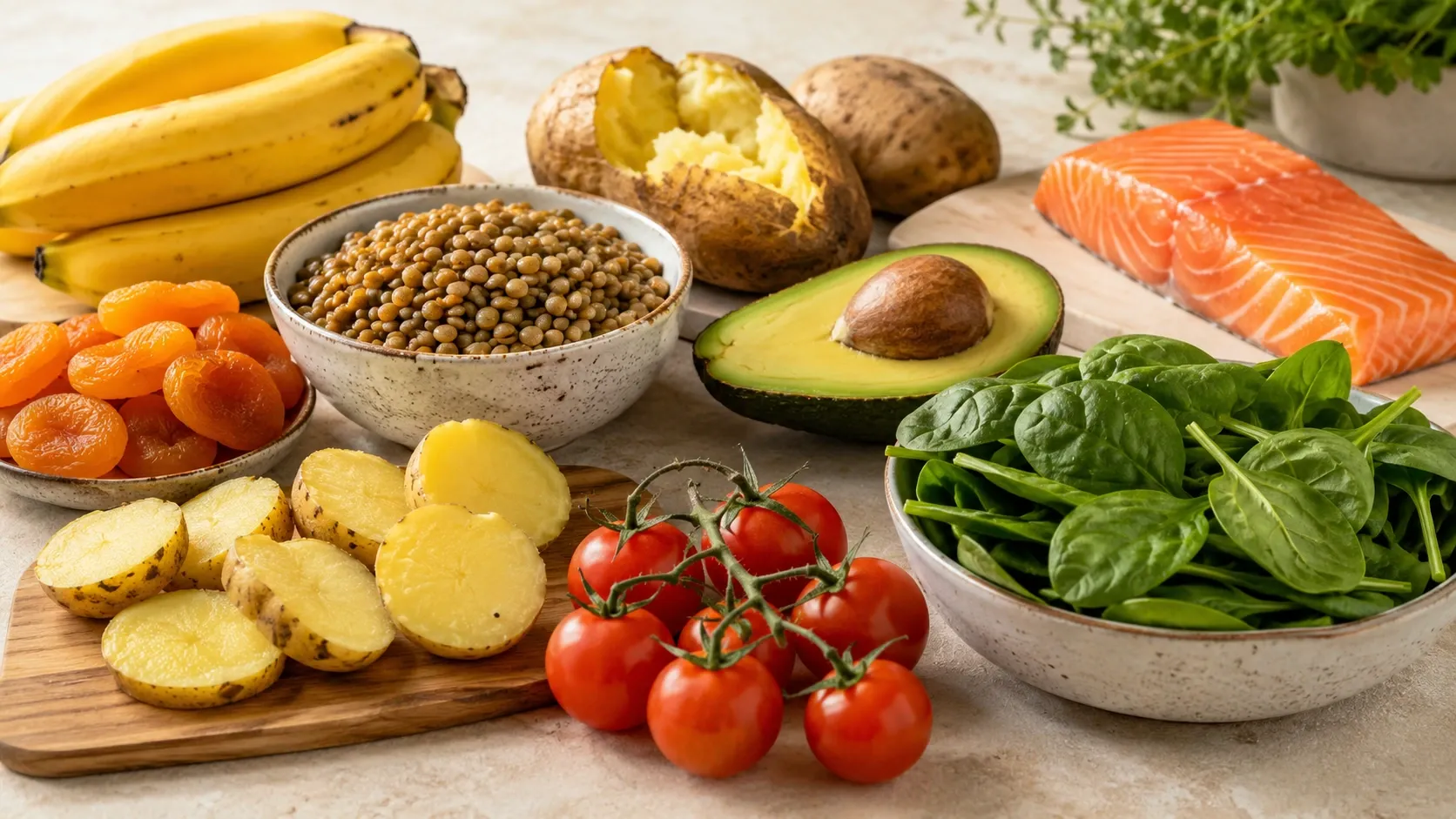
Bananas tend to get most of the attention whenever potassium is mentioned. They certainly contain potassium, but they are neither the only source nor necessarily the most concentrated one.
Potassium is naturally present in fruit, vegetables, legumes, potatoes, dairy foods, fish, meat and many other foods. Rather than searching for one “best” source, it is more useful to understand what potassium does and how a varied diet can provide it throughout the day. (ODS)
What is potassium?
Potassium is an essential mineral and one of the body’s major electrolytes. Most potassium is located inside cells, where it helps regulate intracellular fluid volume and maintain the electrical gradients required for normal cellular function. (ODS)
Those electrical gradients are essential for nerve transmission, muscle contraction and normal kidney function. (ODS)
What does potassium do?
It supports normal muscle function
Muscle contraction relies on electrical changes across cell membranes. Potassium participates in this process alongside other electrolytes, particularly sodium. Adequate electrolyte balance is therefore important for normal muscular function. (ODS)
It contributes to nerve signaling
Nerve cells use electrical gradients to transmit signals. Differences in sodium and potassium concentrations across the cell membrane are fundamental to this mechanism. (ODS)
It helps regulate fluid balance
Potassium is the major positively charged ion inside cells, while sodium has a major role in extracellular fluid. Together, these electrolytes help regulate fluid distribution and normal cellular physiology. (ODS)
It is involved in blood-pressure regulation
Dietary potassium and sodium are closely related to blood pressure. Higher potassium intake can increase urinary sodium excretion and may promote vasodilation, both of which can contribute to lower blood pressure. (ODS)
WHO recommends increasing potassium intake from food to help reduce blood pressure and cardiovascular risk in adults and suggests an intake of at least 3,510 mg per day. (WHO)
This does not mean potassium alone is a treatment for hypertension. Blood pressure is influenced by overall diet, sodium intake, physical activity, body weight, medication use and many other factors.
How much potassium do adults need?
There is no single universal number because health authorities use different methods and objectives when setting nutrient reference values.
| Authority | Adult reference |
|---|---|
| WHO | at least 3,510 mg/day |
| EFSA | 3,500 mg/day |
| U.S. NASEM — men aged 19+ | 3,400 mg/day |
| U.S. NASEM — women aged 19+ | 2,600 mg/day |
WHO’s recommendation is particularly concerned with blood pressure and cardiovascular risk. EFSA considers 3,500 mg/day an adequate intake for adults, while NASEM sets different adequate intake values for adult men and women. (WHO)
For most healthy adults, building a varied diet is generally more useful than trying to count every milligram of potassium consumed each day.
Which foods are good sources of potassium?
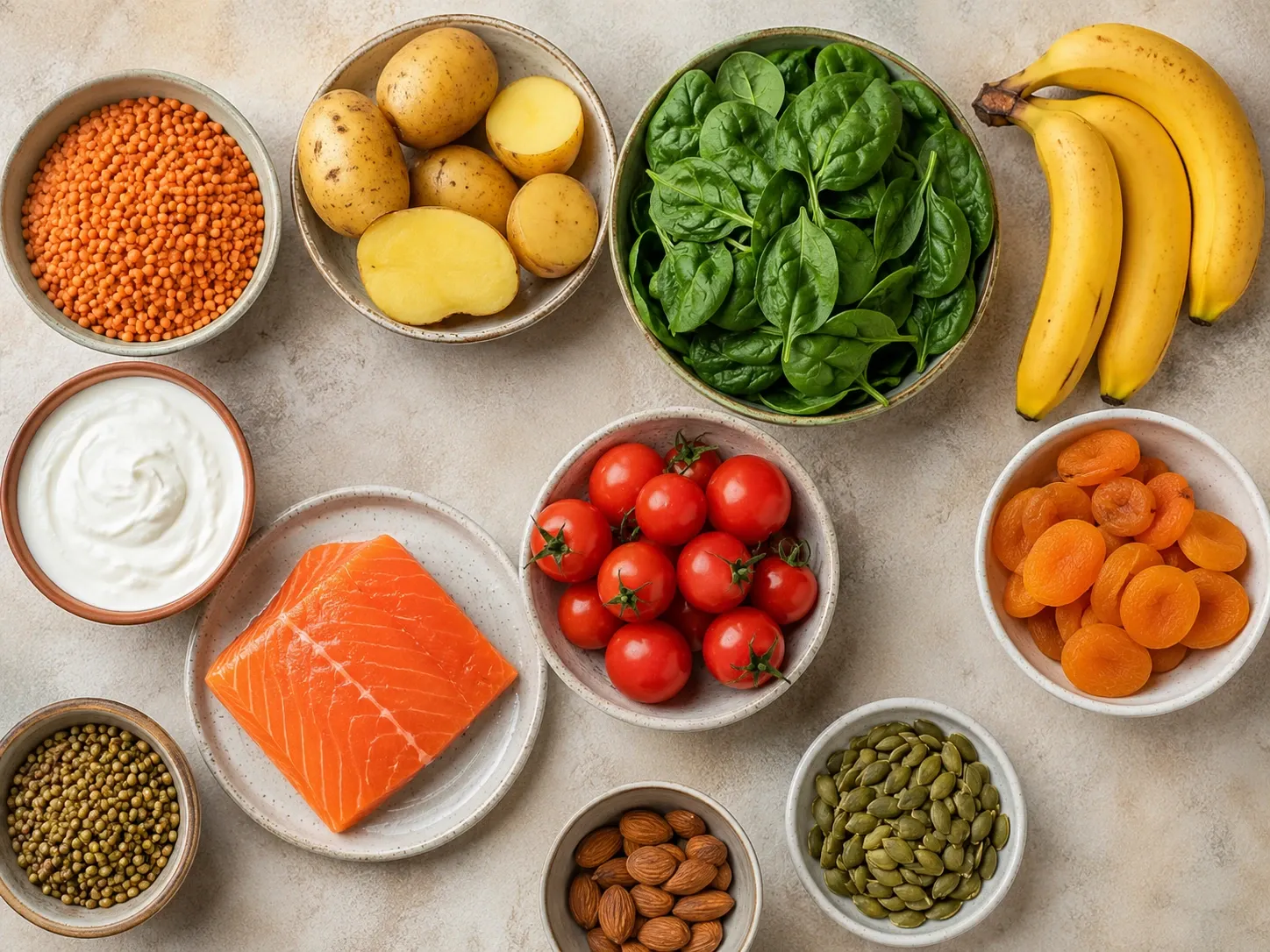
Potassium occurs naturally in a wide range of foods. Fruits are useful sources, but legumes, starchy vegetables, leafy greens, dairy foods and certain fish can also make significant contributions. (ODS)
The following examples come from the table used by the NIH. Values are approximate and vary with serving size, food variety and preparation. (ods.od.nih.gov)
| Food | Reference serving | Approximate potassium |
|---|---|---|
| Dried apricots | ½ cup | 755 mg |
| Cooked lentils | 1 cup | 731 mg |
| Baked potato, flesh only | 1 medium | 610 mg |
| Canned kidney beans | 1 cup | 607 mg |
| Orange juice | 1 cup | 496 mg |
| Cooked soybeans | ½ cup | 443 mg |
| Banana | 1 medium | 422 mg |
| 1% milk | 1 cup | 366 mg |
| Raw spinach | 2 cups | 334 mg |
| Cooked Atlantic salmon | about 3 oz / 85 g | 326 mg |
| Tomato | 1 medium | 292 mg |
| Cooked broccoli | ½ cup | 229 mg |
Source: NIH Office of Dietary Supplements, using food composition data from USDA FoodData Central. (ods.od.nih.gov)
Are bananas particularly high in potassium?
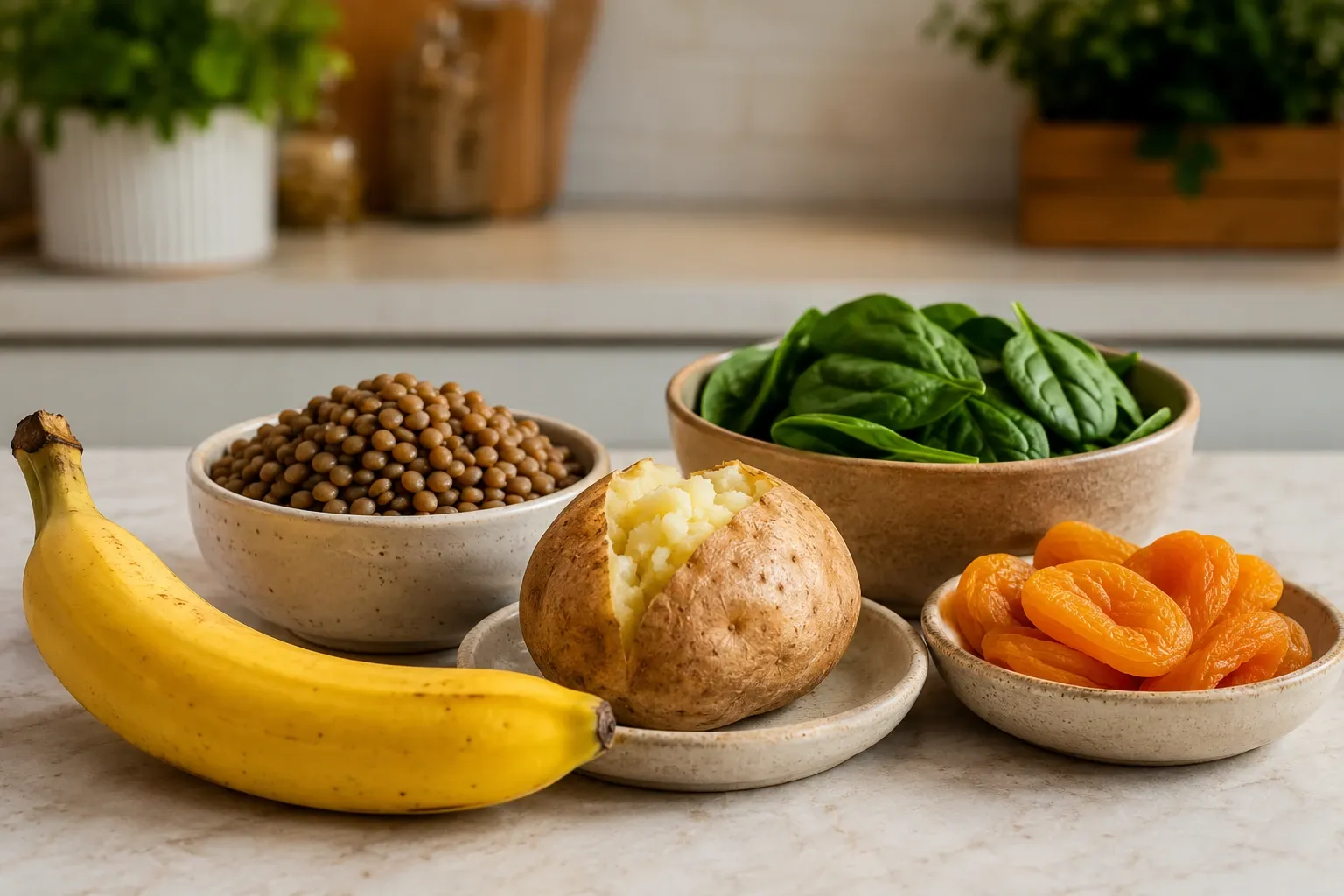
A medium banana contains about 422 mg of potassium in the NIH table, so it is certainly a useful source. However, several foods provide more potassium per listed serving. (ods.od.nih.gov)
A cup of cooked lentils contains about 731 mg, while a medium baked potato provides roughly 610 mg. Dried fruit can also be concentrated in potassium. (ods.od.nih.gov)
Bananas remain convenient and nutritious, but there is no need to eat them specifically to meet potassium needs.
How can you get more potassium from food?
A practical approach is to include different potassium-containing foods throughout the day. Legumes at lunch or dinner, vegetables with main meals, fruit as a snack and dairy or an appropriate alternative can all contribute.
WHO specifically highlights foods such as beans and peas, nuts, vegetables and fruit and recommends increasing potassium primarily through food. (WHO)
For healthy people, this food-first approach is generally more practical than relying on supplements.
What happens when potassium is too low?
An abnormally low concentration of potassium in the blood is called hypokalemia. Mild cases may cause fatigue, constipation, muscle weakness and malaise. More severe hypokalemia can impair muscle function and disturb heart rhythm. (ODS)
Importantly, eating less potassium than a dietary reference value is not the same as having clinical hypokalemia. NIH notes that low dietary intake alone rarely causes hypokalemia in healthy people. (ODS)
Important causes can include prolonged diarrhea, vomiting, certain diuretics, laxative misuse and medical conditions that increase potassium losses. (ODS)
Persistent symptoms or concern about abnormal blood potassium should be assessed by a healthcare professional rather than diagnosed from symptoms alone.
Can you consume too much potassium?
Healthy kidneys are generally very effective at removing excess dietary potassium through urine. NASEM therefore did not establish a tolerable upper intake level for potassium in healthy people based on available evidence. (ODS)
The situation is different when kidney potassium excretion is impaired. Potassium can then accumulate in the blood, causing hyperkalemia, which can be dangerous and, in severe cases, affect heart rhythm. (ODS)
Potassium and medications
Several commonly used medications can alter potassium balance.
ACE inhibitors, angiotensin receptor blockers and potassium-sparing diuretics can reduce potassium excretion and contribute to elevated blood potassium in susceptible people. Other diuretics, including some loop and thiazide diuretics, can increase urinary potassium losses. (ODS)
For this reason, people taking these medicines should not make major changes to potassium supplements or potassium-based salt substitutes without appropriate clinical advice.
Do you need a potassium supplement?
For most people, nutrient needs should primarily be met through food. NIH guidance likewise emphasizes dietary sources, with supplements having a role when specific nutritional needs cannot otherwise be met. (ODS)
Potassium supplements can be medically useful in appropriate situations, but their use depends on blood potassium levels, kidney function, medication use and the underlying reason for a deficiency.
Taking high doses without professional guidance is not a safe substitute for improving overall diet quality.
Why sodium and potassium matter together
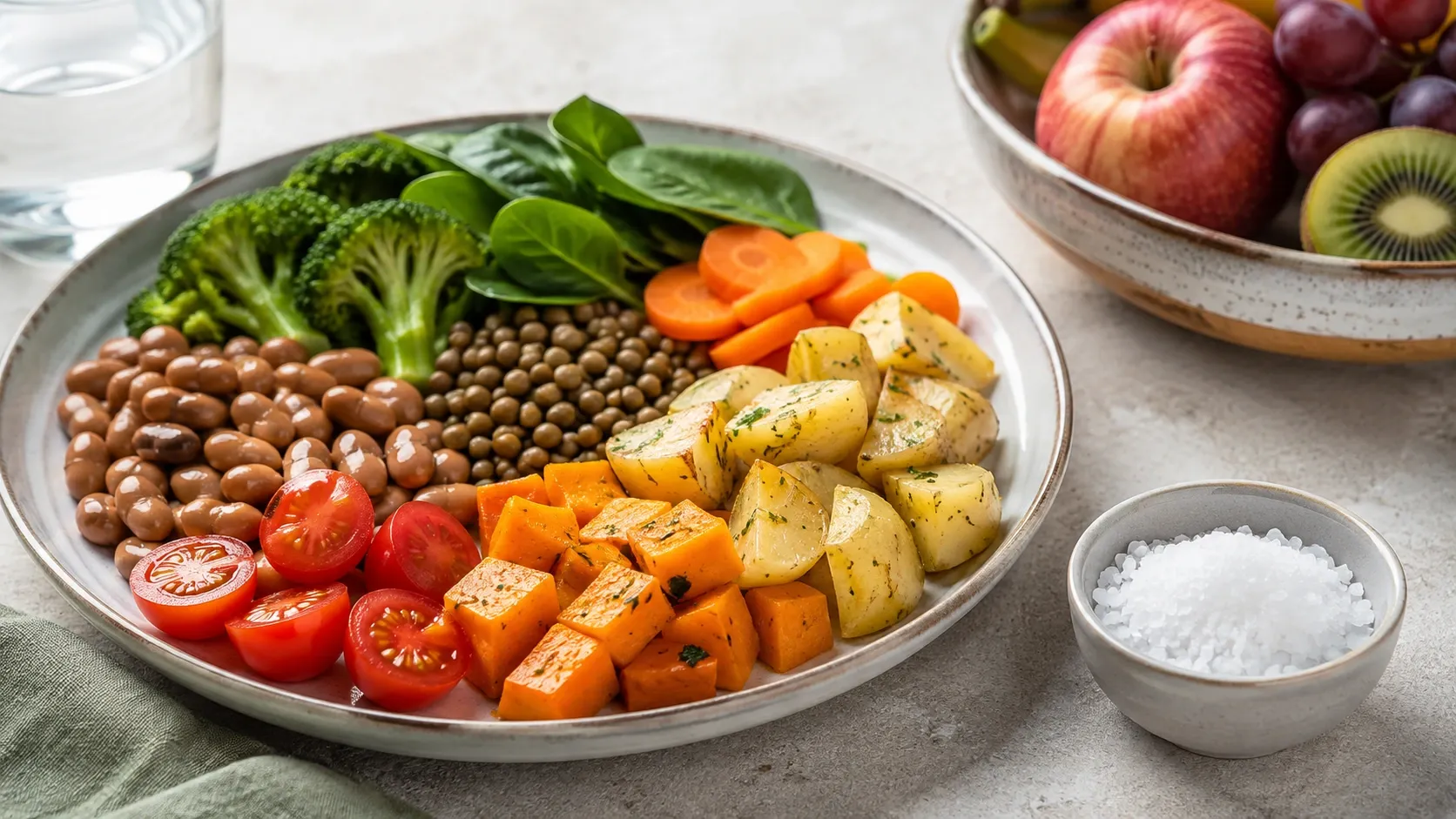
Sodium and potassium are both essential electrolytes, but their physiological roles are closely interconnected. Diets high in sodium and relatively low in potassium are especially relevant when considering blood pressure. (The Nutrition Source)
In practice, improving this dietary balance often means both eating more minimally processed potassium-rich foods and limiting excessive sodium intake.
This is one reason why an overall dietary pattern rich in fruit, vegetables and legumes is more meaningful than simply adding a potassium pill to an otherwise poor-quality diet.
Conclusion
Potassium is essential for normal cell function, nerve transmission, muscle contraction, fluid balance and physiological blood-pressure regulation. It is found across many food groups, and bananas are only one of many useful sources. (ODS)
Lentils, potatoes, leafy vegetables, dried fruit, dairy foods, fish, legumes and fresh fruit can all contribute to daily intake.
For healthy people, a varied food-first approach is usually the most practical strategy. Anyone with kidney disease, altered potassium excretion or medications that affect potassium should obtain individualized advice before significantly increasing intake or using supplements. (ODS)