Are Sweeteners Bad for You? What We Know About Safety
Approved sweeteners have established safety limits, but that does not mean they improve health. Here is what evidence says about aspartame, sucralose, cancer, weight, and diabetes.
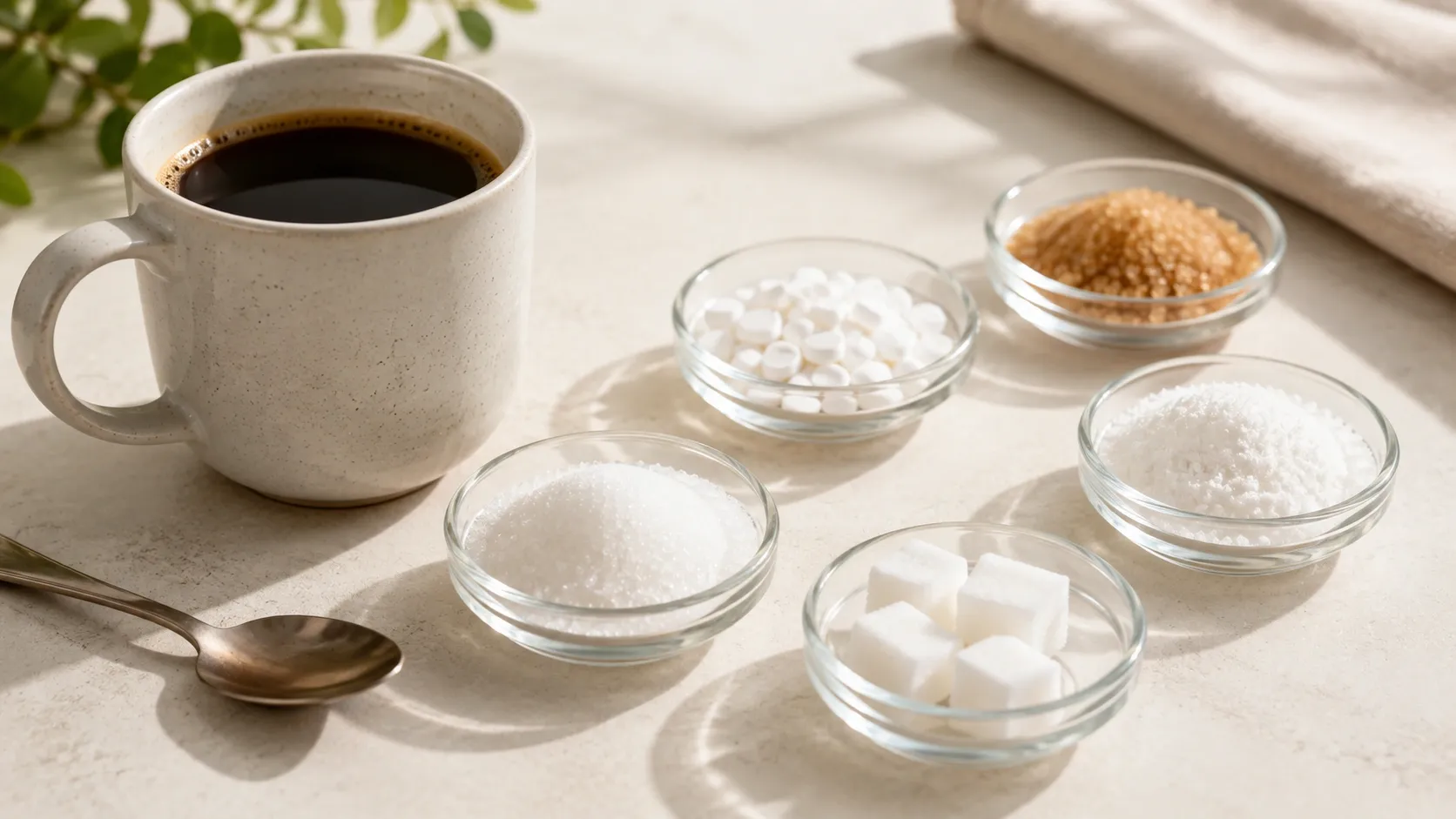
Few food ingredients generate as many conflicting headlines as low- and no-calorie sweeteners. One headline presents them as a smarter alternative to sugar; another links them to cancer, diabetes, weight gain, or disruption of the gut microbiome.
The evidence does not fit neatly into either extreme. Approved sweeteners are not automatically considered dangerous when consumed within evaluated exposure limits. At the same time, replacing sugar with a sweetener does not automatically make a product healthy or guarantee weight loss or protection from disease. (WHO)
Understanding the subject requires separating toxicological safety from long-term health outcomes.
“Sweetener” does not mean one substance
Non-sugar sweeteners include compounds such as:
- aspartame;
- sucralose;
- saccharin;
- acesulfame potassium;
- cyclamates;
- neotame;
- advantame;
- steviol glycosides.
WHO’s definition includes both synthetic and naturally occurring or modified non-nutritive sweeteners. This means that describing a product as “natural” or “artificial” tells us relatively little about its actual safety profile. (WHO)
Sugar alcohols, or polyols, such as erythritol, xylitol, sorbitol, and maltitol form a separate group. WHO specifically excluded them from its 2023 non-sugar sweetener recommendation. (WHO)
What does “safe” actually mean?
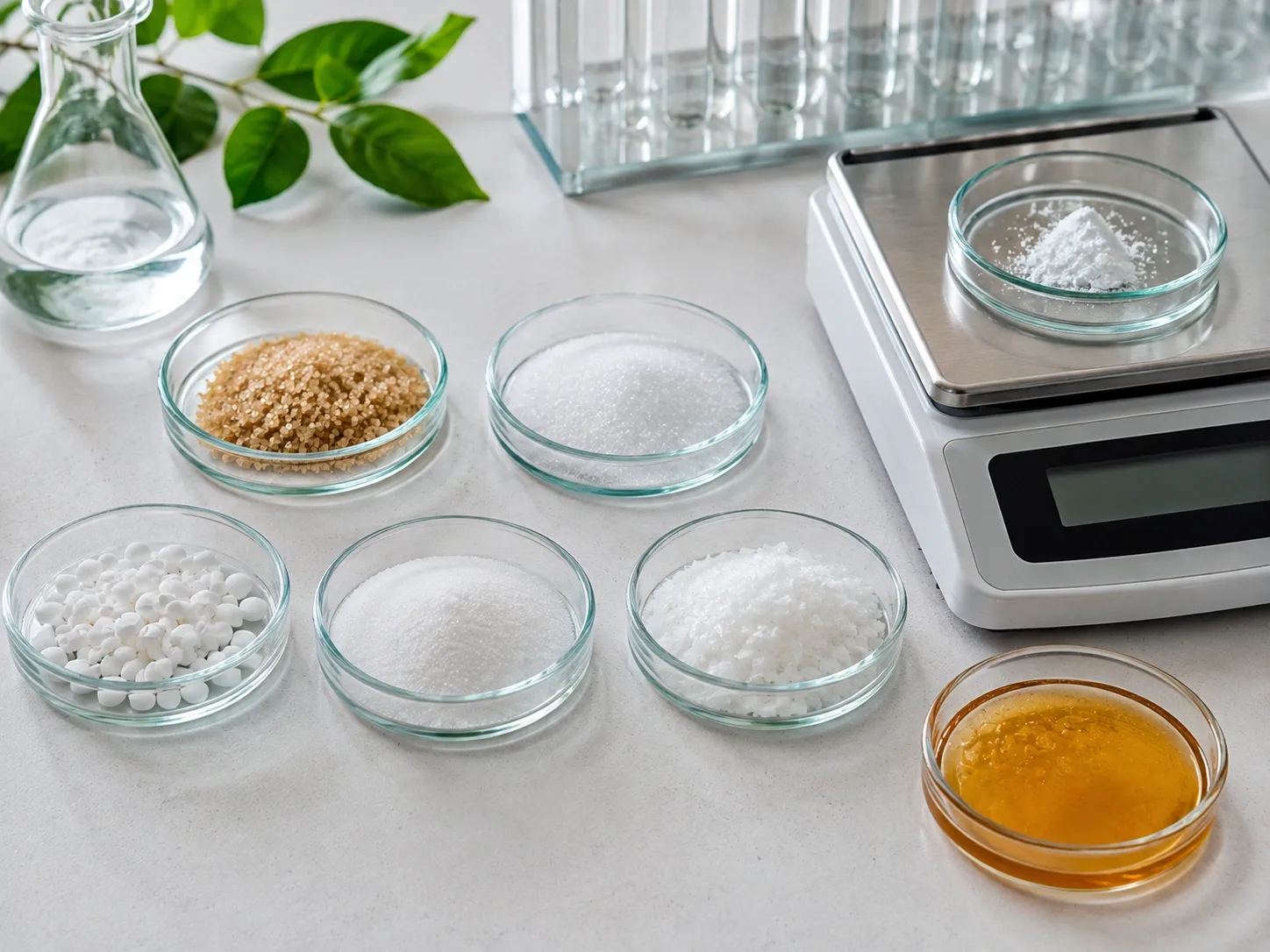
Food-safety authorities assess individual sweeteners using toxicology and exposure data.
One important concept is the acceptable daily intake, or ADI: an amount considered safe to consume every day over a lifetime without appreciable health risk according to the available toxicological assessment. (FDA)
An ADI is not a recommended intake or a nutritional target.
Why did WHO recommend against non-sugar sweeteners?
In 2023, WHO issued a conditional recommendation against using non-sugar sweeteners for long-term weight control or to reduce the risk of diet-related chronic disease in the general population. (WHO)
That recommendation was widely interpreted as a declaration that sweeteners were unsafe.
It was not.
WHO explicitly states that the guideline is not a toxicological safety assessment of individual sweeteners and is not intended to replace safe-intake limits established by JECFA or other regulatory authorities. (WHO)
The guideline addressed a different question: whether relying on non-sugar sweeteners provides meaningful long-term benefits for weight control and chronic disease prevention.
WHO concluded that the evidence did not establish such long-term benefit strongly enough to recommend the strategy. (WHO)
Can sweeteners help with weight loss?
Sometimes — particularly when they replace calories from sugar.
Randomized trials generally show more favorable results when low- or no-calorie sweeteners are compared directly with caloric sugar rather than with water or other noncaloric options. (WHO)
A meta-analysis published in 2026 included 19 randomized trials and found an average body-weight difference of approximately -0.79 kg when non-nutritive sweeteners replaced caloric sugars. (PubMed)
The effect was modest and heterogeneous. Benefits were apparent in studies lasting less than 18 weeks but were no longer significant in the longer-duration subgroup. (PubMed)
Sweeteners are therefore better understood as a possible substitution tool, not as a weight-loss treatment.
What is the sweetener replacing?
This matters enormously.
Replacing:
sugar-sweetened soda → zero-sugar soda
can reduce sugar and calories.
Replacing:
water → zero-sugar soda
does not produce the same calorie advantage.
The comparison partly explains why different studies can reach different conclusions. (PubMed)
Why do observational studies sometimes suggest harm?

Long-term cohort studies often find associations between greater consumption of artificially sweetened products and outcomes such as type 2 diabetes or cardiovascular disease.
Those findings deserve attention, but association does not automatically establish causation.
WHO specifically noted that baseline differences among consumers and complicated patterns of sweetener use may confound these results. That uncertainty contributed to the recommendation being classified as conditional. (WHO)
For example, people who gain weight or develop prediabetes may begin choosing diet drinks precisely because their metabolic risk has already increased.
Years later, diet-drink consumption may appear associated with diabetes even though some of the underlying risk existed first.
This is one example of reverse causation.
Does aspartame cause cancer?
In 2023, IARC classified aspartame as possibly carcinogenic to humans — Group 2B. The decision was based on limited evidence, including limited human evidence for hepatocellular carcinoma. (WHO)
At the same time, JECFA reviewed the evidence from a risk-assessment perspective and retained the acceptable daily intake of 0–40 mg/kg of body weight per day. (WHO)
These findings are not necessarily contradictory.
Hazard is different from risk
IARC hazard identification asks whether an agent has the potential to cause cancer under some circumstances.
Risk assessment asks how likely harm is at a particular exposure.
IARC’s Group 2B classification indicates limited evidence of a possible carcinogenic hazard; it does not tell a person their probability of developing cancer from drinking a particular quantity of diet soda. (WHO)
JECFA concluded that the available evidence did not justify changing its existing ADI.
For a 70 kg adult, the JECFA limit corresponds to 2,800 mg of aspartame per day. WHO illustrated that an adult of that weight would need to consume more than roughly 9–14 cans containing 200–300 mg each in a day to exceed the ADI if there were no other dietary sources. Actual product concentrations vary. (WHO)
What about sucralose?
Sucralose received a major regulatory update in February 2026.
After reviewing the evidence, EFSA concluded that sucralose remains safe under currently authorized food uses and kept its acceptable daily intake at 15 mg/kg of body weight per day. (EFSA)
The assessment did not identify a genotoxicity concern for sucralose under the conditions evaluated. (EFSA)
EFSA did, however, decline to confirm the safety of a proposed extension into certain fine baked goods because of uncertainty regarding chlorinated compounds that might form under a broad range of baking conditions. (EFSA)
That uncertainty warrants further research, but it should not be misrepresented as evidence that currently authorized sucralose use has been shown to be harmful.
Is stevia safer because it comes from a plant?
Not necessarily.
Food-grade steviol glycosides are evaluated as food additives. In 2026, JECFA once again confirmed an ADI of 0–4 mg/kg of body weight per day expressed as steviol. (WHO)
WHO also includes stevia and stevia derivatives in its non-sugar sweetener recommendation. (WHO)
“Natural” is therefore not a substitute for a toxicological assessment.
Do sweeteners cause diabetes?
High-intensity sweeteners generally provide little or no energy and do not produce the same blood-glucose load as sugar when they replace it. (FDA)
That can make them useful in some situations where reducing sugar intake is a goal.
The long-term question is less certain.
Randomized trials generally show little adverse effect on glucose metabolism in the short term, while observational studies have reported associations between greater non-sugar sweetener consumption and cardiometabolic disease. Whether those long-term associations are causal remains uncertain. (WHO)
Statements that sweeteners either “cause diabetes” or “prevent diabetes” therefore overstate current evidence.
What about the gut microbiome?
This remains an active research area.
Experimental studies suggest that some sweeteners can influence gut microorganisms under certain conditions. Human research, however, has produced variable results, and different sweeteners are handled differently by the body. (PubMed)
Recent reviews characterize randomized human findings as heterogeneous and note important gaps regarding clinical relevance and long-term metabolic consequences. (PubMed)
The available evidence therefore does not support treating “sweeteners destroy the gut microbiome” as an established fact.
Are erythritol and xylitol the same as artificial sweeteners?
No.
Erythritol, xylitol, sorbitol, maltitol, and similar ingredients are sugar alcohols, or polyols. WHO’s 2023 recommendation specifically excluded them from its definition of non-sugar sweeteners. (WHO)
Some polyols can cause gas, bloating, or laxative effects at higher doses. (FDA)
Research about erythritol therefore cannot automatically be applied to aspartame, sucralose, or stevia.
Is there a “healthiest” sweetener?
There is not enough evidence to produce a universal ranking.
The practical choice may depend on taste, amount used, cooking application, gastrointestinal tolerance, medical conditions, and personal preference.
Someone who already drinks coffee without sugar or sweetener has no nutritional reason to start adding one.
For someone consuming a substantial amount of added sugar, a low- or no-calorie sweetener may be a useful substitution tool, particularly if it actually reduces sugar and calorie intake. (PubMed)
For long-term dietary patterns, WHO emphasizes another goal: gradually reducing the overall sweetness of the diet rather than relying indefinitely on non-sugar sweeteners. (WHO)
How much is safe?
There is no single number for all sweeteners.
Each compound has its own toxicological assessment, and different regulatory authorities can set different ADIs.
For example, JECFA uses an ADI of 40 mg/kg/day for aspartame, while FDA’s ADI is 50 mg/kg/day. EFSA retained an ADI of 15 mg/kg/day for sucralose in 2026, while FDA uses 5 mg/kg/day. These differences reflect separate regulatory assessments and do not simply mean that one agency considers a sweetener safe and another considers it dangerous. (WHO)
For most consumers using regulated products in ordinary quantities, calculating every milligram is generally unnecessary.
Who needs special caution?
One clear exception involves aspartame.
People with phenylketonuria (PKU) need to avoid or strictly limit phenylalanine and therefore must restrict aspartame. (FDA)
For children, pregnant people, or anyone with a particular medical condition, the focus should remain on overall dietary quality, with individualized professional advice when appropriate.
WHO’s recommendation against using non-sugar sweeteners as a weight-control strategy also includes children in the general population. (WHO)
Sugar or sweetener: which is better?

That question creates a false binary.
The alternative to sugar-sweetened soda does not have to be diet soda. It can be water.
Someone who drinks coffee with several teaspoons of sugar might gradually use less sugar, temporarily use a sweetener, or eventually prefer it without either.
When a non-caloric sweetener replaces a meaningful amount of sugar, it can reduce calories and sugar intake. (PubMed)
But keeping every food and drink intensely sweet — whether with sugar or a sugar substitute — is not the only option. WHO encourages people to reduce the overall sweetness of the diet over time. (WHO)
The same question applies to the “less processed” versions of sugar:
Is Brown Sugar Healthier Than White Sugar?
Conclusion
So, are sweeteners bad for you?
The most accurate answer is that there is no evidence-based reason to classify all authorized sweeteners as inherently dangerous when they are consumed within established safety conditions, but neither should they be promoted as substances that improve health on their own. (WHO)
When they replace sugar and calories, they can provide modest short-term advantages in certain contexts. Current evidence has not established enough long-term benefit for WHO to recommend them as a weight-control or chronic disease-prevention strategy for the general population. (PubMed)
Aspartame carries an IARC classification of a possible carcinogenic hazard, while JECFA has maintained its acceptable daily intake after assessing risk at actual exposure levels. Sucralose underwent a new EFSA reassessment in 2026 and remains considered safe under its currently authorized uses. (WHO)
For most people, the practical goal is less dramatic: reduce excess added sugar, do not rely on sweeteners as a health intervention, and gradually become comfortable with foods and drinks that taste less intensely sweet.