Coenzyme Q10: What We Know About Benefits and Supplementation
Coenzyme Q10 plays a role in cellular energy production and is widely sold as a supplement. Learn where evidence supports potential benefits, how it is studied, and the main safety considerations.
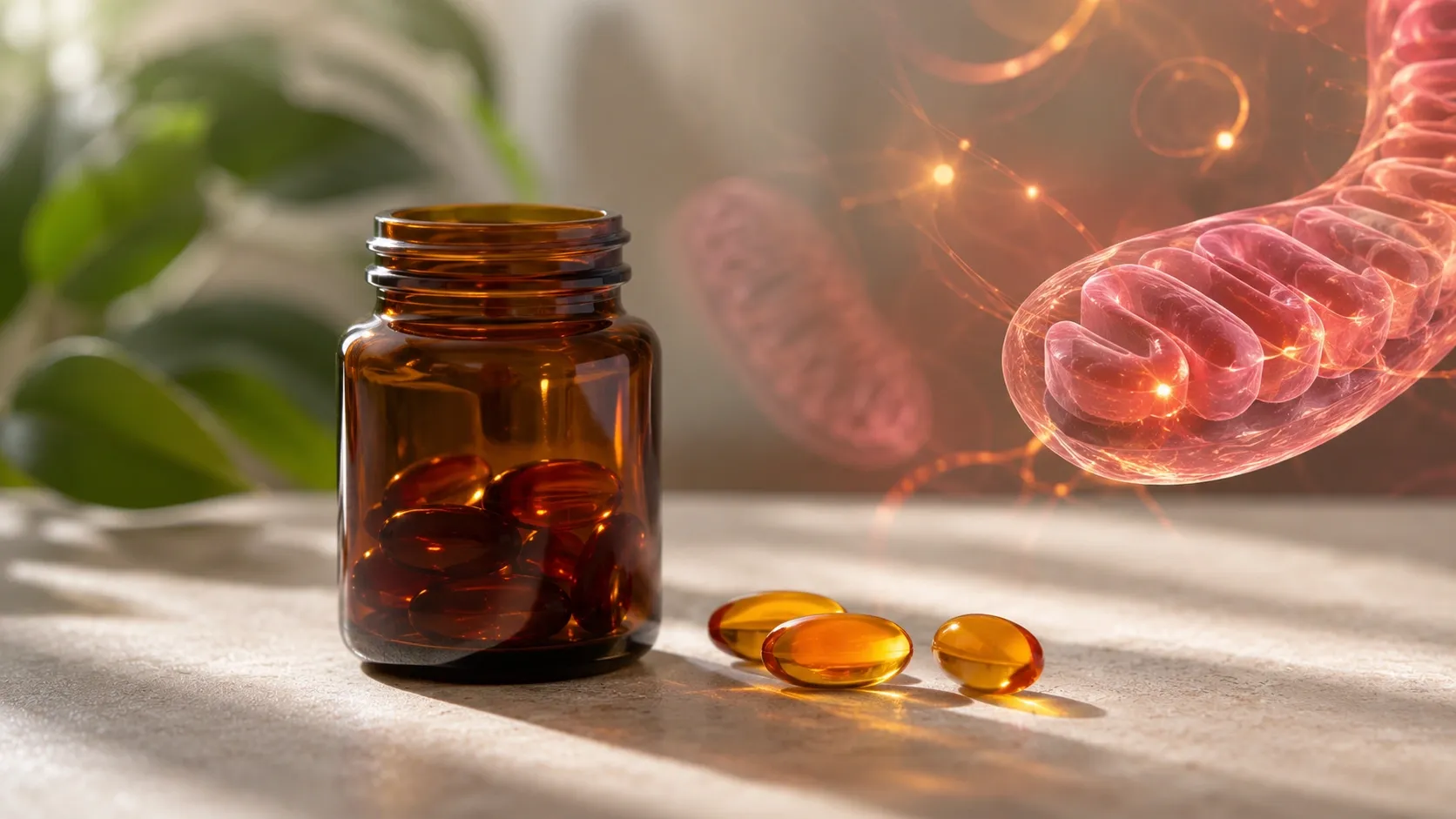
Coenzyme Q10, usually shortened to CoQ10, has become a common ingredient in supplements marketed for energy, healthy aging, exercise performance and cardiovascular health. Its popularity has a legitimate biological basis: CoQ10 plays an important role in cellular energy production. (NCBI Bookshelf)
The more difficult question is whether taking additional CoQ10 produces measurable health benefits. Current clinical research suggests that it may be useful in selected situations, but results vary considerably depending on the condition, formulation and outcome being studied. (NCCIH)
What is coenzyme Q10?

CoQ10 is a naturally occurring compound produced by the human body. It is found throughout the body, with particularly high concentrations in tissues such as the heart, liver, kidneys and pancreas. (NCCIH)
Within mitochondria, CoQ10 participates in the electron transport chain that helps generate ATP, one of the main energy currencies of cells. It is also involved in antioxidant processes. (NCBI Bookshelf)
Supplements commonly contain one of two forms:
- ubiquinone, the oxidized form;
- ubiquinol, the reduced form.
These forms are interconvertible in the body, so choosing between them is not as straightforward as assuming one is universally superior. Formulation itself can have a major effect on absorption. (PubMed)
Which CoQ10 benefits are supported by evidence?
The answer depends on the intended use.
| Potential use | What the evidence suggests | Important limitation |
|---|---|---|
| Heart failure | Recent evidence suggests possible benefit as an adjunctive treatment | It does not replace standard therapy |
| Migraine prevention | Meta-analyses report promising improvements | Higher-quality trials are still needed |
| Fatigue | Some randomized evidence shows lower fatigue scores | Fatigue has many different causes |
| Statin-associated muscle symptoms | Recent evidence suggests possible pain reduction | Earlier findings were inconsistent |
| General “energy boosting” | No evidence guarantees benefit in healthy people | Marketing claims often exceed the data |
(PubMed)
CoQ10 and heart failure
Cardiovascular disease is one of the most extensively studied areas for CoQ10 supplementation.
A 2025 umbrella review concluded that CoQ10 may reduce mortality and hospitalization in people with heart failure, with moderate-certainty evidence reported for some outcomes. (PubMed)
Earlier assessments were more cautious. A 2021 Cochrane review concluded that the available evidence was not convincing enough to clearly support or reject CoQ10 therapy for heart failure. (Cochrane)
The difference illustrates why supplement evidence needs to be updated periodically: conclusions can shift as additional trials and reviews become available.
Can CoQ10 help prevent migraine?
Evidence in migraine prevention is promising.
A systematic review and dose-response meta-analysis published in 2025 reported that CoQ10 supplementation was associated with reductions in migraine frequency, severity and duration compared with control interventions. (PubMed)
However, the investigators also called for additional high-quality clinical trials. CoQ10 is therefore better viewed as a potential adjunct in selected individuals than as a universally effective migraine treatment. (PubMed)
Does CoQ10 reduce fatigue?
There is an important distinction between CoQ10’s role in cellular energy metabolism and the claim that taking a supplement will make anyone feel more energetic.
A 2022 meta-analysis included 13 randomized controlled trials and 1,126 participants. Overall, the CoQ10 groups showed a statistically significant reduction in fatigue scores compared with placebo. (PubMed)
That is encouraging, but it does not establish CoQ10 as a general treatment for tiredness. The studies included different populations, and fatigue itself can result from many medical, behavioral and lifestyle factors.
Persistent, severe or unexplained fatigue deserves assessment of its underlying cause rather than automatic supplementation.
What about CoQ10 for people taking statins?
This remains one of the most debated uses of CoQ10.
An NCCIH assessment based on earlier evidence stated that the overall scientific literature did not support a consistent reduction in statin-related muscle pain. (NCCIH)
A newer systematic review and meta-analysis published in 2025 reached a more favorable conclusion. Seven randomized trials with a total of 389 participants were included. Four reported significant reductions in muscle symptoms, while three did not; the pooled analysis favored CoQ10 for pain reduction. (PMC)
The studies were nevertheless small, enrolling 35 to 76 participants, lasted 30 to 90 days and used 100 to 600 mg of CoQ10 per day. (PMC)
The most accurate conclusion is therefore that recent evidence is encouraging, but routine CoQ10 supplementation cannot yet be considered necessary for every statin user.
How much CoQ10 should you take?
There is no universal CoQ10 dose that applies to every goal.
Clinical studies use different regimens. The Q-SYMBIO heart-failure trial used a total of 300 mg per day, while randomized studies included in the 2025 statin-associated muscle symptom meta-analysis used 100 to 600 mg per day. (PubMed)
These figures describe research protocols; they are not personalized dosing recommendations.
An appropriate approach depends on:
- the reason for supplementation;
- health conditions;
- current medications;
- product formulation;
- tolerance;
- professional guidance.
Brazil’s Anvisa advises consumers to obtain appropriate health guidance and to follow the recommended dose and duration of use for supplements. (Brazilian Ministry of Health)
Ubiquinol vs. ubiquinone
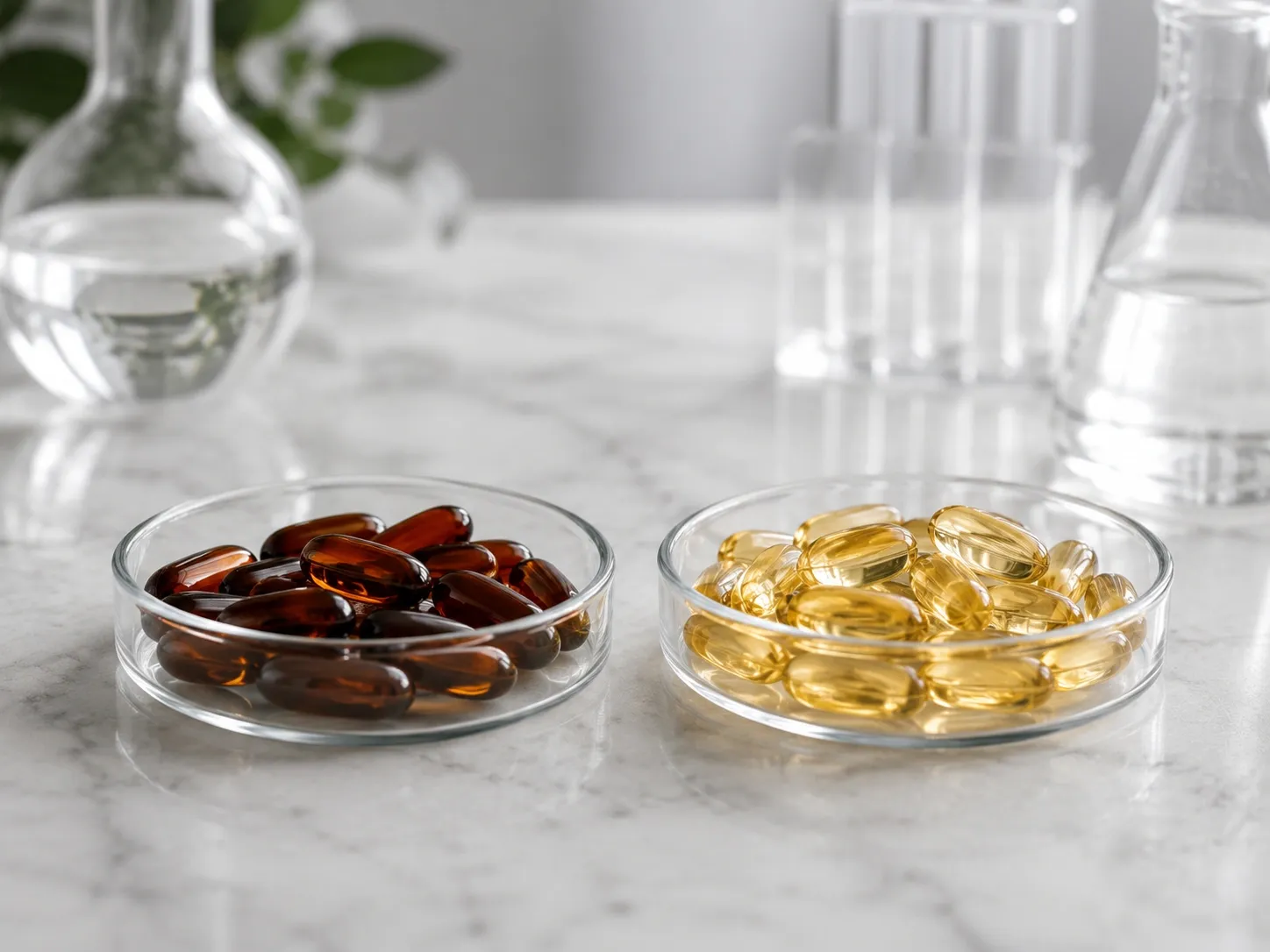
Marketing often presents ubiquinol as automatically superior to ubiquinone.
The research is more nuanced.
In a randomized crossover study involving 21 healthy adults aged 65 to 74, three formulations containing the equivalent of 100 mg of CoQ10 were compared. A water-soluble formulation produced significantly greater bioavailability than the reference ubiquinone capsule, while the tested ubiquinol capsule did not show a statistically significant increase over ubiquinone in that study. (PubMed)
Researchers also found that circulating CoQ10 appeared predominantly as ubiquinol even when participants consumed ubiquinone. (PubMed)
This suggests that the formulation and delivery system may matter as much as whether the label says ubiquinone or ubiquinol.
Does greater absorption mean greater clinical benefit?
Not necessarily.
Bioavailability tells us how much of a compound reaches the circulation and how quickly it does so. It does not automatically demonstrate that one product prevents more migraines, improves heart-failure outcomes or reduces fatigue more effectively.
Pharmacokinetic studies may also involve relatively few participants. The 2020 formulation comparison, for example, included 21 individuals. Clinical superiority requires trials designed to measure clinically meaningful outcomes rather than blood concentrations alone. (PubMed)
Is CoQ10 safe?
CoQ10 has generally been well tolerated in research. NCCIH reports that serious adverse effects have not been commonly identified, although mild digestive symptoms and insomnia may occur. (NCCIH)
Supplement use still requires caution because CoQ10 may interact with:
- warfarin;
- insulin;
- certain cancer treatments. (NCCIH)
People managing chronic diseases or taking regular medication should discuss supplementation with their health care provider.
How to choose a CoQ10 supplement

Product quality matters.
In Brazil, Anvisa advises consumers to purchase supplements from reliable sellers and verify whether products are appropriately regularized. Depending on the regulatory pathway, consumers may be able to check the registration or notification number printed on the label through Anvisa’s database. (Brazilian Ministry of Health)
Useful information to check includes:
- CoQ10 amount per serving;
- ubiquinone or ubiquinol form;
- regulatory information where applicable;
- clearly identified manufacturer;
- storage instructions;
- full ingredient list;
- unnecessary combinations with numerous other compounds.
Be cautious with claims that a supplement can “prevent heart attacks,” “eliminate fatigue,” “reverse aging” or “guarantee energy.” Current evidence does not justify universal claims of this kind. (NCCIH)
Who might consider CoQ10 supplementation?
Supplementation is easier to evaluate when there is a clearly defined goal.
CoQ10 has been investigated particularly in people with:
- heart failure, as an adjunct to standard therapy;
- migraine, as part of preventive strategies;
- certain forms of fatigue;
- statin-associated muscle symptoms. (PubMed)
For otherwise healthy individuals without a specific indication, current research does not establish that routine CoQ10 supplementation guarantees greater energy, better performance or general disease prevention. (NCCIH)
Conclusion
Coenzyme Q10 has genuine biological importance and a meaningful body of clinical research behind it. That does not mean every health claim made for CoQ10 supplements is established.
The most interesting evidence currently involves specific settings such as adjunctive treatment in heart failure, migraine prevention, fatigue and possibly statin-associated muscle symptoms. Even in these areas, study quality, populations and results vary. (PubMed)
For someone considering supplementation, the useful questions are not simply “Does CoQ10 work?” or “Which brand is best?” They are what is the goal, what evidence supports that goal, what dose has actually been studied, and what medications or health conditions need to be considered?
That distinction is particularly important when a supplement is being considered to manage symptoms or complement treatment for a medical condition.