Creatine: what does the science really say?
One of the most studied supplements in the world, with solid evidence for strength and performance — and a list of myths that should have been retired years ago.
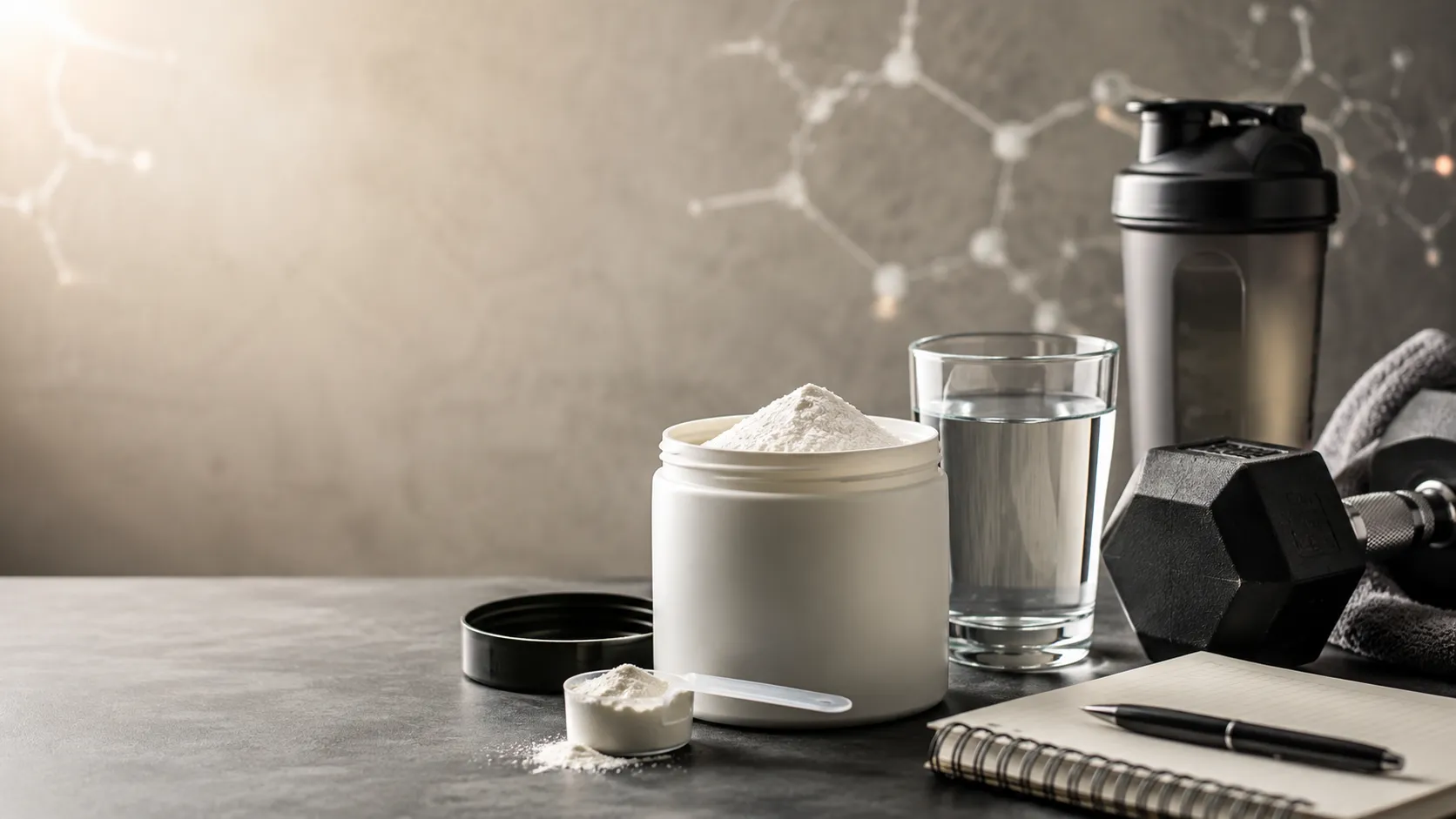
Few supplements have accumulated as much research as creatine — and few carry as much folklore. It is worth separating what is demonstrated from what is repeated at the gym.
What creatine is
Creatine is a compound produced naturally by the liver, kidneys and pancreas, and also obtained from meat and fish. It is stored in muscle as phosphocreatine and takes part in the rapid regeneration of ATP — the energy currency used in short, intense efforts.
In practice, more available phosphocreatine means more capacity to sustain hard sets before fatigue sets in.
What the evidence supports
Creatine monohydrate is one of the few supplements with a consistent, replicated effect:
- Strength and power: 5% to 15% gains in high-intensity, short-duration exercise
- Training volume: more repetitions at the same load, which over weeks means more stimulus
- Lean mass: an initial increase tied to intramuscular water retention, followed by real gain when resistance training is present
- Cognition: promising results under sleep deprivation and in high-demand tasks, still consolidating
Safety
In healthy people the safety record is robust: studies of continuous use for up to five years found no kidney or liver damage. The rise in serum creatinine seen in lab work is expected — it is a byproduct of creatine metabolism itself, not a sign of renal injury.
Conclusion
Creatine monohydrate, 3 to 5 g per day, is cheap, well studied and effective for anyone doing resistance training. It is not mandatory and it does not replace good nutrition — but among available supplements, it has the best ratio of evidence to cost.