Does Avocado Make You Gain Weight? Calories, Fat and Satiety
Avocado is higher in calories and fat than many fruits, but that does not mean it automatically causes weight gain. Learn how calories, unsaturated fats, portions and satiety fit together.
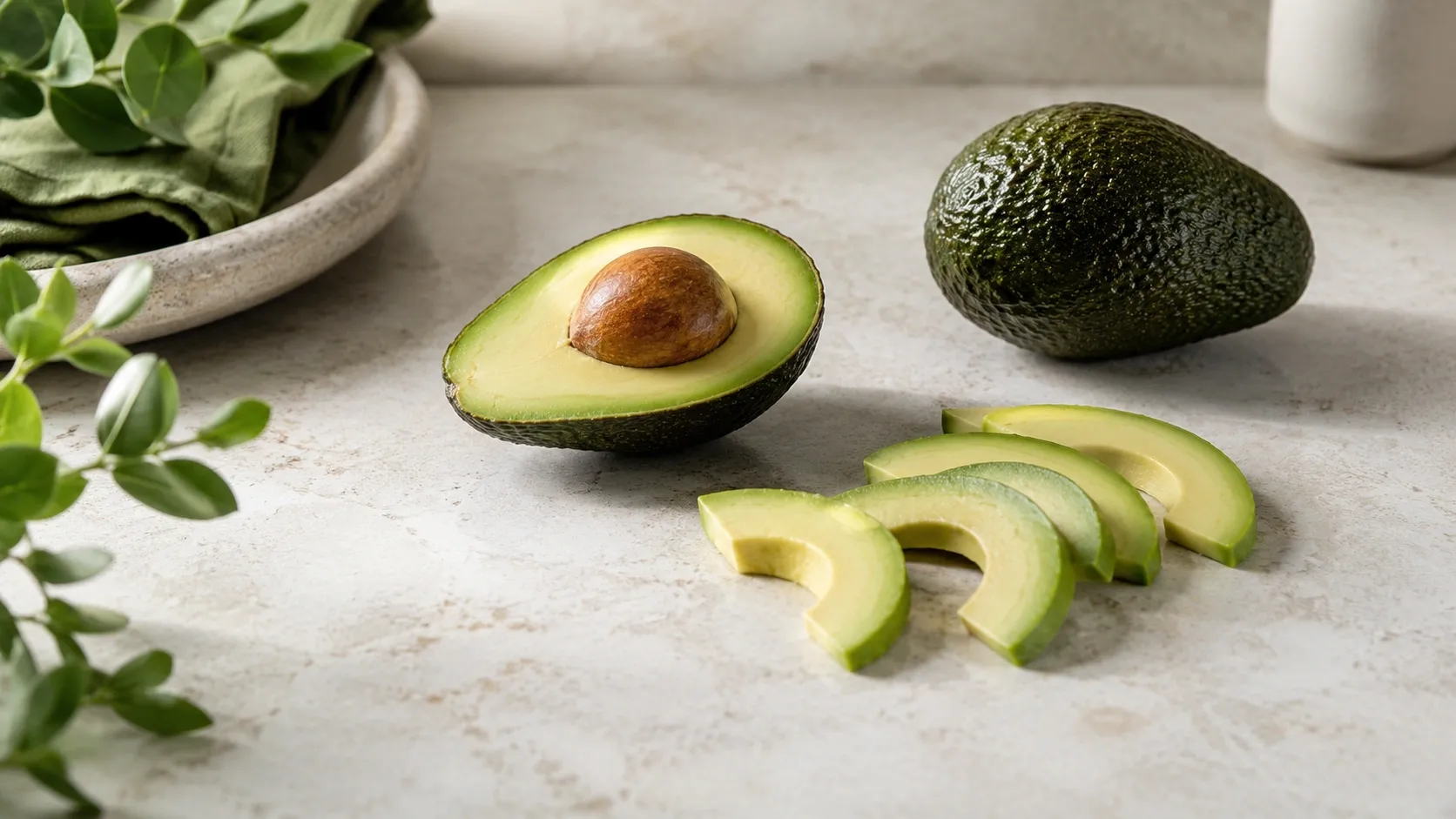
Avocado presents an apparent nutritional contradiction. It is commonly included in healthy eating patterns, yet many people avoid it because it is high in fat and therefore assumed to be “fattening.”
The short answer is that avocado does not automatically cause weight gain. It is more energy-dense than many fruits, but body weight is shaped by the overall diet and energy balance over time, within a complex system also influenced by biological, environmental, psychological and social factors. (WHO)
Clinical-trial reviews also do not show that adding avocado to a diet necessarily causes weight gain. (PubMed)
How many calories are in avocado?
There is no single number that applies to every avocado.
A Brazilian food-composition reference, TACO, reports the following for 100 g of raw avocado:
| Nutrient | Per 100 g |
|---|---|
| Energy | 96 kcal |
| Protein | 1.2 g |
| Total fat | 8.4 g |
| Carbohydrate | 6.0 g |
| Dietary fiber | 6.3 g |
Other varieties can be substantially more energy-dense.
Harvard’s Nutrition Source, for example, describes a medium avocado containing about 240 calories, 22 g of fat and 10 g of fiber. (Harvard T.H. Chan)
These figures are a useful reminder that “half an avocado” is not a precise nutritional measurement unless the variety and size are known.
Why is avocado higher in calories than many fruits?
Its macronutrient composition is unusual for a fruit.
Avocado contains considerably more fat than most fruits, with monounsaturated fat making up most of its fat content in common avocado references. (Harvard T.H. Chan)
The Brazilian TACO analysis reports approximately:
- 4.3 g monounsaturated fat;
- 1.4 g polyunsaturated fat;
- 2.3 g saturated fat
per 100 g of raw avocado.
So avocado really is a relatively fatty fruit. What does not follow is the assumption that dietary fat automatically becomes body fat.
Is avocado fat considered healthy?
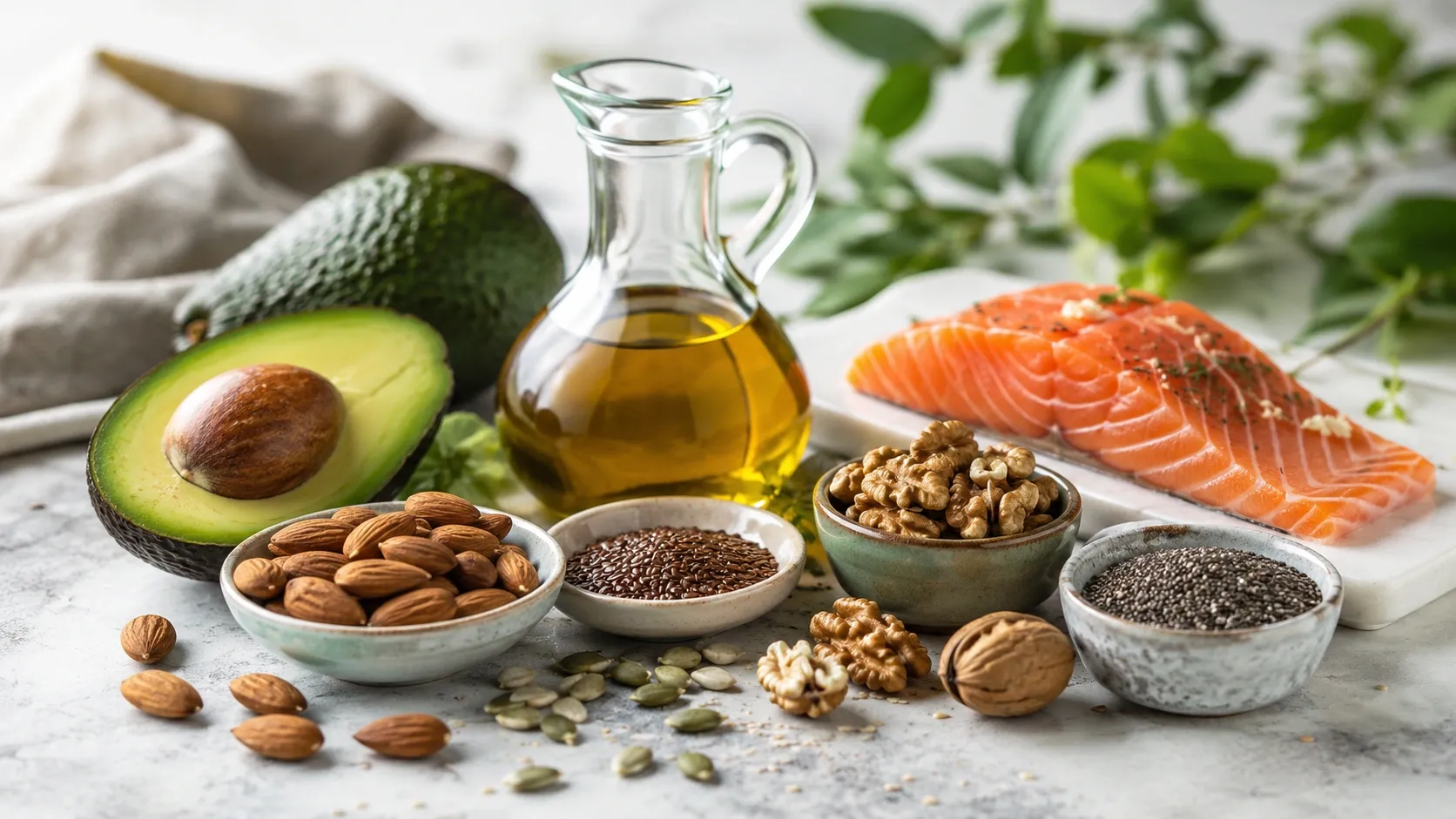
Most of it is unsaturated.
WHO guidance emphasizes that fat quality matters and specifically identifies avocado as a food containing unsaturated fat. Unsaturated fats are preferred over saturated and trans fats within a balanced diet. (WHO)
However, “healthy fat” does not mean “calorie-free.”
A food can provide useful nutrients and still make a meaningful contribution to daily energy intake.
Does eating fat make you fat?
Body-weight regulation is more complicated than blaming one macronutrient.
Sustained energy intake above energy expenditure favors weight gain, but WHO also describes obesity as a multifactorial condition affected by environmental, psychosocial, genetic and other influences. (WHO)
This is why a serving of avocado does not automatically become stored body fat simply because it contains dietary fat.
The overall eating pattern matters.
What does research show about avocado and body weight?
Available clinical evidence does not support the idea that avocado inevitably leads to weight gain.
A 2022 systematic review and meta-analysis of randomized controlled trials found no significant change in body weight from avocado consumption and reported that avocado intake did not promote weight gain in the available trials. (PubMed)
A later systematic review and meta-analysis published in the Journal of the Academy of Nutrition and Dietetics similarly concluded that avocado consumption did not negatively affect body weight. The authors also called for larger and better-designed studies. (PubMed)
That distinction matters: a food can be calorie-dense without necessarily causing weight gain when incorporated into the diet appropriately.
Does avocado cause weight loss?
The evidence is much less convincing for this claim.
Clinical-trial meta-analysis has not demonstrated a consistent, significant weight-loss effect that would justify describing avocado itself as a fat-burning or weight-loss food. (PubMed)
It may fit well into a weight-loss diet. It does not appear to make weight loss happen independently of the rest of the diet.
Can avocado make a meal more filling?
Possibly.
Avocado combines dietary fiber with fat, which changes the nutrient composition and eating experience of a meal.
In a randomized crossover trial, 31 adults with overweight or obesity consumed a control breakfast or calorie-matched meals in which some carbohydrate energy was replaced with half or a whole avocado. (PubMed)
Participants reported greater meal satisfaction after the avocado-containing meals. A whole-avocado meal also suppressed hunger more than the control meal at some points during the six-hour study period. Researchers observed changes in appetite-related hormones including PYY and GLP-1. (PubMed)
What the satiety study cannot tell us
A six-hour experiment cannot establish what will happen to someone’s body weight over months or years.
The sample was small, participants had overweight or obesity, and the study was funded by the Hass Avocado Board. These limitations mean its results should not be turned into a claim that avocado necessarily causes weight loss. (Hass Avocado Board)
A more reasonable conclusion is that avocado may improve satisfaction and short-term satiety in certain meals.
Fiber is part of the picture
The Brazilian TACO reference lists about 6.3 g of dietary fiber per 100 g of raw avocado.
WHO recommends that people over age 10 aim for at least 25 g of naturally occurring dietary fiber per day. Avocado can contribute to that total along with vegetables, legumes, whole grains, nuts and other fruits. (WHO)
This fiber content is one reason avocado differs nutritionally from consuming a concentrated added fat alone.
Can avocado fit into a weight-loss diet?
Yes.
The question is less about banning avocado and more about how it fits into total energy intake.
For someone managing calories, thinking in terms of replacement rather than addition can be useful. Using avocado instead of another calorie-containing ingredient is different from adding a large avocado serving on top of everything else already planned for the meal.
This follows the broader principle of maintaining an appropriate energy intake for weight management. (CDC)
How much avocado should you eat?
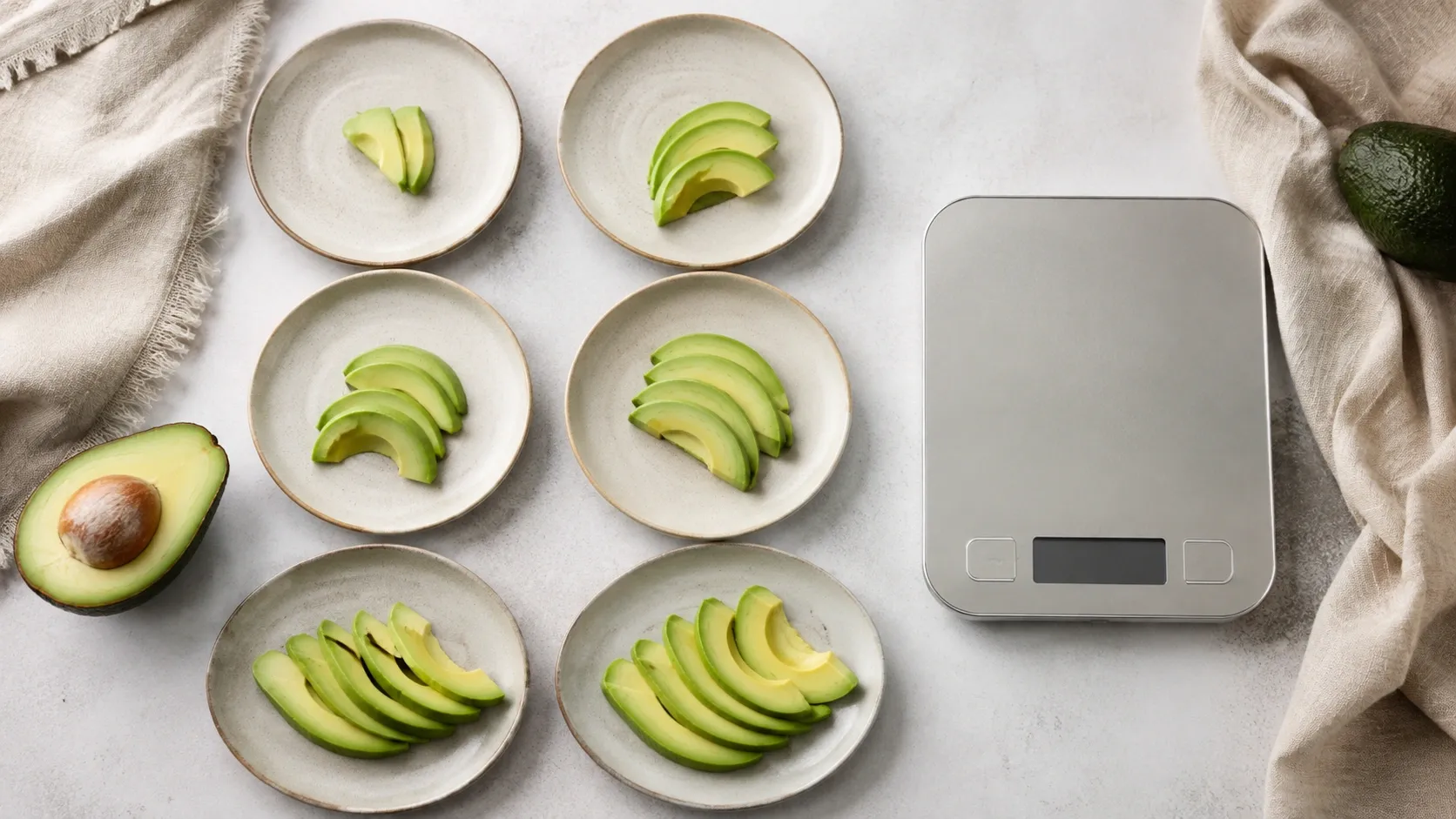
There is no scientifically established universal serving that every adult should eat each day.
Energy needs differ according to body size, activity level, health goals and many other factors. Avocado varieties also vary.
Using the TACO value simply as an example:
| Avocado amount | Approximate energy |
|---|---|
| 30 g | 29 kcal |
| 50 g | 48 kcal |
| 75 g | 72 kcal |
| 100 g | 96 kcal |
Calculations are based on the TACO value of 96 kcal per 100 g and should not be assumed to apply to every avocado cultivar.
Preparation also matters
The nutritional impact of eating avocado does not depend only on the fruit itself.
Plain avocado, avocado added to a vegetable-rich meal, and avocado used in a dessert with additional calorie-dense ingredients are different eating situations.
For weight management, the energy and nutrient content of the whole meal matters more than whether avocado appears on the ingredient list.
Should you avoid avocado because it is high in fat?
There is no nutritional reason for most people to avoid all dietary fat.
WHO describes fat as an essential nutrient and recommends emphasizing unsaturated-fat sources over saturated and trans fats. Avocado is among the foods listed as a source of unsaturated fat. (WHO)
Healthy eating therefore cannot be reduced to choosing whichever food has the fewest calories.
Adequacy, balance, moderation and dietary diversity all matter. (WHO)
Will eating avocado every day make you gain weight?
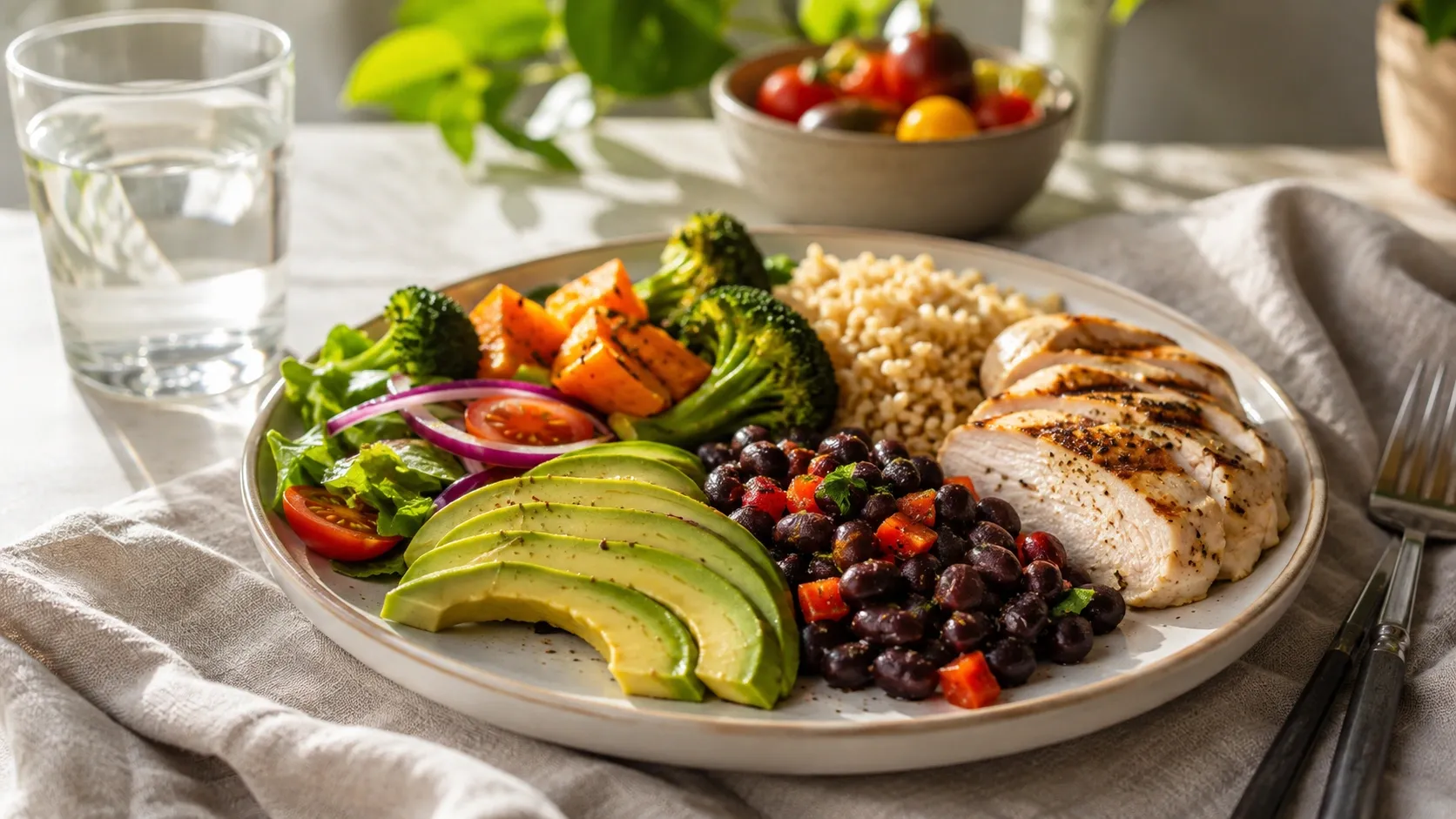
Not necessarily.
Systematic reviews of clinical trials do not show a consistent increase in body weight from avocado consumption. (PubMed)
That does not mean its calories disappear.
If a large avocado serving is added every day without replacing other energy and this produces a sustained calorie surplus, it can contribute to weight gain just as other calorie sources can. (WHO)
For another everyday source of unsaturated fat and how portions work there, see also:
Almonds: Nutrition Benefits and the Right Portion Size
Conclusion
Avocado does not need to be avoided because of fears that its fat automatically causes weight gain.
It is a relatively energy-dense fruit, but most of its fat is unsaturated and it also provides meaningful amounts of dietary fiber. (Harvard T.H. Chan)
The best available evidence does not show that avocado consumption necessarily causes weight gain. At the same time, evidence does not support presenting avocado as a food that independently produces weight loss. (PubMed)
The practical message is that portion size and dietary context matter more than labeling avocado as either “fattening” or “slimming.”