Peanuts: Benefits, Calories, and How Much to Eat
Peanuts provide protein, fiber, and mostly unsaturated fats, but they are calorie-dense. Learn their potential benefits, calorie content, and a practical serving size.
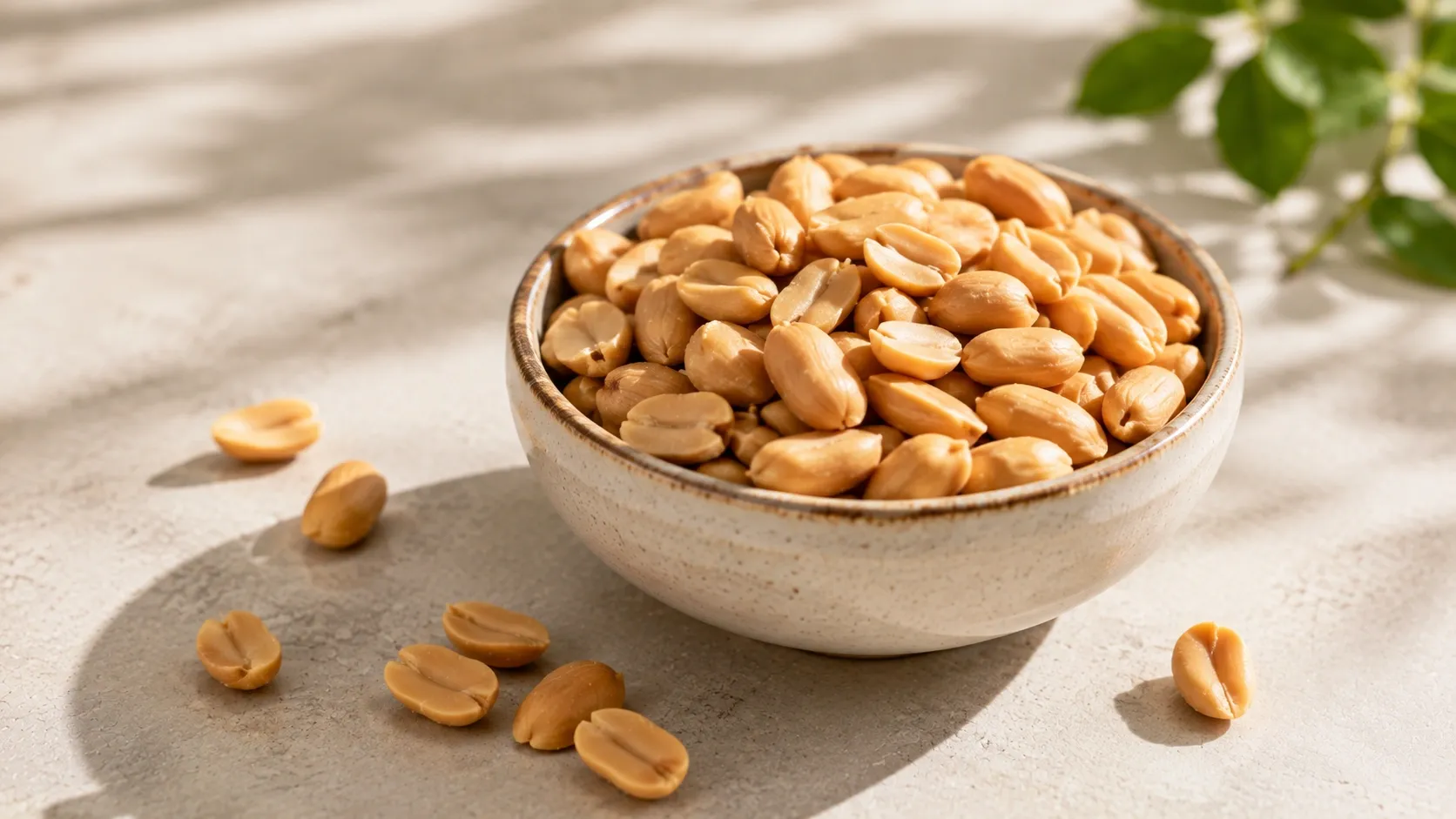
Affordable, versatile, and easy to add to snacks and meals, peanuts provide protein, fiber, predominantly unsaturated fats, and minerals. They are also highly energy-dense, making portion size an important part of the picture.
For most people without a peanut allergy, peanuts can fit comfortably into a balanced diet. Rather than asking whether peanuts simply “make you gain weight,” it is more useful to consider what they provide, how much you eat, and what they replace in your diet.
What nutrients do peanuts provide?
Although peanuts are commonly grouped with nuts in culinary settings, botanically they are legumes. The Brazilian TACO database classifies them under legumes and derivatives and documents a nutrient-dense profile.
Per 100 g, raw peanuts provide 544 kcal, 27.2 g of protein, 43.9 g of fat, 20.3 g of carbohydrate, and 8 g of dietary fiber in TACO. The database also lists 171 mg of magnesium per 100 g.
A normal snack portion, of course, is considerably smaller.
| Nutrient | Raw peanuts — 100 g | Raw peanuts — 30 g |
|---|---|---|
| Energy | 544 kcal | ~163 kcal |
| Protein | 27.2 g | ~8.2 g |
| Fat | 43.9 g | ~13.2 g |
| Carbohydrate | 20.3 g | ~6.1 g |
| Dietary fiber | 8.0 g | ~2.4 g |
Calculated from TACO’s values per 100 g.
Do roasted peanuts contain more calories?
They can have more calories per 100 g because processing and reduced moisture change nutrient concentration. In TACO, the tested roasted and salted peanut sample contains 606 kcal per 100 g, compared with 544 kcal for raw peanuts.
That works out to approximately 182 calories per 30 g for that roasted sample. Individual commercial products may differ, so package labeling is the best source for the exact product being eaten.
What are the potential benefits of peanuts?
Peanuts do not owe their nutritional value to one “superfood” compound. Their value comes from a combination of unsaturated fat, plant protein, fiber, and micronutrients. (Harvard T.H. Chan)
1. Most of their fat is unsaturated
Peanuts are high in fat, but most of that fat is unsaturated. TACO reports 17.2 g of monounsaturated fat and 16.2 g of polyunsaturated fat per 100 g of raw peanuts, compared with 8.7 g of saturated fat.
Harvard similarly describes peanuts as providing mostly mono- and polyunsaturated fats. (Harvard T.H. Chan)
That does not mean larger quantities are automatically better. Fat is energy-dense, so portions still matter.
2. They provide meaningful plant protein
With 27.2 g of protein per 100 g in TACO, peanuts can contribute significantly to plant-protein intake. A 30 g serving contains about 8.2 g.
This can make peanuts useful as part of a snack or meal, particularly when they replace foods with little nutritional value. People with specific protein requirements, however, should consider their overall dietary pattern rather than relying on peanuts alone.
3. Peanuts also contain fiber
TACO reports 8 g of dietary fiber per 100 g of raw peanuts, equal to about 2.4 g in a 30 g serving.
The combination of fat, protein, fiber, and the physical structure of nuts is among the mechanisms researchers have investigated to explain why their calories do not necessarily translate directly into higher body weight. Studies suggest that partial energy compensation may occur after consuming nuts and peanuts, although the response varies. (PubMed)
4. They may support a heart-healthy eating pattern
Observational research has associated greater nut intake, including peanuts, with lower incidence of several cardiovascular outcomes. Because these studies observe associations, they cannot establish that peanuts alone caused the reduced risk. (PubMed)
Evidence from peanut-specific interventions is more measured. A 2022 meta-analysis reported lower triglycerides with regular peanut consumption, while effects on other cardiovascular risk markers were less consistent. (PubMed)
Do peanuts make you gain weight?
Peanuts are calorie-dense, but calorie-dense does not mean they automatically cause weight gain.
A systematic review and meta-analysis of 55 nut-feeding trials found no meaningful increase in body weight, BMI, or waist circumference when nuts were incorporated into the diet. (PubMed)
Another systematic review involving tree nuts and peanuts found evidence for energy compensation, meaning some of the calories consumed may be offset by reduced subsequent food intake. The effect is variable and does not make peanut calories disappear. (PubMed)
A peanut-specific meta-analysis also adds an important caveat: participants at high cardiometabolic risk experienced a small increase in body weight with peanut interventions, particularly at higher doses, although body fat and BMI did not increase significantly. (PubMed)
For weight management, using peanuts instead of another snack is therefore generally more relevant than simply adding them to the diet.
How many peanuts should you eat?
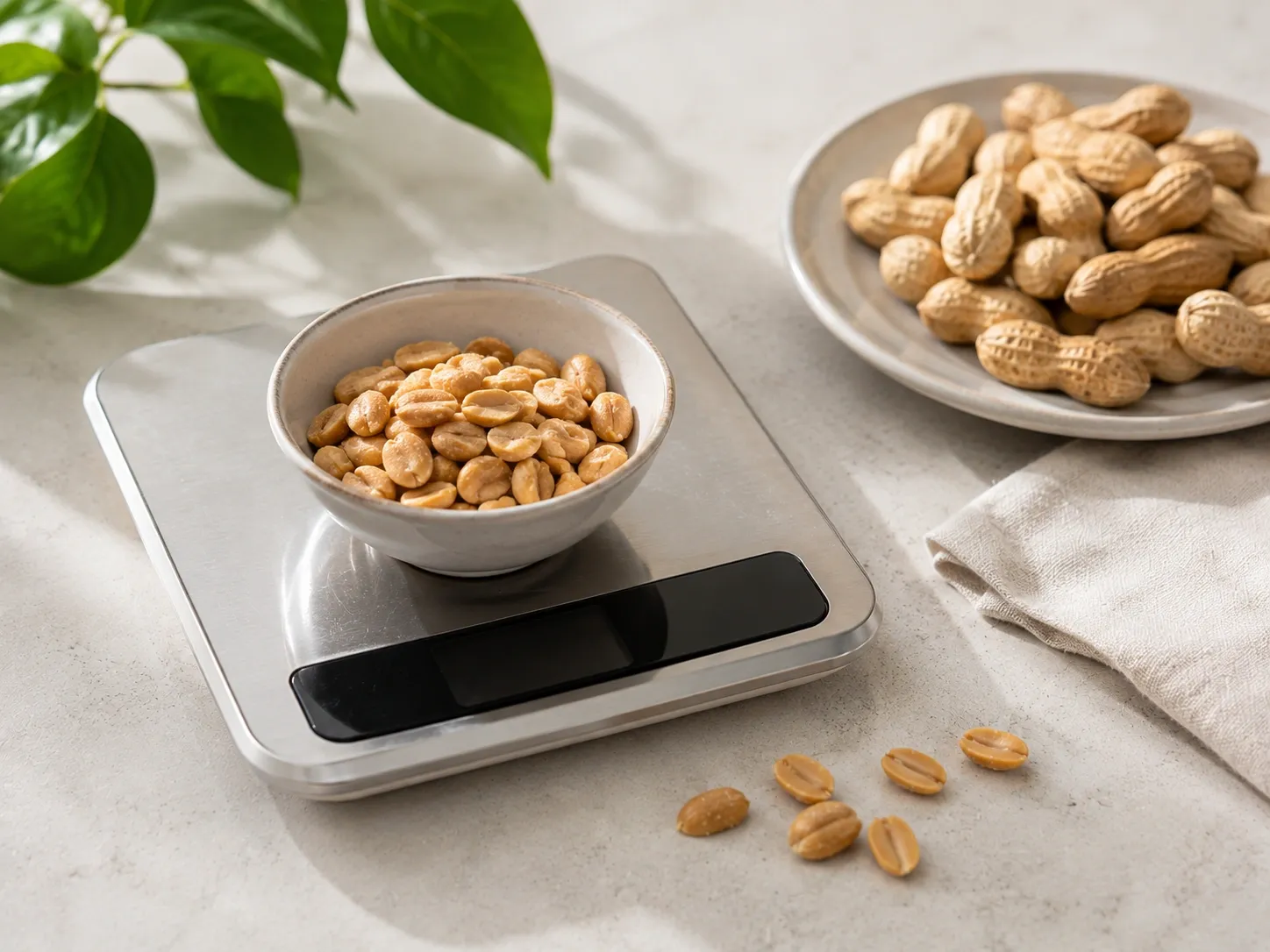
There is no universal recommendation requiring everyone to eat a specific quantity of peanuts each day.
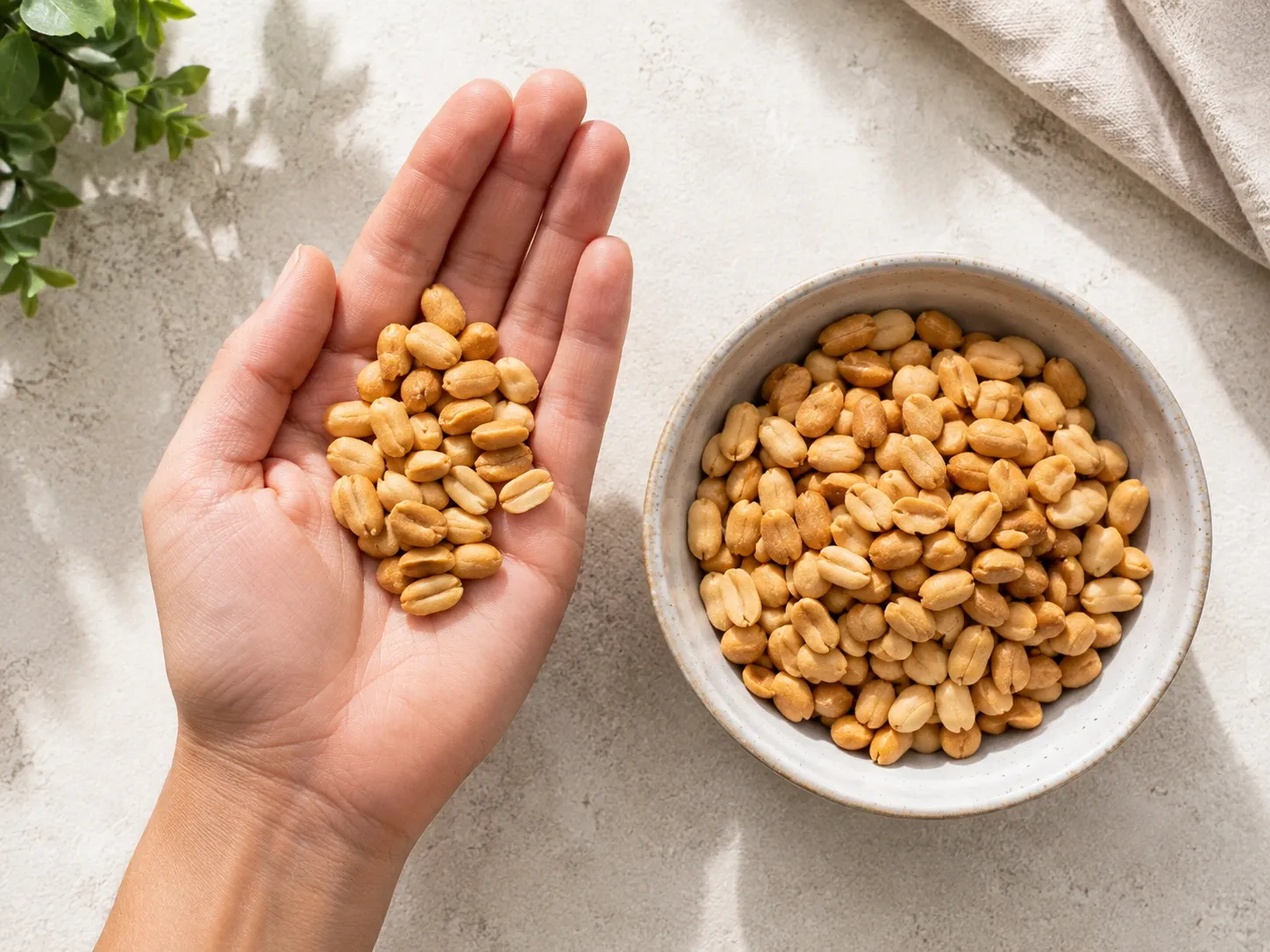
As a practical reference, around 30 g — roughly a small handful — works well as a serving in many situations. The FDA uses 30 g as the reference amount for labeling nuts, seeds, and mixtures, including peanuts. This is a labeling standard rather than an individualized daily requirement.
| Amount of raw peanuts | Approximate energy |
|---|---|
| 15 g | 82 kcal |
| 30 g | 163 kcal |
| 50 g | 272 kcal |
| 100 g | 544 kcal |
Calculations are based on TACO’s value of 544 kcal per 100 g.
Someone with lower energy needs might prefer 15–20 g as an addition to a meal, while 30 g or more can fit other dietary patterns. The appropriate amount depends on the rest of the diet.
What type of peanuts should you choose?
For regular consumption, products with a simple ingredient list are generally the easiest to evaluate.
Practical choices include:
- dry-roasted unsalted peanuts;
- lightly salted peanuts;
- peanuts without sugar or sweet coatings;
- peanut butter made predominantly from peanuts.
Harvard advises paying attention to added sugar and hydrogenated oils in peanut butter and highlights dry-roasted options without added sugars. (Harvard T.H. Chan)
Salted peanuts do not necessarily need to be avoided, but people limiting sodium intake should check the label because added sodium can vary substantially among products.
What about peanut butter?
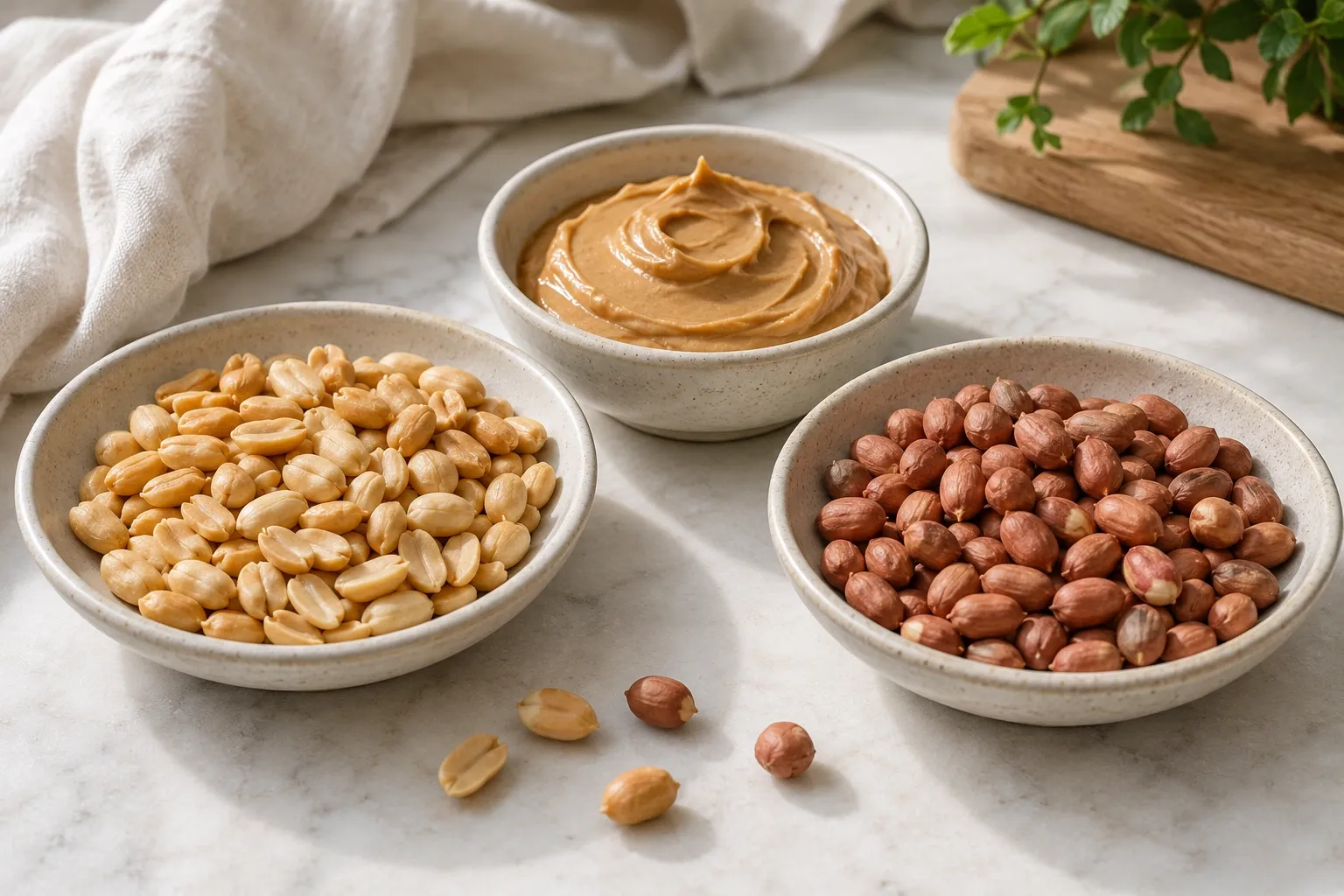
Peanut butter can be convenient, but it is easy to consume a larger amount than intended.
For nut and seed butters, the FDA uses two tablespoons as its labeling reference amount. The actual gram weight and calorie content should be checked on the specific product label.
A short ingredient list can make comparison easier. Products with considerable added sugar, coatings, or other fats may have a nutritional profile quite different from plain peanuts.
Who needs to be careful with peanuts?
The most important contraindication is peanut allergy.
The FDA lists peanuts among the major food allergens and notes that allergic reactions can range from hives and swelling to potentially life-threatening anaphylaxis. People with diagnosed peanut allergy should avoid peanuts according to their medical management plan and carefully read food labels. (FDA)
For a comparison with the most studied nut on the shelf:
Almonds: Nutrition Benefits and the Right Portion Size
Conclusion
Peanuts are nutrient-dense foods that provide protein, fiber, predominantly unsaturated fats, and minerals, but they also contain substantial calories. A 30 g serving of raw peanuts provides about 163 calories, while roasted preparations may contain more per equal weight.
For people without peanut allergy, a modest portion can fit well within a balanced diet, especially when it replaces a less nutritious snack. The right amount depends on individual energy needs and the overall dietary pattern.