Apples: What Do They Really Offer for Health?
Apples provide fiber and polyphenols and can be part of a healthy diet. Learn what research actually shows about cholesterol, diabetes, satiety, gut health, and other potential benefits.
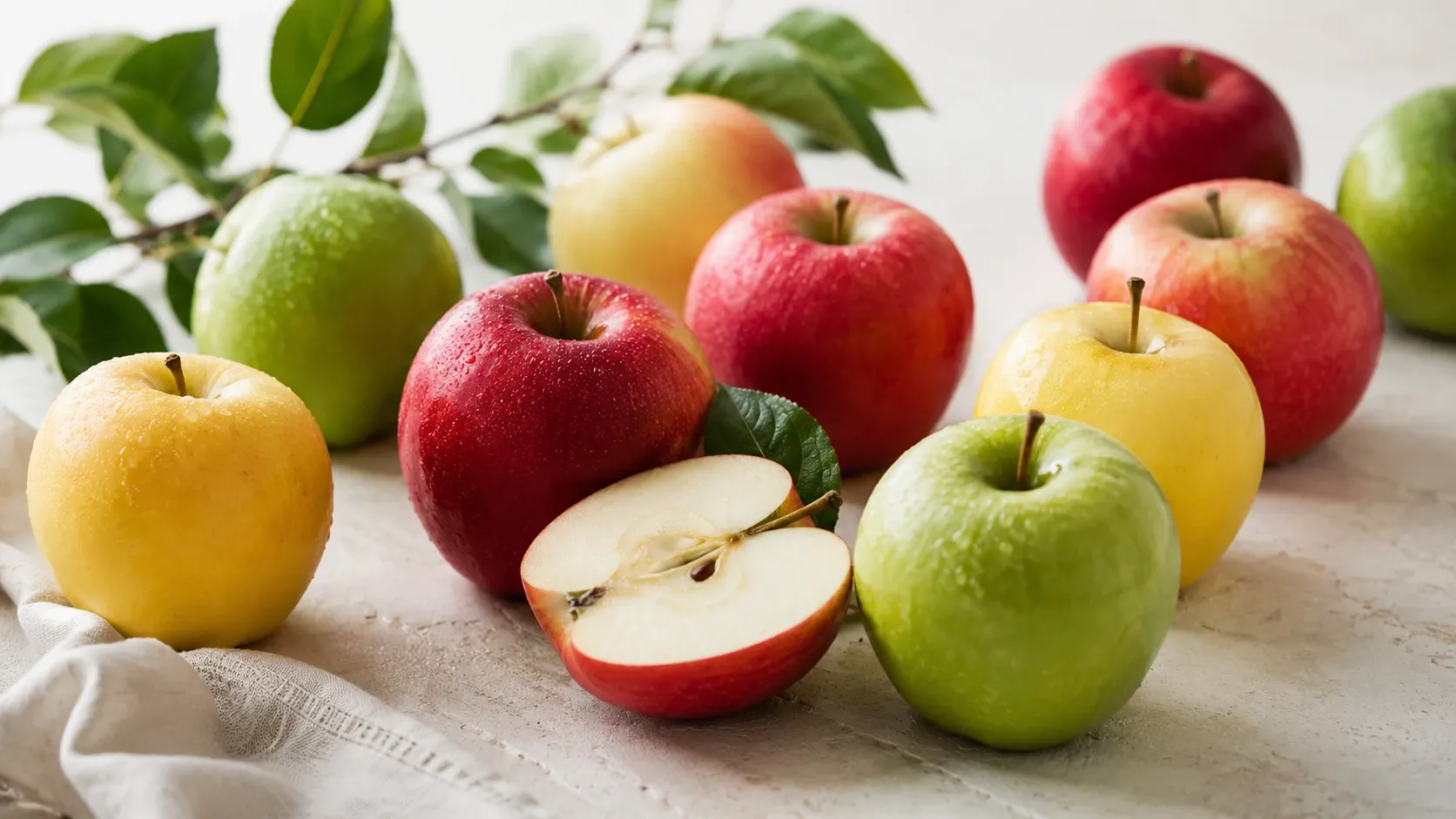
Few foods have a healthier reputation than apples. The familiar saying that “an apple a day keeps the doctor away,” however, goes further than the scientific evidence can support.
Apples are genuinely nutritious. They provide fiber, water and several plant compounds and can contribute to a high-quality diet. That is different from saying that an apple can independently prevent disease. A 2026 systematic review of human intervention studies found several promising effects but concluded that substantial differences between studies still prevent definitive conclusions about many apple-specific health outcomes. (Royal Society of Chemistry)
What is in an apple?
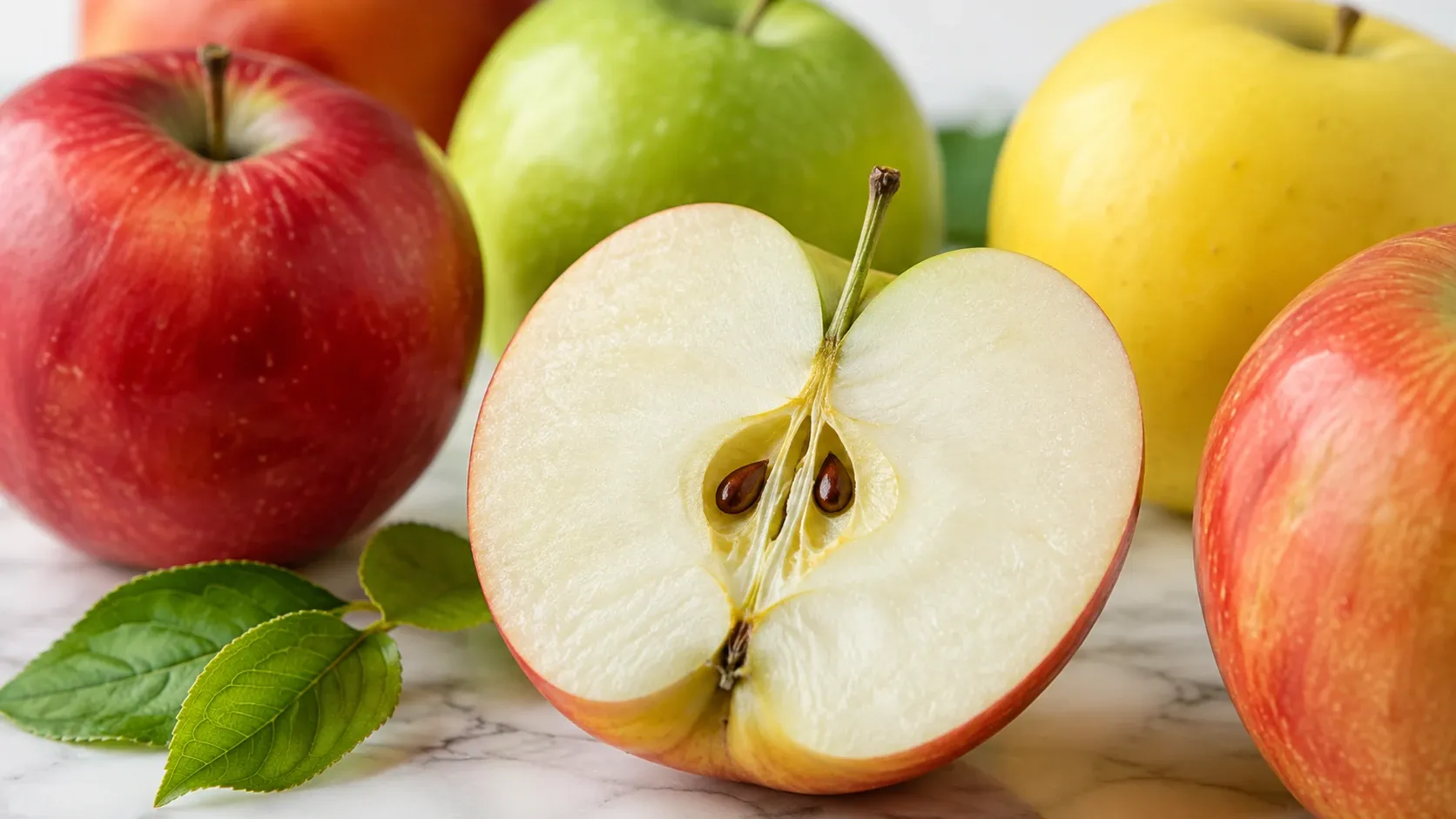
One medium apple provides approximately:
| Nutrient | Approximate amount |
|---|---|
| Energy | 95 kcal |
| Carbohydrate | 25 g |
| Naturally occurring sugars | 19 g |
| Fiber | 3 g |
| Fat | ~0 g |
| Protein | ~1 g |
Exact values vary with apple size and cultivar. Apples also provide vitamin C and phytochemicals such as quercetin, catechins, chlorogenic acid and, in some varieties, anthocyanins. (The Nutrition Source)
Their value comes from the whole food matrix, including fiber and diverse bioactive compounds, rather than from one “super nutrient.”
Fiber is one of the apple’s most useful features
Apples contain both soluble and insoluble fiber. One component is pectin, a soluble fiber that can be fermented by microorganisms in the colon. (The Nutrition Source)
This is one reason apples have been investigated in relation to satiety, lipid metabolism, glucose responses and the gut microbiome.
One apple does not provide all the fiber a person needs, however. It is better considered one fiber source among vegetables, legumes, whole grains, nuts, seeds and other fruits.
What about apple polyphenols?
Apples contain a range of phenolic compounds, including quercetin, catechins and chlorogenic acid. The amount varies by cultivar and by the part of the fruit being analyzed. (The Nutrition Source)
These compounds are often described as antioxidants, but laboratory antioxidant activity should not be confused with proof that a food prevents a particular disease in humans.
The 2026 systematic review found potentially favorable changes in some antioxidant and vascular markers, but also emphasized substantial heterogeneity across human intervention studies. (Life Science Network)
Are apples good for the heart?
Cardiometabolic health is among the better-studied areas of apple research.
In a randomized crossover trial, 40 adults with mildly elevated cholesterol consumed two whole apples per day — approximately 340 g of apple without the core — for eight weeks. Compared with a sugar- and calorie-matched control beverage, whole apples modestly reduced total and LDL cholesterol and improved a measure of microvascular function. They did not significantly reduce blood pressure. (PubMed)
This is interesting evidence, but it remains one relatively small trial using a particular apple cultivar.
Broader systematic reviews show that effects on cholesterol, glucose, blood pressure and other cardiometabolic markers are not completely consistent across studies. (PubMed)
What about apples and diabetes?
A medium apple contains roughly 19 g of naturally occurring sugars, but looking only at that number ignores the physical structure of the food. Whole apples also contain water, fiber and an intact cellular matrix. (The Nutrition Source)
A meta-analysis of prospective cohort studies found that greater apple and pear consumption was associated with a lower risk of developing type 2 diabetes. Because those studies were observational, they cannot demonstrate that apples themselves caused the lower risk. (PubMed)
Prevention and treatment are also different questions. People who already have diabetes need to consider total dietary intake, medication, activity and their individual glucose response.
The presence of natural sugar therefore does not make apples a forbidden food, but neither should apples be presented as a diabetes treatment.
Can apples help with weight management?
No fruit automatically causes fat loss.
Apples may be useful because of their volume, water, texture and fiber, all of which can influence fullness.
In a controlled study comparing whole apple, applesauce and apple juice consumed before a meal, the whole fruit produced greater satiety and was associated with lower subsequent energy intake. (PubMed)
This illustrates why food structure matters.
Longer-term studies, however, have not produced sufficiently consistent weight outcomes to describe apples as a weight-loss food. (PubMed)
A more practical approach is to use whole fruit as part of a snack or meal and, when appropriate, as an alternative to foods that are more energy-dense and less filling.
Whole apple, applesauce or juice?

They are not identical.
| Form | Fiber and structure | Satiety | Practical context |
|---|---|---|---|
| Whole apple | Structure and more fiber preserved | Higher | Generally preferable |
| Applesauce | Structure partially disrupted | Intermediate | Fiber depends on preparation |
| Apple juice | Little fiber, especially when filtered | Lower | Easy to consume quickly |
Whole apples have produced greater fullness than applesauce or juice in controlled experiments. Harvard also notes that clear apple juice loses most of its fiber and many flavonoids during filtration and processing. (PubMed)
An occasional glass of juice is not inherently harmful. It simply does not reproduce all the nutritional and physical properties of eating the whole fruit.
Should you eat the apple skin?
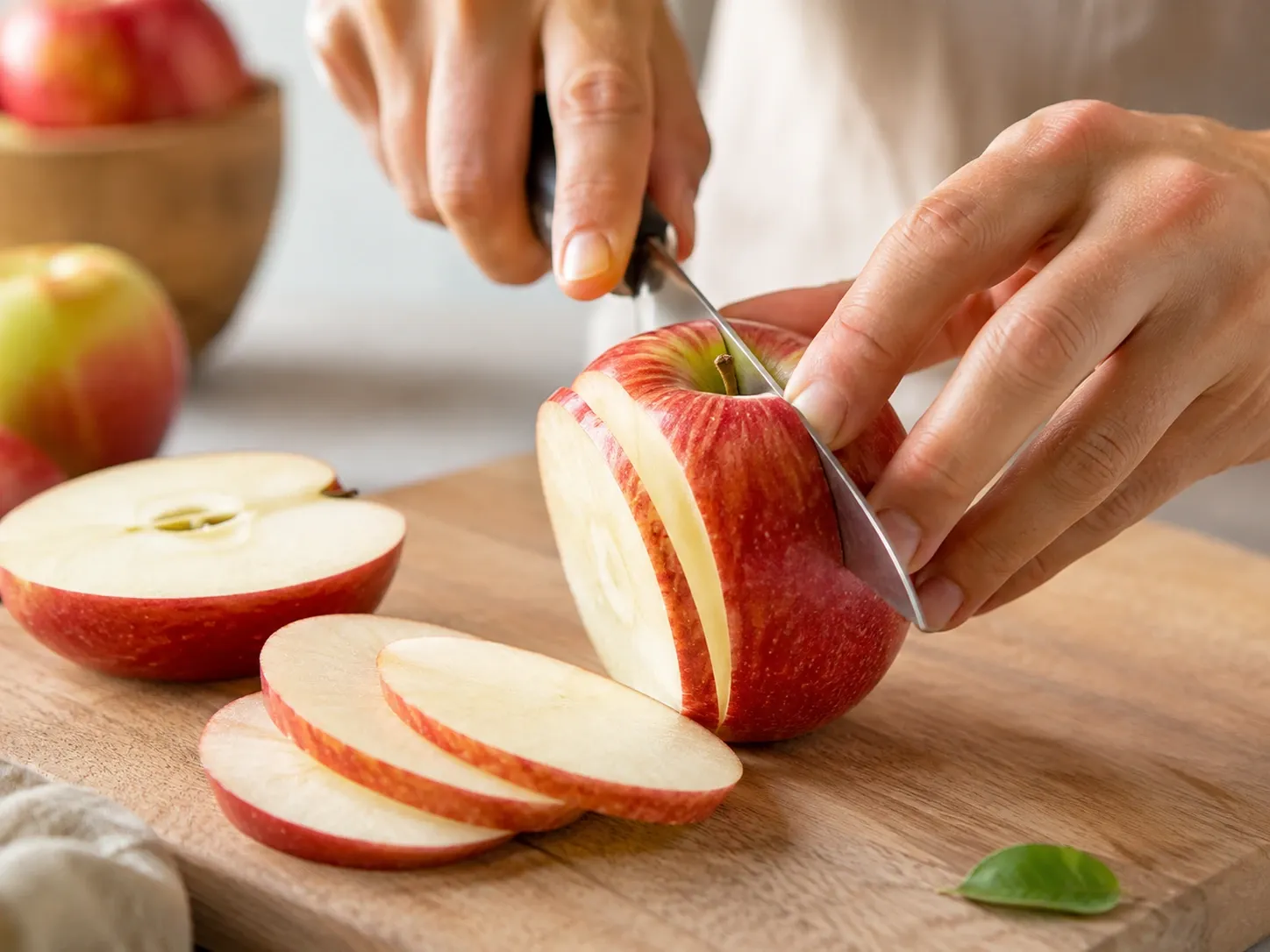
If you like and tolerate it, generally yes.
Removing the peel eliminates a meaningful amount of fiber and most of the apple’s flavonoids. (The Nutrition Source)
Fresh apples should be washed before eating. FDA food-safety guidance recommends thoroughly rinsing fresh produce under running water and does not recommend washing fruits with soap or detergent. (FDA)
There is therefore little reason to peel an apple simply because the flesh is assumed to be healthier.
Apples and the gut microbiome
This is a promising but still developing area.
Pectin and other apple components interact with microorganisms in the intestine. The 2026 systematic review found that some medium- and long-term intervention studies reported apparently favorable changes in gut microbiota composition. (Life Science Network)
However, the interventions and analytical methods differed substantially. The researchers concluded that current evidence is not sufficient to establish exactly which apple products, amounts or bioactive compounds would reliably produce clinically meaningful gut benefits. (Life Science Network)
Claims that apples simply “feed good bacteria” therefore leave out much of the scientific uncertainty.
Do apples prevent cancer?
There is not enough evidence to claim that eating apples specifically prevents cancer.
Observational studies have reported associations between fruit intake and lower risks of some cancers, but apple-specific findings are inconsistent and may be influenced by other dietary and lifestyle factors. Harvard similarly notes that results in humans differ according to cancer type and study design. (The Nutrition Source)
It is more appropriate to view apples as one of many plant foods that can contribute to a high-quality dietary pattern rather than as an “anticancer food.”
Is one apple variety healthier than another?
Fuji, Gala, Granny Smith and other cultivars differ in flavor, texture, acidity and phytochemical composition.
That does not make it possible to identify one universal winner.
Polyphenol profiles vary by cultivar, and many clinical studies use specific varieties. Current research does not provide a strong basis for recommending one cultivar as categorically superior for disease prevention. (The Nutrition Source)
Choosing fruits you enjoy and varying your overall fruit intake matters more.
Do you need one apple every day?
There is no scientific requirement that everyone eat exactly one apple per day.
The value of the famous saying is probably closer to its encouragement of a regular fruit habit than to anything unique about the number one.
Brazil’s Dietary Guidelines recommend making unprocessed or minimally processed foods the basis of the diet and specifically include fresh fruits as useful options for meals and snacks. (Serviços e Informações do Brasil)
Apples can therefore be eaten regularly without needing to displace bananas, oranges, berries, pears, mangoes or any other fruit.
What do apples genuinely offer?
Removing the hype leaves a useful picture:
- apples provide fiber and several polyphenols; (The Nutrition Source)
- eating the whole fruit can support satiety; (PubMed)
- clinical research suggests potential improvements in some cardiovascular markers; (PubMed)
- observational research links apple intake with favorable health outcomes but does not prove cause and effect; (PubMed)
- gut microbiome findings are promising but not yet definitive; (Life Science Network)
- apples should not be considered medicine, a cancer-prevention strategy or a standalone weight-loss solution.
Conclusion
Apples do not need extraordinary claims to be worthwhile.
They are convenient, provide fiber and plant compounds, and can contribute to satiety and dietary variety. Some clinical trials have found improvements in cardiovascular markers, while observational studies report favorable associations with several health outcomes. At the same time, the latest systematic review of human interventions emphasizes that the evidence remains heterogeneous and insufficient for many definitive apple-specific claims. (PubMed)
For most people, the practical message is straightforward: eating a whole apple, preferably with the skin when practical, is a convenient way to include more fruit and fiber in the diet. Not because apples have a unique ability to keep disease away, but because healthy dietary patterns are built from foods like them.