Mango: Sugar, Nutrients and Health Benefits
Mango is naturally sweet, but it also provides vitamin C, fiber and other nutrients. Learn how much sugar it contains and what research says about its health effects.
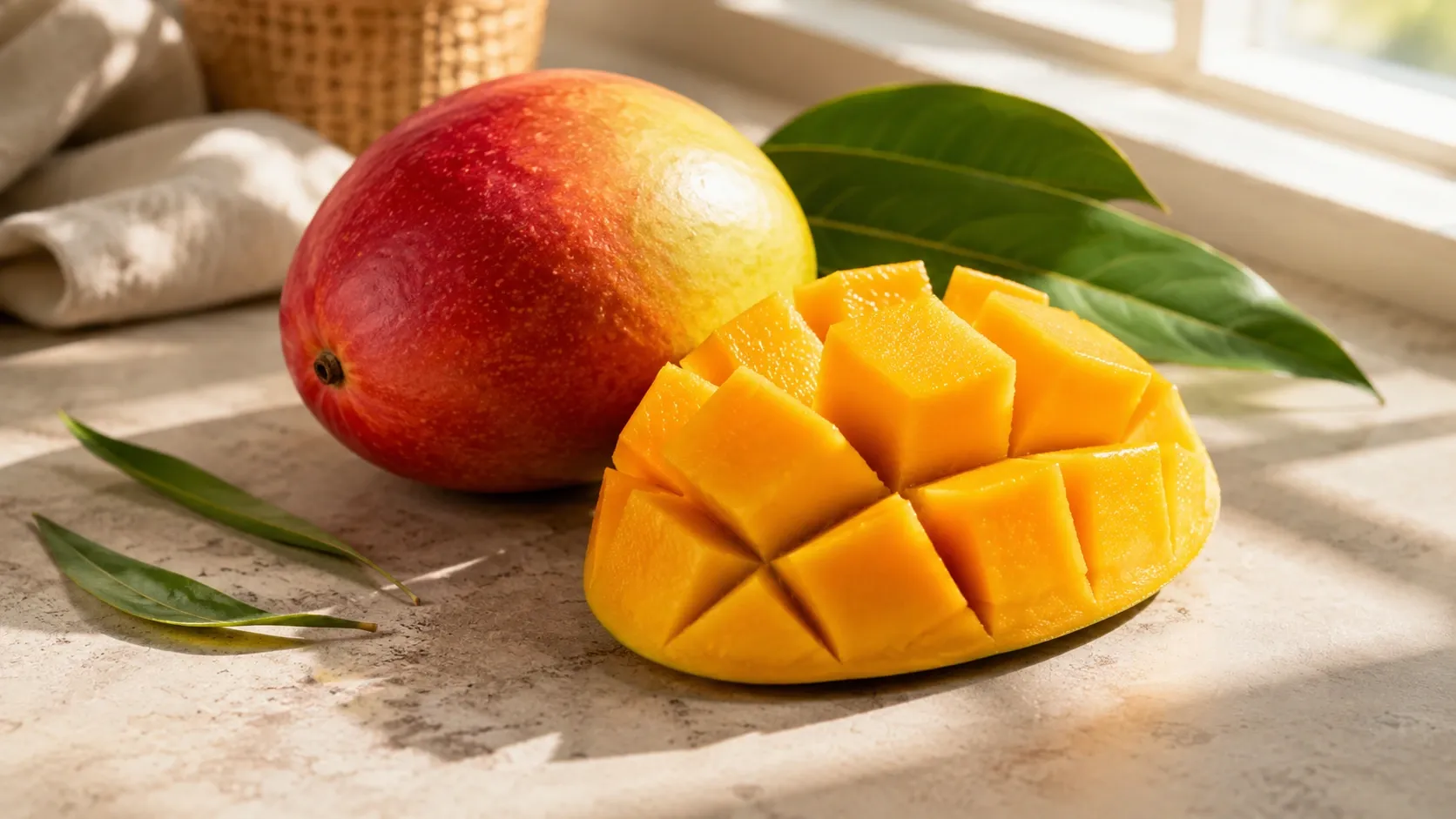
Ripe mango is aromatic, intensely sweet and often judged by one number before anything else: its sugar content.
Mango does indeed contain a meaningful amount of naturally occurring sugars. That does not make it nutritionally equivalent to candy, soft drinks or other foods containing added sugar.
Whole mango also provides water, fiber, vitamin C, folate, carotenoids and several phytochemicals. Its nutritional value therefore makes more sense when the fruit is considered as a complete food rather than as a package of sugar.
How much sugar is in mango?
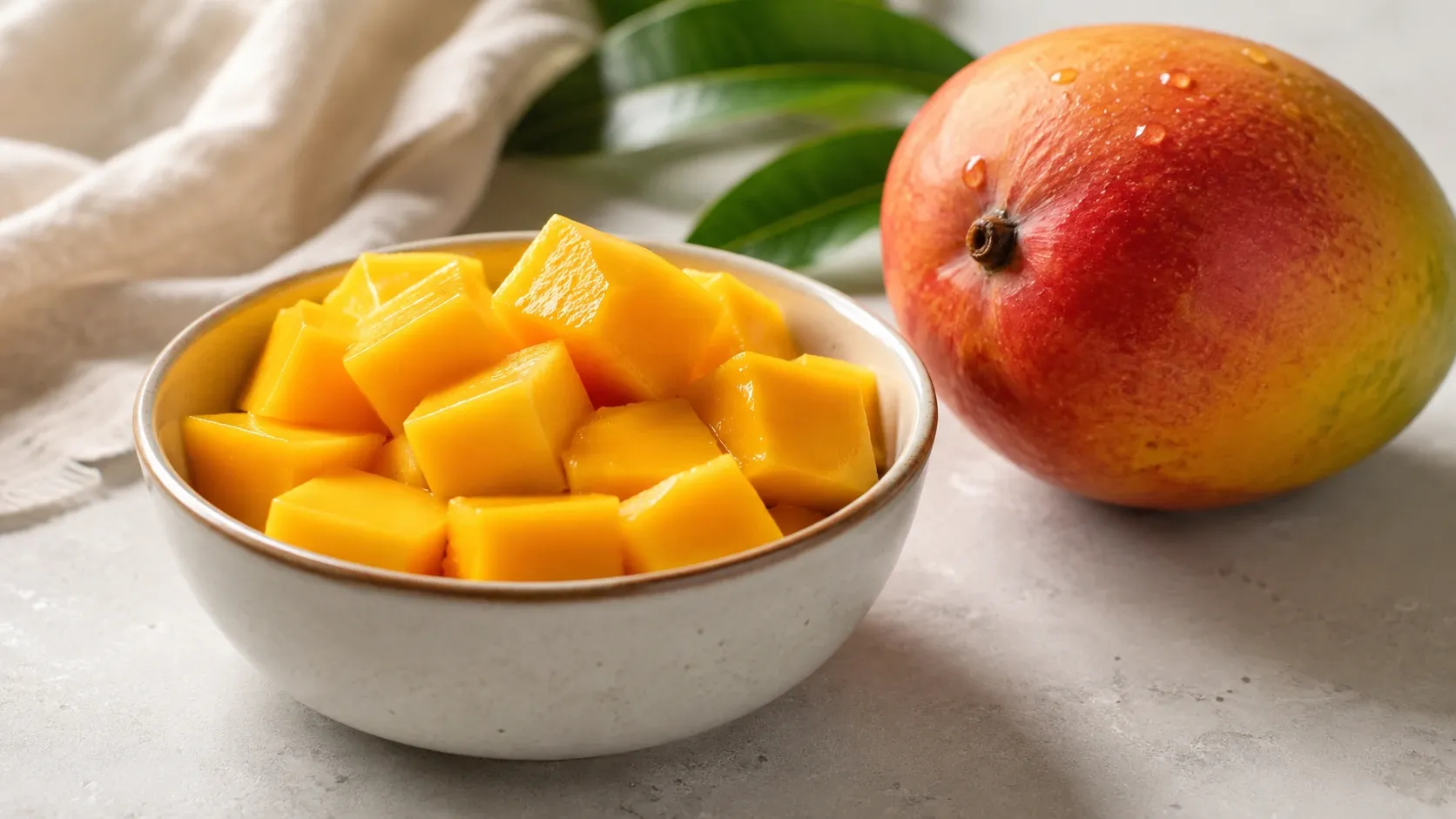
USDA composition data indicate that 100 g of raw mango contains approximately 13.7 g of total sugars, around 15 g of carbohydrate and about 60 kcal.
A simplified nutrition profile looks like this:
| Nutrient | Approximate amount per 100 g |
|---|---|
| Energy | 60 kcal |
| Carbohydrate | 15.0 g |
| Total sugars | 13.7 g |
| Fiber | 1.6 g |
| Protein | 0.8 g |
| Vitamin C | 36.4 mg |
| Folate | 43 µg |
| Potassium | 168 mg |
| Vitamin A | 54 µg RAE |
These values are references rather than an exact description of every mango. Variety, ripeness and growing conditions can affect food composition.
Is mango sugar the same as added sugar?
Mango naturally contains sugars including sucrose, fructose and glucose.
Chemically, these molecules are not unique to fruit. Nutritionally, however, the food matrix in which they are consumed matters.
Whole mango provides water, fiber and micronutrients together with its sugars. This is very different from many foods and drinks in which large amounts of sugar are added without the same whole-food structure.
WHO guidance reflects this distinction. Its definition of free sugars includes sugars added to foods and drinks as well as sugars naturally present in honey, syrups, fruit juices and fruit juice concentrates. The recommendation does not target sugars naturally present in whole fresh fruits and vegetables. (WHO)
What nutrients does mango provide?
Mango supplies more than carbohydrate.
Its nutritional profile includes vitamin C, folate, carotenoids, fiber and smaller amounts of several minerals.
Vitamin C
About 100 g of mango provides roughly 36.4 mg of vitamin C.
Vitamin C is required for normal collagen synthesis, has antioxidant functions, contributes to normal immune activity and improves absorption of nonheme iron from plant foods. (ODS)
Folate
Raw mango also provides folate, a B vitamin needed for DNA production and normal cell division. USDA data list approximately 43 µg per 100 g.
Carotenoids and polyphenols
Mango contains carotenoids as well as a range of phenolic compounds.
These phytochemicals are the subject of research into oxidative stress, inflammation and metabolic health. However, demonstrating biological activity in laboratory studies is not the same as proving that eating mango prevents or treats disease in humans. (PubMed)
Is mango actually good for health?
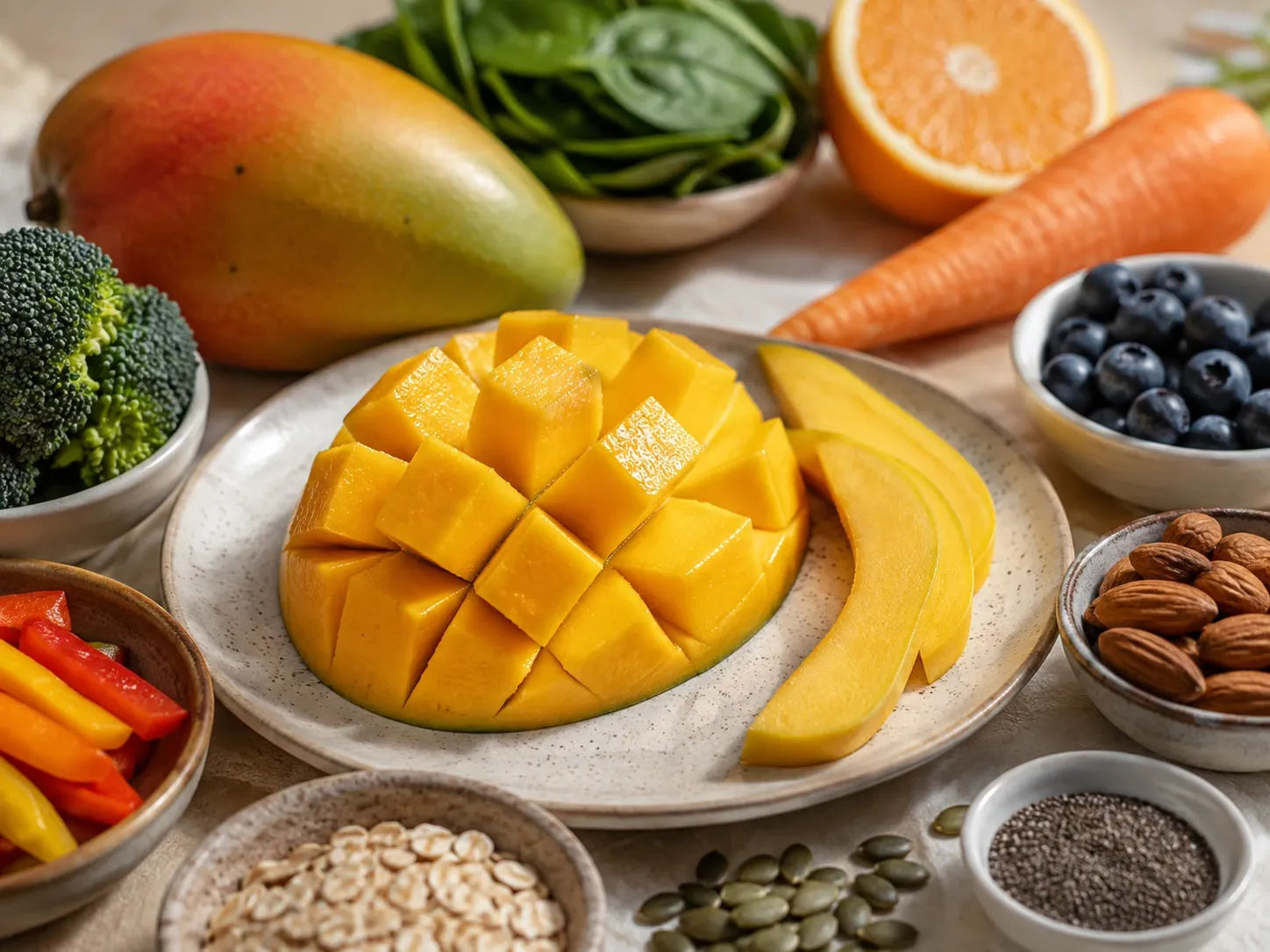
The most defensible answer is that mango is a nutritious whole fruit that can contribute to a healthy dietary pattern.
WHO recommends that carbohydrate intake come primarily from whole grains, vegetables, fruits and pulses. Mango fits naturally within that broader recommendation. (WHO IRIS)
Claims that mango itself prevents diabetes, cardiovascular disease or other conditions require a much higher level of evidence.
A 2025 review found a growing number of human studies reporting potentially favorable outcomes related to glycemic control, oxidative stress, gut health and cardiometabolic markers. The overall clinical literature, however, remains relatively small. (PubMed)
What does mango do to blood sugar?
Because mango tastes sweet, it is easy to assume that it must necessarily have an unfavorable effect on glucose regulation.
The current research is more nuanced.
In a 2025 randomized study, adults with prediabetes consumed approximately 300 g of mango per day or an isocaloric granola-bar control for 24 weeks. Some measures of fasting glucose and insulin sensitivity favored the mango group. (PubMed)
The study was small: only 23 participants completed it. It was also funded by the National Mango Board. These factors do not make the findings invalid, but they make replication in larger, independent trials especially important. (PubMed)
Another 2025 trial involving 48 adults with overweight or obesity and chronic low-grade inflammation reported improvements in insulin-related measures after four weeks, although fasting glucose and inflammatory markers did not significantly improve. (PubMed)
The evidence therefore does not justify saying that mango lowers blood sugar.
It suggests instead that a sweet whole fruit can fit into a metabolically healthy eating pattern, and that mango-specific effects deserve further investigation.
Can people with diabetes eat mango?
For many people, yes.
Diabetes management does not automatically require eliminating every sweet-tasting fruit. Carbohydrate quantity, portion size, medications, meal composition and an individual’s glucose response are important.
Whole mango should also be distinguished from mango nectar, sweetened juice, ice cream, desserts and other products that may contain substantial amounts of added sugar.
Does mango cause weight gain?
Calling a fruit “fattening” simply because it tastes sweet oversimplifies nutrition.
Raw mango provides about 60 kcal per 100 g. It therefore contributes energy, but it can fit comfortably into balanced eating patterns.
The more useful question is not whether mango contains calories, but how much is eaten and how it fits into total energy intake and overall food quality.
There is no general need to avoid mango during weight management simply because its natural sugar content is higher than that of some other fruits.
Whole mango or mango juice?
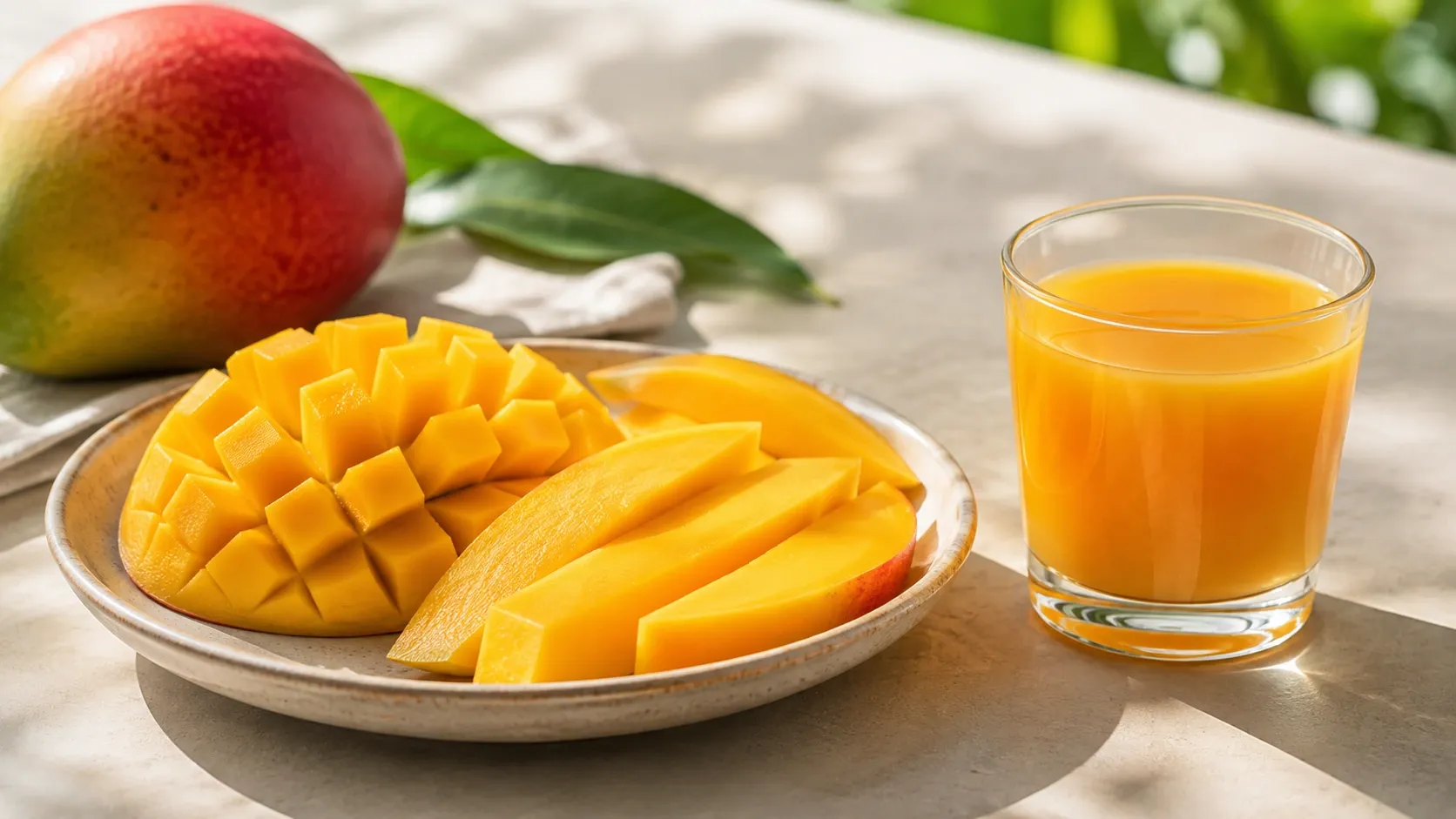
For everyday fruit intake, whole mango has important advantages.
WHO includes sugars naturally present in fruit juice within the definition of free sugars, while naturally occurring sugars in intact fresh fruit are treated differently. WHO carbohydrate guidance also favors whole fruits as high-quality carbohydrate sources. (WHO)
This does not make mango juice forbidden.
It means that eating a mango and drinking its juice are not nutritionally identical choices, especially if the drink contains additional sugar, syrups or other sweetened ingredients.
What about gut health?
Mango provides dietary fiber and polyphenols that are being investigated for potential interactions with the intestinal microbiome.
Experimental work and early human research are interesting, but evidence is not yet strong enough to claim that mango specifically “balances the microbiome,” treats constipation or prevents intestinal disease. (PubMed)
A more established message is that fruit contributes to dietary variety and fiber intake.
Is there a best time to eat mango?
There is no universal time of day when mango becomes healthier or less healthy.
It can be eaten at breakfast, as a snack, after a meal or incorporated into savory dishes and salads.
For people who prefer a more substantial snack, pairing mango with foods such as plain yogurt or nuts can add protein or fat and make the snack more complete.
The best timing is usually the one that fits a person’s overall eating pattern.
Does ripeness change its nutrition?
As mango ripens, its texture, aroma, acidity and carbohydrate profile change. Different cultivars also have naturally different composition.
Food-composition tables should therefore be understood as reference values rather than an exact laboratory measurement of every fruit sold in a grocery store. USDA food databases themselves account for biological variation among food samples. (FoodData Central)
For most healthy people, that variation is not a reason to calculate the precise sugar content of every individual mango.
What are mango’s best-supported benefits?
Without turning preliminary research into medical claims, mango can reasonably be described as a food that:
- contributes to whole-fruit intake;
- provides vitamin C;
- provides folate and carotenoids;
- adds dietary fiber;
- provides polyphenols and other phytochemicals;
- can replace more heavily sweetened snacks or desserts in some situations.
Its strongest nutritional value probably comes from this combination rather than from any single medicinal property.
Conclusion
Mango contains sugar — approximately 13.7 g per 100 g of raw fruit in the USDA reference — but that number alone does not determine its nutritional quality. Whole mango also provides water, fiber, vitamin C, folate, carotenoids and other bioactive compounds.
WHO also distinguishes the sugars naturally present in whole fresh fruit from free sugars found in foods such as sweetened products, honey, syrups and fruit juices. (WHO)
Recent clinical studies on mango and metabolic health are promising, but they remain too limited to conclude that the fruit prevents or treats diabetes or other diseases. Sample sizes are small, and some prominent studies have received mango-industry funding. (PubMed)
For most people, the practical message is straightforward: there is no reason to fear mango simply because it tastes sweet. Whole mango can be part of a balanced diet, with the amount adjusted to individual needs.