Watermelon: Hydration, Nutrients and Sugar Content
Watermelon is over 90% water, but it also provides natural sugars and nutrients. Learn how much sugar it contains and how it fits into a healthy diet.
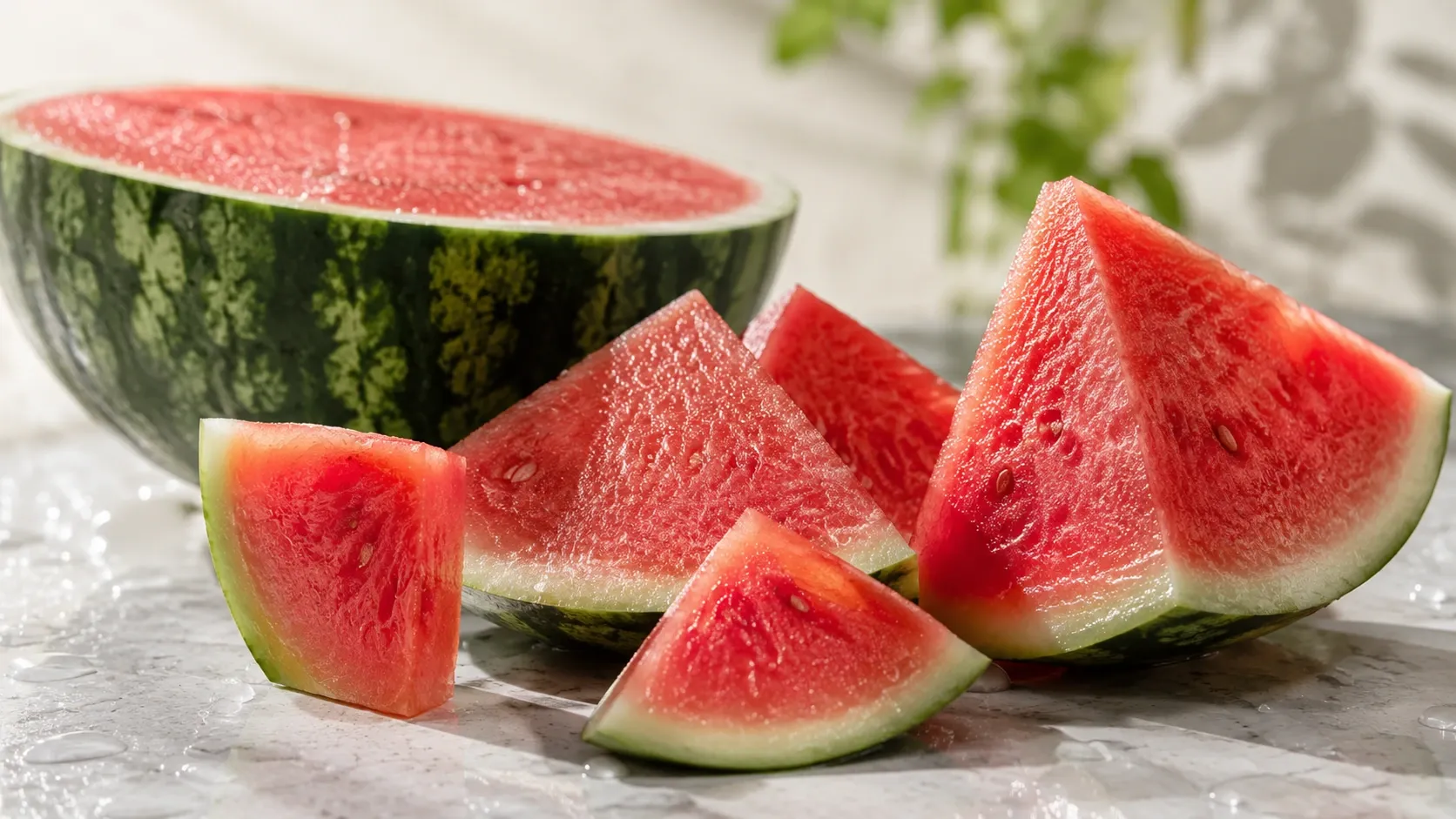
Few fruits feel as refreshing as watermelon on a hot day. Its juicy texture makes it seem almost like flavored water, yet its sweet taste can also make people wonder whether it contains too much sugar.
Both impressions need context. Watermelon is indeed made mostly of water, but it also provides carbohydrates, vitamins, minerals and bioactive plant compounds. Its natural sugar content per 100 g is relatively modest. (TabNut)
How much water is in watermelon?
Raw watermelon is approximately 91% water by weight. In 100 g of the fruit, around 91 g is water. (TabNut)
That translates approximately to:
| Amount of watermelon | Approximate water |
|---|---|
| 100 g | 91 g |
| 150 g | 137 g |
| 200 g | 183 g |
| 300 g | 274 g |
These numbers are estimates based on reference composition data. Actual values can vary by cultivar, growing conditions and ripeness. (TabNut)
Does watermelon really hydrate you?
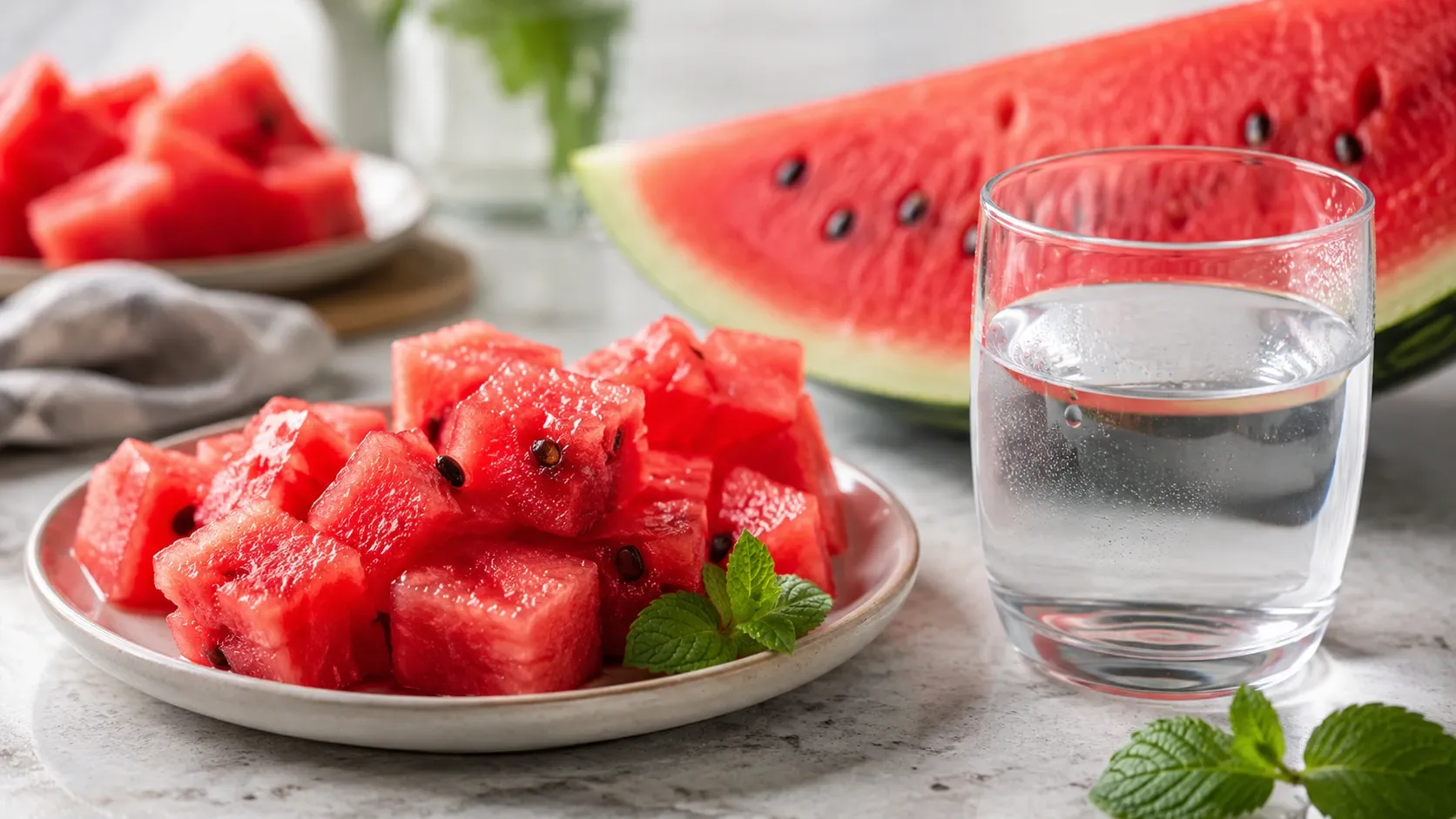
Yes. Water from food contributes to total daily water intake.
The National Academies’ dietary reference work recognizes water from foods as part of total intake. U.S. survey data used in the report suggest that roughly one-fifth of adult water intake can come from foods, although the proportion varies substantially depending on diet and circumstances. (National Academies)
Water-rich fruits and vegetables can therefore contribute to hydration.
That does not mean watermelon should replace drinking water. Fluid requirements vary with temperature, exercise, illness, pregnancy, diet and other factors.
What nutrients are in 100 g of watermelon?
Reference composition data for approximately 100 g of raw watermelon include:
| Nutrient | Approximate amount per 100 g |
|---|---|
| Water | 91.5 g |
| Energy | 30 kcal |
| Carbohydrate | 7.6 g |
| Sugars | 6.2 g |
| Fiber | 0.4 g |
| Protein | 0.6 g |
| Fat | 0.2 g |
| Potassium | 112 mg |
| Vitamin C | 8.1 mg |
Composition can differ somewhat between databases, cultivars and individual fruits. (My Food Data)
Watermelon is not a high-fiber or high-protein food. Its main nutritional characteristics are its high water content and low energy density, alongside several micronutrients and plant compounds. (My Food Data)
What about lycopene?
The red color of many watermelon varieties comes partly from carotenoids, including lycopene.
Lycopene is a plant pigment also found in tomatoes and other red foods. Watermelon can be a dietary source of lycopene, although concentrations vary among cultivars and with ripeness and growing conditions. (MDPI)
This does not mean watermelon alone prevents a specific disease. Bioactive compounds should be interpreted within the context of the whole food and overall dietary pattern.
Watermelon also contains L-citrulline
Watermelon contains the amino acid L-citrulline, which has attracted interest in nutrition and cardiovascular research.
L-citrulline participates in metabolic pathways involving L-arginine and nitric oxide, leading researchers to investigate potential effects on vascular function and blood pressure. (MDPI)
A meta-analysis of randomized trials reported a reduction in systolic blood pressure in watermelon intervention studies, but several other outcomes did not change significantly, and the authors emphasized that additional research is needed. (PubMed)
Importantly, some studies use watermelon juice, concentrated powders, extracts or specific amounts of citrulline. Their results should not be interpreted as evidence that a normal serving of fresh watermelon acts as a treatment for hypertension. (MDPI)
So, how much sugar is actually in watermelon?
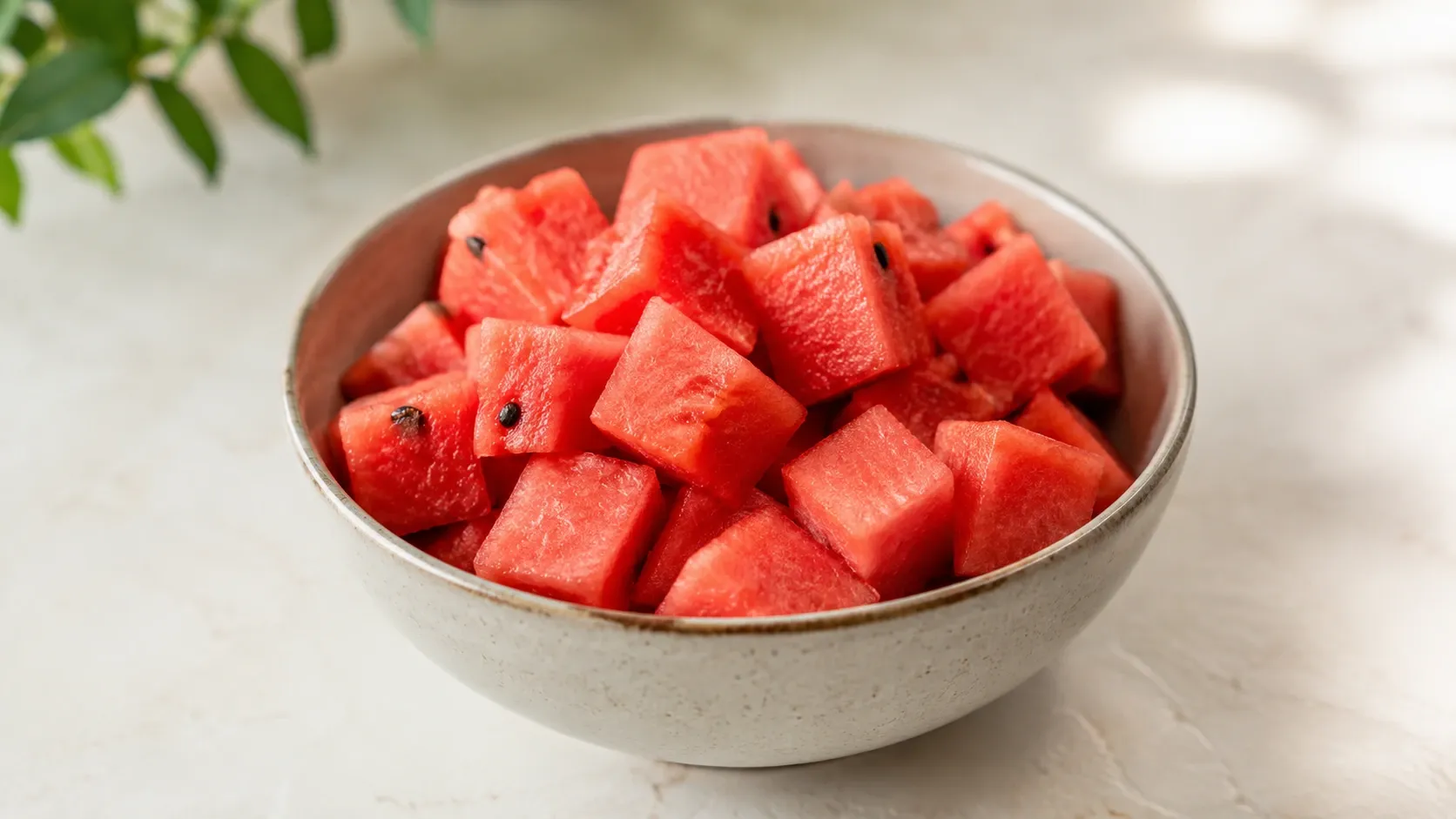
Approximately 6.2 g of naturally occurring sugars are present in 100 g of watermelon. (TabNut)
The amount rises with portion size:
| Watermelon | Approximate sugars |
|---|---|
| 100 g | 6.2 g |
| 150 g | 9.3 g |
| 200 g | 12.4 g |
| 300 g | 18.6 g |
Watermelon therefore is not sugar-free, but neither is it mostly sugar. Most of its weight is water. (TabNut)
Is watermelon sugar the same as added sugar?
Chemically, watermelon contains simple sugars, including glucose, fructose and sucrose. Nutritionally, however, the food context is different from consuming sugars that have been added to foods or beverages.
The World Health Organization defines free sugars as sugars added to foods and beverages by manufacturers, cooks or consumers, together with sugars naturally present in honey, syrups, fruit juices and fruit juice concentrates. (WHO)
Sugars naturally contained within whole fresh fruit are not included in this definition. (WHO)
For that reason, counting 12 g of sugar in a serving of whole watermelon as nutritionally identical to 12 g of added sugar misses an important distinction.
What changes when watermelon is juiced?
The distinction matters here.
The WHO includes sugars naturally occurring in fruit juice in the free-sugar category. Its current healthy-diet guidance also notes that fruit juices, including varieties without added sugar, can provide significant free sugars and should be limited. (WHO)
Juicing can also make it easier to consume the equivalent of several servings of fruit quickly.
For everyday eating, choosing watermelon pieces rather than regularly drinking large glasses of watermelon juice is therefore a useful approach.
Does watermelon cause a large blood sugar spike?
Watermelon contains carbohydrate and can raise blood glucose after a meal. The size of that response depends on portion, cultivar, meal composition and individual physiology.
Older references commonly gave watermelon a relatively high glycemic index. The international tables updated in 2021, however, reported an average GI of 50 across four tested varieties, along with a low glycemic load for a 120 g serving. (Glycemic Index)
Glycemic load takes the amount of carbohydrate in the serving into account, which is relevant for a food that consists mostly of water.
A laboratory GI value still cannot predict every individual’s glucose response.
Can people with diabetes eat watermelon?
A diabetes diagnosis does not automatically require eliminating fruit.
The American Diabetes Association lists watermelon among common fruit choices and explains that fruit contains carbohydrate that should be accounted for within an individual’s meal plan. (American Diabetes Association)
Factors worth considering include portion size, total meal carbohydrate, personal glucose response and medication use.
How much watermelon should you eat?
There is no official universal daily serving specifically for watermelon.
The WHO recommends fruits and vegetables as part of a healthy dietary pattern and currently advises people older than 10 to aim for at least 400 g of fruits and vegetables combined per day, not 400 g of watermelon specifically. (WHO)
Variety is therefore more useful than focusing on one fruit.
As an illustration rather than a prescription:
- 150 g of watermelon: approximately 9.3 g of sugars;
- 200 g: approximately 12.4 g;
- 300 g: approximately 18.6 g. (TabNut)
The appropriate amount depends on the rest of the diet and individual needs.
Does watermelon cause weight gain?
Watermelon provides approximately 30 kcal per 100 g and has a low energy density largely because of its high water content. (My Food Data)
That does not make portion size irrelevant, but its sweet taste alone is not evidence that watermelon is unusually calorie-dense.
For body-weight management, the overall dietary pattern and long-term energy intake matter more than avoiding a particular whole fruit simply because it contains naturally occurring sugars.
Whole watermelon or watermelon juice?
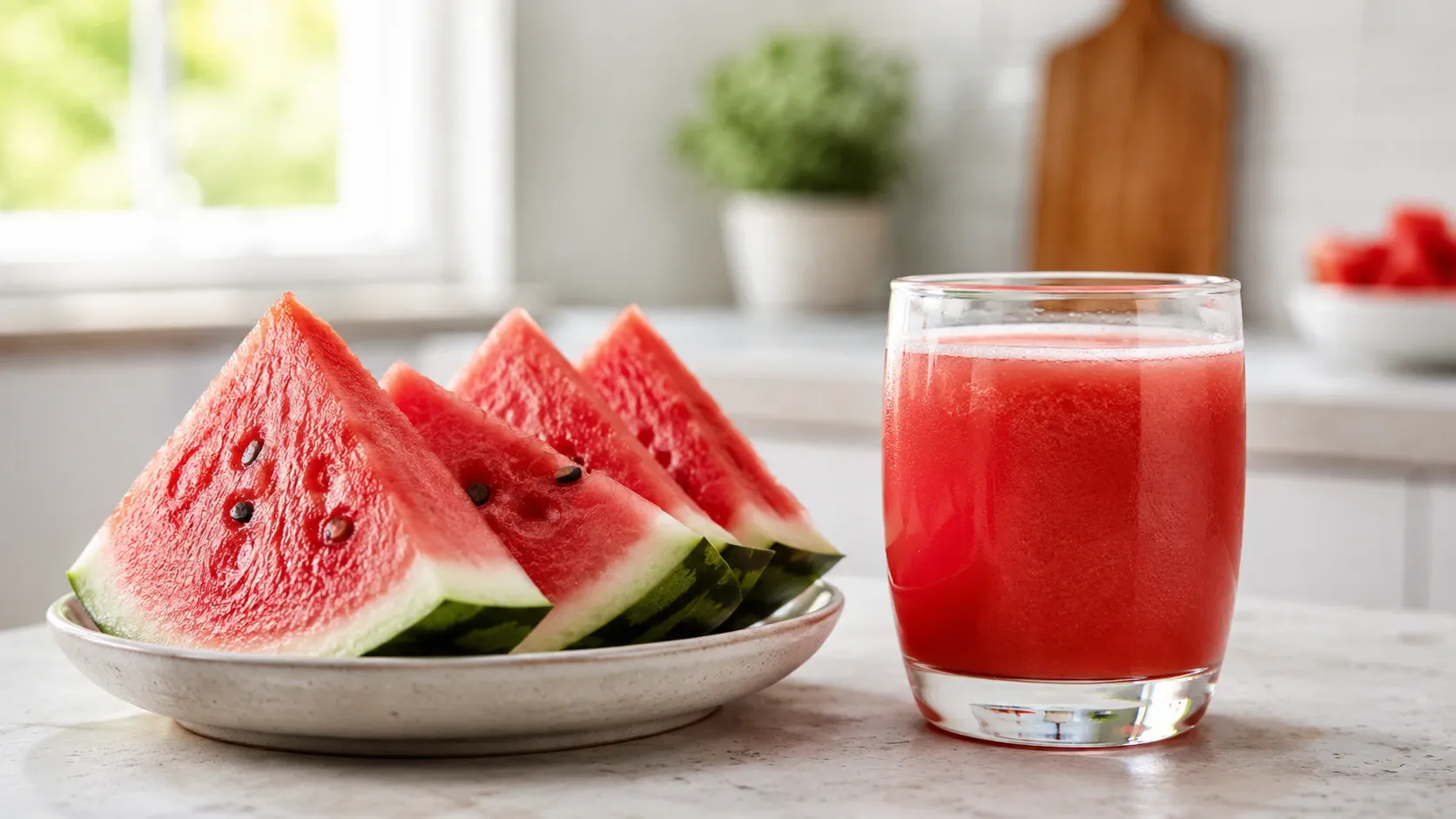
For most everyday occasions, eating the fruit itself has several practical advantages:
- it preserves the natural structure of the food;
- it requires chewing;
- it retains the fiber present in the flesh;
- the amount being consumed is easier to see;
- sugars in intact fruit are not categorized as free sugars, whereas sugars in fruit juice are. (WHO)
An occasional glass of watermelon juice does not need to be treated as inherently harmful. It simply should not be considered nutritionally identical to eating the whole fruit.
Conclusion
Watermelon lives up to its refreshing reputation: around 91% of its weight is water, so it makes a genuine contribution to daily water intake. (TabNut)
It also provides vitamin C, potassium, lycopene and L-citrulline, although evidence about specific therapeutic effects should not be exaggerated. (MDPI)
As for sugar, reference data indicate approximately 6.2 g per 100 g of fresh watermelon. These naturally occurring sugars in intact fruit are not classified by the WHO as free sugars. (TabNut)
In practical terms, there is little reason to fear watermelon simply because it tastes sweet. Portion size, overall dietary variety and individual health needs provide far more useful context than looking at the fruit’s sugar content in isolation.