Papaya: Nutrition, Digestion, and Health Benefits
Papaya provides vitamin C, carotenoids, fiber, and folate. Learn what science actually says about its nutrition, digestion claims, and health benefits.
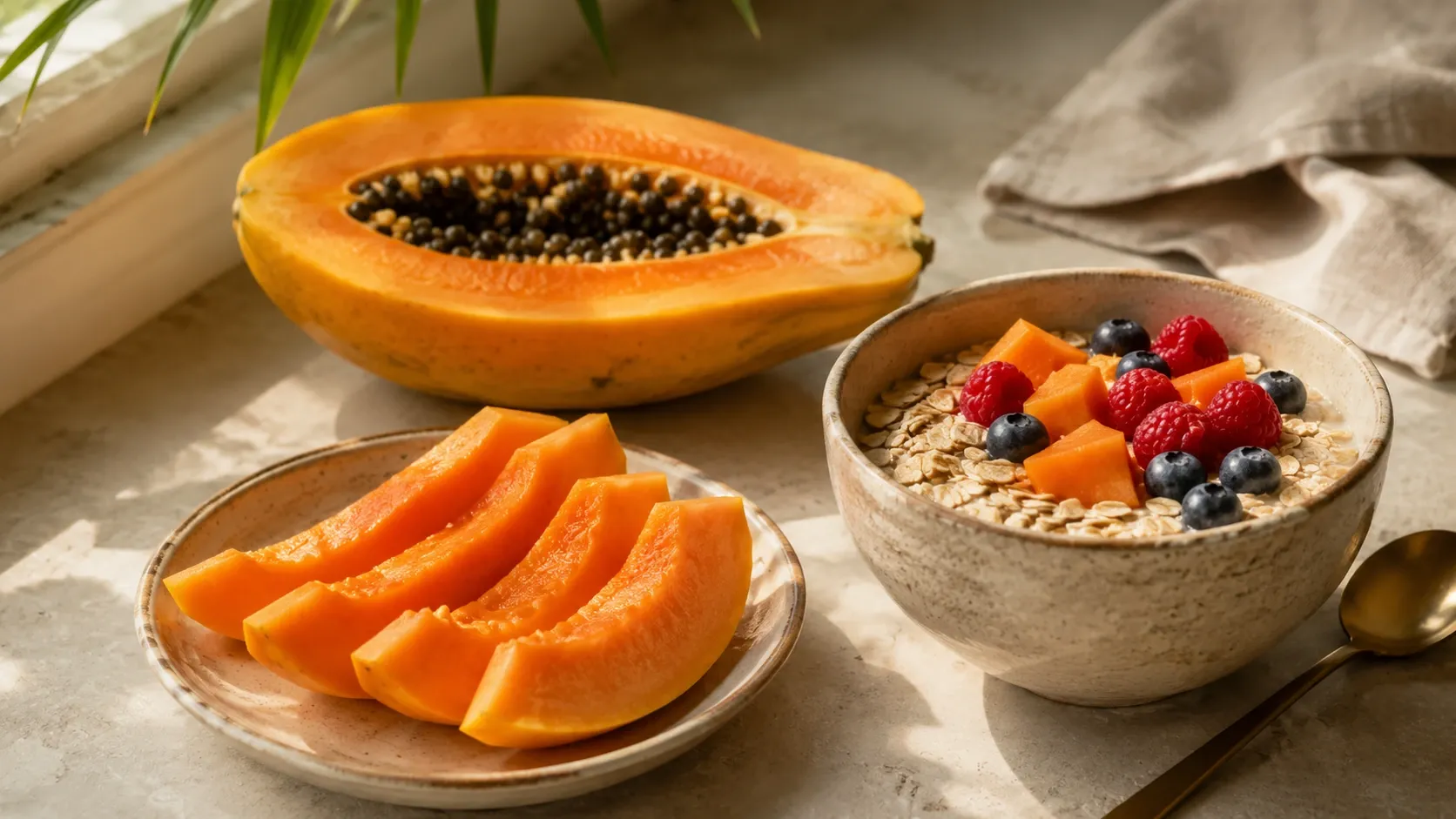
Sweet, soft, and widely eaten throughout tropical regions, papaya is perhaps best known for its reputation as a digestive fruit.
Some of that reputation has a reasonable nutritional basis. Papaya provides water and dietary fiber, and the plant contains protein-digesting enzymes such as papain.
However, the scientific evidence is more nuanced than the familiar claim that papaya simply “improves digestion.”
Papaya is also a notable source of vitamin C, carotenoids, and folate, making its overall nutritional value a stronger and better-established reason to eat it.
What nutrients does papaya contain?
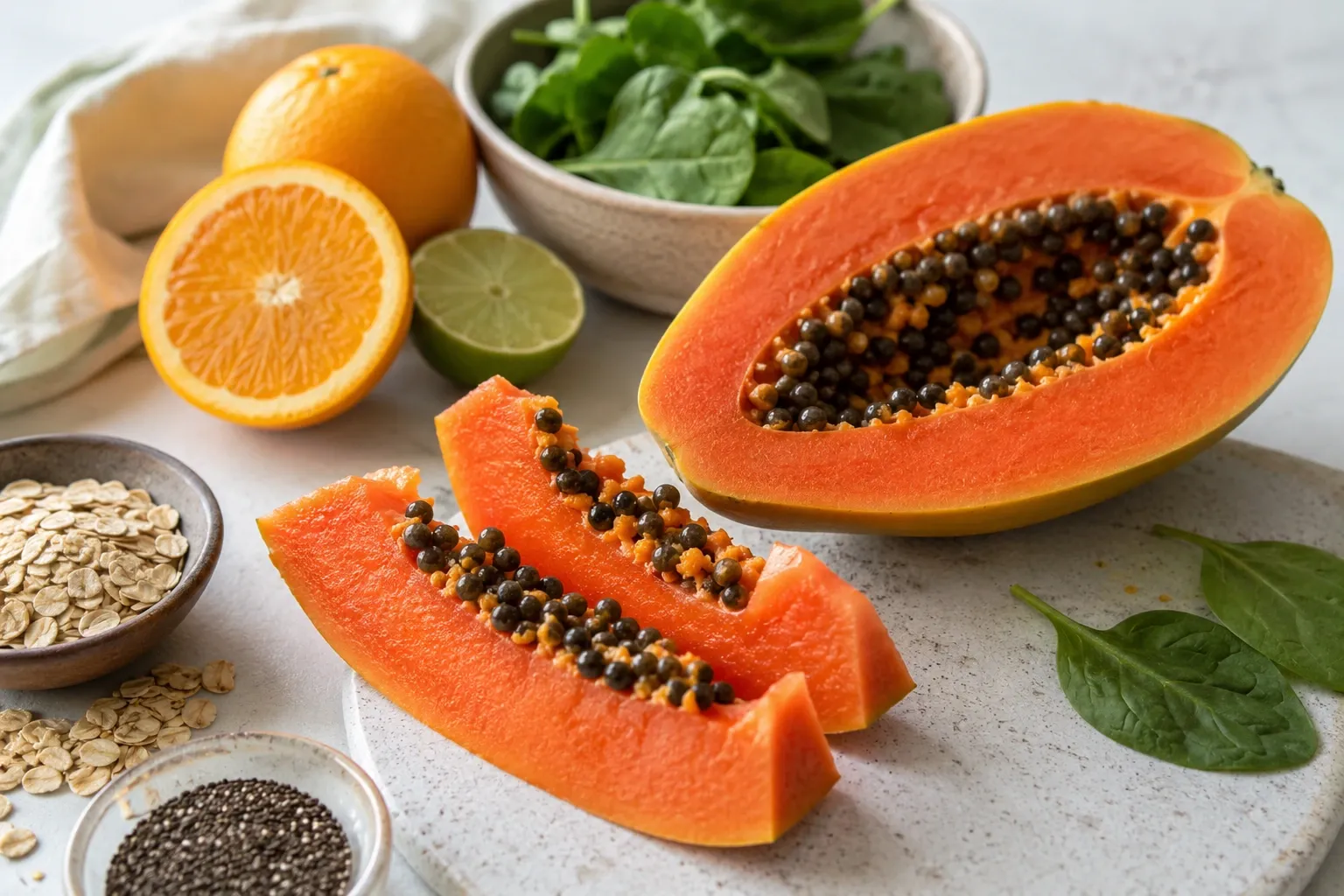
Food composition varies with cultivar, ripeness, growing conditions, and analytical methods.
As a Brazilian reference, the TBCA lists the following values for 100 g of raw papaya flesh: (TBCA)
| Nutrient | Amount per 100 g |
|---|---|
| Energy | 43 kcal |
| Water | 88.7 g |
| Total carbohydrate | 10.2 g |
| Protein | 0.50 g |
| Fat | 0.20 g |
| Dietary fiber | 1.03 g |
| Potassium | 124 mg |
| Magnesium | 16.2 mg |
| Vitamin C | 81.4 mg |
| Folate equivalent | 35 µg |
| Vitamin A | 59 µg RAE |
This profile makes papaya a water-rich fruit with little fat and a substantial amount of vitamin C. (TBCA)
Papaya is a notable source of vitamin C
Vitamin C is one of papaya’s nutritional highlights.
The Brazilian composition data list 81.4 mg per 100 g of raw papaya. (TBCA)
Vitamin C is required for collagen synthesis and participates in antioxidant systems. It also enhances the absorption of nonheme iron from plant foods and has roles in normal immune function. (ODS)
This makes papaya a useful food for contributing to vitamin C intake.
It does not mean papaya alone prevents infections, cancer, or other diseases.
A nutrient-rich fruit can support nutritional adequacy without acting as a medication.
What about carotenoids?
Papaya’s yellow, orange, and reddish colors come partly from carotenoid pigments.
Some carotenoids can be converted into vitamin A, which is required for normal vision, immune function, growth, and development. (ODS)
A randomized crossover study in humans found that several carotenoids from papaya, including lycopene and beta-cryptoxanthin, were bioavailable after consumption. (PubMed)
That finding confirms that the compounds can be absorbed.
It does not prove that papaya itself prevents a particular disease.
Does papaya actually improve digestion?
There are two main reasons papaya has developed a digestive reputation.
First, it is a water-rich fruit that contains dietary fiber.
Second, the papaya plant contains proteolytic enzymes, particularly papain.
Both statements are true. Neither justifies treating papaya as a universal digestive remedy.
Fiber, papaya, and bowel regularity
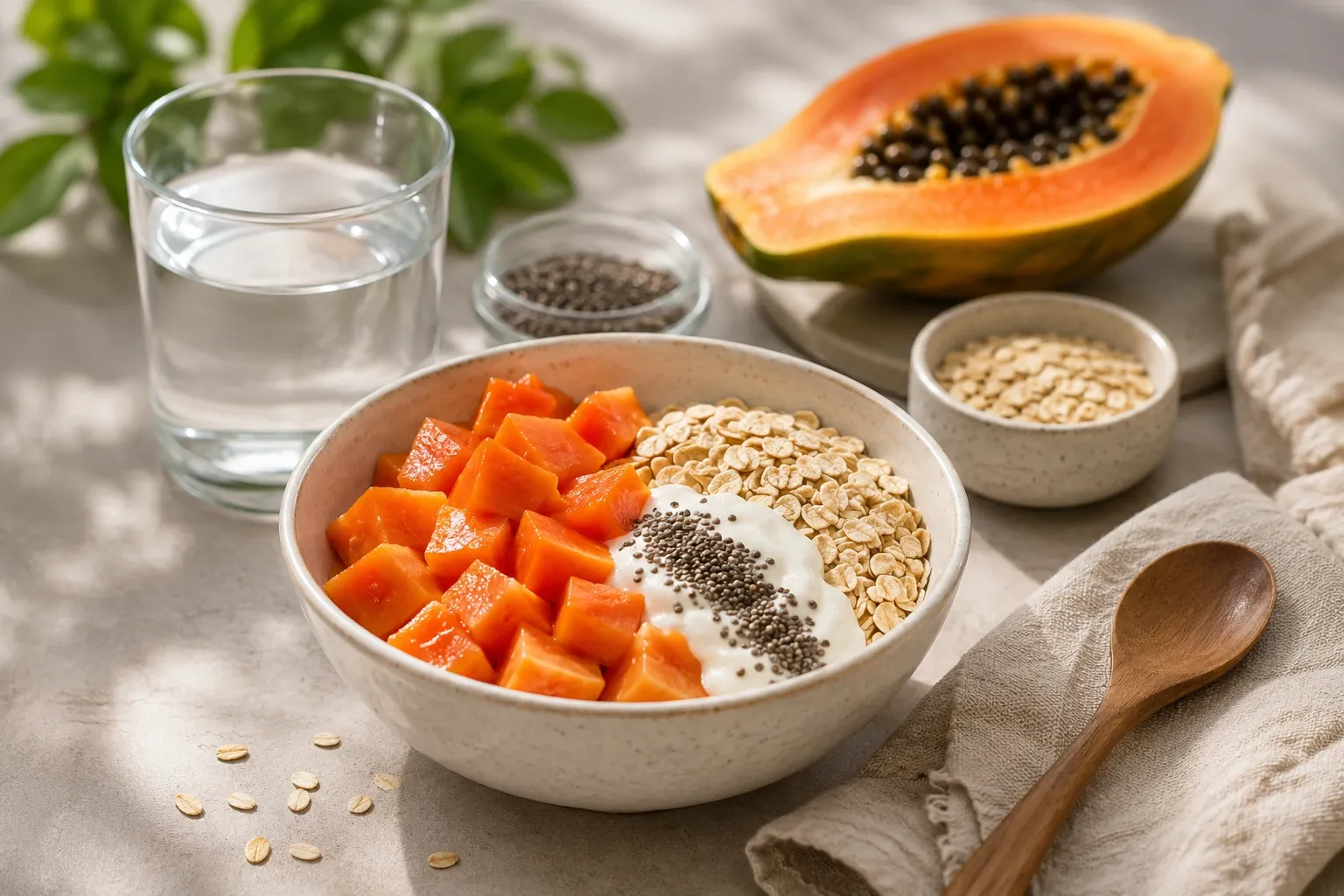
Dietary fiber plays an established role in bowel function.
The NIDDK recommends consuming enough fiber and adequate fluids as part of dietary strategies to prevent or manage constipation. (NIDDK)
Papaya can contribute to that intake, although it is not among the most concentrated sources of fiber.
The Brazilian TBCA lists about 1.03 g of fiber per 100 g. A 310 g portion listed in the database contains approximately 3.2 g. (TBCA)
It is therefore reasonable to say papaya can contribute to a diet that supports bowel regularity.
It is less accurate to describe it as a guaranteed laxative.
What is papain?
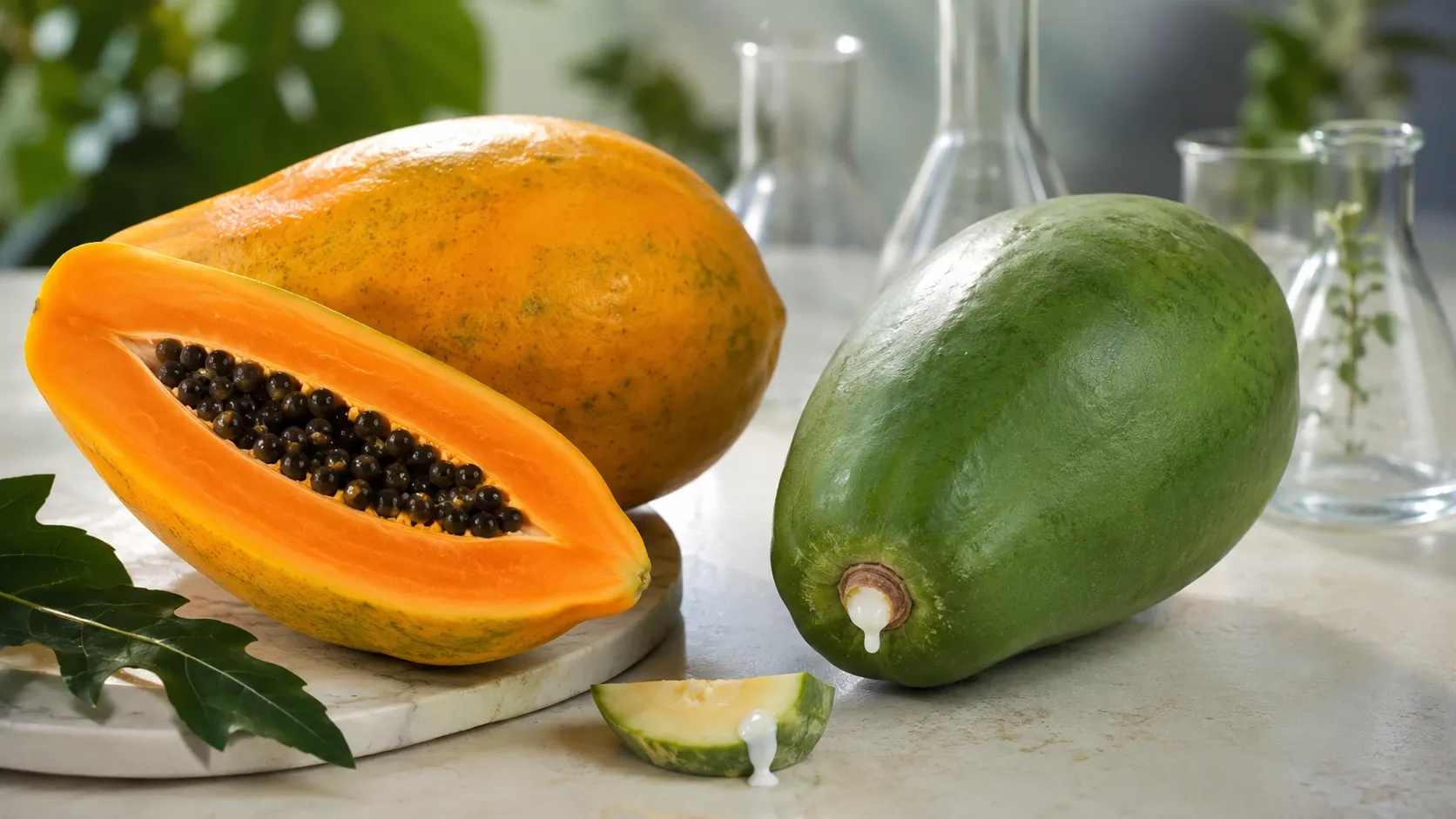
Papain is a proteolytic enzyme, meaning that it can break down proteins.
Papain and related proteases are present in the papaya plant’s latex system. (PubMed)
This biochemical property is well established and has made papain useful in several technological applications involving proteins.
However, it has also led to an oversimplified health claim: that eating ripe papaya automatically improves protein digestion.
Clinical evidence for that conclusion is limited.
Research on purified papain, papaya latex, extracts, or concentrated preparations cannot automatically be translated to an ordinary serving of ripe fruit.
What do human digestive studies show?
A double-blind placebo-controlled study investigated a specific papaya preparation in volunteers with chronic digestive complaints.
Participants consumed the preparation or placebo daily for 40 days. The study reported statistically significant improvements in constipation and bloating in the treatment group. (PubMed)
That is an interesting signal, but it should not be overstated.
The intervention was a specific papaya preparation, not simply fresh papaya eaten as part of a normal diet. A single relatively small trial also cannot establish papaya as a treatment for irritable bowel syndrome, chronic constipation, or other gastrointestinal disorders.
More clinical research would be needed.
Is papaya an antioxidant food?
Papaya contains vitamin C and several carotenoids, compounds involved in antioxidant and redox-related biological systems. (ODS)
That makes them nutritionally relevant.
However, the term “antioxidant” should not be turned into claims that papaya “detoxifies the body,” “eliminates free radicals,” or prevents disease by itself.
The health benefits associated with fruit- and vegetable-rich diets probably reflect complex combinations of fiber, micronutrients, phytochemicals, food substitution, and overall lifestyle.
Papaya can help build a healthy diet
The WHO recommends that carbohydrates come primarily from foods such as whole grains, fruits, vegetables, and pulses and advises people older than 10 to aim for at least 400 g of fruit and vegetables per day. (WHO)
Papaya can contribute to that target.
Its nutritional profile combines:
- a high water content;
- vitamin C;
- carotenoids;
- folate;
- dietary fiber;
- very little fat;
- relatively low energy content per 100 g. (TBCA)
Those characteristics make it a nutritious fruit without requiring exaggerated health claims.
Papaya also provides folate
The Brazilian composition database lists approximately 35 µg of folate equivalent per 100 g. (TBCA)
Folate is a B vitamin required for DNA and RNA synthesis, amino acid metabolism, and normal cell division. (ODS)
Papaya can contribute to folate intake, although it is not the only dietary source.
Specific folic acid recommendations during pregnancy should not be replaced simply by eating folate-containing fruits.
Is papaya high in sugar?
Papaya tastes sweet because it naturally contains sugars.
The TBCA lists approximately 10.2 g of total carbohydrates per 100 g of papaya. (TBCA)
These naturally occurring carbohydrates come in a whole-food matrix containing water, micronutrients, and fiber.
That is different from adding sugar to a beverage or dessert.
Whole fruit also differs from juice. The WHO classifies sugars naturally present in fruit juices as free sugars and recommends limiting them. (WHO)
For that reason, eating papaya whole will usually offer advantages over drinking strained papaya juice.
Does papaya help with weight loss?
Papaya does not burn fat.
At about 43 kcal per 100 g in the Brazilian database, it is relatively low in energy density and can fit comfortably into many balanced eating patterns. (TBCA)
This can make it a useful food in weight-management diets, but no fruit overrides overall energy balance.
Long-term weight change depends on the broader dietary pattern, activity, sleep, health status, and individual circumstances.
Easy ways to eat papaya
Papaya can be eaten on its own or combined with other foods.
Examples include:
- papaya with oats;
- papaya with plain yogurt;
- papaya with chia or flaxseed;
- mixed fresh fruit;
- papaya with nuts;
- papaya as a simple dessert.
There is no established need to eat it on an empty stomach.
The best time to eat papaya is the time that allows it to fit naturally into a balanced diet.
Are all papayas nutritionally identical?
No.
Papaya cultivars can differ in size, color, sweetness, texture, and nutrient composition.
Most numerical values in this article use Brazilian raw papaya data from the TBCA as the reference. (TBCA)
Other cultivars may therefore have somewhat different nutrient concentrations.
This natural variability is expected and does not change papaya’s overall role as a nutritious fruit.
Fruit, leaves, seeds, and extracts are not interchangeable
Studies involving papaya leaves, seeds, latex, extracts, or supplements should not automatically be used to make claims about ripe papaya flesh.
Different plant parts can contain very different concentrations and combinations of compounds.
Likewise, evidence involving a concentrated extract does not establish that eating fresh fruit will produce the same pharmacological effect.
This distinction is especially important when evaluating medicinal claims about Carica papaya.
Conclusion
Papaya has a strong nutritional profile without needing to be marketed as a miracle food.
It provides vitamin C, fiber, folate, carotenoids, and water while remaining relatively low in energy density. These characteristics can help it contribute to a varied, nutrient-rich diet. (TBCA)
Its digestive reputation requires more nuance. Fiber and adequate fluids are relevant to bowel regularity, and papain is a genuine proteolytic enzyme. However, evidence that ordinary servings of ripe papaya treat specific digestive disorders remains limited. (NIDDK)
The most evidence-based conclusion is straightforward: papaya is a nutritious fruit worth including in a diverse diet, but it should not be treated as a medicine or as a food that must be eaten at a particular time to work.