Does Fasted Training Burn More Fat? What the Evidence Shows
Fasted exercise can increase fat oxidation during a workout, but that does not necessarily mean greater body-fat loss. Here's what the evidence actually shows.

The idea behind fasted exercise sounds straightforward: if you train before eating, less energy is coming from a recent meal, so your body should rely more heavily on stored fat.
That is partly true. During some types of aerobic exercise, training fasted can increase the proportion of energy coming from fat. The problem comes when this short-term metabolic response is assumed to mean greater body-fat loss over weeks or months. (PubMed)
Those are two different outcomes.
What does “burning fat” during exercise actually mean?
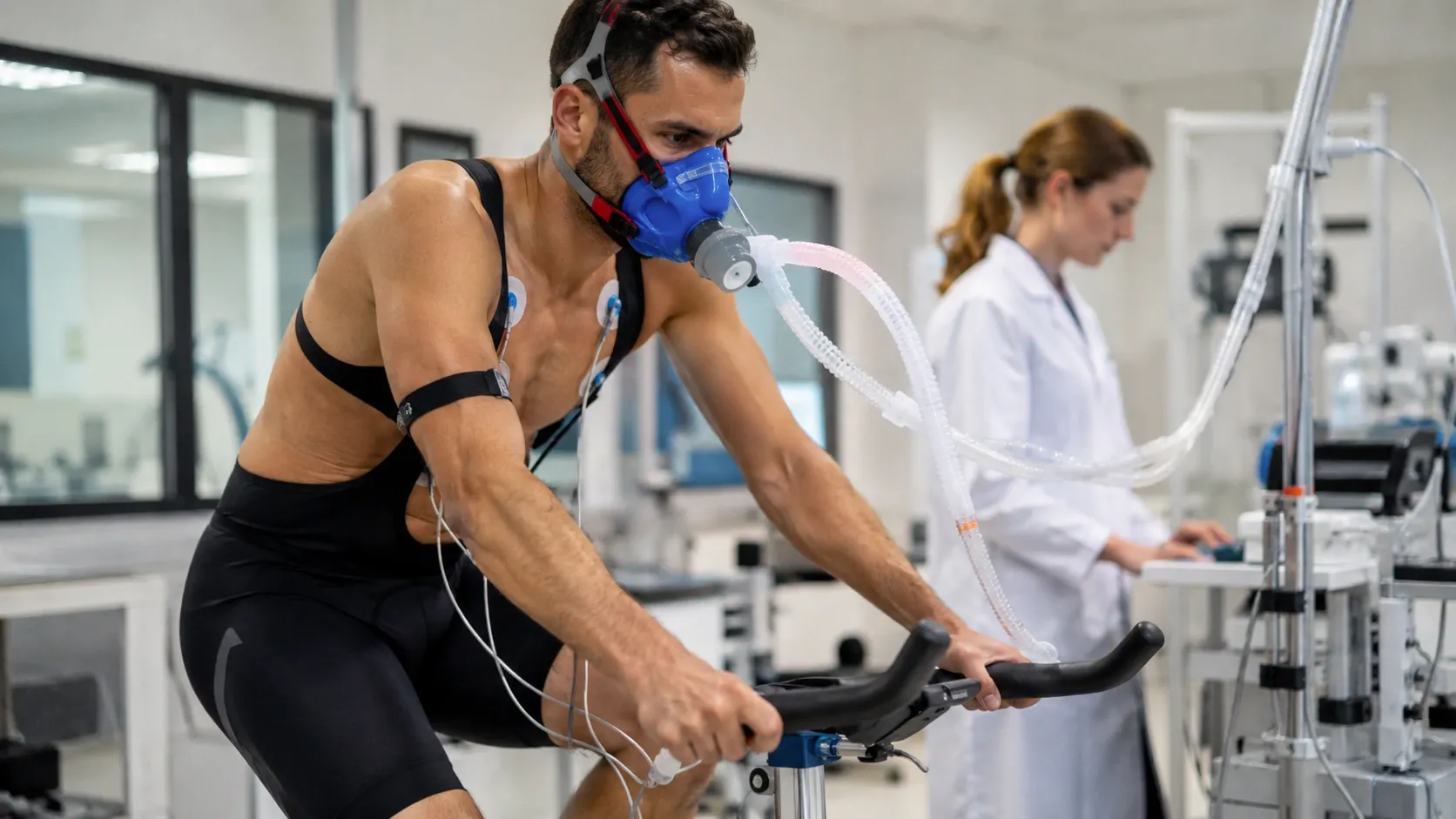
The body uses several fuels to produce energy, with carbohydrates and fat providing much of the energy required during exercise.
The proportion coming from each source changes according to exercise intensity, duration, nutritional status, training level and other factors.
A systematic review and meta-analysis published in the British Journal of Nutrition found that aerobic exercise performed while fasted resulted in greater fat oxidation than exercise performed after feeding. (PubMed)
So the commonly repeated statement that fasted cardio can increase fat use during a workout has scientific support.
It does not, however, answer whether you will ultimately lose more body fat.
More fat burned during a workout does not necessarily mean more fat lost
Fat oxidation describes a metabolic process taking place at a particular moment.
Body-fat loss describes a change in body composition accumulated over days, weeks and months.
The body continuously adjusts its use of carbohydrate and fat throughout the day. Using more fat during one hour of exercise does not independently determine what happens during the other 23 hours.
Energy intake, total energy expenditure, training, appetite, nutrition and adherence all contribute to the longer-term outcome.
That is why fat oxidation and fat loss should not be treated as interchangeable terms.
What do longer-term studies show?
So far, longitudinal studies have not demonstrated a consistent fat-loss advantage from fasted exercise.
A study published in the Journal of the International Society of Sports Nutrition compared young women performing aerobic exercise either fasted or after feeding while following a calorie-restricted diet for four weeks. Both conditions produced body-composition changes, without a clear additional benefit from exercising fasted. (PubMed)
Another trial in women with overweight or obesity compared interval training performed in fasted and fed conditions. Training improved body composition, but the fasted condition did not produce a superior response. (PubMed)
This distinction is essential when interpreting claims about fasted cardio.
Why does fasted exercise use more fat?
After several hours without food, the metabolic environment differs from the post-meal state.
During moderate aerobic activity, this can shift fuel selection toward greater relative use of fatty acids and lower relative carbohydrate use. This is the metabolic effect captured in studies of fasted fat oxidation. (PubMed)
The body, however, responds across the entire day.
Changes in food intake after exercise, total daily movement, subsequent fuel use and workout performance can all modify the final outcome.
That is why measuring only a 30-, 45- or 60-minute exercise session cannot reliably predict body-fat loss.
More fat oxidation can come with lower performance
A randomized crossover experiment involving 16 healthy men and women illustrates this trade-off.
Participants performed cycling after either seven hours without food or a meal consumed two hours before exercise. During the fasted condition, participants oxidized approximately 3.25 g more fat during the session. (PubMed)
At the same time, performance on a subsequent exercise test was approximately 3.8% lower while fasted. Motivation, perceived energy, readiness and enjoyment were also lower. (PubMed)
This does not mean everyone will perform 3.8% worse while fasted. It was a small, acute experiment.
It does demonstrate why greater fat oxidation should not automatically be interpreted as a superior training outcome.
Does fasted exercise reduce daily calorie intake?
Not consistently.
In the same study, participants ate slightly more at the meal following fasted exercise, although their total energy intake across the day remained lower because they had skipped the pre-exercise meal. The experiment was short and cannot establish what would happen over months. (PubMed)
A separate 2024 study followed 12 physically active adults for four days after a 75-minute run performed either fasted or fed. Researchers found no significant differences between conditions in daily energy intake, activity energy expenditure, total energy expenditure or appetite. (University of Birmingham)
Individual responses therefore matter. Some people find fasting convenient, while others experience stronger hunger or lower energy.
Is fasted cardio better for weight loss?

Based on current evidence, fasted cardio should not be considered superior to fed cardio as a general fat-loss strategy.
| Question | What the evidence suggests |
|---|---|
| Fat oxidation during aerobic exercise | Usually higher when fasted |
| Long-term body-fat loss | No consistent additional advantage |
| Short exercise performance | Often similar, depending on the session |
| Prolonged aerobic performance | Pre-exercise feeding may help |
| Appetite | Individual and variable |
| Resistance training | No clear advantage from fasting |
(PubMed)
Fasted cardio can still be useful as a personal preference.
It simply does not appear to be a metabolic shortcut.
What about longer workouts?
Nutrition before exercise becomes more important as duration and demands increase.
A systematic review and meta-analysis published in the Scandinavian Journal of Medicine & Science in Sports found that pre-exercise feeding improved prolonged aerobic performance, particularly for exercise lasting more than roughly 60 minutes. The same benefit was not evident to the same degree during shorter exercise. (PubMed)
Someone taking a short, easy morning run may therefore tolerate fasting perfectly well.
An endurance athlete preparing for a long or demanding session may have a stronger reason to eat beforehand.
What about HIIT and hard workouts?
High-intensity exercise relies heavily on carbohydrate availability.
This does not make fasted high-intensity training impossible, but the practical question is whether fasting compromises the quality of the session.
If training fasted causes someone to reduce power, pace, volume or overall work, maximizing fat oxidation during that hour may be less important than completing the intended workout effectively.
The ideal nutritional state therefore depends partly on the purpose of the training session.
Does lifting weights fasted cause muscle loss?

The claim that one fasted resistance workout automatically causes muscle loss is not supported by current evidence.
A 2025 randomized trial compared 12 weeks of resistance training performed after an overnight fast with training performed one to two hours after a carbohydrate-rich meal. (PubMed)
A 2025 systematic review and meta-analysis also concluded that fasted and fed resistance training appear to produce similar effects on body composition, muscle hypertrophy and strength. However, the authors emphasized that the available evidence is still limited. (PubMed)
Fasted lifting therefore does not appear inherently harmful when overall training and nutrition are appropriate.
There is also no convincing evidence that fasting is superior for muscle growth.
Do you need to eat before resistance training?
Not always.
Some people feel stronger and more comfortable after eating. Others train first thing in the morning and dislike having food in their stomach.
If fasted training feels good, performance remains strong and overall nutrition is adequate, it can be a practical option.
If fasting reduces workout quality, there is little reason to force it purely for the sake of fat burning.
Could fasted training improve metabolic adaptations?
Some studies have identified differences in molecular signaling and substrate metabolism when exercise is performed after fasting or with low carbohydrate availability.
These physiological changes are scientifically interesting, but they should not automatically be translated into claims of superior fat loss or athletic performance.
A measurable metabolic change is not necessarily a meaningful long-term advantage.
To date, the increase in fat oxidation seen during fasted exercise has not consistently translated into greater body-fat loss in comparative training studies. (PubMed)
When can fasted training make sense?
For a healthy person, fasted exercise may be reasonable when:
- the session is short or moderate;
- the person feels comfortable without breakfast;
- eating before training causes gastrointestinal discomfort;
- exercise performance remains good;
- it makes the morning routine easier;
- the person simply prefers it.
In those circumstances, there is no need to avoid fasted exercise.
The important point is not to expect a fat-loss benefit that the evidence has not consistently demonstrated.
When might eating first be a better option?
Pre-exercise food may be more useful when:
- the session is long;
- exercise intensity is high;
- performance is a priority;
- fasted training causes weakness or low energy;
- training volume is high;
- the session is competitive;
- the athlete needs to maximize pace, power or total work.
The strongest evidence for a performance advantage from pre-exercise feeding relates to prolonged aerobic activity. (PubMed)
Who should be particularly cautious?
People with diabetes need to individualize fasted exercise, especially when using insulin or medications that can cause hypoglycemia.
The American Diabetes Association notes that physical activity can lower blood glucose during and after exercise. People using insulin or insulin secretagogues can be at increased risk of hypoglycemia when medication, food intake and exercise are not appropriately coordinated. (American Diabetes Association)
People experiencing severe dizziness, confusion, fainting or unusual weakness during exercise should stop and seek appropriate medical assessment when necessary.
What matters more if fat loss is the goal?

The entire program matters more than whether one workout was performed before or after breakfast.
In practice, priorities include:
- maintaining an appropriate overall energy intake;
- consuming adequate protein;
- performing resistance training;
- including aerobic exercise or regular physical activity;
- getting adequate sleep;
- preserving training quality;
- following a routine that can actually be sustained.
A theoretically perfect protocol is of limited value if it produces poor workouts, excessive hunger or low adherence.
So, is fasted training worth doing?
It can be — if you prefer it.
You do not have to eat before every workout.
You also do not need to fast in order to lose body fat.
The mistake is turning an acute metabolic effect — greater fat use during a particular workout — into a claim of superior weight loss.
Conclusion
Fasted aerobic exercise can increase fat oxidation during a workout, but current evidence does not consistently show that this produces greater long-term body-fat loss. (PubMed)
For short or moderate workouts, healthy people who feel comfortable without eating can use fasted training as a matter of preference.
For longer exercise sessions or when performance is a priority, eating beforehand may be advantageous. (PubMed)
Current resistance-training evidence also does not show a clear benefit of fasting for hypertrophy, strength or fat loss. (PubMed)
The best strategy is therefore not necessarily the one that burns the greatest proportion of fat during one hour of exercise. It is the one that allows you to train effectively, eat appropriately and remain consistent long enough to achieve your goal.