Does Green Tea Help You Lose Weight? What Evidence Shows
Green tea may slightly increase energy expenditure, but its effect on body weight is small. See what research says about catechins, caffeine, and safety.
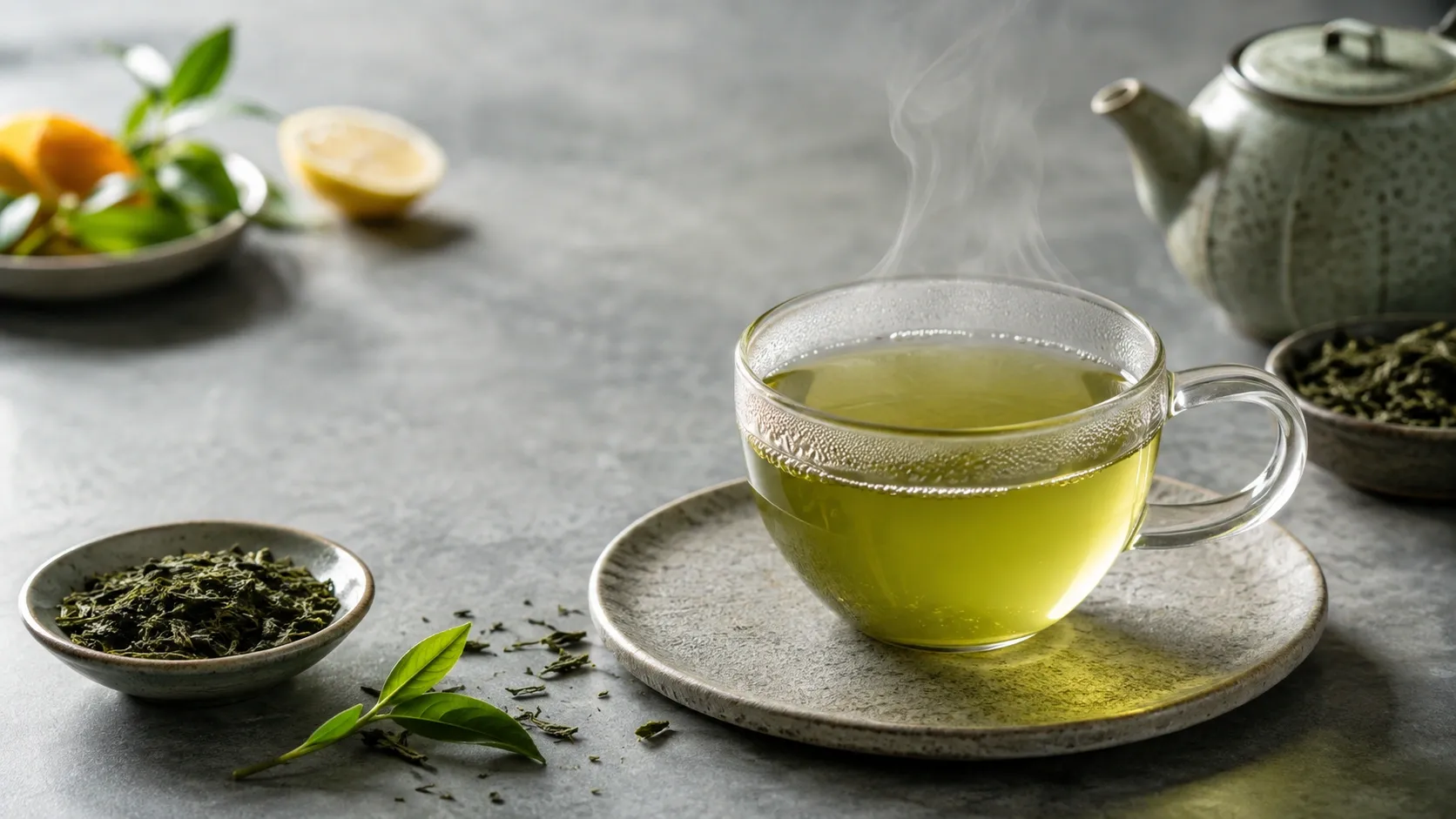
Green tea has become almost synonymous with weight-loss diets.
It appears in “fat burners,” metabolism supplements, detox programs, and recommendations claiming that a few cups per day can make the body burn substantially more fat.
There is a scientific reason why the idea became popular.
Green tea contains catechins, including epigallocatechin gallate (EGCG), as well as caffeine. Both have been investigated for their effects on energy expenditure and fat metabolism. (NIH ODS)
The key question, however, is not whether these compounds affect metabolism at all.
It is whether those effects are large enough to produce meaningful weight loss.
Overall, the evidence suggests that green tea or green tea extracts may produce a small reduction in body weight, but the average effect is too modest for green tea to be considered an effective stand-alone weight-loss strategy. (Cambridge University Press)
Why is green tea associated with weight loss?
Green tea comes from Camellia sinensis.
Its best-known bioactive compounds include catechins, with EGCG receiving particular research attention. Green tea also naturally contains caffeine. (NIH ODS)
Researchers have proposed that these compounds may:
- slightly increase energy expenditure;
- increase fat oxidation;
- influence thermogenesis;
- potentially contribute to weight control.
Some of these short-term metabolic effects have been demonstrated.
Their size, however, is much smaller than marketing claims often suggest.
Does green tea actually boost metabolism?
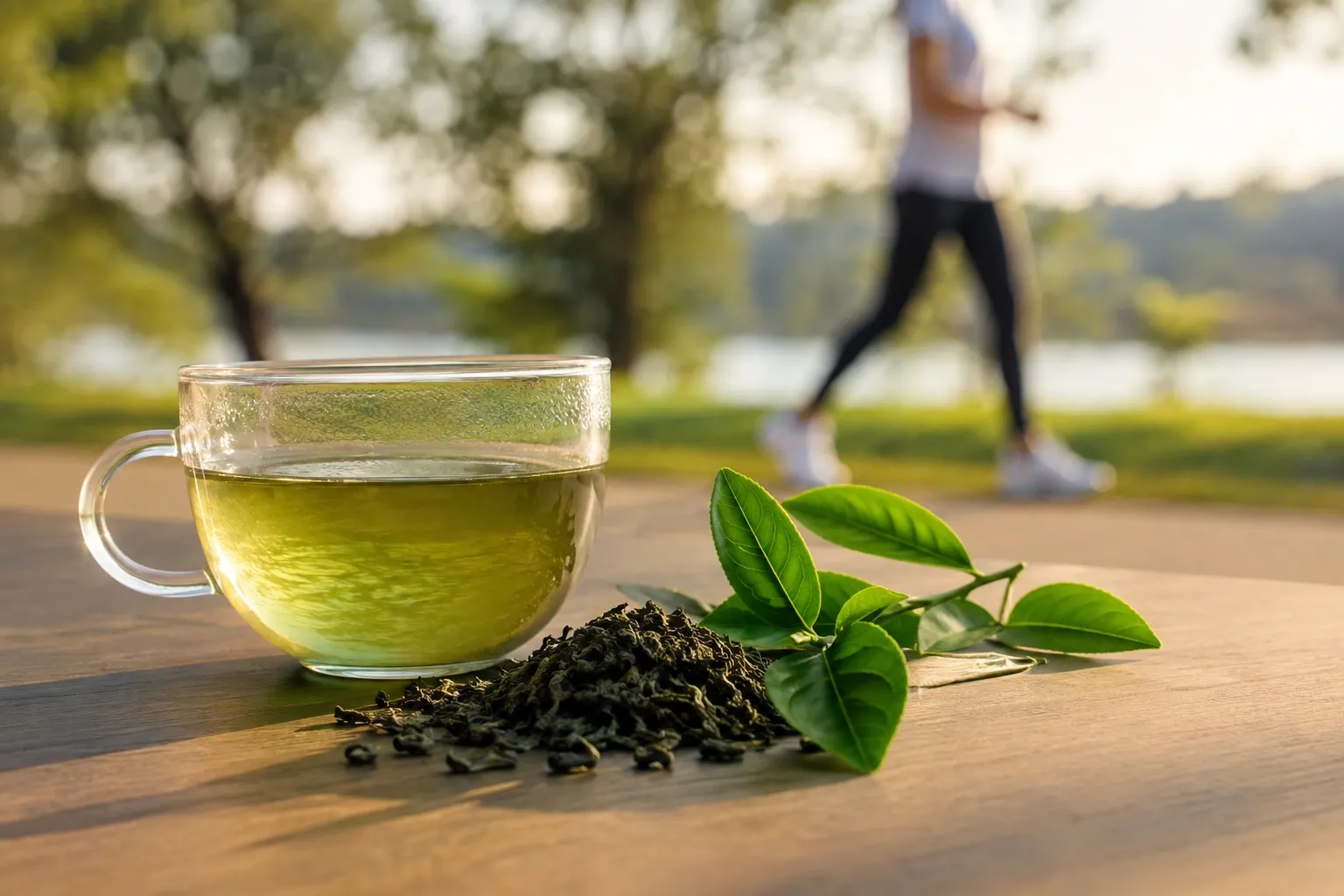
To a degree, yes.
The NIH Office of Dietary Supplements reports that caffeine, either alone or combined with green tea catechins, can increase energy expenditure in controlled studies. Catechins combined with caffeine may also increase fat oxidation. (NIH ODS)
Interestingly, EGCG by itself has not consistently increased resting metabolic rate or fat oxidation, suggesting that caffeine may contribute substantially to the observed effect. (NIH ODS)
But boosting energy expenditure temporarily is not the same thing as producing substantial long-term weight loss.
That distinction becomes clear when researchers look at actual changes on the scale.
How much weight does green tea help people lose?
The Cochrane review examined randomized trials of green tea preparations in adults with overweight or obesity.
In six studies conducted outside Japan that could be pooled, the average difference in body weight was only 0.04 kg compared with control and was not statistically significant. (Cochrane)
The authors concluded that any weight loss caused by green tea preparations was very small and unlikely to be clinically important. They also found no clear benefit for maintaining weight after weight loss. (Cochrane)
More recent evidence suggests that a small effect may exist, but it does not substantially change the practical conclusion.
What do newer meta-analyses show?
A 2024 systematic review and dose-response meta-analysis published in the British Journal of Nutrition evaluated green tea extract supplementation and related preparations in adults.
Across 38 studies reporting body weight, green tea supplementation reduced body mass by an average of approximately:
0.64 kg compared with control. (Cambridge University Press)
BMI fell by an average of approximately:
0.16 kg/m². (Cambridge University Press)
There was also a small change in body-fat percentage, but the pooled analyses did not find significant reductions in total fat mass or waist circumference. (Cambridge University Press)
This highlights an important concept in nutrition research:
statistically significant does not always mean practically significant.
A 0.64 kg average difference can be detectable in a large meta-analysis without representing a major real-world weight-loss effect.
How certain is the evidence?
The 2024 review also graded the certainty of its findings.
Evidence for body weight was rated moderate certainty.
Evidence for BMI and fat mass was rated low, while several other outcomes, including waist circumference and body-fat percentage, were rated very low certainty. Many studies also had substantial heterogeneity or risk-of-bias concerns. (Cambridge University Press)
A balanced conclusion is therefore not that green tea has absolutely no effect.
It is that any average weight-loss effect appears small.
Does green tea “burn fat”?
The phrase can be misleading.
Catechins combined with caffeine may increase fat oxidation, meaning that the body uses somewhat more fat as fuel under certain conditions. (NIH ODS)
That does not necessarily mean body-fat stores will fall substantially.
The body constantly shifts between carbohydrate and fat use throughout the day. Long-term fat loss ultimately depends on the balance between energy intake and expenditure over time.
This is why an interesting metabolic mechanism can produce only a tiny difference in actual body weight.
Does green tea work better when combined with exercise?

Researchers have studied that question as well.
A 2024 systematic review and meta-analysis compared exercise plus green tea with exercise alone in people with overweight or obesity.
The combined intervention produced small additional effects on weight, BMI, and body-fat-related measures.
However, the authors concluded that green tea provided only a minimal additional benefit beyond exercise-induced weight loss. (PubMed)
In practical terms, exercise remains far more important than the tea.
Is green tea worth drinking during a weight-loss diet?
It can be.
If you enjoy green tea, there is no need to avoid it simply because its weight-loss effect is small.
The important issue is expectation.
Drinking green tea while making no other changes is unlikely to cause meaningful weight loss. (Cochrane)
There is, however, another way it may be useful.
Replacing a sugar-sweetened or calorie-containing drink with unsweetened green tea can reduce energy intake. In that situation, the benefit may come primarily from the beverage being replaced rather than from a dramatic thermogenic action of green tea itself.
This fits with NIH guidance emphasizing dietary patterns, calorie intake, and physical activity as the foundations of long-term weight management. (NIH ODS)
Brewed green tea and green tea extract are not equivalent
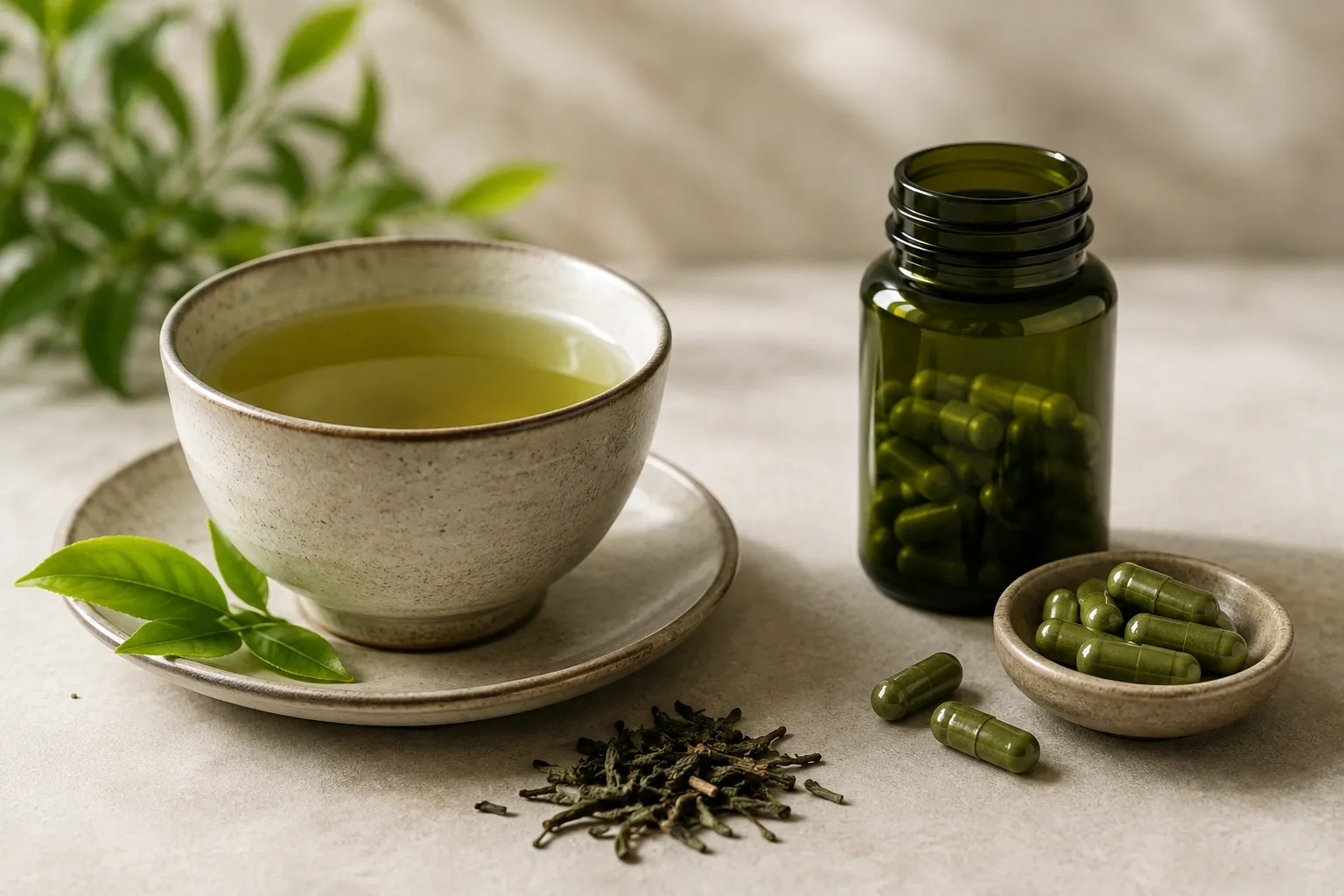
This distinction is essential.
A traditional green tea infusion contains catechins and caffeine in amounts that vary according to preparation.
A concentrated extract can provide much larger amounts of those compounds.
Many clinical weight-loss studies have tested green tea extracts or enriched preparations, not simply ordinary tea brewed from leaves or a tea bag. (Cochrane)
Therefore, results from a supplement study cannot automatically be translated into “drink this many cups per day.”
The safety profile also changes as concentrations rise.
Green tea extract requires more caution
NCCIH reports no major safety concerns for adults consuming green tea as a beverage, although its caffeine content still needs to be considered. (NCCIH)
Concentrated extracts are different.
Reported supplement side effects include nausea, constipation, abdominal discomfort, and increased blood pressure. Rare cases of liver injury have also been reported, primarily with green tea extracts sold in tablets or capsules. (NCCIH)
EFSA specifically evaluated this concern.
Its scientific assessment concluded that catechins from traditional green tea infusions are generally safe. However, supplemental EGCG intakes of 800 mg per day or more were associated with early signs of liver injury in human studies. (EFSA)
EFSA was also unable to identify a supplemental EGCG dose that could be guaranteed to be risk-free for everyone based on the available evidence. (EFSA)
Is there an ideal amount for weight loss?
No specific number of cups has been shown to produce clinically meaningful weight loss.
Trials vary substantially in:
- catechin dose;
- EGCG content;
- caffeine content;
- product formulation;
- treatment duration;
- participant characteristics.
Many trials used supplements or specially enriched products. (NIH ODS)
For that reason, claims such as “three cups a day melts fat” are not evidence-based prescriptions.
Drinking more also does not mean proportionally greater weight loss.
Should green tea be taken on an empty stomach?
There is no convincing evidence that drinking ordinary green tea on an empty stomach produces meaningfully greater weight loss.
Concentrated supplements require even more caution.
EFSA noted that exposure patterns differ between traditional infusions and supplements, with concentrated products more likely to be consumed as a single dose and sometimes while fasting. (EFSA)
There is no need to chase a special timing strategy to turn a small effect into a large one.
What about caffeine?
Green tea contains caffeine, although the amount varies with the product and preparation. (NCCIH)
People who are sensitive to caffeine may experience:
- sleep problems;
- restlessness;
- palpitations;
- anxiety;
- digestive discomfort.
For that reason, large amounts late in the day may be a poor choice for someone whose sleep is affected by caffeine.
Sacrificing sleep in an attempt to gain a small thermogenic effect would be an especially questionable weight-management strategy.
Can green tea interact with medications?
Yes, particularly at higher intakes or in concentrated supplement form.
NCCIH reports that high-dose green tea can lower blood concentrations of nadolol, potentially reducing the medication’s effectiveness. Green tea extract can also affect atorvastatin concentrations, and an interaction with raloxifene has been documented. (NCCIH)
People who regularly use medication should therefore discuss concentrated green tea supplements with a physician or pharmacist.
Extra caution is appropriate for people with:
- liver disease;
- cardiovascular conditions;
- high blood pressure;
- multiple medications;
- pregnancy or breastfeeding;
- high sensitivity to caffeine. (NCCIH)
Should green tea be avoided during weight loss?
No.
Green tea can be an enjoyable beverage and can fit perfectly well into a balanced diet.
It simply should not be given more importance than interventions with much larger effects.
Long-term weight management still relies primarily on factors such as:
- appropriate energy intake;
- a nutritionally adequate eating pattern;
- physical activity;
- sufficient sleep;
- behavior and adherence;
- professional treatment when clinically indicated.
NIH guidance emphasizes diet and physical activity as the foundation of sustainable weight management and considers the overall evidence supporting weight-loss supplements to be unconvincing. (NIH ODS)
What about “thermogenic” green tea products?
Read the ingredient list carefully.
Many commercial products contain green tea alongside other ingredients, such as:
- added caffeine;
- guarana;
- other stimulants;
- botanical extracts;
- proprietary blends.
Their effects cannot automatically be attributed to green tea.
The NIH notes that weight-loss supplements often contain multiple ingredients that have not been adequately studied together and that the amounts of active compounds can vary considerably among products. (NIH ODS)
“Natural” does not automatically mean effective or risk-free.
So, does green tea make you lose weight?
If it does, the average effect is small.
Catechins and caffeine have biologically plausible effects on energy expenditure and fat oxidation. (NIH ODS)
Some recent meta-analyses detect statistically significant reductions in body weight.
But the magnitude remains modest. In the 2024 analysis, the average difference was approximately 0.64 kg. (Cambridge University Press)
Earlier high-quality evidence, including the Cochrane review, found effects that were even smaller and unlikely to be clinically important. (Cochrane)
These findings are not necessarily contradictory.
Together, they suggest the same practical conclusion: green tea is not a powerful weight-loss tool.
Conclusion
Green tea contains biologically active catechins and caffeine that can modestly increase energy expenditure and fat oxidation. (NIH ODS)
When actual body weight is measured, however, the effect becomes much less impressive.
A 2024 meta-analysis found an average reduction of approximately 0.64 kg, while the Cochrane review concluded that weight loss from green tea preparations is very small and unlikely to be clinically meaningful. (Cambridge University Press)
Therefore, green tea should not be treated as a weight-loss solution.
If you enjoy it, unsweetened green tea can fit well into a healthy dietary pattern and may be particularly useful when it replaces a higher-calorie beverage.
But brewed tea and concentrated extract are not the same product. High-dose green tea supplements, particularly those rich in EGCG, deserve additional caution because of potential adverse effects, including rare liver injury. (EFSA)
For weight management, green tea is a detail. Dietary quality, energy balance, physical activity, sleep, behavior, and long-term adherence remain far more important. (NIH ODS)