Glycemic Index: What It Is and How Much It Really Matters
Learn what the glycemic index measures, how it differs from glycemic load, and why portions, fiber, and overall diet quality matter more than one number.

The glycemic index often comes up in discussions about diabetes, weight loss, and healthy eating. The idea can sound straightforward: low-glycemic-index foods are “good,” while high-GI foods should be avoided.
Nutrition is more complicated than that.
The glycemic index (GI) is a useful tool for understanding how different carbohydrate-containing foods affect blood glucose. But it does not fully measure a food’s nutritional quality, does not directly account for the amount eaten, and cannot perfectly predict the glucose response to a complete meal. (The Nutrition Source)
So GI matters — but it needs to be placed in context.
What is the glycemic index?
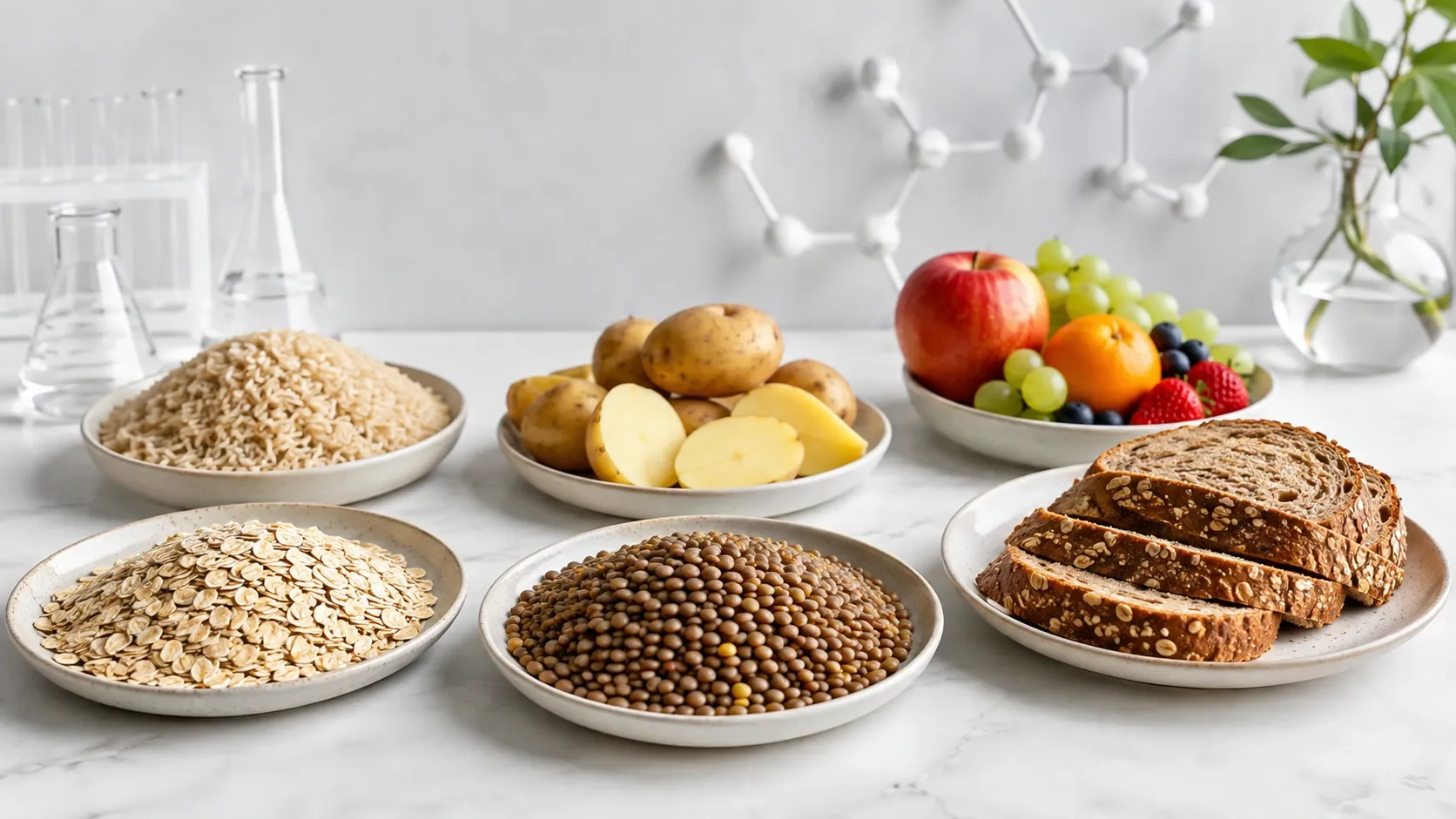
The glycemic index ranks carbohydrate-containing foods according to the blood glucose response they produce under standardized testing conditions.
Using glucose as the reference, foods are generally classified as follows: (The Nutrition Source)
| Classification | Glycemic index |
|---|---|
| Low GI | 55 or lower |
| Medium GI | 56–69 |
| High GI | 70 or higher |
The higher the value, the greater the relative glycemic response produced by the carbohydrate in that food during testing.
However, GI is not simply a measurement of how much sugar a food contains.
Two foods containing similar amounts of carbohydrate can produce different glucose responses because their carbohydrates are digested and absorbed differently.
How is glycemic index measured?
GI testing was developed to provide a standardized way to compare carbohydrate-rich foods.
Participants consume portions containing standardized amounts of available carbohydrate, and their blood glucose response is compared with the response to a reference food. Scientific testing protocols have been progressively standardized to improve reproducibility and comparison across studies. (PubMed)
The 2021 international tables of glycemic index and glycemic load compiled a large body of tested foods and remain an important reference for the application of GI in research and practice. (PubMed)
Why can the same food have different GI values?
GI is not an absolutely immutable property.
Several factors can influence carbohydrate digestion and availability, including: (The Nutrition Source)
- processing;
- particle size;
- fiber content;
- physical food structure;
- fruit ripeness;
- starch characteristics;
- fat content;
- acidity;
- preparation methods.
A finely processed grain, for example, may be digested differently from a more intact grain. A ripe fruit can also behave differently from the same fruit at another stage of ripeness. (The Nutrition Source)
This is one reason why a single published GI number should not always be treated as an exact value that applies to every version of a food.
Glycemic index is not the same as glycemic load

This distinction is essential.
The glycemic index describes the relative glycemic response to carbohydrate, but it does not directly tell you how much carbohydrate you are actually eating.
Glycemic load (GL) adds this information.
The simplified formula is:
Glycemic load = glycemic index × grams of available carbohydrate in the serving ÷ 100. (The Nutrition Source)
Two variables therefore matter:
- how strongly the carbohydrate tends to affect blood glucose;
- how much carbohydrate the serving actually contains.
This helps explain why using GI tables without looking at portion sizes can sometimes be misleading.
Portion size may matter as much as glycemic index
Consider two foods with different GI values.
If a normal serving of one contains very little available carbohydrate, its overall glycemic impact may remain limited. Conversely, a large serving of a moderate-GI food may provide a substantial carbohydrate load.
For real-world blood glucose responses, carbohydrate quantity and quality need to be considered together. (The Nutrition Source)
This is why glycemic load often provides more practical context than GI alone.
So, how much does glycemic index actually matter?
The most useful answer is: it matters as one characteristic of a diet, not as a complete food-rating system.
GI can help compare carbohydrate sources, particularly when the foods being compared are otherwise nutritionally similar.
The problem arises when the GI number replaces the rest of the nutritional assessment.
GI does not directly tell you:
- how much you will eat;
- how much fiber the food provides;
- its protein content;
- the quality of its fats;
- its vitamin and mineral content;
- its sodium content;
- its energy density;
- how processed it is;
- how it fits into the rest of your diet.
Therefore, a low GI does not automatically mean a food is healthy, and a high GI does not automatically make a food forbidden.
Carbohydrate quality goes beyond GI
The World Health Organization’s current carbohydrate guidance places strong emphasis on overall carbohydrate quality.
WHO recommends that carbohydrate intake come primarily from whole grains, vegetables, fruits, and pulses. These foods provide more than carbohydrate alone and are important sources of fiber and other nutrients. (WHO)
This matters because a healthy dietary pattern cannot be reduced to the glucose curve observed after a single food.
What happens when carbohydrates are part of a mixed meal?
GI testing needs to control variables to make scientific comparisons possible.
Real meals are different.
Rice may be eaten with beans, vegetables, meat, fish, eggs, or other sources of protein and fat. Bread may be eaten with eggs, cheese, vegetables, or spreads. Fruit may be paired with yogurt or nuts.
Those combinations change the digestive context.
Fiber, fat, protein, acidity, and food structure can modify digestion and post-meal glucose responses. Experimental studies of mixed meals show that changing macronutrient composition can alter the observed glycemic response. (PubMed Central (PMC))
That is another reason why the GI of an isolated food is not an exact prediction of what will happen after every meal containing that food.
Does glycemic index matter more for people with diabetes?
It can be particularly useful.
For people with diabetes, managing carbohydrate quantity, distribution, and quality may form part of medical nutrition therapy.
A systematic review and meta-analysis published in the BMJ examined randomized trials of lower-GI or lower-GL dietary patterns in people with diabetes. Compared with higher-GI/GL or control diets, lower-GI/GL patterns reduced HbA1c by an average of about 0.31 percentage points, alongside small improvements in several other cardiometabolic markers. (BMJ)
That is a meaningful but modest effect.
The American Diabetes Association’s Standards of Care in Diabetes—2026 describes the evidence surrounding GI and GL as complex. It also notes that low-GI or low-GL eating patterns often overlap with higher-fiber dietary patterns, making it difficult to completely separate their effects. (Diabetes Journals)
Eating plans should therefore be individualized according to clinical goals, medications, preferences, and glucose responses.
Does glycemic index help with weight loss?
It is important to distinguish blood glucose responses from fat loss.
A meal producing a smaller glucose excursion does not automatically mean it will cause greater weight loss.
The 2023 Cochrane review included 10 studies involving 1,210 people with overweight or obesity. It concluded that low-GI or low-GL diets probably result in little to no difference in body-weight change compared with higher-GI/GL or other diets. (PubMed)
Choosing lower-GI foods can still be useful when it leads to more legumes, less-refined grains, and fiber-rich foods.
But current evidence does not support making GI the central mechanism of a weight-loss strategy.
Energy intake, satiety, food quality, physical activity, sleep, eating behavior, and long-term adherence all remain important.
Is every glucose spike harmful?
No.
Blood glucose normally rises after carbohydrate-containing meals. This is part of normal physiology.
Clinical significance depends on factors such as the magnitude and duration of the response, the person’s metabolic health, meal composition, and whether conditions such as diabetes are present.
Treating every measurable rise in glucose as something that must be eliminated can therefore lead to unnecessary dietary restrictions.
In people without diabetes, there is still uncertainty about how much small differences in individual postprandial glucose responses should influence dietary decisions. Recent continuous-glucose-monitoring research has also found day-to-day variability in responses to duplicate meals, which means a single observed “spike” should be interpreted cautiously. (PubMed)
Does glycemic response vary from person to person?
A food’s published GI is derived from standardized testing and represents a comparative measure, not a perfect individualized prediction.
In real life, post-meal glucose responses can be influenced by many factors, including:
- serving size;
- previous meals;
- physical activity;
- time of day;
- metabolic health;
- medications;
- sleep;
- mixed-meal composition;
- normal biological variability.
Research into personalized nutrition shows that postprandial responses are not always identical across individuals or repeated exposures.
A 2025 study in adults without diabetes, for example, reported substantial within-person variability in CGM-measured glucose responses to duplicate meals. (PubMed)
This does not make glycemic index useless. It simply means GI is a standardized comparative tool rather than a perfect personalized prediction.
How to use glycemic index without making eating complicated
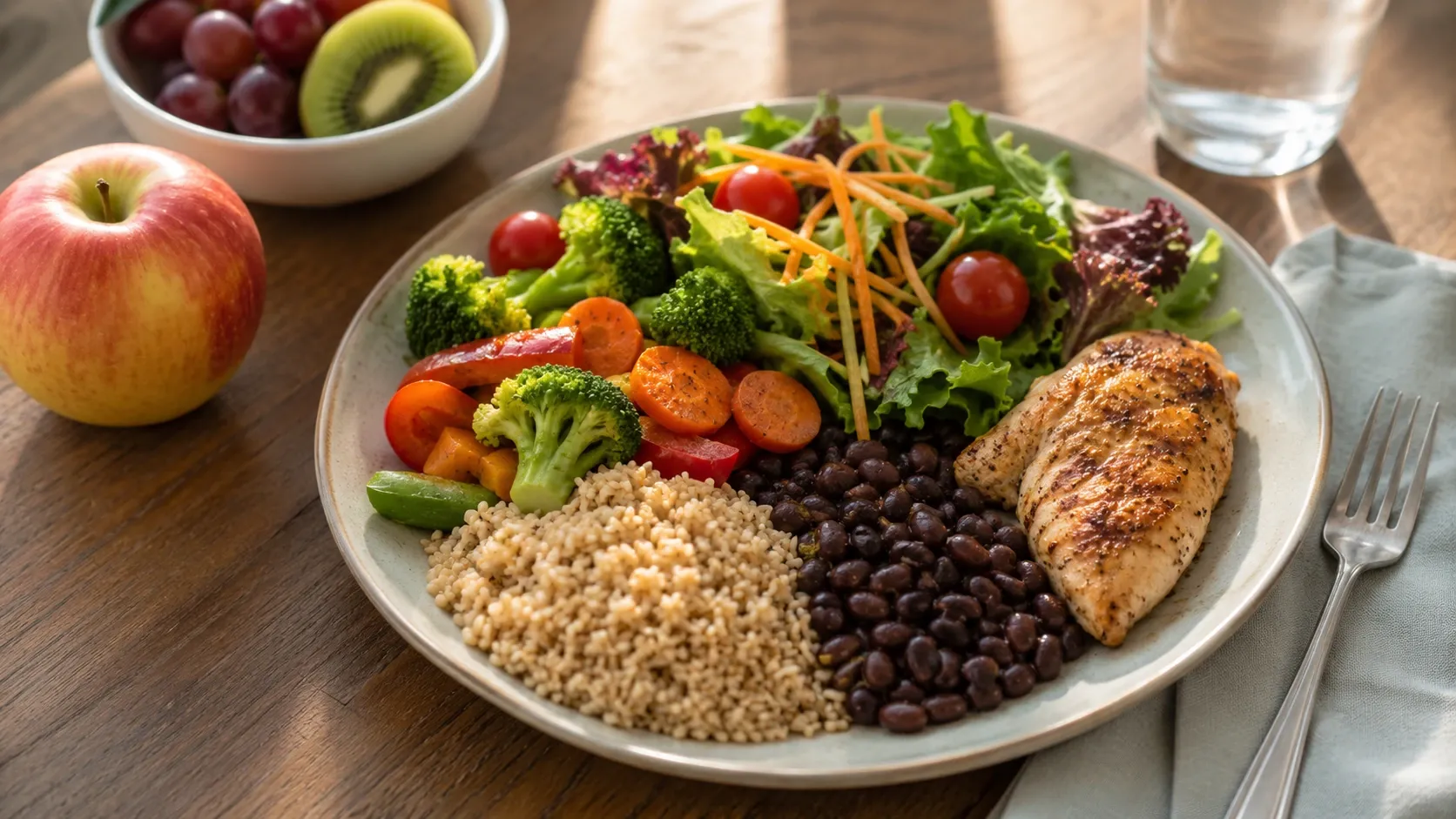
Most people do not need to memorize long tables of GI numbers.
A more practical hierarchy can be used.
1. Start with food quality
Prioritize carbohydrate sources such as:
- pulses;
- whole fruit;
- vegetables;
- whole grains;
- less-refined cereals and grains.
This aligns with WHO recommendations on carbohydrate quality. (WHO)
2. Consider the amount
Even a low- or moderate-GI food can deliver a high carbohydrate load if the serving is very large.
Portion size still matters.
3. Look at the entire meal
Do not assess rice without considering beans, vegetables, protein, and the rest of the plate.
Meal composition can alter the metabolic response. (PubMed Central (PMC))
4. Prioritize fiber-rich foods
Whole grains, fruit, vegetables, and pulses provide benefits that extend well beyond their GI.
The ADA also notes that low-GI/GL eating patterns frequently overlap with higher-fiber diets. (PubMed Central (PMC))
5. Use GI to refine choices, not create forbidden-food lists
When two foods are similar in other respects, GI may be a useful additional criterion.
There is no need to automatically eliminate every food classified as high GI.
Three common glycemic-index myths
“Low GI means healthy”
Not necessarily.
GI measures one specific feature: the glycemic response to carbohydrate. It does not measure overall nutritional quality.
“High-GI foods automatically cause weight gain”
No.
Body-fat gain or loss is not determined by one GI value. Current Cochrane evidence does not show an important weight-loss advantage for low-GI/GL diets over other dietary approaches. (PubMed)
“Avoiding glucose spikes is all you need to prevent disease”
That is also an oversimplification.
Metabolic health is influenced by the overall diet, physical activity, body composition, sleep, genetics, smoking, medication use, and many other factors.
Carbohydrate quality matters, but it is only one part of the picture.
Conclusion
The glycemic index is a scientifically valid tool that can provide useful information about different carbohydrate sources.
It becomes more useful when considered together with carbohydrate quantity, glycemic load, fiber content, and meal composition. For people with diabetes, lower-GI or lower-GL eating patterns may provide a modest additional improvement in glycemic control. (BMJ)
What GI cannot do is classify a food as entirely “good” or “bad” on its own.
For most people, the more practical strategy is to prioritize whole grains, fruits, vegetables, and pulses, pay attention to portions, and treat GI as supporting information rather than the main rule of a healthy diet. (WHO)