High Triglycerides: How Diet and Lifestyle Can Help
High triglycerides can improve with healthier eating, physical activity, weight management, and less added sugar and alcohol. Learn which changes matter most.

Seeing high triglycerides on a blood test often leads to the same question: what should you change in your diet?
Triglycerides can respond substantially to lifestyle changes. Diet, physical activity, body weight, and alcohol intake all matter. However, elevated triglycerides are not always caused by food. Poorly controlled diabetes, thyroid disease, kidney or liver disease, genetics, and certain medications can also contribute. (NHLBI, NIH)
For that reason, managing high triglycerides is not simply about identifying foods to avoid. The more useful approach is to understand why triglycerides are elevated and which changes address that cause.
What are triglycerides?
Triglycerides are a type of fat carried in the bloodstream and stored by the body as an energy reserve.
Some come from dietary fat, but the body also produces triglycerides from energy that is not immediately needed. (NHLBI, NIH)
That is why eating too much energy overall can affect triglycerides even if dietary fat itself is not unusually high.
Excess calories, particularly in a dietary pattern high in added sugars, refined carbohydrates, and alcohol, can contribute to elevated levels. (MedlinePlus)
What triglyceride levels are considered high?
A commonly used classification for adults is:
| Triglyceride level | General classification |
|---|---|
| Below 150 mg/dL | Desirable |
| 150–199 mg/dL | Borderline high |
| 200–499 mg/dL | High |
| 500 mg/dL or higher | Very high / requires special attention |
Brazil’s 2025 dyslipidemia guideline considers fasting triglycerides below 150 mg/dL desirable and uses a threshold below 175 mg/dL when the sample is obtained without fasting. (Laboratório São Paulo)
A triglyceride result is only one part of cardiovascular risk assessment. LDL cholesterol, non-HDL cholesterol, blood glucose, blood pressure, smoking, family history, and existing health conditions also matter.
Why do very high triglycerides matter?
Persistent triglyceride elevation is part of the broader spectrum of atherogenic lipid disorders considered in contemporary cardiovascular guidelines. (professional.heart.org)
At 500 mg/dL or higher, another concern becomes increasingly important: acute pancreatitis, a potentially serious inflammation of the pancreas. Brazilian and international guidance therefore treats this level differently from mild or moderate triglyceride elevation. (SciELO)
What should you eat when triglycerides are high?

There is no individual food that “cleans triglycerides” out of the bloodstream.
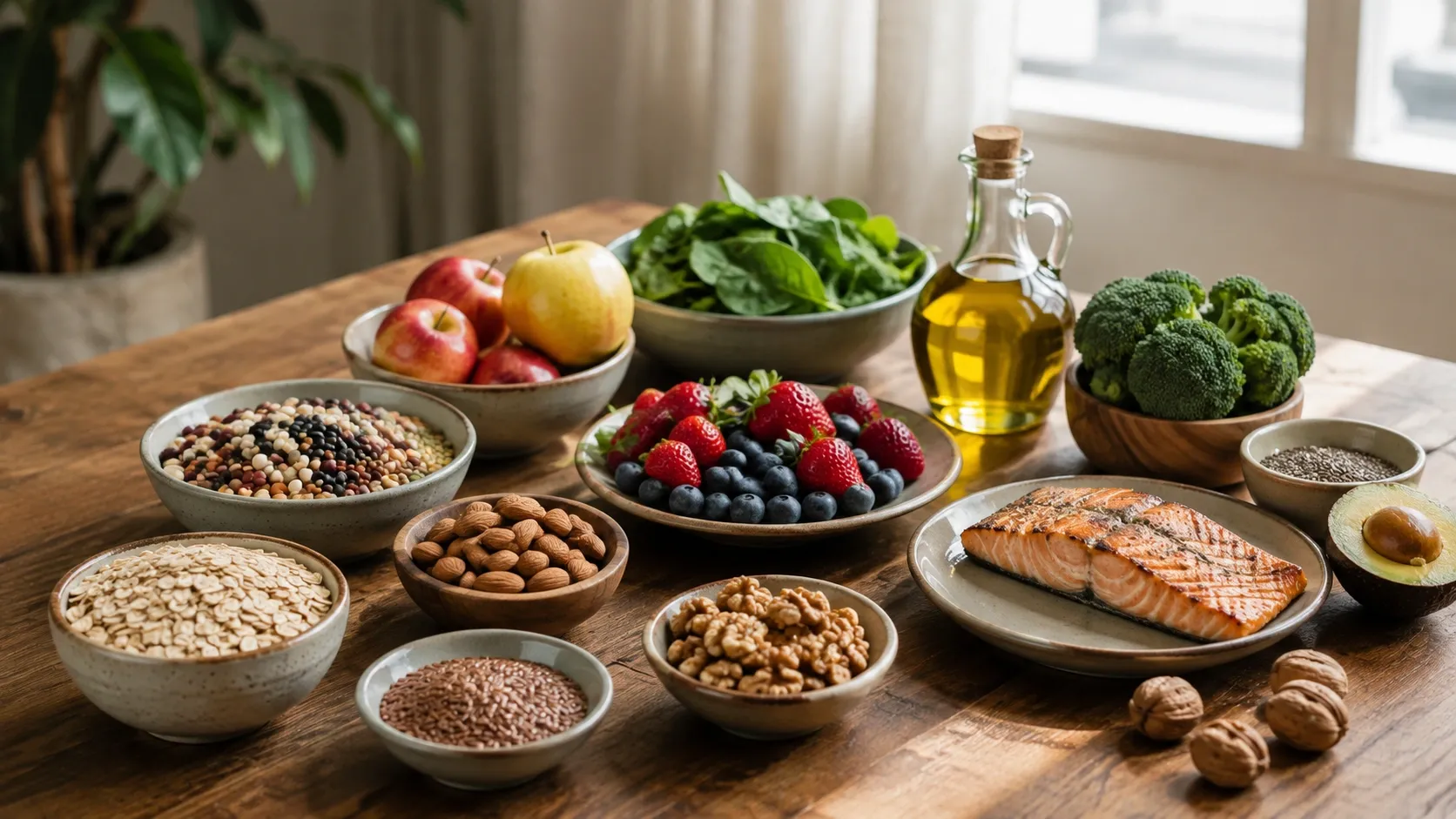
Evidence instead supports improving the overall dietary pattern. Contemporary cardiovascular guidance emphasizes vegetables, fruit, whole grains, legumes, nuts, seeds, healthy protein sources, and unsaturated fats while limiting added sugars and highly processed foods rich in sugar and saturated fat. (www.heart.org)
Cut back on added sugars
Added sugar does more than affect blood glucose.
When energy intake exceeds the body’s immediate needs, the liver can convert some of that excess energy into triglycerides.
Foods and drinks worth paying particular attention to include:
- regular soft drinks;
- sweetened beverages;
- candy and desserts;
- pastries and cookies;
- heavily sweetened breakfast cereals;
- coffee drinks containing large amounts of sugar;
- packaged foods in which sugars or syrups appear among the main ingredients.
Limiting added sugars is part of current dietary guidance for both hypertriglyceridemia and cardiovascular health. (AHA Journals)
This does not mean eliminating all carbohydrates.
Choose less-refined carbohydrates
Whole grains, beans, lentils, vegetables, and whole fruit provide carbohydrates along with fiber and other nutrients.
Highly refined foods can be easy to consume in large portions and contribute to excess calorie intake. The U.S. National Library of Medicine specifically includes limiting sugar and refined foods among lifestyle recommendations for high triglycerides. (MedlinePlus)
Useful everyday swaps include:
| Have less often | Choose more often |
|---|---|
| Sugar-sweetened soda | Water or unsweetened sparkling water |
| Highly refined grain products | Mostly whole-grain options |
| Daily sweets | Whole fruit or other minimally processed snacks |
| Cookies and packaged cakes | Minimally processed foods |
| Oversized refined starch portions | Legumes, vegetables, and whole grains |
The goal is not to label individual foods as inherently bad. It is to improve the pattern you eat most of the time.
What about fruit?
For most people with elevated triglycerides, whole fruit does not need to be eliminated.
The American Heart Association includes fruit and vegetables as part of a heart-healthy diet. (www.heart.org)
There is an important practical difference between eating an orange and drinking a large glass containing the juice of several oranges. Whole fruit retains its physical structure and generally takes longer to consume.
For everyday use, whole fruit is therefore usually a more practical choice than large quantities of juice or sweetened fruit drinks.
Do you need to avoid all fat?
No.
This is a common misunderstanding.
For mild or moderate triglyceride elevation, fat quality still matters. Cardiovascular dietary guidance recommends replacing sources of saturated fat with unsaturated fats found in foods such as nuts, seeds, fish, and non-tropical liquid vegetable oils. (www.heart.org)
That does not mean that high-calorie foods such as oils and nuts can be eaten without considering portion size.
There is also an important exception.
Does alcohol raise triglycerides?
It can, particularly at higher intakes.
Brazil’s 2025 dyslipidemia guideline reports an association between high alcohol consumption and increased triglycerides and does not recommend alcohol for the prevention or treatment of atherosclerosis. (SciELO)
The NHLBI also advises limiting alcohol in people with high triglycerides. When triglycerides are very high, a clinician may recommend avoiding alcohol altogether. (NHLBI, NIH)
This is one reason the idea that everyone should drink wine “for the heart” is misleading.
Can weight loss lower triglycerides?
For people with overweight or obesity, it often can.
Reducing excess body fat can improve insulin sensitivity and metabolic processes involved in triglyceride production.
The 2025 Brazilian guideline describes meaningful metabolic improvement with weight reductions in the range of roughly 5% to 10% for people who need to lose weight. A systematic review of randomized trials also found that weight-loss interventions reduced triglyceride concentrations. (SciELO)
Weight loss is not an appropriate goal for everyone with high triglycerides. People already at a healthy weight may benefit more from focusing on dietary quality, physical activity, alcohol intake, glucose control, and possible secondary causes.
Exercise matters too

Physical activity is not only a way to burn calories.
Exercise influences lipid metabolism and can improve triglyceride concentrations as well as overall cardiovascular fitness.
Brazil’s 2025 dyslipidemia guideline recommends that adults accumulate at least:
- 150 minutes of moderate-intensity aerobic activity per week; or
- 75 minutes of vigorous activity per week;
- or a combination of both.
Resistance training can also be part of the program. (SciELO)
For someone who has been inactive, starting with a manageable amount and building gradually is generally more sustainable than trying to reach the entire weekly target immediately.
People with cardiovascular disease, exercise-related symptoms, or significant medical limitations should discuss exercise intensity with their healthcare team.
A practical eating pattern
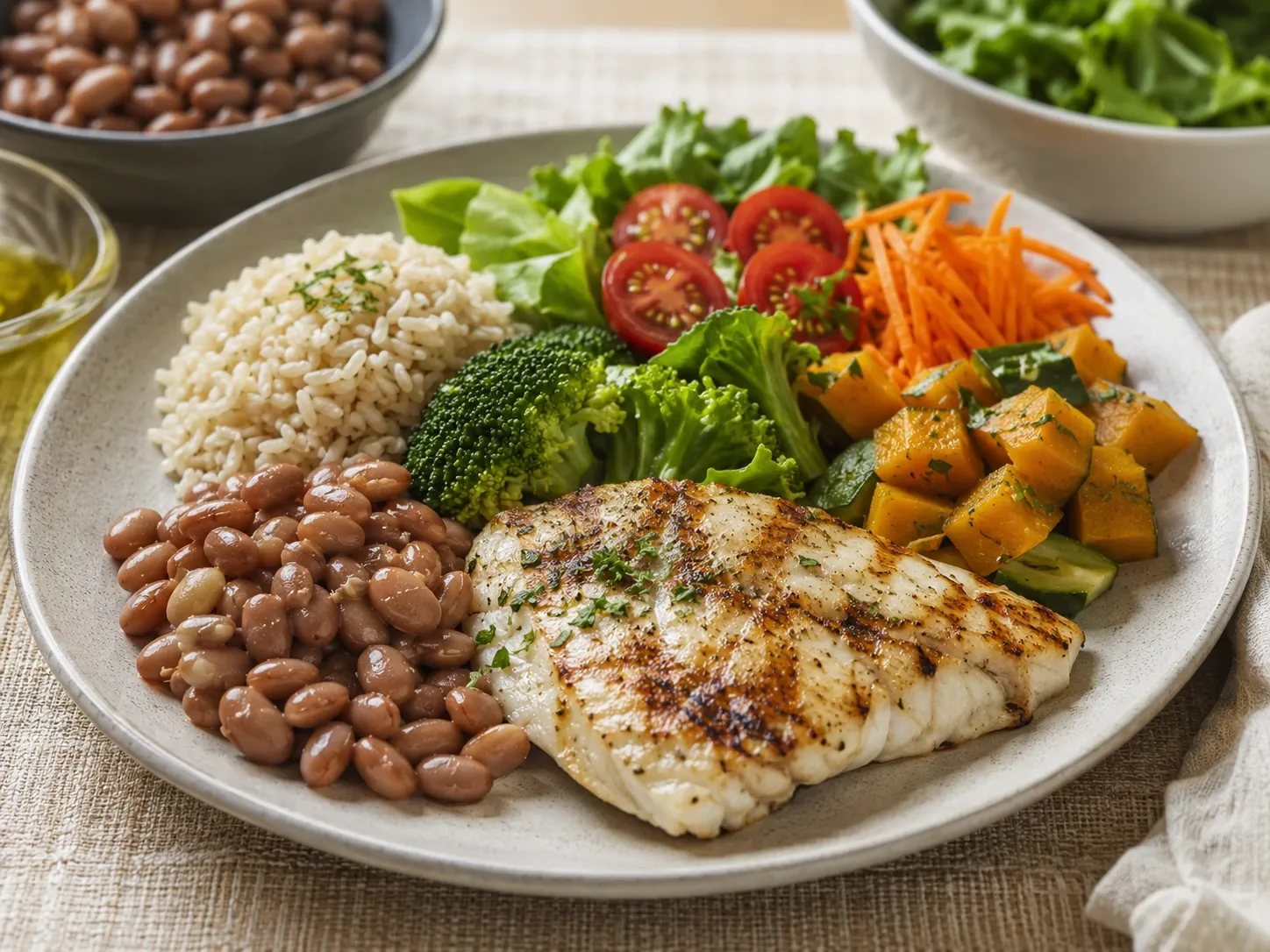
Rather than looking for a special “triglyceride diet,” build meals mostly around minimally processed foods.
A main meal might include:
- plenty of vegetables;
- beans, lentils, or another legume;
- an appropriate portion of a whole grain;
- fish, poultry, eggs, or another suitable protein source;
- a modest portion of an unsaturated fat source.
Whole fruit, plain yogurt without large amounts of added sugar, or appropriately portioned nuts can replace highly sweetened snacks.
This pattern is broadly consistent with current cardiovascular nutrition recommendations but should be adjusted for culture, personal preferences, energy needs, diabetes, kidney disease, and other medical conditions. (www.heart.org)
Look beyond food
High triglycerides do not automatically mean that someone is eating too much dietary fat.
Potential contributors include:
- poorly controlled diabetes;
- overweight and obesity;
- hypothyroidism;
- kidney disease;
- liver disease;
- inherited lipid disorders;
- excessive alcohol intake;
- physical inactivity;
- certain medications.
Persistent or marked elevations therefore deserve clinical investigation, particularly when they remain high despite reasonable lifestyle habits.
When are lifestyle changes not enough?
Lifestyle modification is foundational, but it does not replace medication when medication is clinically indicated.
Treatment depends on the degree of triglyceride elevation, cardiovascular risk, diabetes, existing cardiovascular disease, LDL cholesterol, and the underlying cause. The 2026 ACC/AHA dyslipidemia guideline continues to place lifestyle and cardiovascular risk-based treatment at the center of management while recognizing that additional therapies may be needed depending on ASCVD and pancreatitis risk. (American College of Cardiology)
Depending on the individual case, clinicians may use statins, fibrates, prescription omega-3 formulations, or other treatments.
Prescription omega-3 products used for triglyceride management are not the same as automatically taking an over-the-counter fish-oil supplement. (NHLBI, NIH)
Do not start or stop lipid-lowering medication without discussing it with a qualified healthcare professional.
Conclusion
High triglycerides can respond meaningfully to lifestyle changes, especially when diet quality, excess body weight, inactivity, or alcohol are contributing factors.
The best-supported strategies include reducing added sugars and heavily refined foods, choosing a dietary pattern rich in vegetables and minimally processed foods, limiting alcohol, exercising regularly, and pursuing sustainable weight loss when medically appropriate. (www.heart.org)
But the blood-test number does not tell the entire story. Diabetes, thyroid disease, kidney or liver conditions, medications, and genetics may also need to be addressed.
And if triglycerides reach 500 mg/dL or higher, professional assessment becomes particularly important because pancreatitis risk and the potential need for more intensive treatment change the clinical priorities. (SciELO)