Is Breakfast Really the Most Important Meal of the Day?
Is breakfast truly essential? See what research says about weight, metabolism, cardiovascular health, skipping breakfast, and what matters most in the morning.

“Never leave home without breakfast.” “Breakfast boosts your metabolism.” “Skipping breakfast makes you gain weight.”
These ideas have been repeated so often that breakfast has acquired the reputation of being the most important meal of the day.
Science tells a more nuanced story.
Breakfast can be an excellent opportunity to eat fruit, whole grains, protein, fiber, and other nutrient-rich foods. For some people, it also provides structure and helps manage hunger throughout the morning.
That is different from claiming that everyone must eat shortly after waking to be healthy. Reviews and randomized trials suggest that the effects of eating or skipping breakfast depend on the outcome being studied and do not support a universal rule. (Cambridge University Press)
Why did breakfast become so important?
Part of its reputation comes from observational research.
Over many years, studies have repeatedly found that people who regularly eat breakfast tend to have more favorable health indicators than habitual breakfast skippers.
Meta-analyses have associated breakfast skipping with a greater prevalence of overweight and obesity. A 2024 analysis of prospective cohort studies also found an association between breakfast skipping and higher all-cause and cardiovascular mortality. (PubMed)
Those findings matter.
But association is not the same as causation.
Breakfast eaters may differ in many other ways
Suppose researchers follow thousands of people and find that regular breakfast eaters have a lower risk of a health outcome.
Breakfast may not be the only difference between the groups.
They could also differ in:
- overall diet quality;
- physical activity;
- smoking;
- sleep;
- alcohol consumption;
- work schedules;
- income;
- education;
- food access;
- daily routine.
Statistical analyses can adjust for many of these factors, but residual confounding may remain.
This is why randomized controlled trials are especially useful when researchers want to understand causality.
What happens when breakfast is tested in randomized trials?
The results are far less dramatic.
A 2019 BMJ systematic review and meta-analysis examined randomized trials comparing breakfast consumption with breakfast omission. The results did not support recommending breakfast as a stand-alone weight-loss strategy. (The BMJ)
A second meta-analysis published in 2020 included seven randomized trials involving 425 adults, with an average intervention length of about 8.6 weeks.
Across these studies, breakfast skipping was associated with approximately 0.54 kg lower body weight compared with breakfast consumption. This does not mean skipping breakfast should be prescribed for weight loss: the effect was small, trials were relatively short, and body-fat percentage did not differ significantly. (PubMed)
The same analysis found that LDL cholesterol was about 9.24 mg/dL higher among breakfast skippers. There were no significant differences in blood pressure, total cholesterol, HDL cholesterol, triglycerides, fasting glucose, insulin, and several other markers. (PubMed)
The reasonable conclusion is not “always skip breakfast” or “never skip breakfast.”
It is that one meal does not determine body weight or metabolic health on its own.
Does skipping breakfast make you eat more later?
This idea seems logical.
If you do not eat in the morning, you might become so hungry that you compensate at lunch or dinner.
That can happen.
But it is not consistent across everyone.
A USDA systematic review assessed 19 studies examining breakfast in adults, 18 of which were randomized trials. Because the results were mixed and the studies had important limitations, the reviewers concluded that a firm relationship between breakfast consumption and total daily energy intake could not be established. (PubMed)
Some people compensate later in the day. Others do not.
So the claim that skipping breakfast always causes overeating later is too simplistic.
Does breakfast really “boost metabolism”?
This is another popular claim.
The body uses energy to digest and process food, but eating in the morning does not flip a metabolic switch that automatically causes weight loss.
Experiments comparing breakfast with extended morning fasting have found differences in components of energy expenditure, physical activity, appetite, and intake. However, these changes have not translated into a consistent body-weight advantage for breakfast eaters. (Cambridge University Press)
What about the observational evidence?
It should not be ignored.
A 2024 meta-analysis combining nine cohort studies and 242,095 adults reported an association between breakfast skipping and higher all-cause and cardiovascular mortality. (PubMed)
That association is worth investigating.
But it does not mean that starting breakfast tomorrow will automatically reverse that risk.
Breakfast skipping could also act as a marker for other behavioral or socioeconomic differences.
Does meal timing matter?

Probably to some extent, although this is a broader question than simply eating or skipping breakfast.
Human physiology follows biological rhythms across the roughly 24-hour day. This has led to growing interest in chrononutrition, which investigates how the timing and distribution of food intake interact with circadian biology.
The American Heart Association has highlighted the potential relevance of meal timing and regularity to cardiometabolic health while recognizing that the evidence does not support one universal schedule for everyone. (American Heart Association)
This also means that “skipping breakfast” and “intermittent fasting” are not synonymous.
Someone may shorten their eating window by finishing dinner earlier while still eating breakfast.
Do you need breakfast to lose weight?
If the question is:
“Do I have to eat breakfast to lose weight?”
The answer is no.
Randomized trials do not show that simply adding breakfast reliably promotes weight loss. (The BMJ)
If the question is:
“Do I have to skip breakfast to lose weight?”
The answer is also no.
One person may successfully lose weight while eating breakfast every day. Another may prefer eating later.
Other factors include:
- total energy intake;
- diet quality;
- satiety;
- protein and fiber intake;
- physical activity;
- sleep;
- eating behavior;
- long-term adherence.
Meal timing is only one part of the picture.
What you eat for breakfast may matter more than simply eating breakfast
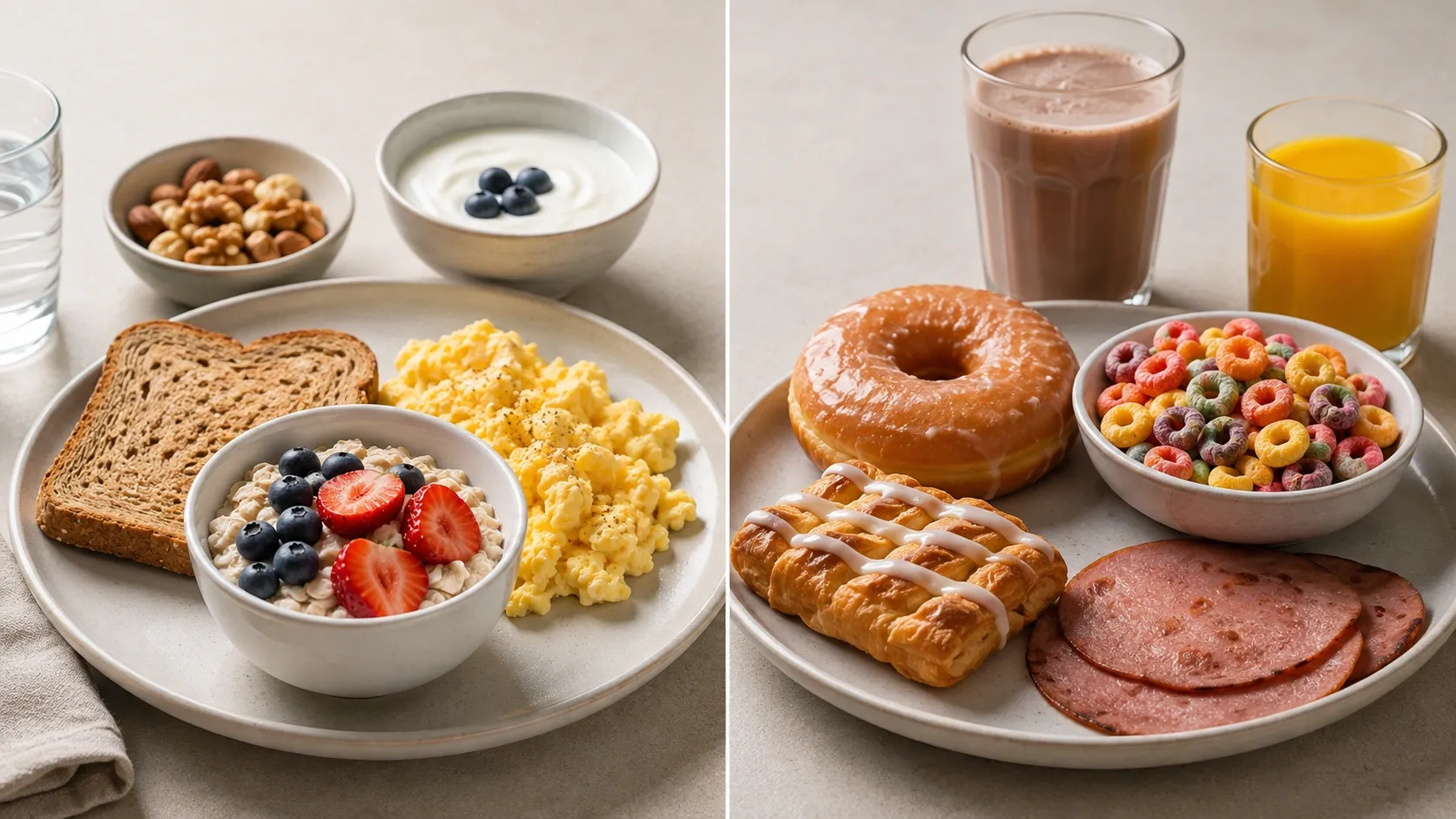
Compare two meals.
Breakfast A:
- fruit;
- oats;
- plain yogurt;
- nuts or seeds.
Breakfast B:
- a sugary drink;
- heavily sweetened cereal;
- pastries or cookies;
- processed meat.
Both people technically “ate breakfast.”
Nutritionally, however, the meals are very different.
WHO emphasizes a varied diet rich in whole grains, vegetables, fruit, pulses, and nuts while limiting free sugars, sodium, and less favorable fats. (WHO)
The American Heart Association similarly emphasizes overall dietary patterns, vegetables and fruit, whole grains, healthier protein sources, unsaturated fats, and minimally processed foods. (American Heart Association)
So asking “Did you eat breakfast?” may be less useful than asking “What did you eat, and what does the rest of your diet look like?”
How to build a nutritious breakfast
There is no mandatory formula, and breakfast foods do not need to be traditionally Western breakfast foods.
A practical approach is to combine several of the following.
A source of protein
Examples include:
- eggs;
- plain yogurt;
- milk;
- tofu;
- beans or other pulses;
- nuts or nut butters.
Fiber-rich or higher-quality carbohydrate foods
Examples include:
- oats;
- whole-grain bread;
- other whole grains;
- fruit;
- pulses.
Fruit or vegetables
Whole fruit is a convenient way to add fiber, vitamins, minerals, and variety.
Unsaturated fats
Options include:
- nuts;
- seeds;
- avocado;
- appropriate plant oils.
This general approach is consistent with healthy-diet guidance from Harvard’s Nutrition Source, WHO, and the American Heart Association. (Harvard T.H. Chan)
Breakfast does not have to look like “breakfast food”
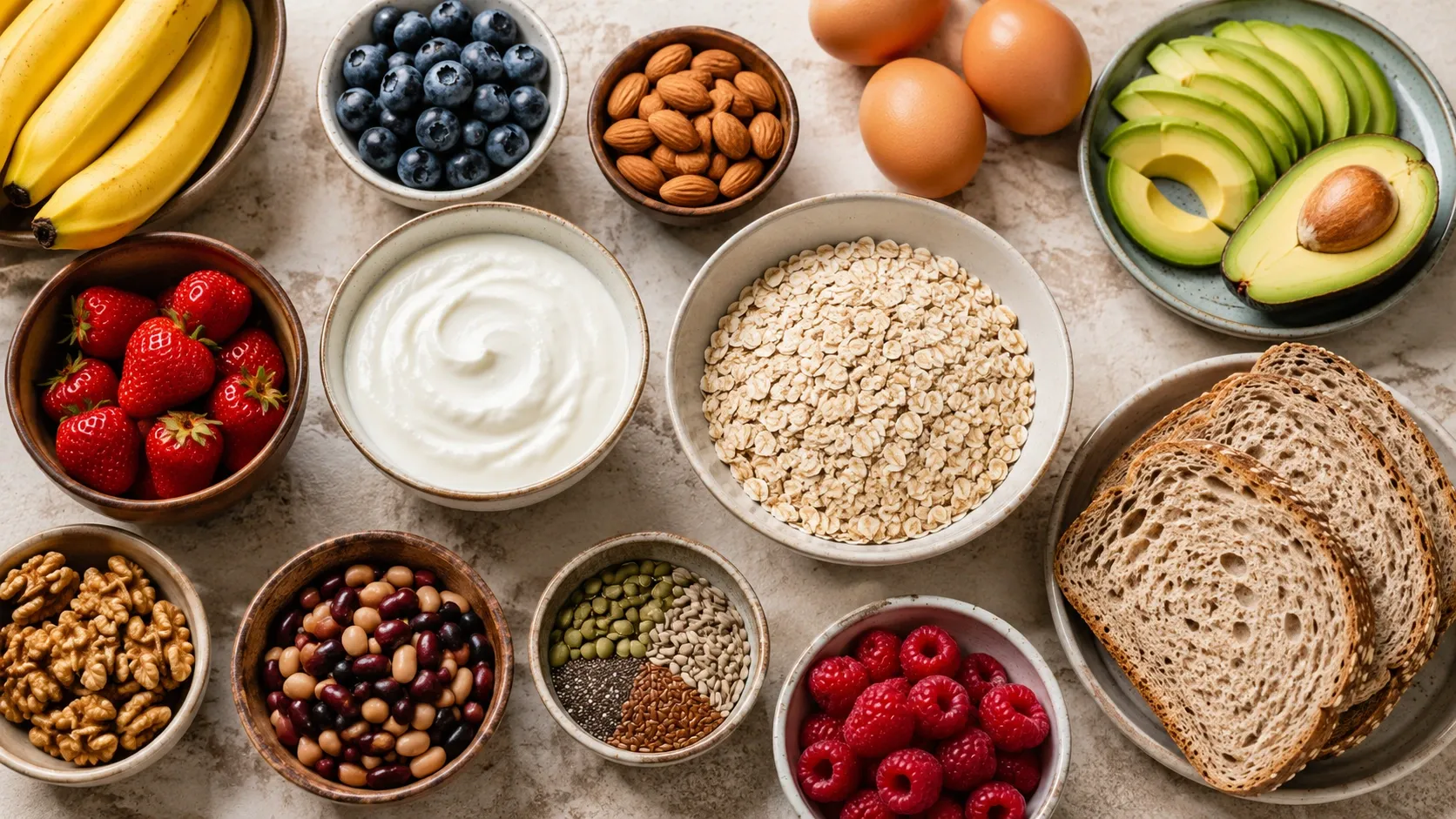
Breakfast is also culturally defined.
The first meal of the day could include:
- rice and beans;
- an omelet with vegetables;
- balanced leftovers from dinner;
- whole-grain bread with eggs;
- yogurt, oats, and fruit;
- a pulse-based dish.
From a nutritional perspective, the clock does not automatically turn a food into a healthy or unhealthy choice.
The overall composition still matters.
What if you are not hungry in the morning?
A healthy adult who naturally wakes up without an appetite does not necessarily need to eat immediately simply because it is “breakfast time.”
The USDA’s recent systematic review could not establish a consistent relationship between breakfast consumption and total daily energy intake in adults. (PubMed)
Some people feel and perform better after an early meal.
Others are comfortable eating several hours later.
Both patterns can potentially accommodate a nutritionally adequate diet.
What about children and teenagers?
The context is different.
For children and adolescents, breakfast can be an important opportunity to obtain energy and nutrients, and school meal programs may also improve access to regular nutritious food.
However, even in younger populations, observational associations should not automatically be interpreted as causal. A systematic review of adolescents found associations between breakfast skipping and several cardiometabolic risk factors, but rated the overall quality of the evidence as low. (PubMed)
Research on breakfast and cognitive or academic performance is also heterogeneous, with findings depending on study design, nutritional status, and meal composition. (PubMed)
Children therefore deserve a more specific assessment than simply applying adult evidence to them.
Is breakfast incompatible with intermittent fasting?
Not necessarily.
Intermittent fasting includes several different strategies.
A person may:
- delay the first meal;
- move the final meal earlier;
- shorten the daily eating window;
- use another intermittent-energy-restriction pattern.
Therefore, potential benefits of intermittent fasting should not automatically be attributed to skipping breakfast.
A large network meta-analysis published in the BMJ in 2025 found that intermittent-fasting strategies generally produced weight changes similar to continuous energy restriction, with relatively modest differences between approaches. (The BMJ)
There is no single mandatory eating schedule for weight loss.
Should you eat breakfast or not?
A practical approach is to pay attention to how your morning eating pattern affects the rest of your day.
Breakfast may be helpful if:
- you wake up hungry;
- it helps your energy or concentration;
- it makes nutritious foods easier to include;
- it prevents excessive hunger later;
- it works well with your routine;
- it helps distribute protein and other nutrients across the day.
Eating early may be less necessary if:
- you naturally have little appetite in the morning;
- you still eat a nutritionally adequate diet later;
- delaying food does not lead to excessive hunger or loss-of-control eating;
- the pattern is compatible with your health needs.
The goal is not to obey a slogan.
It is to build an eating pattern that is nutritionally adequate, safe, and sustainable.
What matters more than choosing a “winning meal”?
Major healthy-eating recommendations do not depend on declaring breakfast, lunch, or dinner the winner.
WHO emphasizes dietary variety, adequate nutrient and energy intake, and foods such as whole grains, vegetables, fruits, pulses, and nuts. (WHO)
The American Heart Association similarly emphasizes that the overall pattern of food choices matters. (American Heart Association)
In practice, focus on:
| Factor | Why it matters |
|---|---|
| Food quality | Influences the overall nutrient density of the diet |
| Total amount eaten | Affects energy balance |
| Fruit and vegetables | Provide fiber, vitamins, minerals, and other compounds |
| Whole grains and pulses | Improve fiber intake and carbohydrate quality |
| Adequate protein | Supports nutritional needs and satiety |
| Added sugars | Should be limited within a healthy diet |
| Routine and regularity | May improve adherence for some people |
| Individual preference | Helps make an eating pattern sustainable |
(WHO)
Among the foods that handle the protein side of this meal, one packs a lot into very little:
Eggs: protein, vitamins, and minerals all in one food
Conclusion
Breakfast does not need to be crowned the most important meal of the day to be valuable.
For people who enjoy eating in the morning, breakfast can be an excellent opportunity to include fruit, whole grains, protein, fiber, and other nutritious foods.
For a healthy adult who is not hungry early, however, current evidence does not show that forcing an early meal is necessary for weight loss or to “keep the metabolism running.” Randomized-trial reviews do not demonstrate a consistent body-weight advantage simply from eating breakfast. (The BMJ)
At the same time, observational studies continue to associate habitual breakfast skipping with several unfavorable outcomes, which makes meal timing and cardiometabolic health worthwhile areas for continued research. (PubMed)
The practical takeaway is simpler than the slogan:
If you eat breakfast, focus on its quality. If you do not, focus on the quality and adequacy of everything you eat throughout the rest of the day.