Is Spinach Really as Nutritious as People Say?
Spinach is rich in vitamin K, folate, and other nutrients, but iron, calcium, and oxalates require context. Here is what the evidence shows.
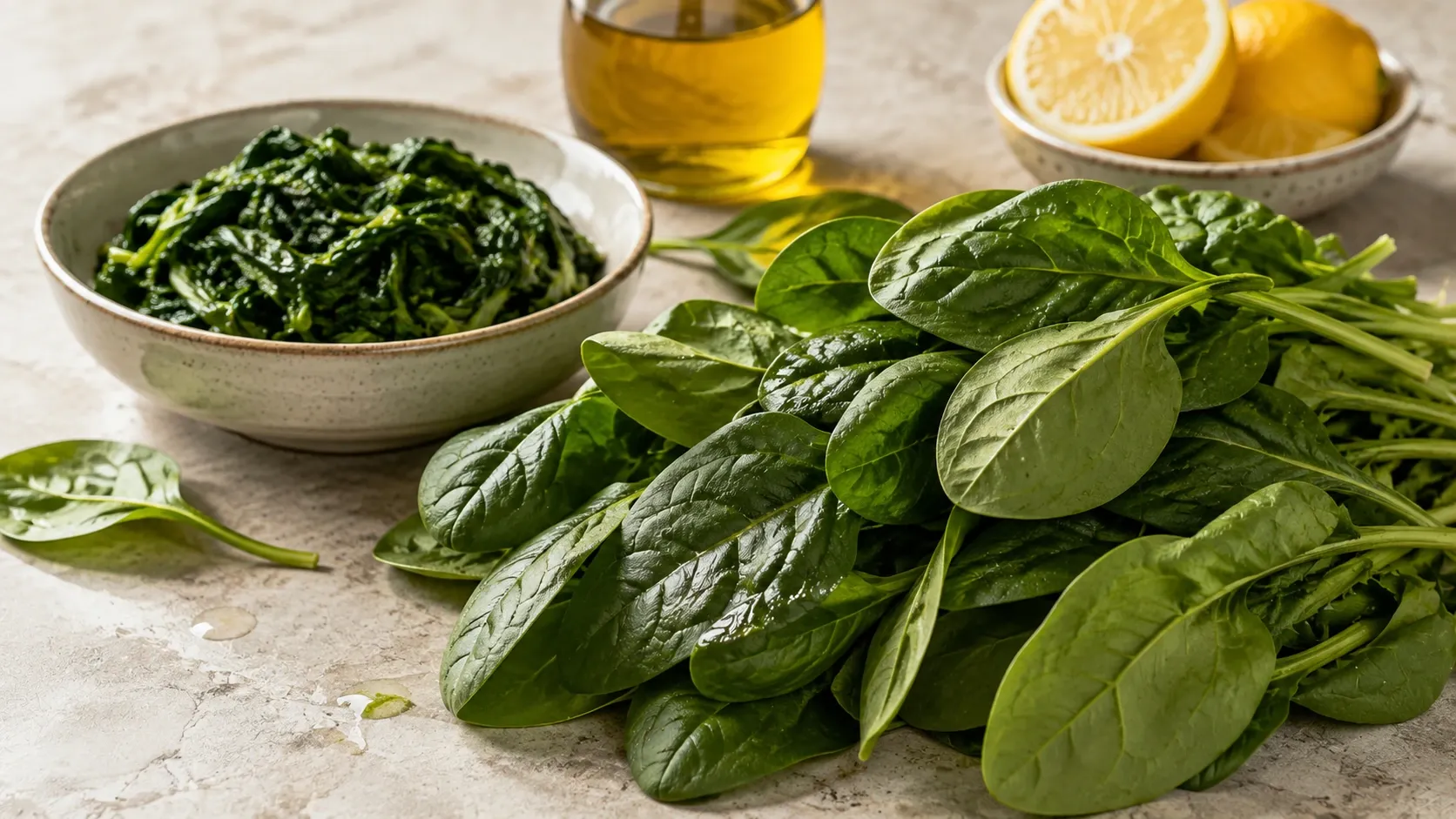
Few vegetables have developed a nutritional reputation as strong as spinach. For decades, it has been associated primarily with iron, but its real nutritional strengths extend far beyond that mineral.
The short answer is yes, spinach is a highly nutritious food. It is particularly notable for vitamin K and folate while also contributing iron and other micronutrients. Still, nutrient amounts on a food composition table do not always tell the whole story because absorption can vary substantially. (ODS)
This distinction is especially important for iron and calcium.
Which nutrients stand out in spinach?
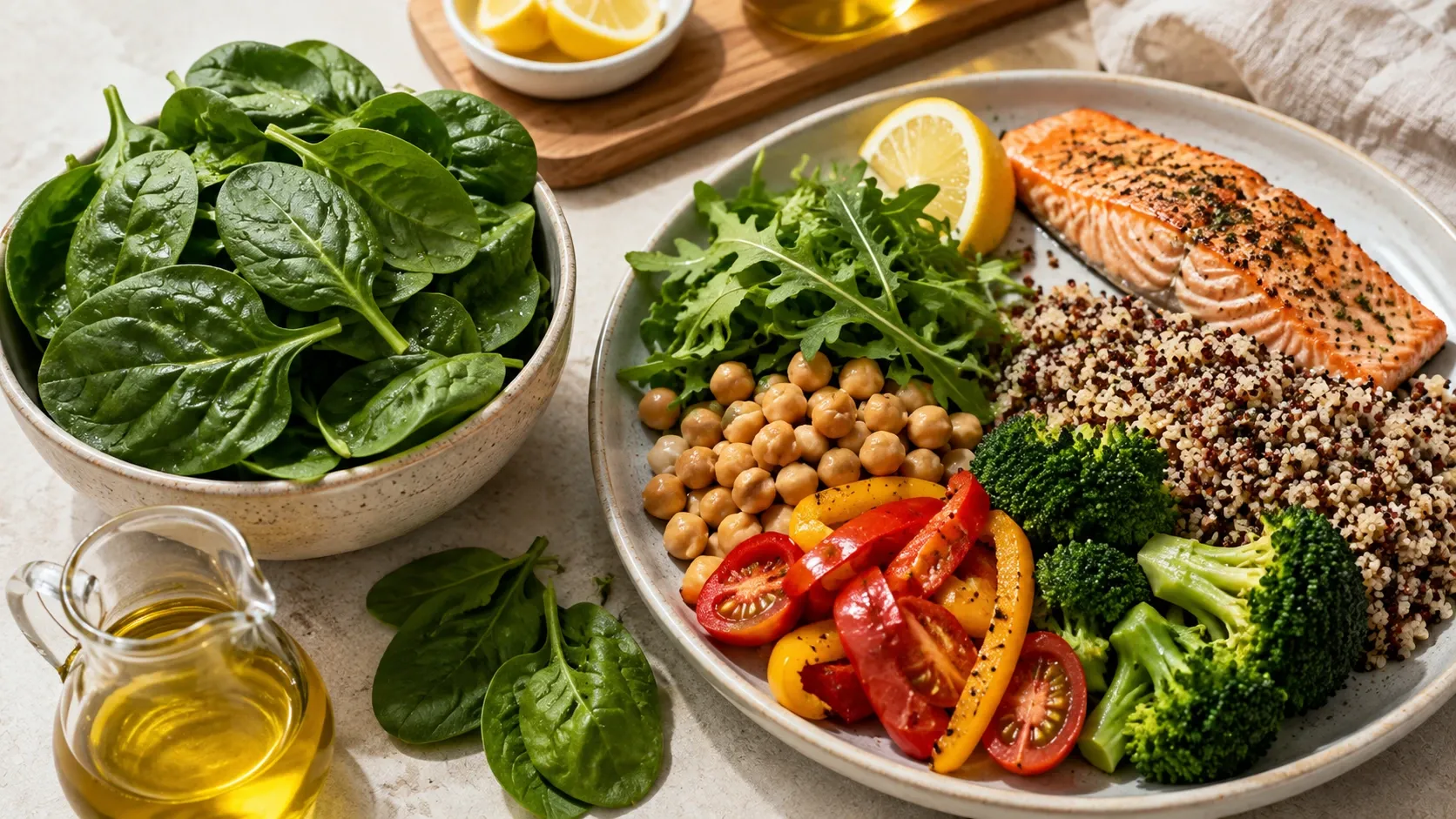
Two of spinach’s nutritional highlights are vitamin K and folate.
According to the NIH Office of Dietary Supplements, one cup of raw spinach contains approximately 145 mcg of vitamin K, equivalent to about 121% of the FDA Daily Value. (ODS)
The same cup of raw spinach provides about 58 mcg DFE of folate. Half a cup of boiled spinach provides approximately 131 mcg DFE, or about one-third of the Daily Value. (ODS)
Spinach also provides minerals. Half a cup of boiled spinach contains approximately 3 mg of iron and 123 mg of calcium. The important question, however, is how much of those minerals the body can actually absorb. (ODS)
| Nutrient | Example serving | Approximate amount | Important context |
|---|---|---|---|
| Vitamin K | 1 cup raw | 145 mcg | Excellent source |
| Folate | 1 cup raw | 58 mcg DFE | Useful contribution |
| Folate | ½ cup cooked | 131 mcg DFE | More concentrated serving |
| Iron | ½ cup cooked | 3 mg | Nonheme iron |
| Calcium | ½ cup cooked | 123 mg | Absorption limited by oxalate |
Values are based on NIH Office of Dietary Supplements food tables. (ODS)
Is spinach as rich in iron as its reputation suggests?
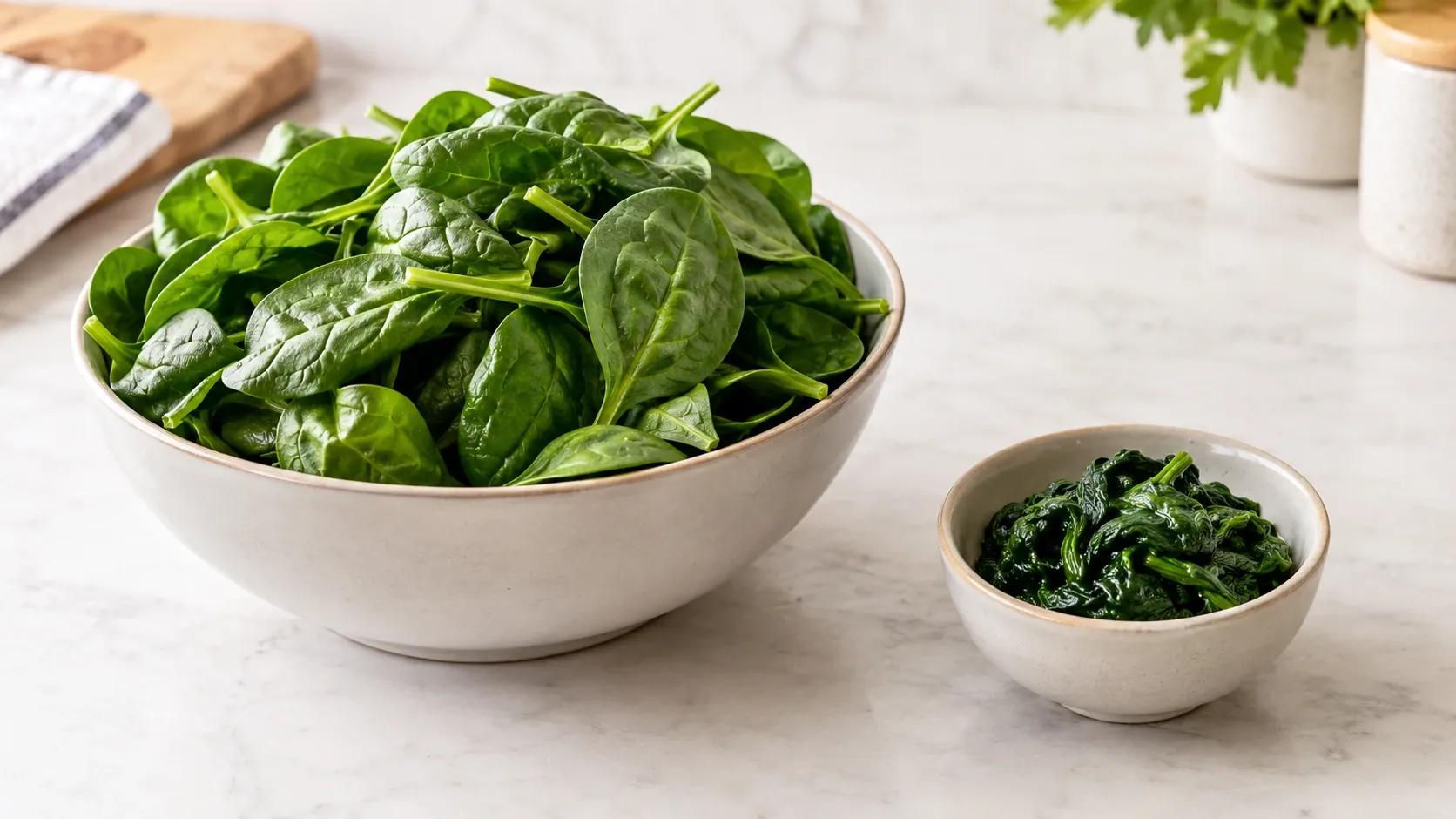
Spinach contains iron, but its iron reputation requires some context.
The iron in spinach is nonheme iron, the form found in plant foods. Nonheme iron generally has lower bioavailability and is more affected by the other foods eaten in the same meal.
The NIH specifically identifies spinach as an example of a plant food that contains iron but has relatively low iron bioavailability because of absorption inhibitors in its food matrix. (ODS)
So while half a cup of cooked spinach contains roughly 3 mg of iron, the body does not absorb all 3 mg. (ODS)
How can you improve plant iron absorption?
Vitamin C can increase the absorption of nonheme iron.
A spinach-based meal can therefore be paired with foods such as:
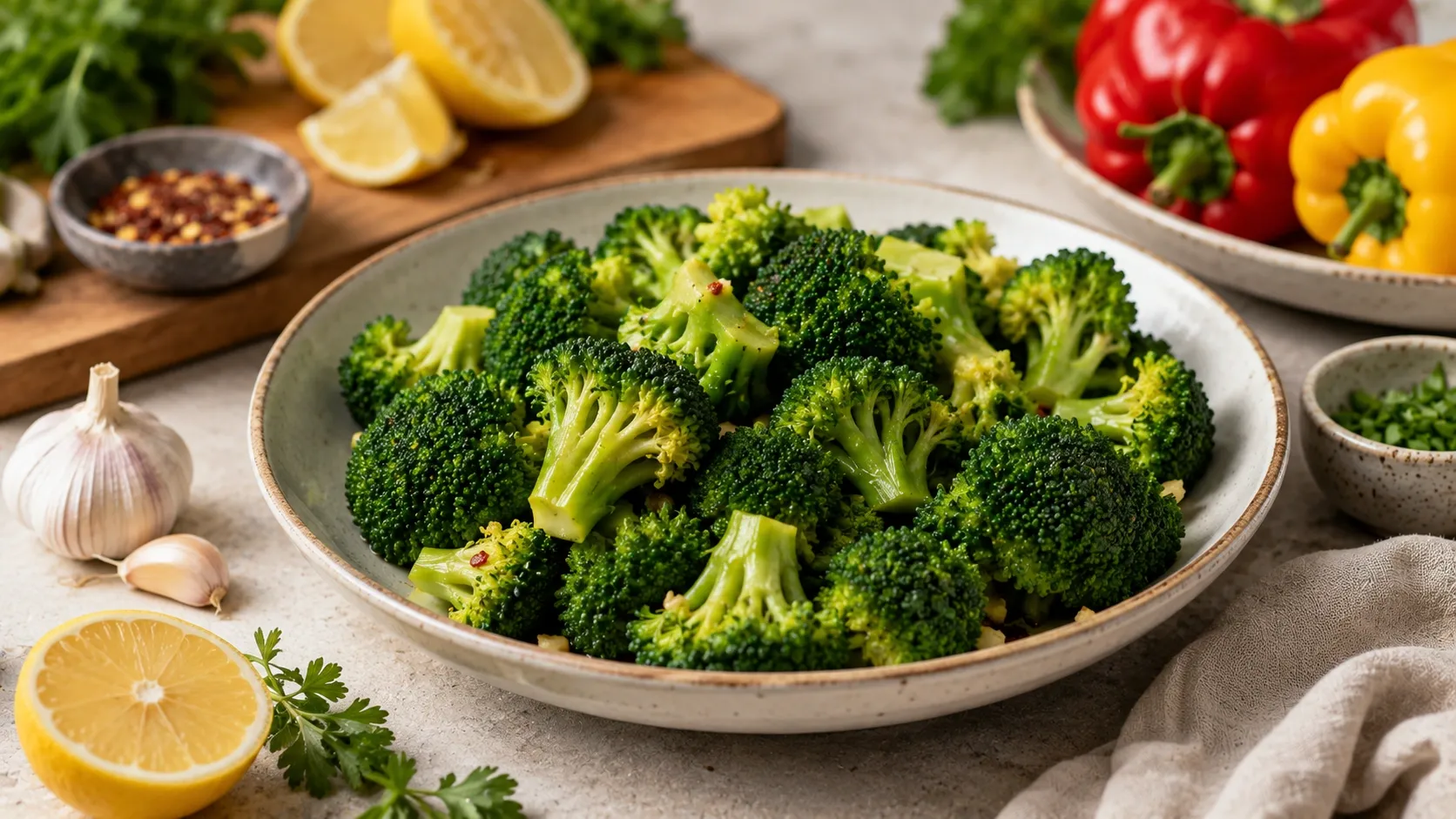
- bell peppers;
- tomatoes;
- citrus fruits;
- strawberries;
- broccoli.
This is a practical example of why overall meal composition matters more than looking at a single nutrient in isolation. (ODS)
What about the calcium in spinach?
The difference between nutrient content and nutrient absorption is even clearer with calcium.
Half a cup of cooked, drained spinach contains about 123 mg of calcium. (ODS)
However, spinach is rich in oxalic acid, which binds calcium and forms poorly absorbed compounds. The NIH estimates calcium absorption from spinach at approximately 5%, compared with about 27% from milk in the comparison cited in its professional fact sheet. (ODS)
That does not make the calcium in spinach meaningless, but it does mean spinach is not an especially efficient primary source of dietary calcium.
Lower-oxalate vegetables such as kale and broccoli can provide calcium with better bioavailability. (ODS)
What are the oxalates in spinach?
Oxalates are naturally occurring compounds found in many plant foods, and spinach is considered a high-oxalate vegetable.
For most healthy people, this does not mean spinach needs to be avoided. The issue is more relevant to individuals predisposed to calcium oxalate kidney stones. NIDDK guidance emphasizes that dietary recommendations should depend on the type of kidney stone and the individual’s overall risk profile. (Instituto Nacional de Diabetes e Doenças Digestivas e Renais)
Importantly, preventing calcium oxalate stones does not usually mean eliminating dietary calcium. Adequate calcium consumed with food can bind oxalate in the digestive tract and reduce the amount available for absorption. (Instituto Nacional de Diabetes e Doenças Digestivas e Renais)
Does cooking reduce oxalates?
It can.
A study examining several vegetables, including Spinacia oleracea, found that boiling reduced soluble oxalate by 30% to 87% across the vegetables tested, while steaming produced smaller reductions of 5% to 53%. The exact reduction varied by vegetable. (PubMed)
Much of the removed oxalate ended up in the cooking water. Boiling and discarding that water may therefore be useful for people who have specifically been advised to lower dietary oxalate.
For everyone else, there is generally no need to treat occasional spinach consumption as a problem.
Is raw or cooked spinach better?
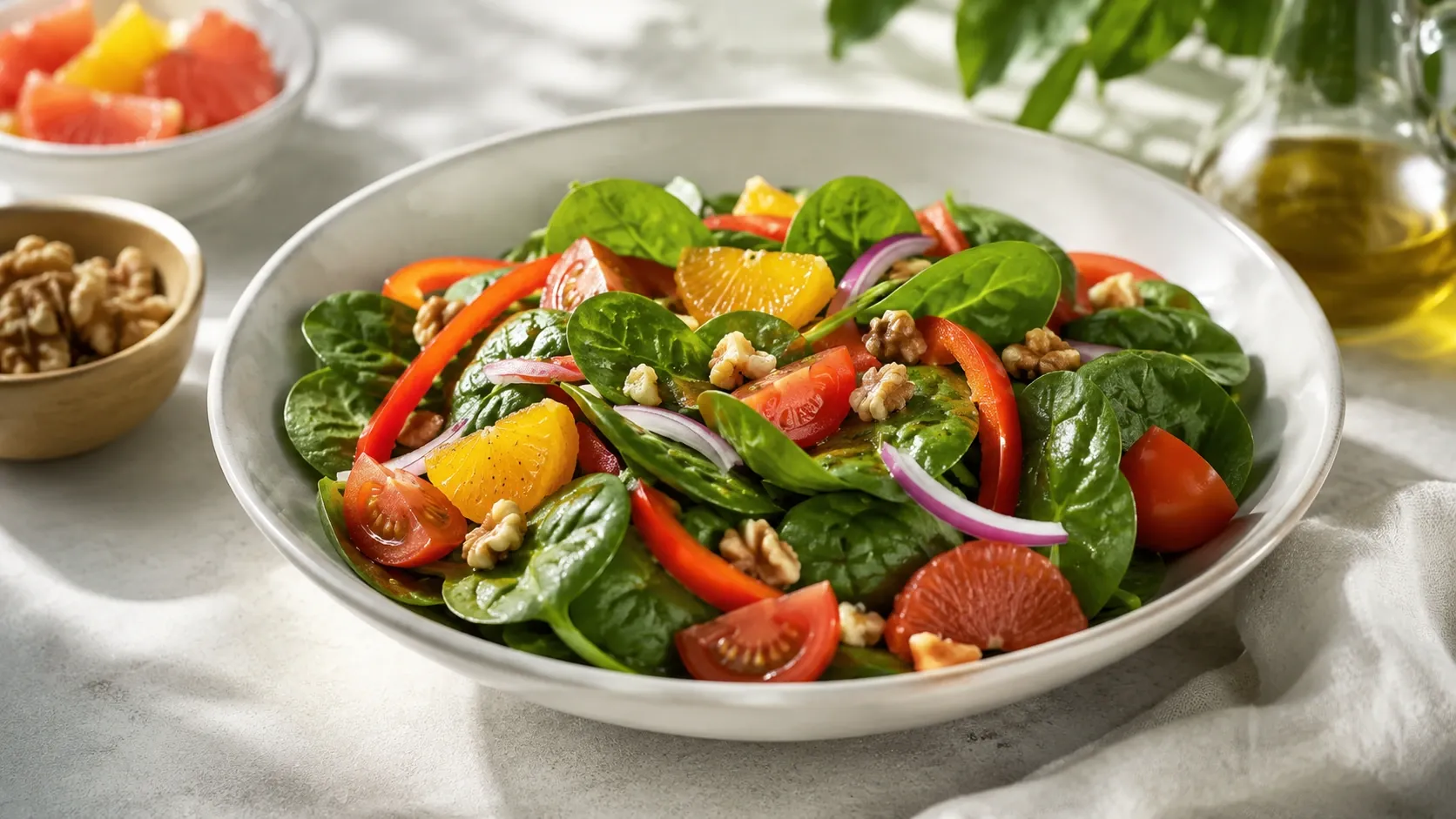
There is no single winner.
Raw spinach is convenient and avoids some heat-related losses. Vitamin C, for example, can decline with prolonged storage and cooking. (ODS)
Cooking, however, dramatically decreases the volume of spinach leaves, allowing a much larger quantity to fit into a small serving.
That helps explain why half a cup of boiled spinach contains approximately 131 mcg DFE of folate while one cup of raw spinach provides about 58 mcg. Cooking did not simply create more folate; the cooked serving contains far more spinach leaves by weight. (ODS)
Cooking can also reduce soluble oxalate. (PubMed)
For most people, using both raw and cooked spinach is a sensible approach.
Vitamin K is one of spinach’s biggest strengths
If one nutrient truly supports spinach’s impressive reputation, it is vitamin K.
One cup of raw spinach provides approximately 145 mcg, exceeding the FDA Daily Value of 120 mcg for adults and children aged 4 years and older. (ODS)
Vitamin K is essential for proteins involved in normal blood clotting and has several other physiological roles. Clinically significant vitamin K deficiency is rare in healthy adults consuming a varied diet. (ODS)
Vitamin K from leafy vegetables is not completely absorbed. NIH notes that eating vegetables with some dietary fat can improve phylloquinone absorption. (ODS)
In practical terms, this could be as simple as serving spinach with olive oil or as part of a meal containing another source of fat.
Can people taking warfarin eat spinach?
Usually, yes.
Advice on this topic is sometimes oversimplified into “people taking blood thinners cannot eat leafy greens,” but the recommendation for warfarin is more nuanced.
Vitamin K affects warfarin’s anticoagulant action. Major changes in vitamin K intake can therefore influence measures such as INR.
The American Heart Association recommends maintaining a relatively consistent amount of vitamin K from week to week. It specifically notes that spinach and other vitamin K-rich vegetables do not have to be completely avoided. (www.heart.org)
Is spinach a “superfood”?
“Superfood” is not a standardized scientific nutrition category and can give the impression that a single food produces extraordinary health effects.
Spinach does not need that label.
It is a nutrient-dense leafy vegetable with particularly meaningful amounts of vitamin K and folate. It also contributes iron and other micronutrients. At the same time, oxalate substantially reduces its calcium bioavailability, and its nonheme iron is less readily absorbed than heme iron. (ODS)
Its nutritional value makes the most sense when spinach is viewed as one component of a varied diet rather than as a uniquely powerful food.
How to get the most from spinach
A few practical strategies can help:
- alternate between raw and cooked spinach;
- pair plant-based iron sources with vitamin C-rich foods;
- include some dietary fat with spinach to support vitamin K absorption;
- rotate spinach with other leafy greens;
- seek individualized guidance if you have recurrent calcium oxalate kidney stones;
- maintain a consistent vitamin K intake if you take warfarin. (ODS)
Conclusion
Yes, spinach deserves much of its nutritional reputation — just not always for the reasons people assume.
Its strongest nutritional features include vitamin K and folate, while it also contributes iron and several other micronutrients. However, nutrient tables can overstate the practical importance of certain minerals: nonheme iron has limited absorption, and only a small proportion of spinach calcium is absorbed because of oxalate. (ODS)
None of this makes spinach less worthwhile. It simply illustrates a basic principle of nutrition: no single nutrient number — and no single food — tells the whole story.
For most people, spinach can comfortably be a regular part of a varied diet, whether eaten raw, sautéed, boiled, or incorporated into other dishes.