Turmeric and Curcumin: Real Benefits and Research Limitations
Turmeric and curcumin are linked to anti-inflammatory and joint-health benefits. Learn what clinical research supports, what remains uncertain, and the key safety concerns.
Few ingredients have accumulated as many health claims as turmeric. It is commonly promoted for inflammation, joint pain, immunity, weight loss, cardiovascular health, liver health, and even cancer prevention.
The scientific evidence starts with an important distinction: eating turmeric is not the same as taking a concentrated curcumin supplement.
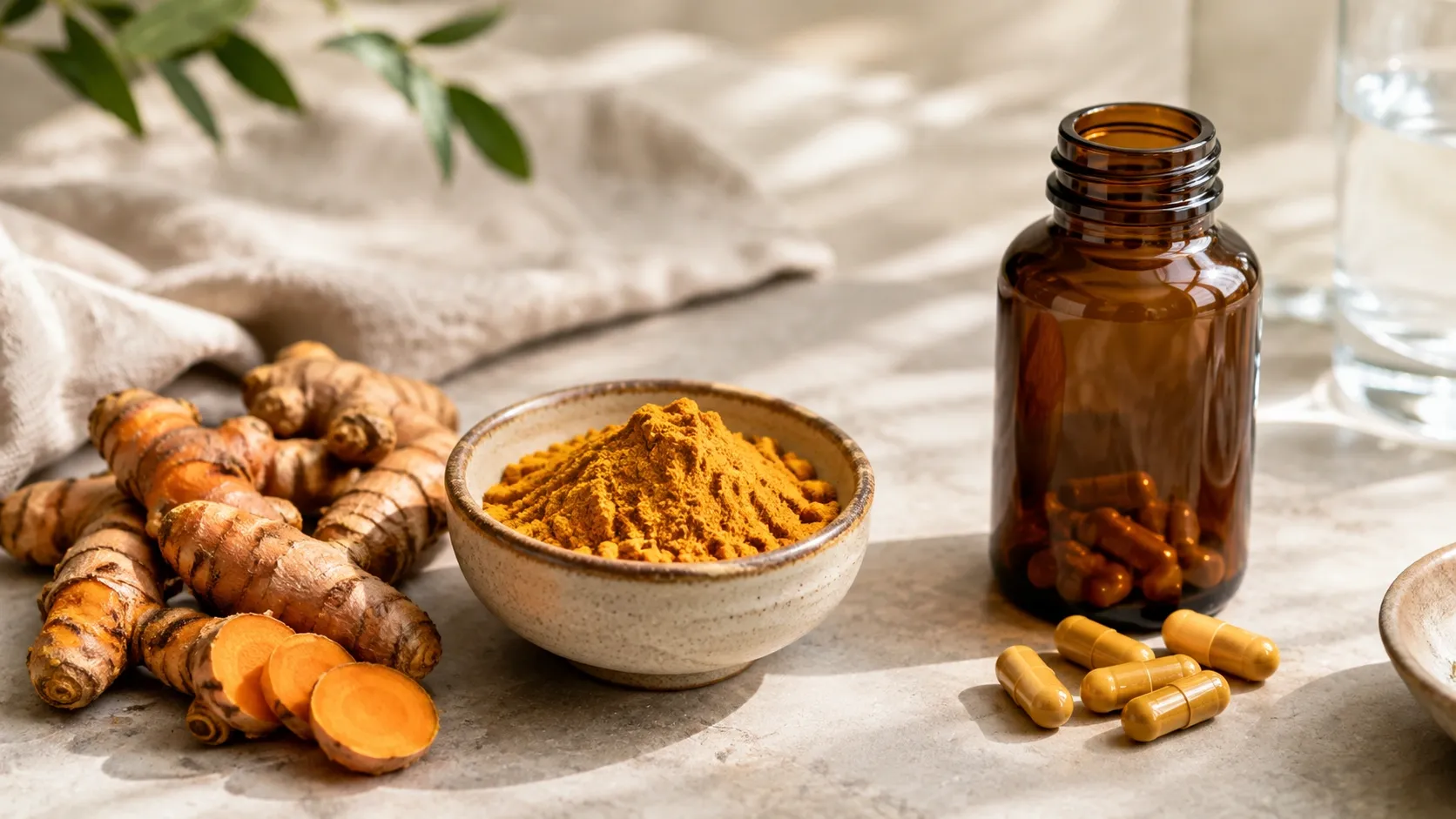
Turmeric comes from the rhizome of Curcuma longa. Its components include curcuminoids, with curcumin being a major member of this group. Supplements may concentrate these compounds and use technologies that substantially change their absorption. (NCCIH)
Turmeric and curcumin are not interchangeable
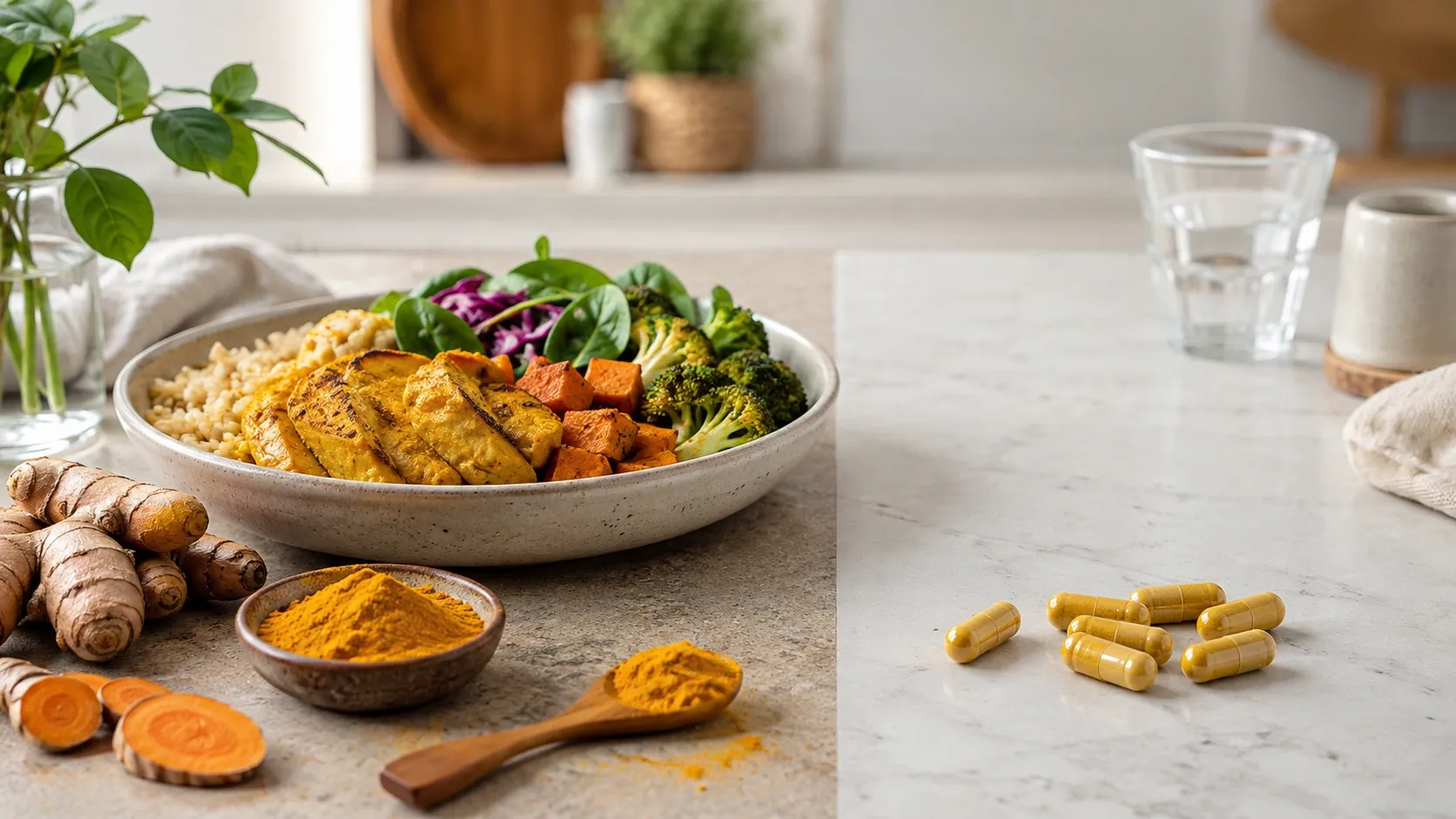
Turmeric is commonly used as a spice.
Clinical research, however, may investigate whole turmeric powder, Curcuma longa extracts, concentrated curcuminoids, isolated curcumin, curcumin plus piperine, lipid complexes, micelles, nanoparticles, or other enhanced-bioavailability preparations.
The NCCIH identifies this variation as an important limitation when interpreting studies. Products carrying the same general “curcumin” label may expose the body to very different amounts of bioavailable curcumin. (NCCIH)
Is curcumin really anti-inflammatory?
There is evidence of biological activity.
A 2024 meta-analysis of meta-analyses reported favorable changes in several biomarkers related to inflammation, oxidative stress, and endothelial function, including reductions in CRP, IL-6, and TNF-α. (PubMed)
However, a biomarker is not the same thing as a meaningful clinical outcome.
A lower inflammatory marker does not by itself demonstrate fewer heart attacks, less cancer, longer survival, improved pain, or better quality of life.
This is why claims that curcumin broadly “fights inflammation throughout the body” go beyond what biomarker evidence alone can establish. (PubMed)
Where is the strongest clinical signal? Osteoarthritis

Joint pain is one of the most extensively studied uses.
A 2025 systematic review and network meta-analysis found that turmeric preparations reduced knee osteoarthritis pain compared with placebo. (PubMed)
The important limitation is that the overall certainty of evidence remained low. (PubMed)
Studies used different products, doses, durations, and bioavailability technologies, making it difficult to identify a single optimal treatment.
The most accurate conclusion is therefore that certain turmeric or curcumin preparations may improve knee osteoarthritis symptoms, but the magnitude and reliability of the effect still require better-quality research. (NCCIH)
What about cholesterol, blood sugar, and fatty liver disease?
These are active areas of research, but results should not be overinterpreted.
The NCCIH notes that preliminary research on metabolic fatty liver disease suggests possible improvements in some measures, while it remains unclear which effects are consistently reproduced. The agency does not consider the overall evidence sufficient to definitively establish turmeric or curcumin as beneficial for a specific health purpose. (NCCIH)
Changes in cholesterol, glucose, liver enzymes, or inflammatory biomarkers also do not mean that curcumin can replace established treatments for diabetes, dyslipidemia, or liver disease.
Does curcumin cause weight loss?
Recent research provides an example of why population matters.
A 2025 systematic review and meta-analysis examined adults with type 2 diabetes. Across nine randomized trials involving 699 participants, curcumin was associated with average reductions of about 1.65 kg in body weight, 0.69 kg/m² in BMI, and 0.93 cm in waist circumference. (PubMed)
These were modest effects in a specific clinical population, and the authors called for additional high-quality studies to confirm long-term clinical relevance. (PubMed)
The findings therefore should not be converted into the broad statement that “curcumin burns fat” or works as a general weight-loss supplement.
Does curcumin prevent cancer?
Laboratory research has generated considerable interest, but experimental findings are not equivalent to successful cancer treatment in humans.
A recent systematic review evaluated randomized trials using curcumin as a complementary intervention in oncology. Studies differed greatly in cancer type, dose, formulation, conventional treatment, and outcome, limiting firm conclusions. (PubMed)
The NCCIH likewise states that there is not enough evidence to recommend curcumin-containing products for treating cancer. (NCCIH)
Curcumin should therefore not be used as a replacement for established oncology care.
Why does curcumin absorption matter?
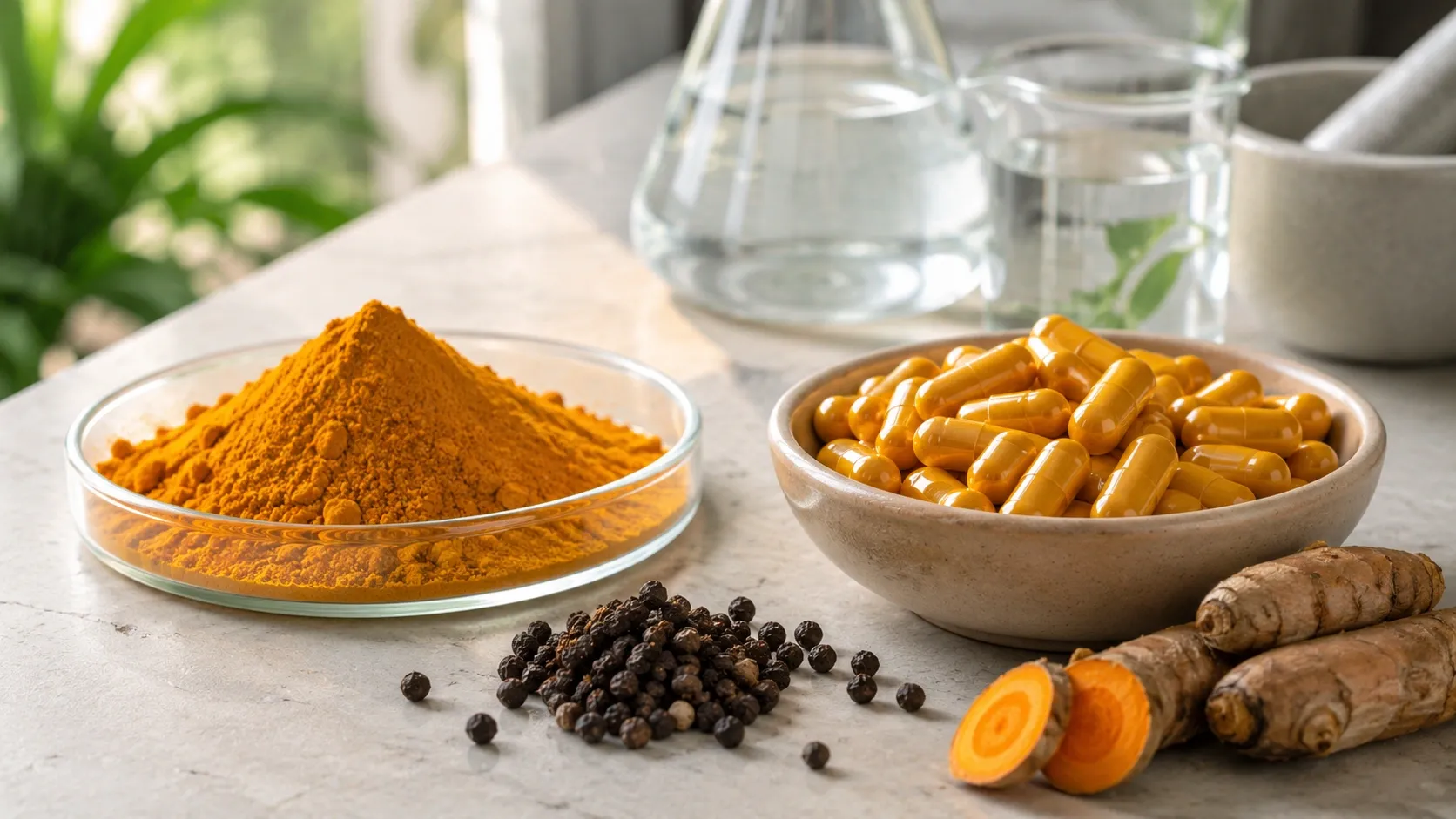
Conventional oral curcumin has limited bioavailability.
This has led researchers and supplement manufacturers to develop multiple strategies for increasing systemic exposure. (NCCIH)
One approach is the addition of piperine, a compound found in black pepper. A pharmacokinetic study demonstrated that piperine can markedly increase curcumin bioavailability. (PubMed)
Other modern formulations use lipid carriers, micelles, or other delivery technologies.
Greater absorption is not automatically better
Higher systemic exposure might alter both potential efficacy and potential risk.
Evidence obtained with one highly bioavailable formulation also cannot automatically be applied to a conventional curcumin capsule. The NCCIH specifically notes that more research is needed to understand how differences in bioavailability influence clinical effects. (NCCIH)
Is curcumin with black pepper always better?
No.
Piperine may increase absorption, but clinical medicine is not simply about maximizing blood levels of a compound. A formulation needs to demonstrate that the increased exposure produces a meaningful benefit with acceptable safety.
“More bioavailable” and “more effective” are not synonyms.
Can curcumin cause liver injury?
This is one of the most important safety issues surrounding concentrated supplements.
The NCCIH reports that liver injury has occurred in people taking some curcumin products designed for increased bioavailability. (NCCIH)
The U.S. Drug-Induced Liver Injury Network reported ten cases attributed to turmeric, including potentially severe hepatocellular injury. (PubMed)
This does not mean that liver injury is common or that everyone taking turmeric supplements is at high risk.
It does mean that “natural” should never be treated as synonymous with “risk-free.”
Other side effects
Oral turmeric and curcumin can cause gastrointestinal effects such as nausea, vomiting, reflux, stomach discomfort, diarrhea, or constipation. (NCCIH)
According to the NCCIH, conventional formulations used at recommended amounts are likely safe for approximately two to three months, although this cannot automatically be generalized to every high-bioavailability formulation or to prolonged use. (NCCIH)
Pregnancy and medications
The NCCIH cautions that turmeric supplements may be unsafe during pregnancy, while little is known about supplement-level exposure during breastfeeding. (NCCIH)
People taking medications should also tell their healthcare providers about herbal supplements because interactions can occur depending on the product and clinical situation. (NCCIH)
What is the right curcumin dose?
There is no universal evidence-based dose for “lowering inflammation” or improving general health.
Different clinical trials have used different compounds, delivery systems, doses, and treatment periods. A dose used with conventional curcumin is also not necessarily equivalent to the same milligram amount in a highly bioavailable formulation. (NCCIH)
This is one reason why comparing supplements only by the number of milligrams on the front label can be misleading.
What about turmeric as a food?
Using turmeric as a culinary spice is very different from treating it as a concentrated therapy.
It can be used to add flavor and color to rice, vegetables, soups, lentils, chickpeas, eggs, sauces, and stews.
Turmeric does not need to be viewed as a medicinal “detox” or anti-inflammatory treatment to have a legitimate place in a varied diet.
What benefits are actually supported?
| Claim | What the evidence supports |
|---|---|
| “Curcumin is anti-inflammatory” | It can change several inflammatory biomarkers, but this does not prove universal clinical benefit. (PubMed) |
| “It helps arthritis” | Some preparations may reduce knee osteoarthritis pain, but overall certainty remains low. (PubMed) |
| “It causes weight loss” | Small effects have been reported in selected populations; it is not an established general weight-loss treatment. (PubMed) |
| “It prevents cancer” | Clinical evidence is insufficient to recommend curcumin for this purpose. (PubMed) |
| “It treats fatty liver” | Preliminary evidence is mixed and not sufficient for a broad treatment recommendation. (NCCIH) |
| “Higher absorption is always better” | No. Higher bioavailability changes exposure and may affect both efficacy and safety. (NCCIH) |
| “Natural means harmless” | Incorrect. Gastrointestinal adverse effects and rare liver injury have been documented. (NCCIH) |
Conclusion
Turmeric and curcumin are not simply wellness hype without scientific basis. Curcumin has measurable biological activity, and clinical research shows changes in several inflammatory biomarkers. There is also a promising signal for reducing pain in knee osteoarthritis. (PubMed)
The evidence becomes much weaker when these findings are expanded into broad claims about preventing cancer, cardiovascular disease, chronic inflammation, or obesity. (NCCIH)
It is equally important to distinguish culinary turmeric from concentrated extracts. Supplement formulations vary substantially in dose and bioavailability, and rare cases of clinically significant liver injury have been documented. (NCCIH)
The scientifically appropriate question is therefore not simply whether curcumin “works.” It is which formulation works, for which condition, in which population, on which outcome, and with what level of certainty and safety.