Volumetrics Diet: Can Low-Calorie-Density Foods Help You Lose Weight?
The Volumetrics Diet emphasizes water- and fiber-rich foods to create larger meals with fewer calories. See what research says about calorie intake, fullness and weight loss.
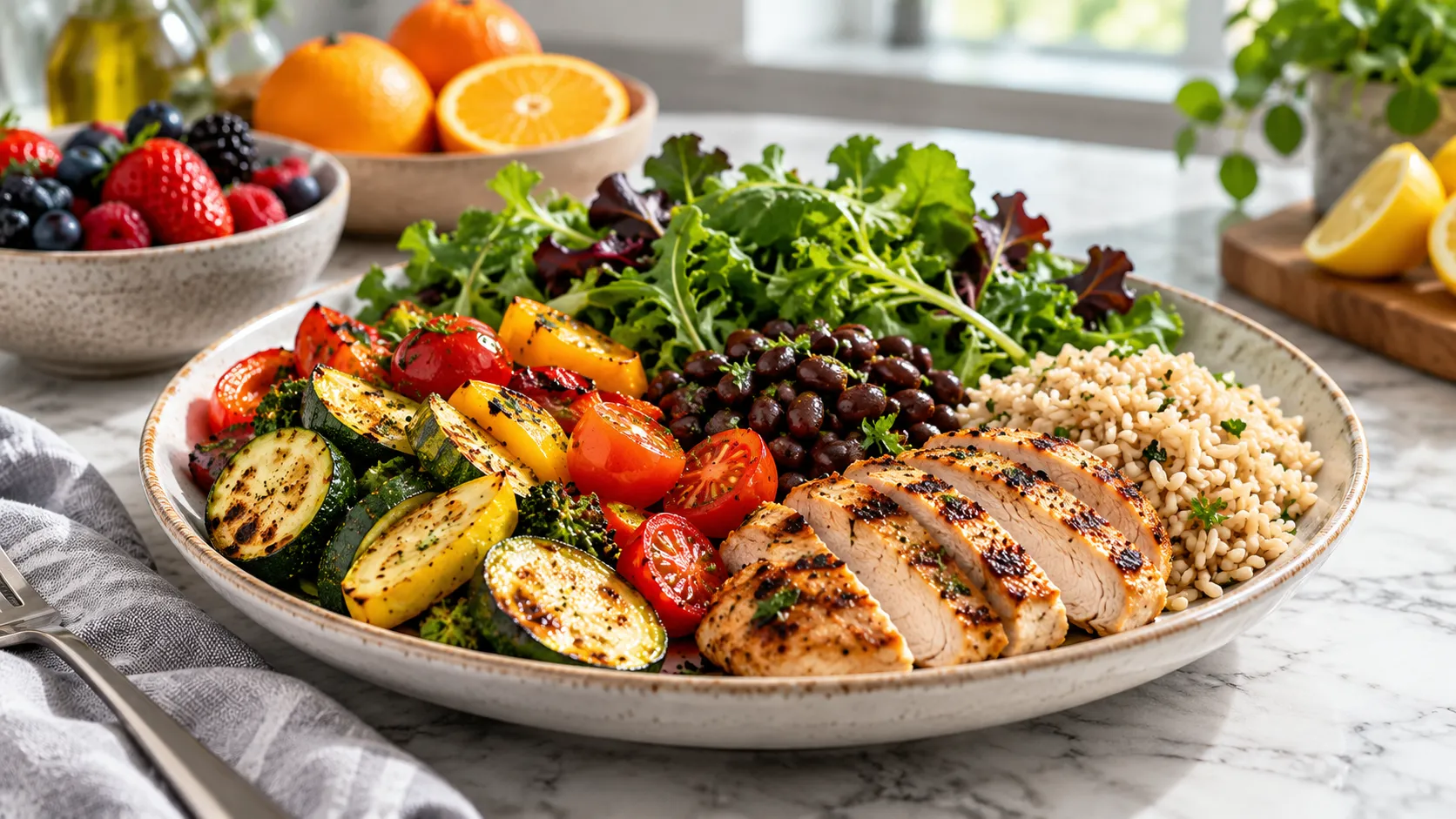
Eating a larger-looking meal while consuming fewer calories may sound contradictory. Yet that is the central idea behind the Volumetrics Diet: prioritize foods that take up plenty of room on the plate and in the stomach while providing relatively little energy per gram.
The concept has scientific support. Controlled studies show that lowering energy density, also called calorie density, can reduce calorie intake without requiring people to reduce the weight or volume of food they eat by the same proportion. (PubMed)
That does not mean certain foods can cause weight loss regardless of total calorie intake. Instead, Volumetrics is best understood as a way to make an energy-reduced diet feel more substantial and, for some people, easier to follow.
What is the Volumetrics Diet?
Volumetrics grew out of nutrition scientist Barbara Rolls’ research at Penn State on food volume, satiety and energy density. (The Pennsylvania State University)
Instead of simply telling people to “eat less,” the approach changes what fills the plate.
It typically emphasizes foods such as:
- vegetables;
- whole fruits;
- broth-based soups;
- pulses;
- cooked grains;
- relatively lean sources of protein;
- meals rich in water and fiber.
More energy-dense foods can still be eaten, but portion size becomes more important.
The result can be a visually generous meal that contains fewer calories than an equally large portion built around more calorie-dense foods.
What does calorie density mean?
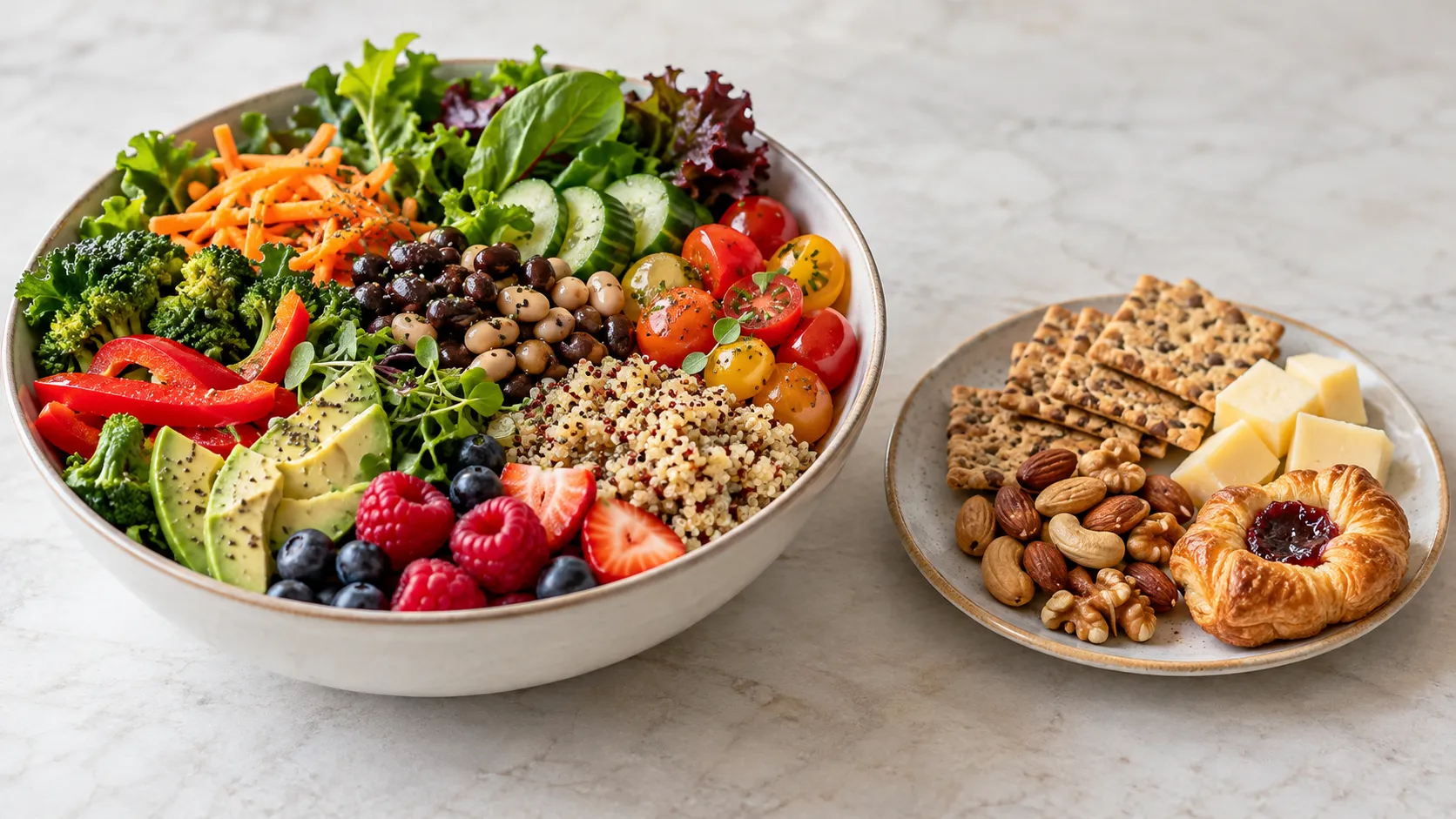
Calorie density describes how many calories are contained in a given weight of food.
In simple terms:
energy density = calories in a food ÷ food weight in grams
If two foods weigh the same but one provides 50 calories and the other provides 250, the second food has five times the energy density.
Water plays an important role because it increases food weight and volume without adding calories. Fruits, vegetables and other water-rich foods therefore tend to have a lower energy density. (NCBI Bookshelf)
Foods that are dry or high in fat often sit at the opposite end of the spectrum because fat provides considerably more energy per gram than either carbohydrate or protein.
Calorie density is not the same as nutritional quality
This distinction matters.
A nut may provide far more calories per gram than a strawberry, but that does not make nuts “bad.”
Similarly, an ultra-processed product engineered to contain very few calories is not automatically a nutritionally superior food.
Energy density works best as a tool for designing meals and managing portions, not as a system for classifying every food as good or bad.
Can a Volumetrics-style diet really help with weight loss?
The available evidence suggests that it can, primarily by making it easier to reduce energy intake.
A meta-analysis published in the European Journal of Nutrition included 38 randomized studies comparing foods or meals with different energy densities.
Lower-energy-density conditions reduced energy intake by an average of about 223 calories, while the amount of food consumed remained broadly similar. (PubMed)
This helps explain the basic mechanism. People often consume a relatively consistent amount of food by weight or volume. When that food contains fewer calories per gram, overall calorie intake can decrease without requiring dramatically smaller meals.
What about long-term weight loss?
The evidence is encouraging but requires more caution.
A systematic review of adult studies concluded that lower-energy-density dietary patterns were consistently associated with better weight-management outcomes. (PubMed)
One year-long randomized trial enrolled 97 women with obesity. One group was advised to reduce dietary fat. The second group reduced fat while also increasing water-rich foods, particularly fruits and vegetables.
Among participants who completed the trial, average weight loss was approximately:
| Strategy | Average weight loss |
|---|---|
| Reduced-fat diet | 6.4 kg |
| Reduced fat + more water-rich fruits and vegetables | 7.9 kg |
The lower-energy-density group also reported less hunger. (PubMed)
These findings are meaningful, but they do not imply that everyone following Volumetrics will experience the same result.
How strong is the evidence overall?
The strongest conclusion is a short-term one:
lowering the energy density of food tends to reduce calorie intake.
Evidence for sustained weight loss is favorable but less definitive.
A review of energy density and weight regulation found robust short-term effects on energy intake but fewer long-term trials capable of determining exactly how much additional weight-loss benefit comes from lowering energy density independently of other dietary changes. (PubMed Central (PMC))
Why can low-calorie-density foods help?
1. They allow more food on the plate
A relatively small portion of a highly energy-dense food can contain many calories.
Replacing part of that food with vegetables, fruit, pulses or other water-rich ingredients can increase meal volume while lowering total energy density.
For people who struggle with diets built around visibly small portions, this can be an important advantage.
2. Food volume contributes to fullness
The stomach responds not only to calories but also to the physical presence of food.
Water incorporated into food adds volume without adding calories. In a classic controlled experiment, incorporating water into food as soup increased fullness and reduced subsequent energy intake compared with serving the same amount of water alongside the food. (PubMed)
This is only one part of satiety. Protein, fiber, sensory factors and eating behavior also play important roles.
3. It can shift the diet toward nutritious foods
Vegetables, fruit and pulses naturally fit into many lower-energy-density meals.
In addition to contributing volume, these foods provide fiber, vitamins, minerals and other beneficial compounds.
The World Health Organization includes vegetables, fruits, pulses and whole grains among the core components of a healthy dietary pattern. (World Health Organization)
How to lower the calorie density of meals
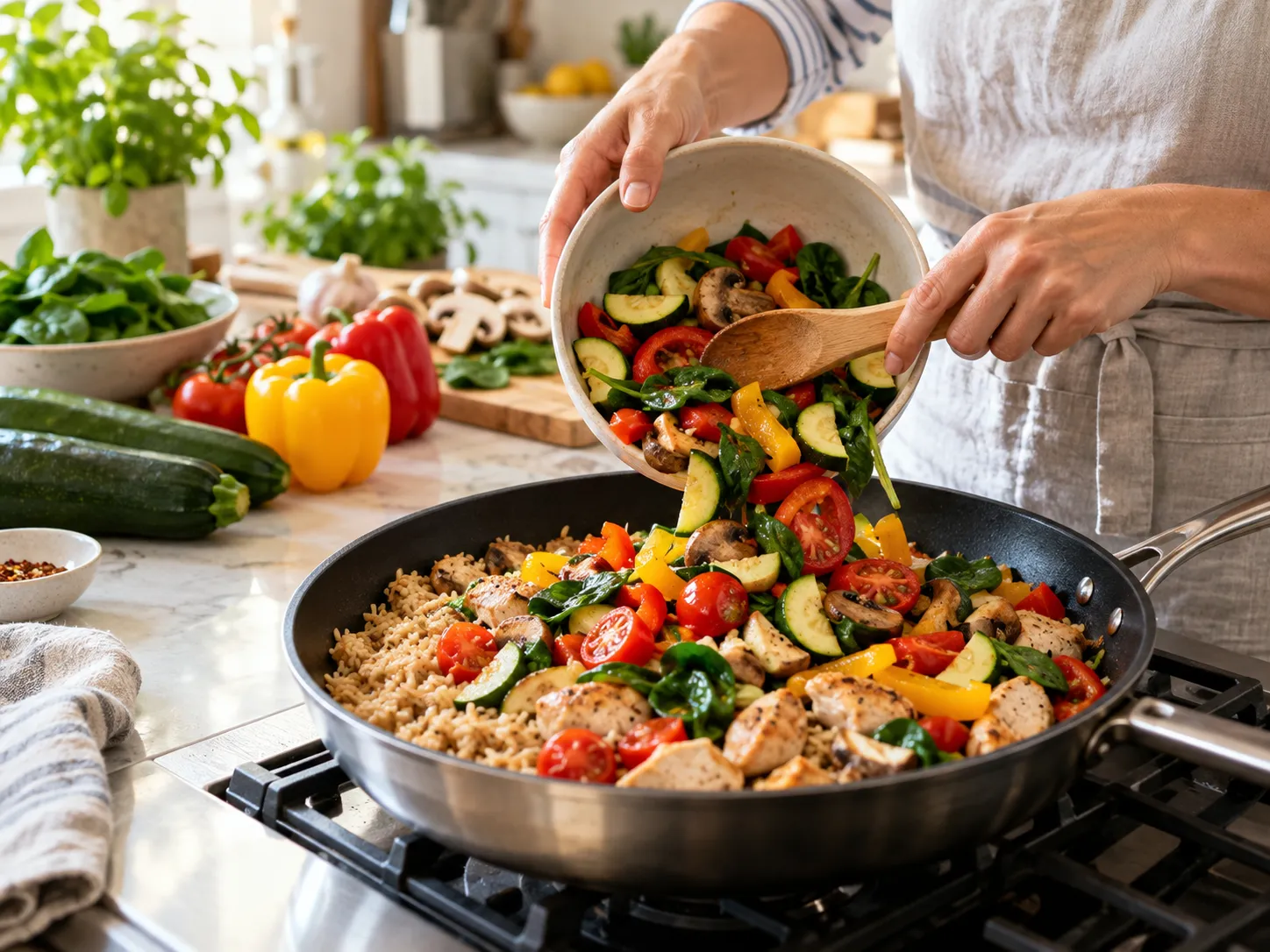
You do not need to completely redesign your diet.
Small changes to meal composition can substantially alter its energy density.
Add more vegetables to meals
Vegetables can be incorporated into:
- omelets;
- rice dishes;
- pasta;
- stews;
- soups;
- sandwiches;
- sauces;
- grain bowls;
- bean-based meals.
This increases meal volume without requiring an equally large increase in higher-calorie ingredients.
Choose whole fruit regularly
Whole fruit retains its food structure and typically provides both water and fiber.
Juice, even without added sugar, can be consumed quickly and can concentrate intake. WHO guidance favors whole fruit and recommends limiting free sugars, including those present in many fruit juices. (World Health Organization)
Use lower-energy-density soups strategically
Vegetable and broth-based soups can work as a starter or part of a meal.
In a controlled experiment, eating a low-energy-density vegetable soup before the main course reduced total energy intake at that meal by about 20%. (PubMed)
The result does not apply to every soup. Large amounts of cream, butter, cheese or oil can substantially increase calorie density.
Include enough protein
A large plate made almost entirely of vegetables is not necessarily a complete meal.
Protein-rich foods contribute to nutritional adequacy and can also influence satiety.
Depending on individual preferences, options may include:
- beans, lentils, chickpeas and peas;
- eggs;
- fish;
- poultry;
- meat;
- tofu and other soy foods;
- milk and dairy products.
A practical example
Consider two ways of creating a satisfying pasta meal.
More energy-dense approach
- a large amount of pasta;
- oil-rich sauce;
- a large serving of cheese;
- very few vegetables.
Lower-energy-density approach
- a moderate amount of pasta;
- plenty of tomatoes, zucchini, eggplant and other vegetables;
- an appropriate protein source;
- tomato-based sauce;
- a smaller, intentional amount of olive oil or cheese.
The second meal may occupy as much or more space on the plate while providing fewer calories per gram.
High-calorie foods do not have to be banned
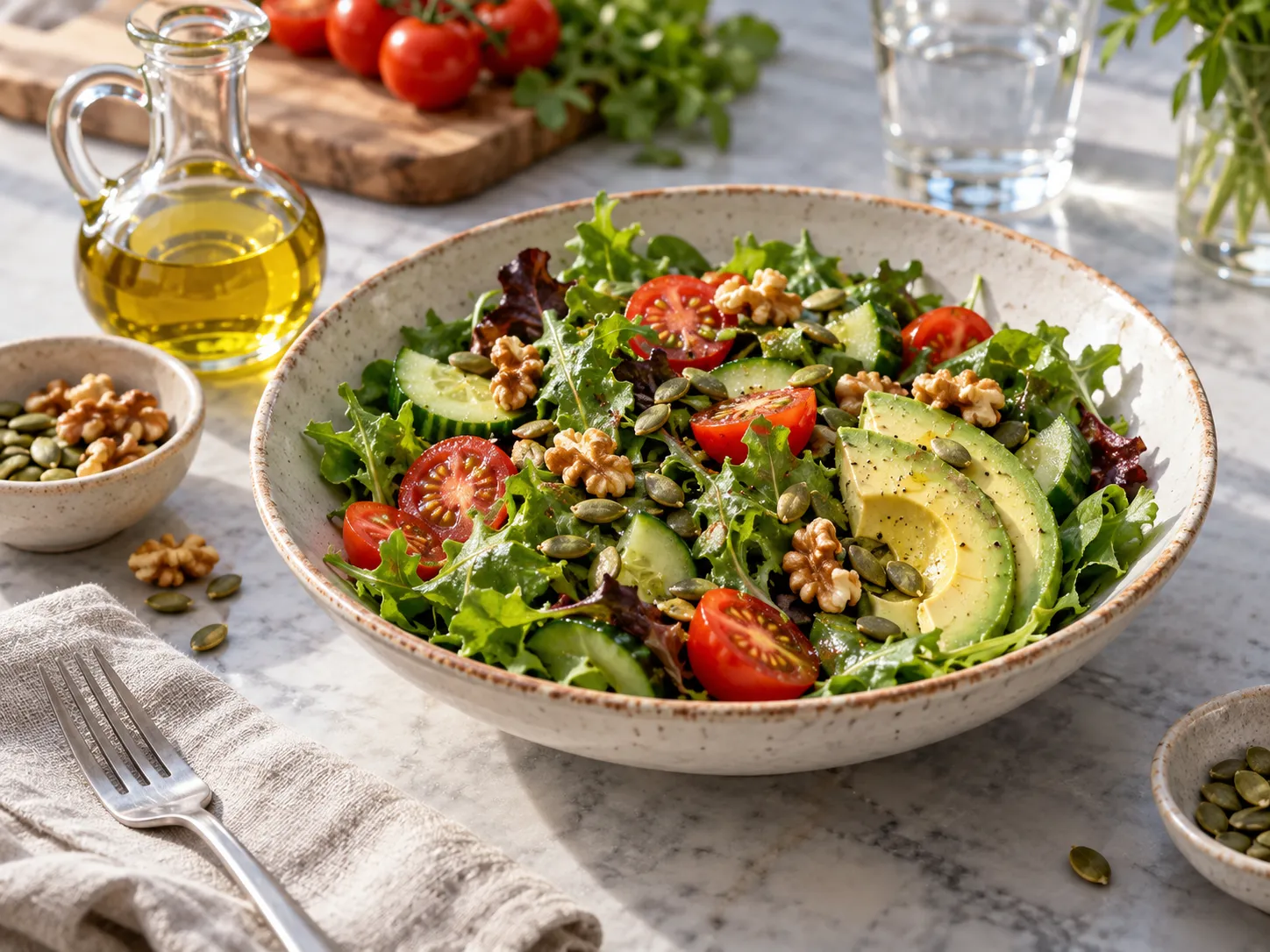
An overly rigid interpretation of Volumetrics can lead to a mistake: trying to eliminate every calorie-dense food.
That is neither necessary nor nutritionally desirable.
Nuts, seeds, olive oil, peanut butter and avocado are examples of foods that contain substantial energy in a relatively small amount while still fitting into a nutritious eating pattern.
The more useful strategy is to combine foods with different energy densities.
For example:
- vegetables with an appropriate amount of olive oil;
- yogurt with fruit and a small serving of nuts;
- vegetables with rice, beans and a protein source;
- fruit with a portion of peanut butter.
The goal is not to achieve the lowest possible energy density at every meal. It is to create an eating pattern that supports fullness, nutritional adequacy and appropriate energy intake.
Does Volumetrics mean you can eat without limits?
No.
“High volume” should not be interpreted as permission to eat unlimited amounts of any low-calorie food.
Eating behavior still matters.
Useful factors to consider include:
- physical hunger;
- fullness;
- portion size;
- meal frequency;
- nutritional quality;
- calorie-containing beverages;
- oils and sauces;
- alcohol;
- frequent snacking.
A lunch packed with vegetables does not guarantee weight loss if the rest of the day’s food and beverage intake consistently exceeds energy requirements.
What are the potential advantages?
A Volumetrics-style approach may be useful because it:
- does not necessarily require dramatically smaller-looking meals;
- encourages fruit and vegetable intake;
- may increase satisfaction with meals;
- can reduce energy intake;
- relies on familiar foods;
- can be adapted to several dietary patterns;
- does not require eliminating entire food groups.
For people who find small portions particularly difficult, the concept can be especially practical.
What are the limitations?
Energy density cannot answer every nutritional question.
Low calorie does not automatically mean healthy
Highly processed foods can be designed to contain relatively few calories without providing an ideal nutritional profile.
At the same time, several nutritious whole foods are naturally calorie-dense.
It can create too much focus on calories
Turning every meal into a mathematical exercise may distract from nutritional quality, enjoyment, culture and internal hunger and fullness cues.
Individual responses vary
Food preferences, lifestyle, activity level, body composition, medications, health conditions and eating history all influence weight management.
A strategy that works very well for one person may require substantial adjustment for another.
Who should consider professional guidance?
Individualized guidance is particularly important for people with health conditions or those planning substantial weight loss.
Examples include:
- diabetes;
- kidney disease;
- gastrointestinal disorders;
- pregnancy or breastfeeding;
- medications affecting weight or blood glucose;
- a history of an eating disorder;
- children and adolescents;
- older adults at risk of losing muscle mass.
Conclusion
Eating lower-calorie-density foods can support weight loss.
The most consistent evidence shows that lowering the energy density of meals allows people to consume a similar amount of food while taking in fewer calories. For some people, this can make calorie reduction more satisfying and easier to maintain. (PubMed)
Over the long term, however, Volumetrics is best understood as a meal-design strategy rather than a special weight-loss formula.
Its most sensible application is to increase water-, fiber- and nutrient-rich foods — particularly vegetables, fruits and pulses — while keeping more energy-dense foods in portions that fit individual needs.
In other words, the goal is not simply to eat as much food as possible. It is to build satisfying, nutritious meals that provide plenty of food volume without delivering more energy than the body needs.