Can Antioxidant Supplements Help or Actually Get in the Way?
Antioxidant supplements do not always improve health, and high doses may sometimes cause harm. See what the scientific evidence actually shows.
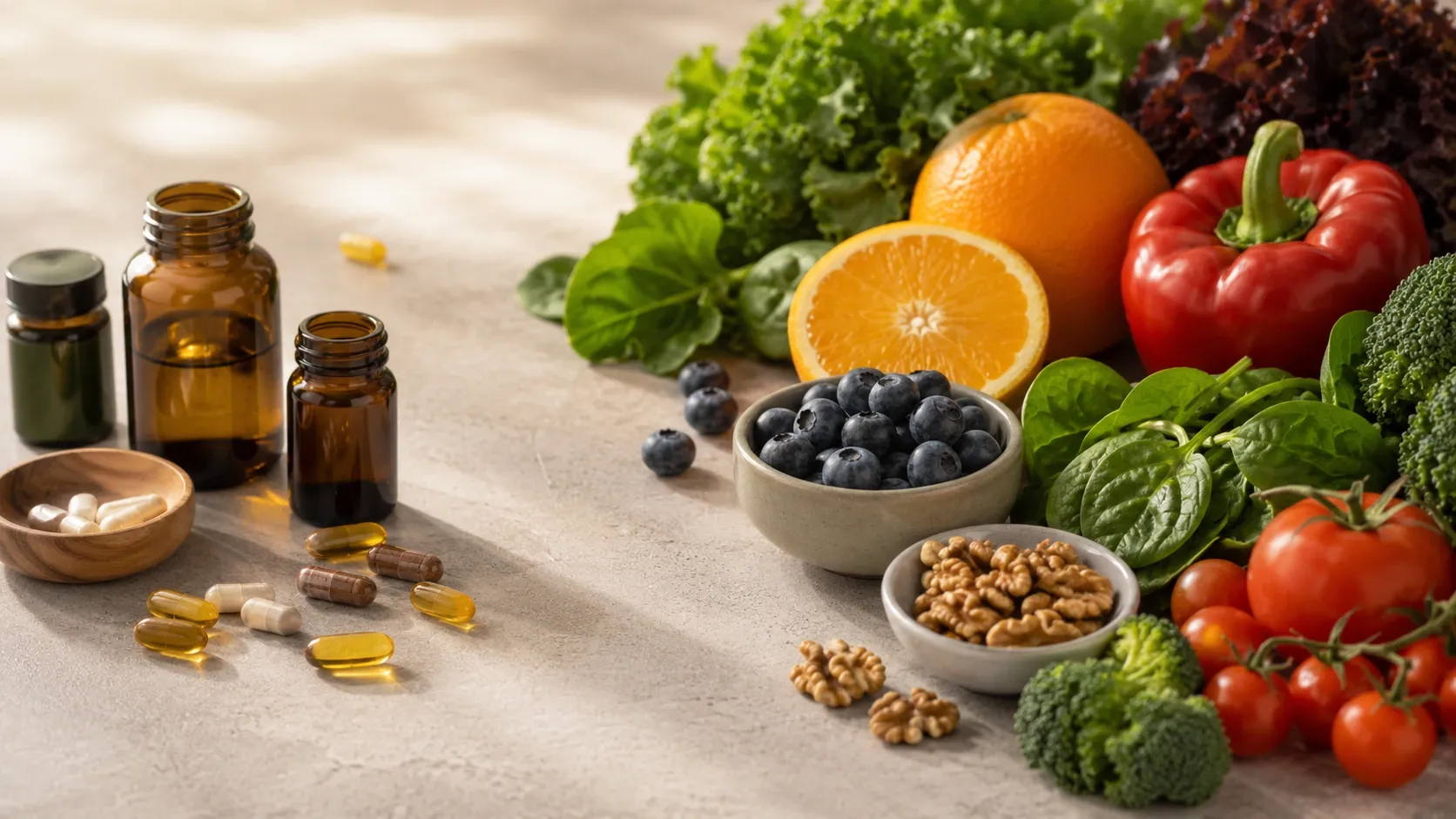
Antioxidants have an almost automatic reputation as health protectors. The reasoning sounds straightforward: if oxidative stress can damage cells, taking more antioxidants should provide greater protection.
Human biology is more complicated than that.
For generally healthy people, there is no good evidence that routinely taking antioxidant supplements provides additional protection against cancer or cardiovascular disease. In some circumstances, high doses can cause harm. (NCCIH)
That does not mean antioxidants are bad. It means that antioxidants in foods, nutrients required for normal physiology, and concentrated high-dose supplements should not be treated as the same thing.
What are antioxidants?
Normal cellular activity generates highly reactive molecules, including reactive oxygen species. When their production overwhelms the body’s regulatory, antioxidant, and repair systems, oxidative stress can occur. (NCCIH)
Vitamin C, vitamin E, carotenoids, and numerous compounds found in foods can participate directly or indirectly in the body’s redox balance.
However, reactive species are not simply harmful waste products.
They also participate in cellular signaling and physiological adaptation. The NCCIH notes that unusually large amounts of antioxidants may interfere with important cellular functions and normal signaling pathways. (NCCIH)
The goal, therefore, is not to eliminate oxidation at all costs.
Antioxidants from food are not the same as antioxidant pills
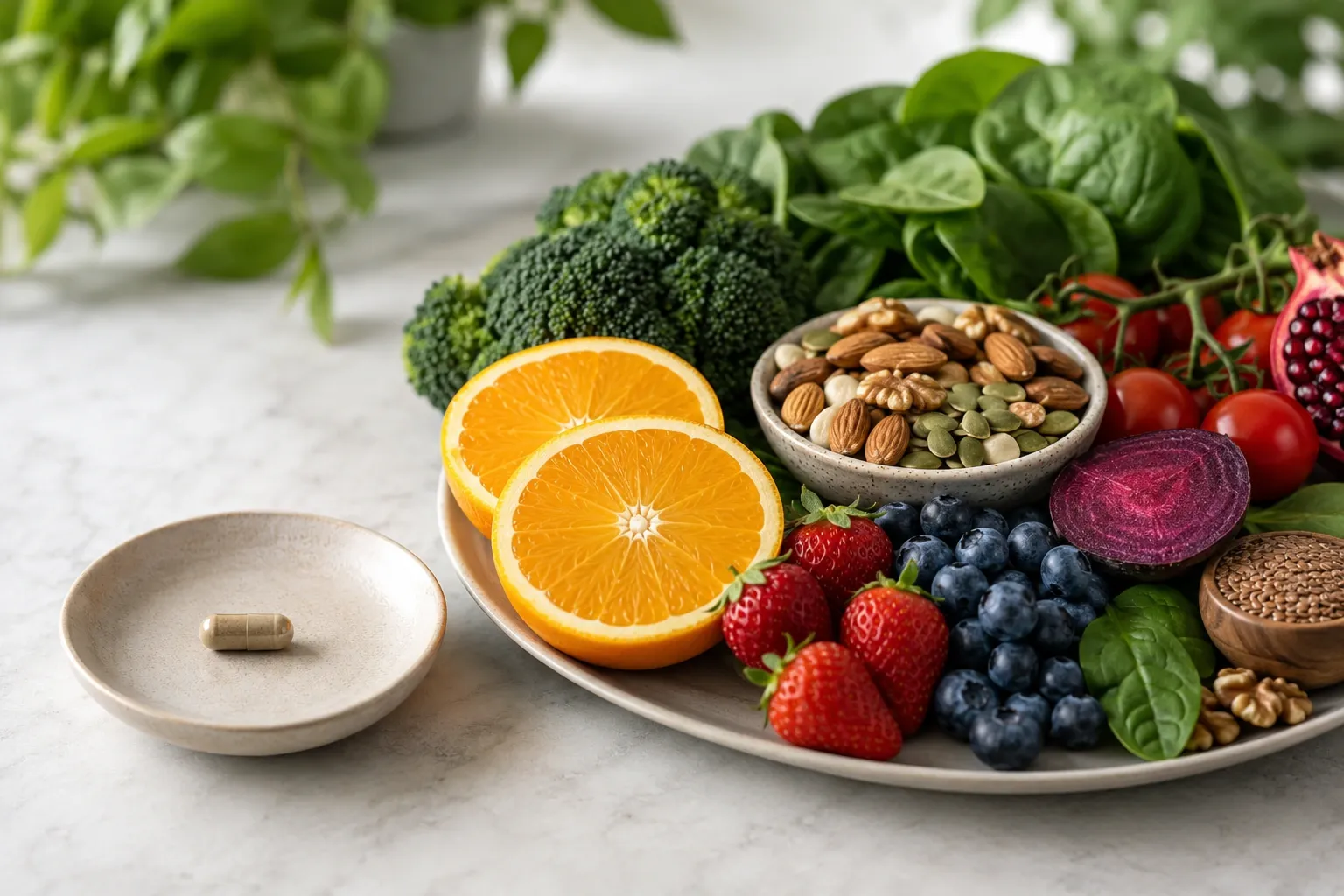
One common mistake is to observe that people who consume plenty of fruits and vegetables often have better health outcomes and conclude that a concentrated antioxidant pill will reproduce those effects.
Research does not support that assumption.
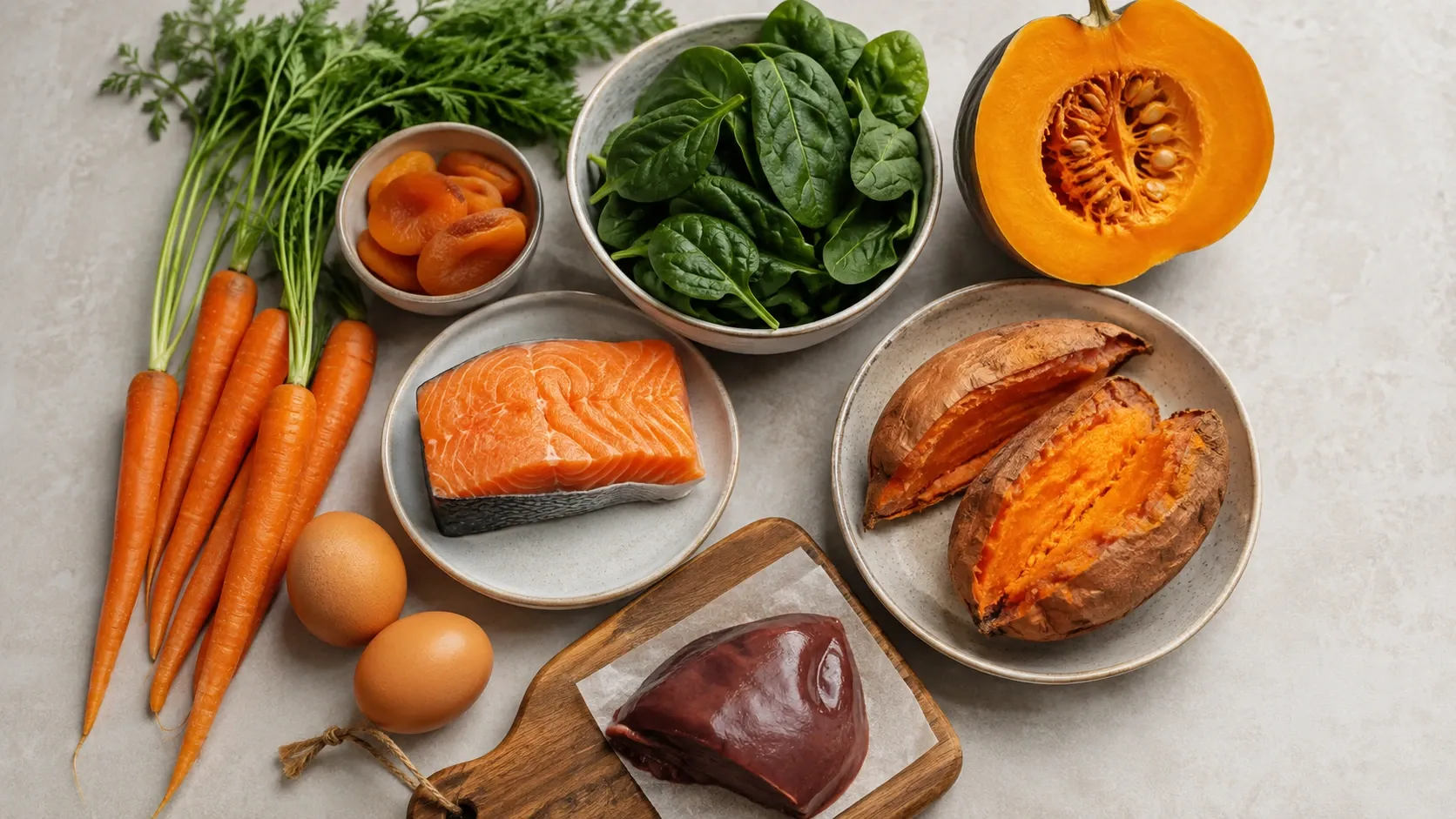
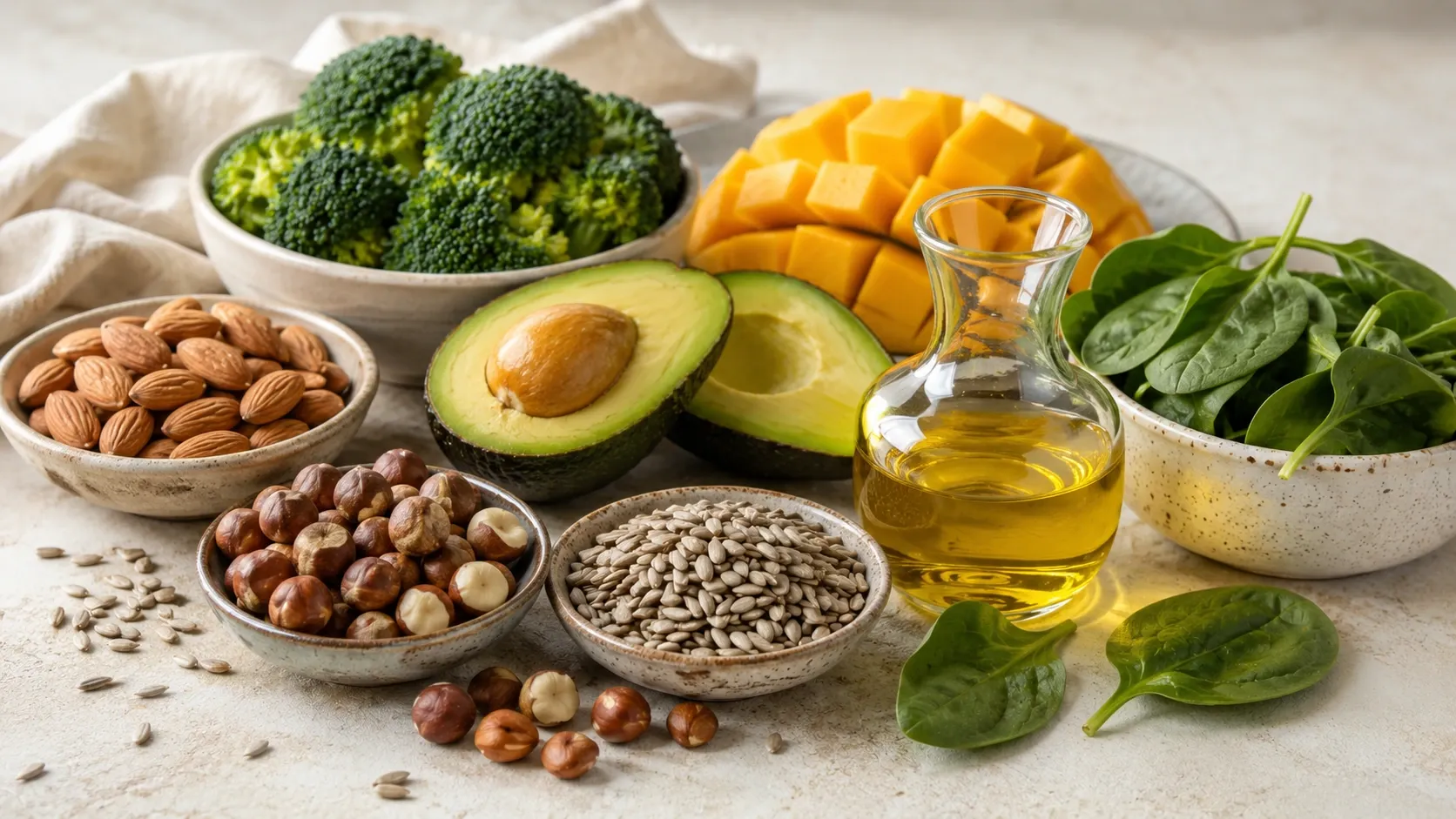
Whole foods contain complex mixtures of nutrients and bioactive compounds. An orange is not simply a vitamin C delivery system. Fruits, vegetables, whole grains, nuts, and seeds provide combinations of vitamins, minerals, fiber, and phytochemicals.
Lifestyle factors can also influence observational findings. People who eat more fruits and vegetables may differ from those who do not in many other health-related behaviors. (NCCIH)
Dose is another major difference. Supplements can deliver amounts far beyond those normally obtained from a serving of food.
Do antioxidant supplements prevent cancer or heart disease?
For generally healthy adults, the current answer is that consistent preventive benefits have not been demonstrated.
In 2022, the U.S. Preventive Services Task Force recommended against taking beta-carotene or vitamin E supplements for the prevention of cardiovascular disease or cancer in community-dwelling, nonpregnant adults. (USPSTF)
For multivitamins and most other individual or paired nutrients, the Task Force concluded that the evidence was insufficient to determine the balance of benefits and harms for these specific preventive purposes. (USPSTF)
Vitamin C provides a useful example of the distinction between biological importance and proven clinical benefit.
Vitamin C is essential and has physiological antioxidant functions. Yet large intervention trials have not demonstrated consistent cardiovascular protection from supplementation. Trials using 500 mg daily for years found no overall reduction in cardiovascular events. (ODS)
An essential nutrient is not automatically more beneficial when consumed far beyond nutritional requirements.
When might antioxidants get in the way?
Beta-carotene and smoking
Beta-carotene is one of the clearest examples showing why the word “antioxidant” should not be interpreted as “risk-free.”
The ATBC trial included 29,133 male smokers. Participants received vitamin E, beta-carotene, both, or placebo. The group receiving beta-carotene experienced an 18% higher incidence of lung cancer. (ODS)
The USPSTF therefore concludes that the harms of beta-carotene supplementation outweigh the benefits when it is taken to prevent cardiovascular disease or cancer. The clearest evidence of harm involves smokers and people with occupational asbestos exposure. (USPSTF)
Vitamin E and bleeding
Vitamin E has important physiological roles, but high supplemental doses are not automatically helpful.
The NCCIH notes that high-dose vitamin E supplements may reduce blood-clotting capacity and increase bleeding risk. They can also interact with anticoagulant and antiplatelet medications. (NCCIH)
For cancer and cardiovascular prevention, the USPSTF found no net benefit from vitamin E supplementation. (USPSTF)
High-dose vitamin C
Vitamin C is water-soluble, and the body tightly regulates its blood and tissue concentrations. As oral doses increase, the percentage absorbed decreases, and excess absorbed vitamin C is largely excreted. (ODS)
High intake is not completely harmless, however.
Large supplemental doses can cause diarrhea, nausea, and abdominal cramps. Caution is also warranted in people with iron overload disorders such as hemochromatosis and in some cancer-treatment settings. (NCCIH)
What about exercise?

Exercise provides another reason why “less oxidation is always better” is an oversimplification.
Physical activity temporarily increases the production of reactive species. Excessive oxidative stress can contribute to tissue damage and fatigue, but physiological amounts of these molecules are also involved in the signaling that helps the body adapt to exercise.
In 2026, the International Society of Sports Nutrition published a position stand specifically addressing dietary antioxidants and sports performance. Its conclusions are context-dependent: antioxidants may support certain aspects of recovery, but supraphysiological doses may also interfere with training adaptations. (PubMed)
This is not an argument for athletes to avoid antioxidant-rich foods.
The concern centers mainly on indiscriminate use of concentrated doses without a demonstrated deficiency, nutritional requirement, or specific performance rationale.
Does this mean antioxidant supplements are never useful?
No.
The problem is treating them as a universal recommendation.
Supplementation can be appropriate when used to correct a deficiency, meet an established nutritional requirement, or address a specific clinical indication. In those cases, the rationale is not simply that “antioxidants are healthy”; there is a defined need and goal.
Age-related macular degeneration provides a useful example.
The AREDS and AREDS2 studies found that specific combinations of antioxidants and minerals can reduce progression to advanced age-related macular degeneration in selected people who already have the condition. These formulations have not been shown to prevent AMD in people who do not have it. (NCCIH)
The formulations were also modified to replace beta-carotene with lutein and zeaxanthin because of concerns about lung cancer risk in current and former smokers. (NCCIH)
The lesson is that evidence should be evaluated according to the specific product, dose, population, and goal.
How can you decide whether a supplement makes sense?
Before buying a product simply because it claims to “fight free radicals,” consider:
- Is there an identified deficiency or nutritional need?
- Is there evidence that the supplement improves the specific outcome you want?
- What dose does the product provide?
- Is the dose much higher than your nutritional requirement?
- Could it interact with your medications?
- Do you have a health condition that changes its safety profile?
- Was the benefit demonstrated in people similar to you?
This avoids both extremes: assuming that all supplements are useless and assuming that anything labeled “natural” or “antioxidant” must be beneficial.
Who should be particularly cautious?
Professional guidance is especially appropriate for people who:
- take anticoagulant or antiplatelet medications;
- are undergoing cancer treatment;
- have hemochromatosis or another iron-overload disorder;
- are pregnant or breastfeeding;
- have chronic medical conditions;
- use several supplements simultaneously;
- take doses far above nutritional requirements;
- smoke or previously smoked and are considering beta-carotene supplementation. (NCCIH)
The goal is not to make vitamins sound dangerous. It is to recognize that a capsule is not automatically safe simply because it contains a familiar nutrient.
Conclusion
Antioxidants are an important part of both nutrition and normal human physiology, but more antioxidant does not automatically mean better health.
For healthy adults, current evidence does not support routine antioxidant supplementation to prevent cancer or cardiovascular disease. High-dose beta-carotene carries documented risks for smokers, high supplemental doses of vitamin E can increase bleeding risk, and supplements may interact with medications or medical treatments. (NCCIH)
Exercise adds another layer of nuance: reactive molecules participate in training adaptation, and supraphysiological antioxidant doses may interfere with that process in some situations. (PubMed)
The most evidence-based approach is straightforward: prioritize a varied diet and use supplements when there is a clearly defined nutritional or clinical reason, considering the compound, dose, evidence, medications, and individual health circumstances.