Vitamin E: What It Does and the Best Food Sources
Vitamin E is an antioxidant nutrient found mainly in vegetable oils, seeds, and nuts. Learn what it does, how much you need, the best food sources, and when supplements require caution.
Vitamin E is often associated with antioxidants, skin health, and dietary supplements. Its role in the body, however, is more nuanced — and taking a high-dose supplement is not the same as meeting your nutritional needs through food.
Vitamin E is a fat-soluble vitamin. The term actually describes eight naturally occurring compounds, including tocopherols and tocotrienols. Of these, alpha-tocopherol is the form recognized as meeting human vitamin E requirements. (ODS)
Fortunately, vitamin E is naturally available in a range of everyday foods, particularly vegetable oils, seeds, and nuts. (ODS)
What does vitamin E do?
One of vitamin E’s best-established roles is its antioxidant activity.
Reactive oxygen species are generated as part of normal metabolism. Under certain conditions, these molecules can participate in reactions that damage cellular components. Vitamin E helps interrupt oxidative reactions involving fats and therefore contributes to the body’s antioxidant defenses. (ODS)
Vitamin E is also involved in immune function, cellular signaling, gene expression, and several metabolic processes. (ODS)
However, an essential antioxidant role does not mean that taking increasingly larger doses will provide increasing health benefits.
Antioxidant activity does not mean supplements prevent disease
Researchers once hoped that vitamin E supplements could reduce the risk of cardiovascular disease and cancer by limiting oxidative damage. Some observational studies appeared to support that possibility. (The Nutrition Source)
Randomized clinical trials have not confirmed a consistent preventive benefit.
The USPSTF’s updated evidence review found no benefit from vitamin E supplementation for all-cause mortality, overall cardiovascular events, cardiovascular mortality, or cancer incidence and mortality in the populations studied. (USPSTF)
As a result, the USPSTF recommends against using vitamin E supplements specifically to prevent cardiovascular disease or cancer in generally healthy, nonpregnant adults without known nutritional deficiencies. (USPSTF)
How much vitamin E do you need?
Under U.S. Dietary Reference Intakes, people age 14 and older need 15 mg of alpha-tocopherol per day. The value is also 15 mg during pregnancy and increases to 19 mg per day during lactation. (ODS)
| Group | Vitamin E reference intake |
|---|---|
| Ages 1–3 | 6 mg/day |
| Ages 4–8 | 7 mg/day |
| Ages 9–13 | 11 mg/day |
| Age 14 and older | 15 mg/day |
| Pregnancy | 15 mg/day |
| Lactation | 19 mg/day |
These values refer to alpha-tocopherol under the Dietary Reference Intakes used by the NIH Office of Dietary Supplements. (ODS)
Reference values can differ internationally. EFSA established adequate intakes of 13 mg/day for adult men and 11 mg/day for adult women. These differences reflect different methods and frameworks used by nutritional authorities. (AESA)
Which foods contain the most vitamin E?
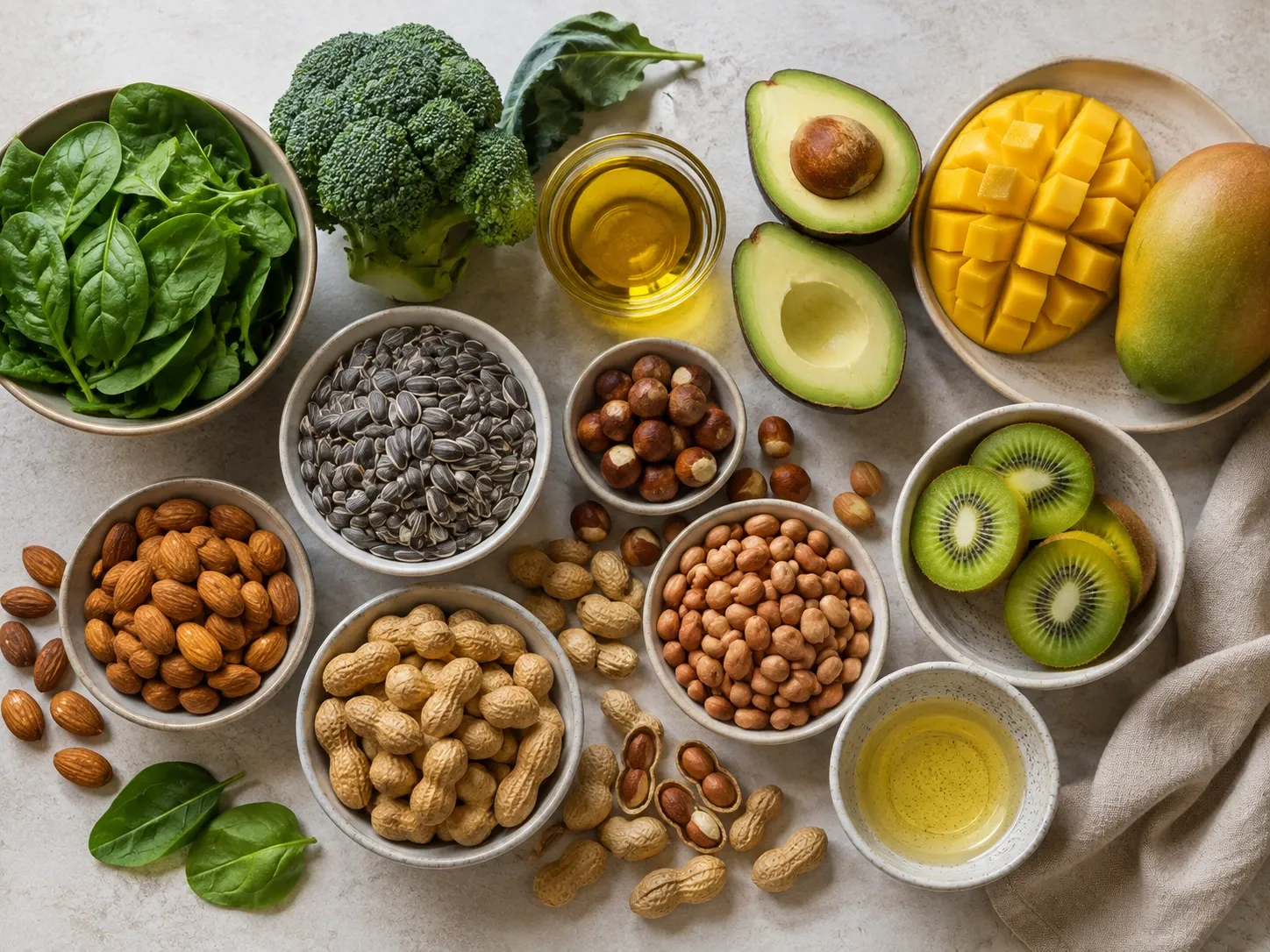
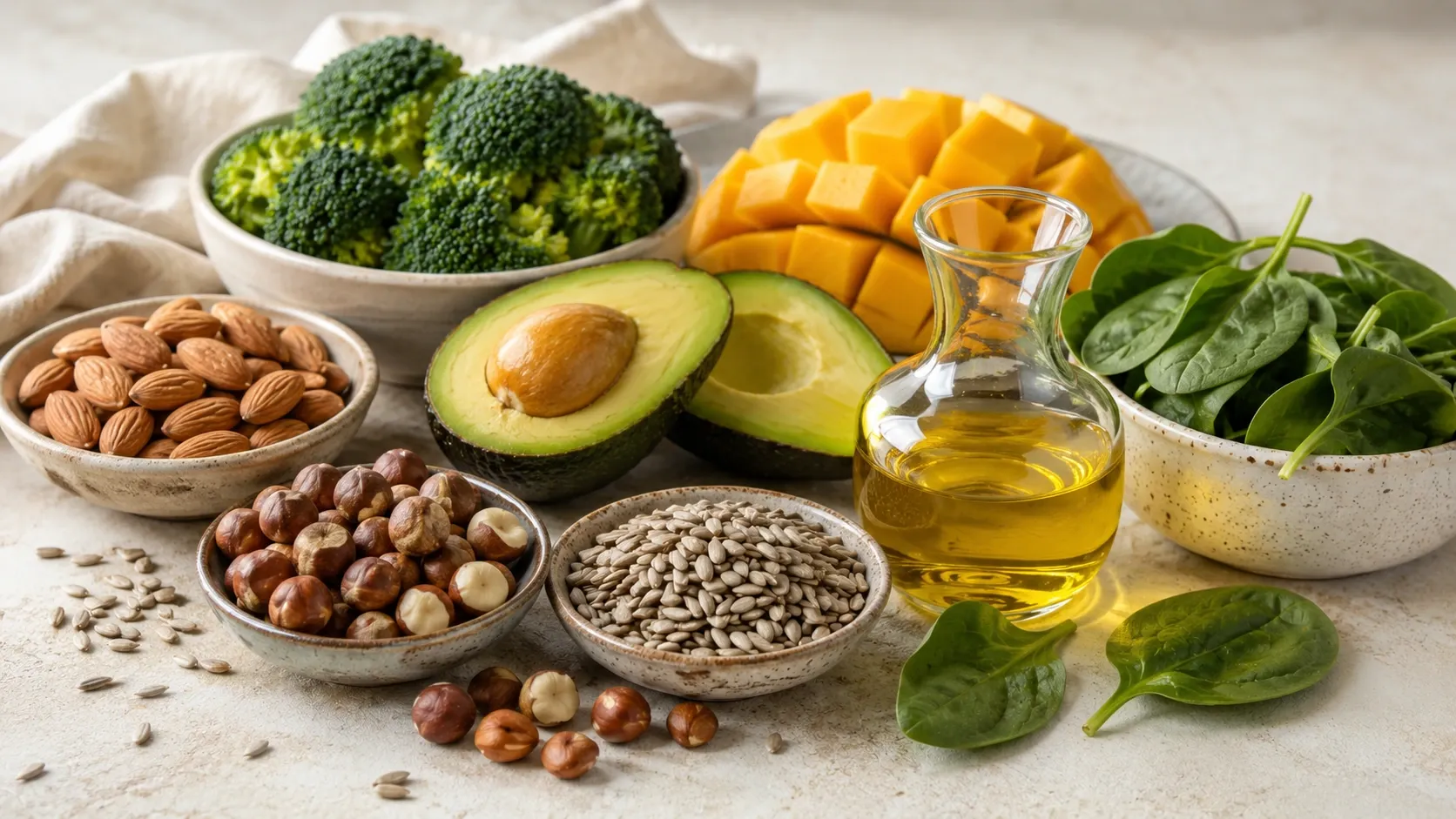
The richest sources of alpha-tocopherol are generally vegetable oils, seeds, and nuts. Leafy vegetables and some fruits also contribute smaller amounts. (ODS)
Examples from the NIH food table include:
| Food | Serving | Vitamin E |
|---|---|---|
| Wheat germ oil | 1 tablespoon | 20.3 mg |
| Dry-roasted sunflower seeds | about 1 oz / 28 g | 7.4 mg |
| Dry-roasted almonds | about 1 oz / 28 g | 6.8 mg |
| Sunflower oil | 1 tablespoon | 5.6 mg |
| Dry-roasted hazelnuts | about 1 oz / 28 g | 4.3 mg |
| Peanut butter | 2 tablespoons | 2.9 mg |
| Dry-roasted peanuts | about 1 oz / 28 g | 2.2 mg |
| Cooked spinach | 1/2 cup | 1.9 mg |
| Cooked broccoli | 1/2 cup | 1.2 mg |
| Kiwifruit | 1 medium | 1.1 mg |
| Sliced mango | 1/2 cup | 0.7 mg |
Actual nutrient content can vary according to variety, processing, cooking, and the food-composition database used. The values above are those reported by the NIH using USDA data. (ODS)
Nuts and seeds can make vitamin E easier to obtain
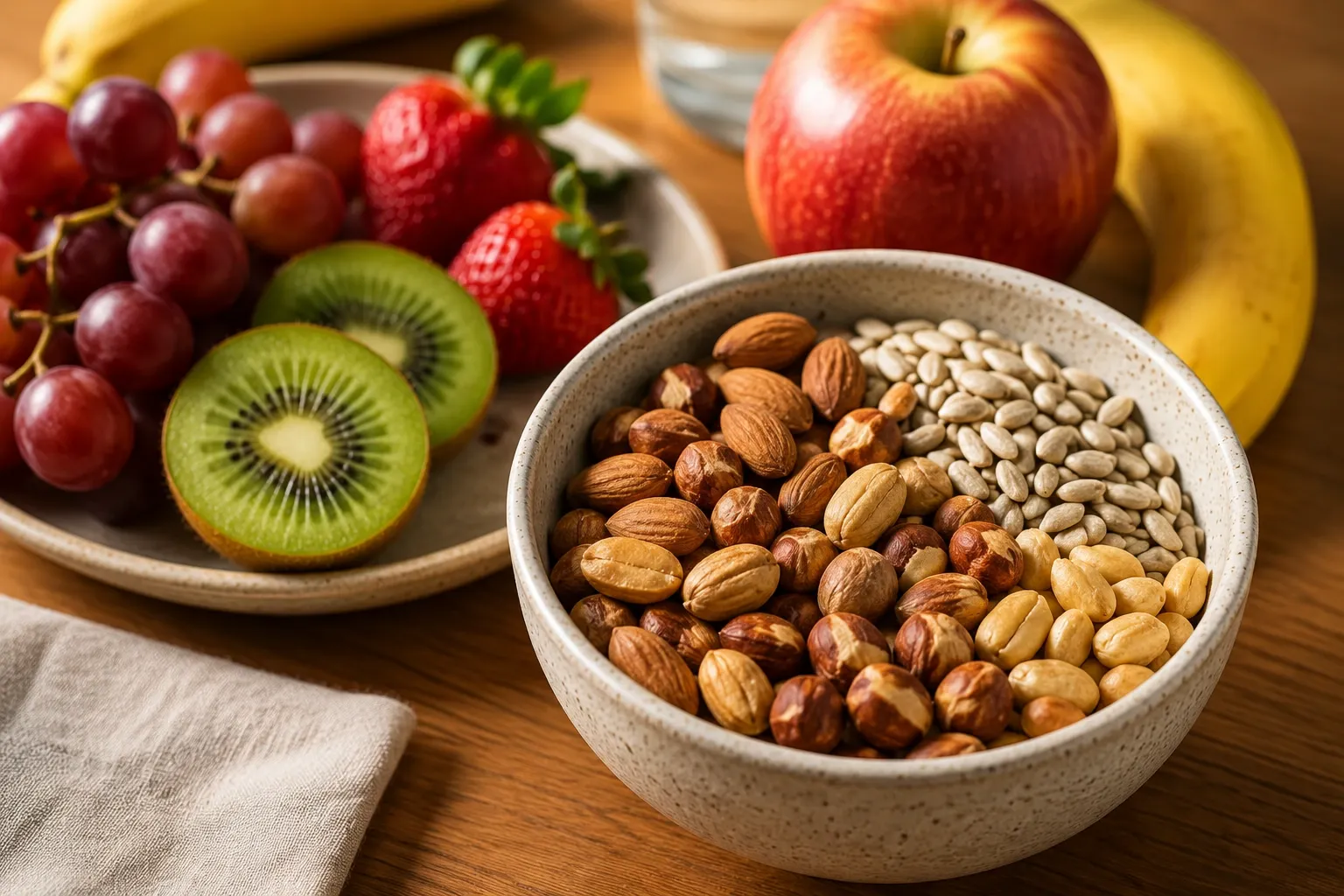
A relatively small serving of sunflower seeds or almonds supplies a substantial amount of vitamin E. These foods can be added to salads, oatmeal, yogurt, fruit dishes, or eaten as part of a snack.
Certain vegetable oils are even more concentrated sources. That does not mean people should consume large amounts of oil simply to obtain vitamin E; overall dietary quality and total energy intake still matter.
Can you get enough vitamin E from food?
In many cases, yes.
The NIH advises that nutritional needs should primarily be met through food, although supplements or fortified foods can be useful when particular nutrient requirements cannot be met through diet alone or in specific life stages or medical situations. (ODS)
A varied diet that regularly includes nuts, seeds, appropriate amounts of vegetable oils, vegetables, and other plant foods can provide multiple sources of vitamin E throughout the day. (ODS)
Is vitamin E deficiency common?
Overt vitamin E deficiency is rare in healthy people. (ODS)
The risk increases when a medical condition interferes with fat absorption. Because vitamin E is fat soluble, normal absorption depends on the body’s ability to digest and absorb dietary fats. (ODS)
Severe deficiency can cause peripheral neuropathy, poor coordination, skeletal muscle problems, retinal changes, and impaired immune responses. These findings are not specific enough to diagnose vitamin E deficiency without appropriate medical assessment. (ODS)
Vitamin E supplements: when caution matters
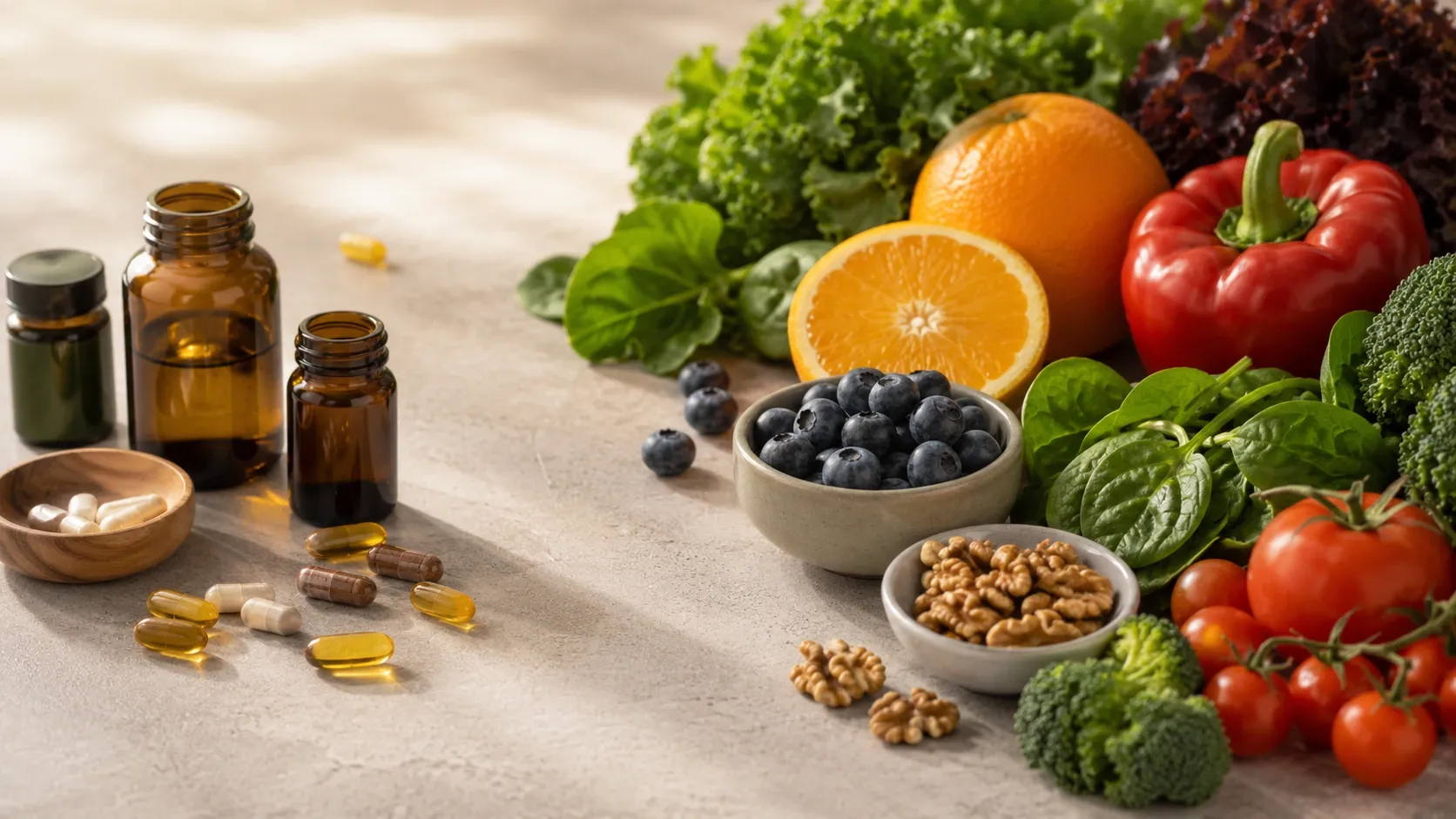
Vitamin E supplements can provide much larger doses than people normally require. The NIH notes that many vitamin-E-only supplements provide at least 67 mg, considerably above the U.S. adult RDA of 15 mg. (ODS)
At high doses, alpha-tocopherol can inhibit platelet aggregation and interfere with vitamin K-dependent clotting factors. This is particularly relevant for people taking anticoagulant or antiplatelet medications. (ODS)
The U.S. tolerable upper intake level for adults is 1,000 mg per day of supplemental alpha-tocopherol. This is a safety ceiling, not a recommended daily intake. (ODS)
People receiving cancer treatment or regularly taking medications should also discuss antioxidant supplements with their healthcare team because clinically relevant interactions may occur. (ODS)
Is vitamin E from food different from taking a supplement?
The nutritional context is different.
Foods provide vitamin E within a complex food matrix that can also contain fats, fiber, protein, minerals, and numerous other compounds. A supplement, by comparison, may deliver a concentrated dose of alpha-tocopherol in a single capsule.
The NIH reports no adverse effects associated with vitamin E naturally present in food. Safety concerns are mainly associated with high-dose supplementation. (ODS)
This is why foods such as almonds, sunflower seeds, spinach, and other dietary sources do not need to be avoided because of concerns about excessive vitamin E in an otherwise normal diet.
Practical ways to add vitamin E-rich foods
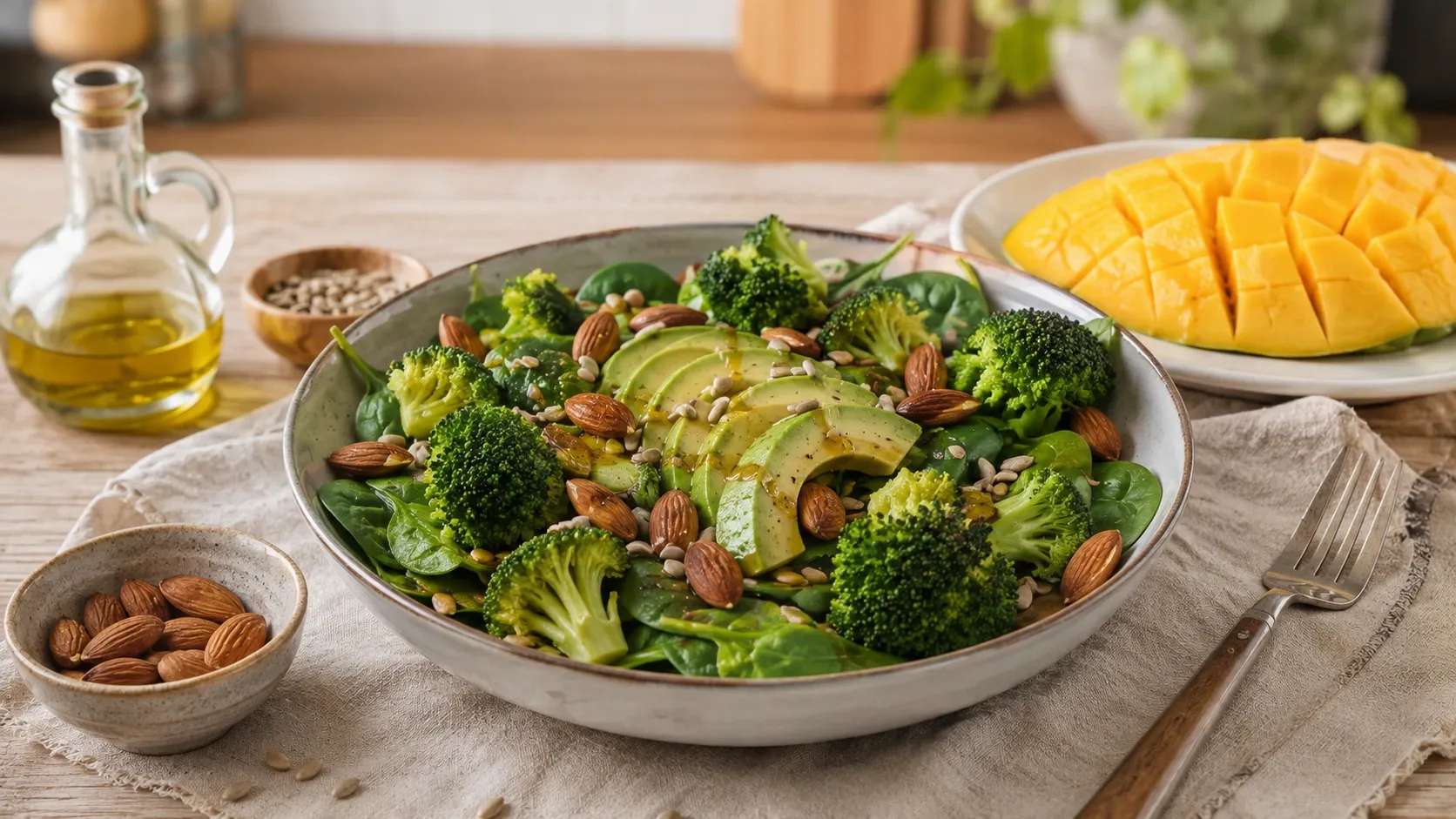
Simple options include:
- adding sunflower seeds to salads or other dishes;
- eating a small serving of almonds, hazelnuts, or peanuts;
- varying the plant oils used in cooking and meal preparation;
- including vegetables such as spinach and broccoli;
- eating fruits such as mango, kiwi, and avocado as part of a varied diet. (ODS)
Rather than focusing on one “superfood,” it is more useful to build a varied dietary pattern that supplies vitamin E alongside other essential nutrients.
Conclusion
Vitamin E is an essential micronutrient with an important antioxidant role, as well as functions in immunity and cellular processes. Vegetable oils, seeds, and nuts are among the richest dietary sources, while vegetables and some fruits can make additional contributions. (ODS)
For most healthy people, obtaining vitamin E through a varied diet is the preferred approach. High-dose supplementation has not been shown to prevent cancer or cardiovascular disease and can carry risks, particularly related to bleeding. (USPSTF)
Anyone with a condition affecting fat absorption, suspected deficiency, or medications that could interact with vitamin E should seek individualized guidance from a qualified healthcare professional. (ODS)