Vitamin A: Functions, Foods, and Risks of Too Much
Learn what vitamin A does, which foods provide retinol and carotenoids, how much adults need, and why excessive intake from supplements can be harmful.
Vitamin A is an essential micronutrient best known for its role in vision, but its importance extends well beyond eye health. It contributes to immune function, cellular communication, growth and development, and reproduction. (ODS)
Because vitamin A is fat-soluble, some forms can be stored in the body. This makes the distinction between getting vitamin A through a balanced diet and consuming high doses of preformed vitamin A from supplements particularly important.
What is vitamin A?
“Vitamin A” refers to a group of related compounds rather than a single molecule.
Preformed vitamin A, including retinol and retinyl esters, comes mainly from animal-based foods and supplements. The body can use it directly.
Plant foods primarily provide provitamin A carotenoids, particularly beta-carotene. These compounds must first be converted into active vitamin A.
The difference matters because the body regulates carotenoid conversion to some extent, while excessive amounts of preformed vitamin A can accumulate and cause toxicity. (ODS)
What does vitamin A do?
Vision
Vitamin A is required for normal visual function, including the eye’s ability to adapt to low-light conditions.
Deficiency can lead to night-vision problems and, when severe and prolonged, more serious eye damage. Globally, vitamin A deficiency remains an important preventable cause of visual impairment among vulnerable children. (WHO)
Immune function
Vitamin A supports normal immune function and helps maintain tissues that serve as physical barriers against pathogens.
This does not mean that taking extra vitamin A will “boost” immunity in someone who already has adequate vitamin A status. Correcting a deficiency and taking unnecessary megadoses are very different interventions. (ODS)
Growth, development, and cellular communication
Vitamin A helps regulate cellular differentiation and communication, processes that allow tissues to develop and function normally.
It is also important during embryonic development. This helps explain why both deficiency and excessive exposure during pregnancy can be harmful. (ODS)
Reproduction
Vitamin A plays roles in male and female reproduction and fetal development.
However, an essential nutrient is not automatically safer at a higher dose. Excessive exposure to preformed vitamin A during pregnancy can be teratogenic. (AESA)
How much vitamin A do adults need?
Vitamin A requirements are often expressed as micrograms of retinol activity equivalents, or mcg RAE. This system accounts for differences in biological activity between retinol and provitamin A carotenoids.
NIH reference values include:
| Group | Recommended daily intake |
|---|---|
| Adult men | 900 mcg RAE |
| Adult women | 700 mcg RAE |
| Pregnant adults | 770 mcg RAE |
| Breastfeeding adults | 1,300 mcg RAE |
(ODS)
These are dietary reference values rather than exact daily targets that must be hit every 24 hours.
Recommendations also differ slightly by authority. EFSA uses European reference values that are not identical to U.S. recommendations, so numbers should always be interpreted in their regional context. (AESA)
Which foods contain vitamin A?
Vitamin A can come from both animal and plant foods, but in different chemical forms.
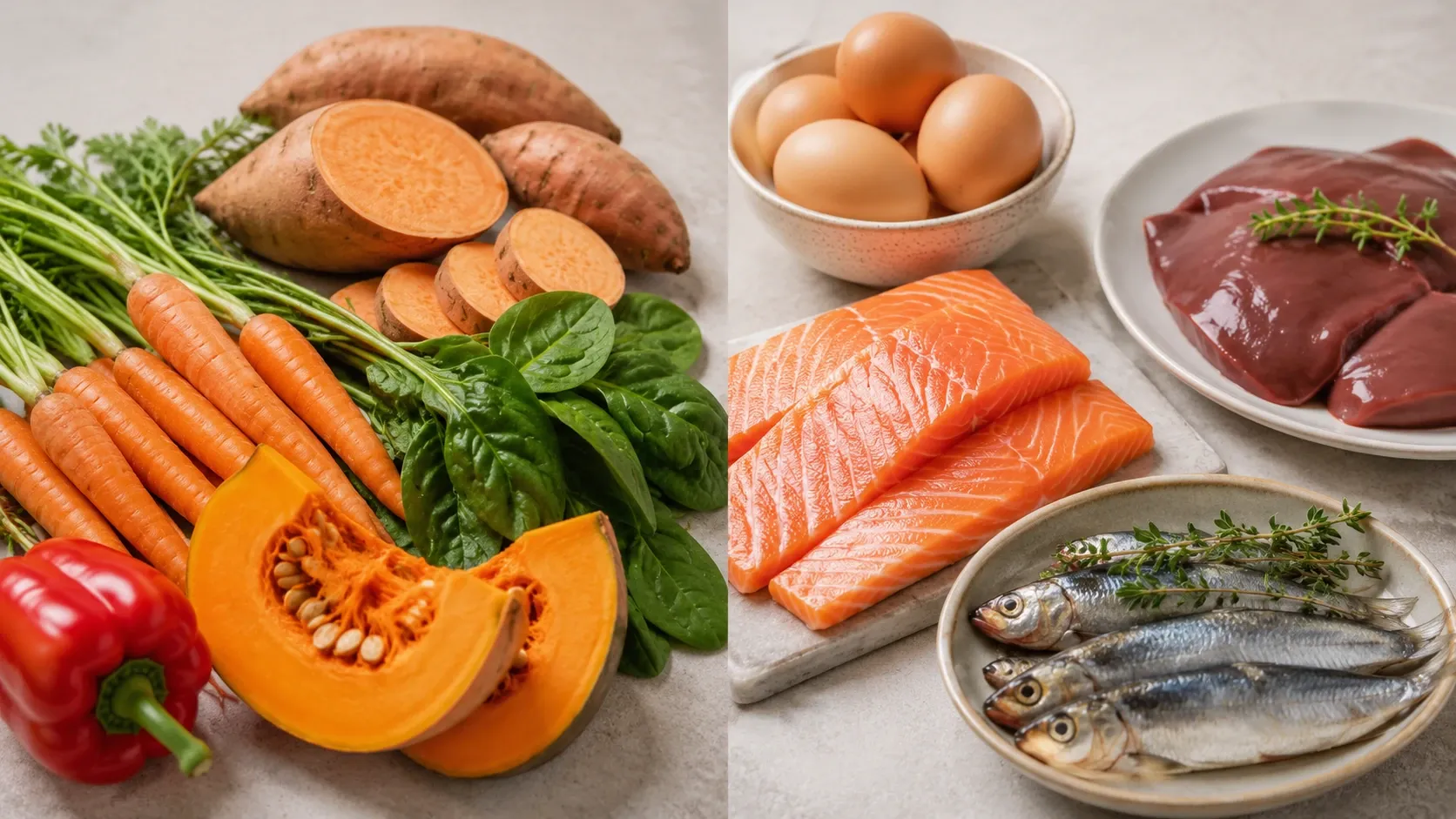
Foods with preformed vitamin A
Sources include:
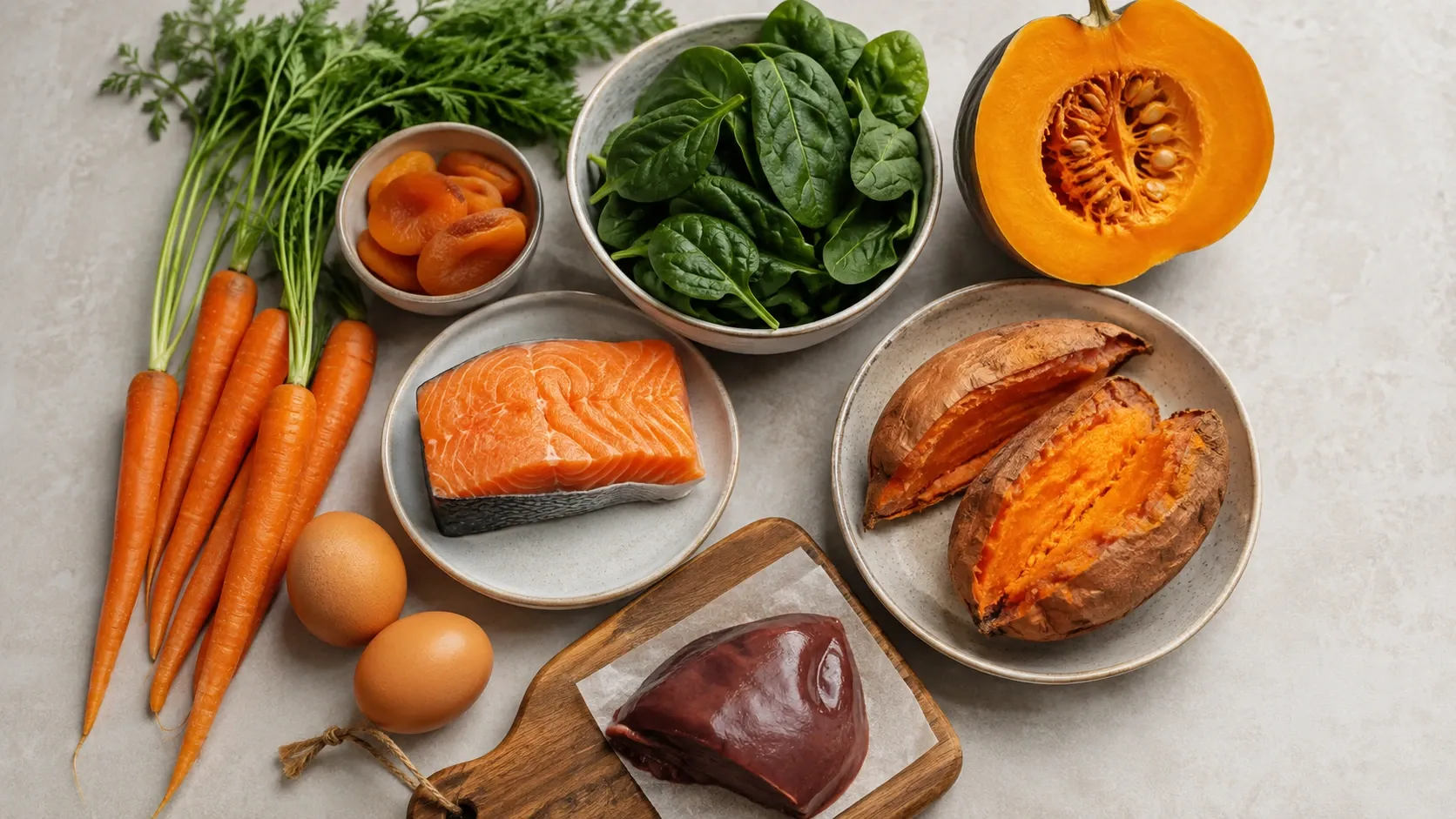
- liver and other organ meats;
- certain fish;
- eggs;
- milk and dairy foods;
- fortified foods, depending on the country.
Liver is exceptionally concentrated. According to the NIH food table, about 3 ounces (85 g) of pan-fried beef liver provides approximately 6,582 mcg RAE. (ODS)
That is more than the adult tolerable upper intake level for preformed vitamin A. However, the UL should not be interpreted as a threshold at which a single exposure automatically causes poisoning. It is intended to identify a level of usual intake above which the risk of adverse effects increases.
Plant sources of provitamin A carotenoids
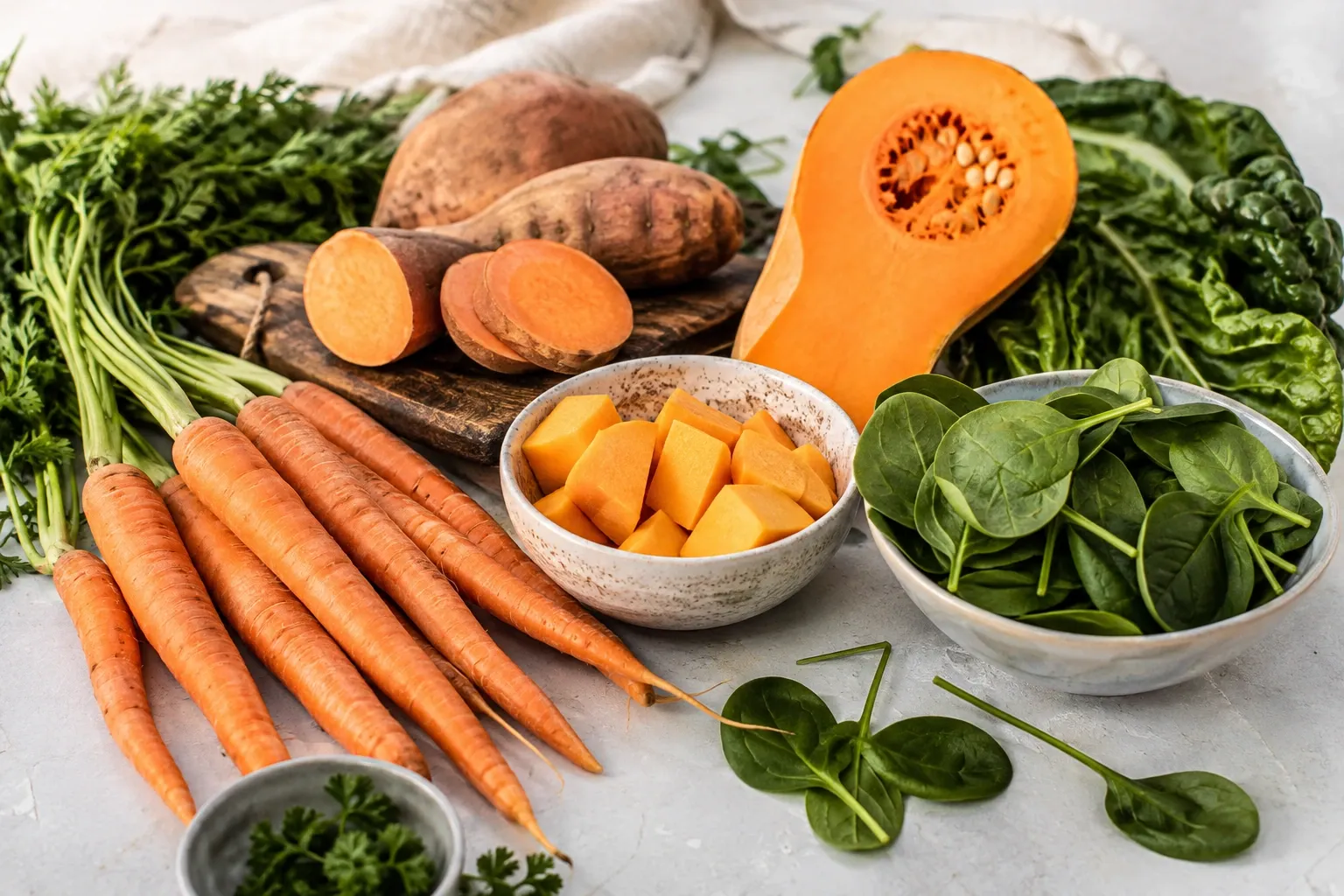
Orange, yellow, and dark-green vegetables are major sources of provitamin A carotenoids.
Examples from the NIH food table include approximately 1,403 mcg RAE in one baked sweet potato, 573 mcg RAE in half a cup of cooked spinach, and 459 mcg RAE in half a cup of raw carrots. (ODS)
These figures do not mean that eating a sweet potato is equivalent to taking the same numeric amount of retinol from a supplement. The body handles carotenoids differently and controls their conversion to vitamin A.
Do retinol and beta-carotene have the same toxicity risk?
No.
Preformed vitamin A can accumulate in the body and cause hypervitaminosis A when consumed in excessive amounts.
Beta-carotene from food does not produce the same form of vitamin A toxicity. Extremely high carotenoid intake can cause a harmless yellow-orange discoloration of the skin called carotenodermia, which typically resolves when intake decreases. (ODS)
How much vitamin A is too much?
For adults, the NIH lists a tolerable upper intake level of 3,000 mcg RAE per day for preformed vitamin A from food, beverages, and supplements.
EFSA reassessed vitamin A safety in 2024 and retained an adult UL of 3,000 mcg RE per day for preformed vitamin A, including for women of childbearing age, pregnant women, and breastfeeding women. (ODS)
The UL is not a recommended target, nor does crossing it slightly on one day mean that toxicity will occur immediately. It is a safety benchmark for usual intake.
What happens if you get too much vitamin A?
Vitamin A toxicity, or hypervitaminosis A, is primarily associated with excessive preformed vitamin A.
Depending on dose and duration, symptoms can include:
- headache;
- nausea;
- dizziness;
- blurred vision;
- coordination problems;
- dry skin;
- muscle or joint pain;
- fatigue;
- abnormal liver tests.
Very severe toxicity can lead to neurological and liver complications. (ODS)
Toxicity can occur acutely after an extremely high exposure or chronically after excessive amounts are consumed repeatedly.
Does too much vitamin A harm bone health?
The evidence requires careful interpretation.
Some observational studies have linked high retinol intake with lower bone mineral density or higher fracture risk in certain groups, while other studies have not found the same association. Reviews therefore describe a body of evidence that is biologically plausible but not completely consistent. (PubMed)
EFSA considered bone outcomes when reassessing the upper intake level in 2024, along with liver toxicity and teratogenicity. Teratogenicity was ultimately selected as the critical effect for deriving the adult UL. (PubMed)
The practical message is to avoid chronically excessive retinol intake, rather than to fear foods containing normal amounts of vitamin A.
Why does pregnancy require extra caution?
Vitamin A is essential for normal fetal growth and development, yet excessive exposure to preformed vitamin A can cause congenital abnormalities.
For that reason, high-dose retinol supplements require particular caution during pregnancy. (AESA)
WHO recommends vitamin A supplementation during pregnancy only in areas where vitamin A deficiency is considered a severe public-health problem, specifically to help prevent night blindness. For most pregnant women, adequate nutrition through a balanced diet is the priority. (WHO)
Do you need a vitamin A supplement?
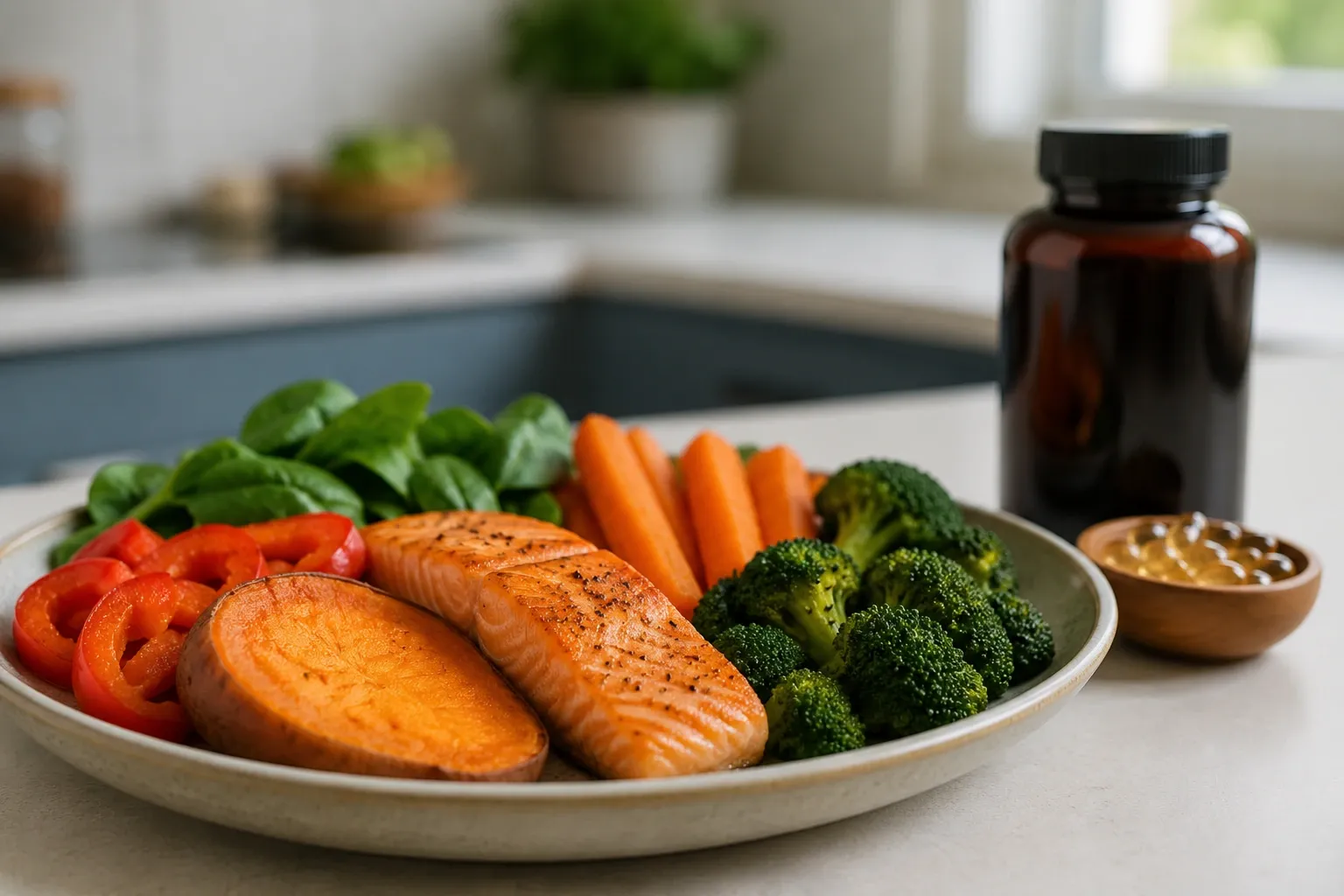
For most people who eat a varied diet and do not have a condition that interferes with nutrient absorption or metabolism, taking extra vitamin A is not automatically beneficial.
Supplementation can be appropriate for confirmed deficiency or specific medical and public-health indications. In those circumstances, the chemical form, dose, and treatment duration all matter.
High-dose supplements should not be used simply because vitamin A is essential.
Medication interactions can also be relevant. Orlistat can reduce vitamin A absorption, while combining vitamin A supplements with some prescription retinoids may increase the risk of excessive vitamin A exposure. (ODS)
Is food the best way to get vitamin A?
For most healthy people, a varied diet can provide vitamin A through a combination of animal foods containing preformed vitamin A and colorful vegetables containing carotenoids.
Carrots, sweet potatoes, pumpkin, and dark-green vegetables also provide fiber and other micronutrients, while eggs, fish, and dairy foods can contribute vitamin A as part of a balanced eating pattern.
The key principle is simple: vitamin A is essential, but more is not necessarily better.
Conclusion
Vitamin A is necessary for vision, immune function, growth, reproduction, and development. It comes from preformed vitamin A in animal foods and from provitamin A carotenoids in plant foods. (ODS)
For most people, a varied diet is the safest foundation. The greatest concern about excessive intake involves preformed vitamin A, particularly from high-dose supplements and very concentrated food sources.
People who are pregnant, use prescription retinoids, or are considering high-dose vitamin A supplements should seek individualized advice from a qualified healthcare professional.
This article is for educational purposes and does not replace professional medical assessment, diagnosis, or treatment.