Is Dark Chocolate Healthy? How to Choose and How Much to Eat
Dark chocolate provides cocoa flavanols, but it is not medicine. Learn what the evidence shows, how to choose a bar, and how much can reasonably fit into a healthy diet.
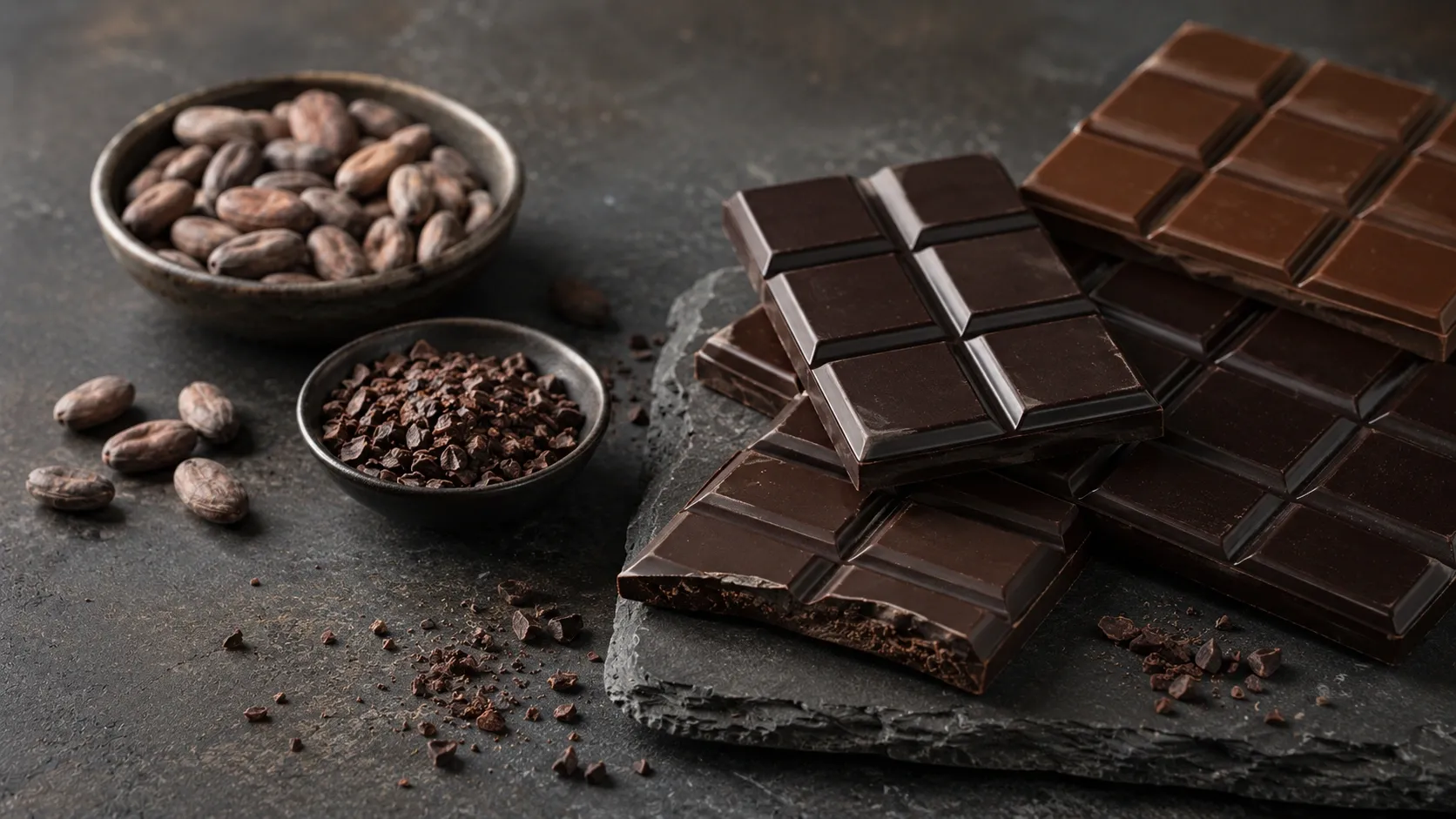
Dark chocolate can be part of a healthy diet, and there is legitimate scientific interest in cocoa. Cocoa contains plant compounds called flavanols, which have been studied for their effects on vascular function, blood pressure, and other cardiometabolic markers. (PubMed)
However, evidence that cocoa flavanols have biological effects should not be translated into the much stronger claim that eating chocolate prevents cardiovascular disease.
Commercial chocolate bars contain variable amounts of cocoa and flavanols while also providing calories, saturated fat, and often added sugar. (Harvard T.H. Chan)
Dark chocolate is therefore better understood as an enjoyable food with some potentially interesting components, not as medicine.
What is in dark chocolate?
Dark chocolate is made from cocoa-derived ingredients, including cocoa solids and cocoa butter, generally combined with varying amounts of sugar.
Harvard describes commercial dark chocolate as commonly containing roughly 50–90% cocoa solids. As the cocoa percentage rises, the flavor generally becomes more intense and less sweet. (Harvard T.H. Chan)
Cocoa also provides minerals including magnesium, iron, copper, phosphorus, and zinc, as well as the flavanols responsible for much of the research interest. (Harvard T.H. Chan)
This does not make chocolate the most efficient way to obtain those nutrients. Many other foods can provide minerals and plant compounds without the same calorie density.
What are cocoa flavanols?
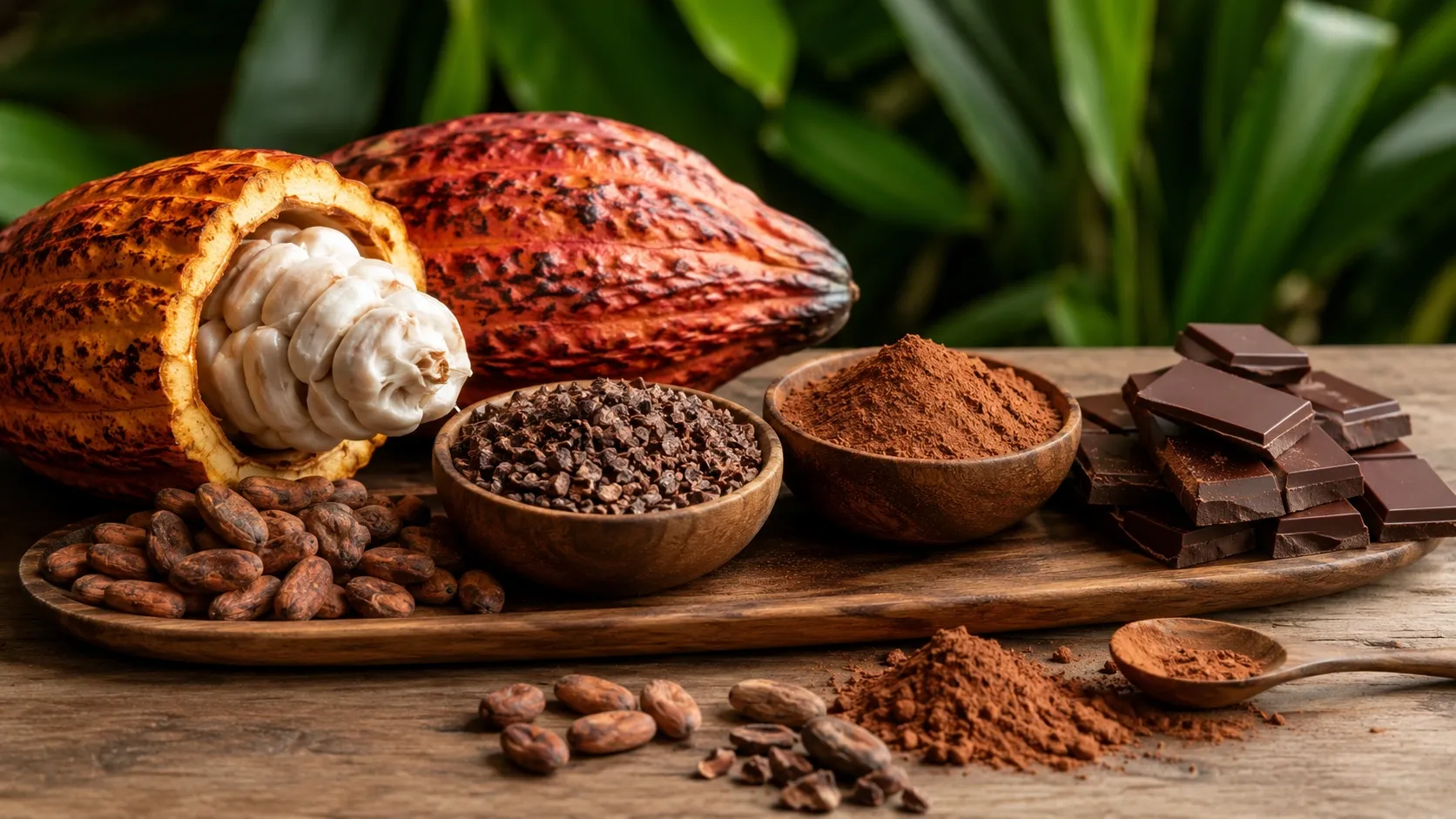
Flavanols belong to the larger family of plant compounds known as flavonoids.
They have been studied for their effects on nitric oxide availability and endothelial function. The endothelium is the cellular lining of blood vessels, and better nitric oxide availability can contribute to blood-vessel relaxation and modest changes in blood pressure. (Harvard T.H. Chan)
Randomized trials and meta-analyses have reported favorable effects of cocoa on several cardiometabolic markers. A 2024 meta-analysis, for example, found improvements in some markers including blood pressure. (PubMed)
The effects are generally modest, however, and studies vary greatly in cocoa product, flavanol concentration, dose, and duration.
Is dark chocolate good for your heart?
The most accurate answer is that cocoa contains compounds with potentially favorable cardiovascular effects, but dark chocolate should not be used to prevent or treat cardiovascular disease.
In 2023, the FDA reviewed evidence for cocoa flavanols and cardiovascular risk. The agency allowed only a highly qualified claim stating that the supporting evidence was very limited. (U.S. Food and Drug Administration)
Importantly, the claim applies specifically to specially produced high-flavanol cocoa powder and foods containing it. The FDA explicitly states that it does not apply to ordinary cocoa powder or chocolate. (U.S. Food and Drug Administration)
That distinction is easy to lose in headlines about the “health benefits of chocolate.”
What did the COSMOS trial find?
COSMOS was a large randomized trial involving more than 20,000 older adults.
Participants received a standardized cocoa extract or placebo. Cocoa flavanol supplementation did not significantly reduce the trial’s primary composite cardiovascular endpoint, although some secondary outcomes were favorable and generated hypotheses for further research. (PubMed)
The intervention was a standardized cocoa extract, not a commercial dark chocolate bar.
Harvard has emphasized that obtaining an equivalent amount of flavanols from ordinary dark chocolate could require an impractically large amount of chocolate and calories. (Harvard T.H. Chan)
Is a higher cocoa percentage always better?
It depends on what “better” means.
If your goal is to choose a bar with a larger proportion of cocoa and generally less sweetness, a higher cocoa percentage is useful. Harvard suggests choosing approximately 70% cocoa or higher when prioritizing cocoa solids and flavanols. (Harvard T.H. Chan)
But cocoa percentage is not the same as flavanol concentration.
Fermentation, roasting, alkalization, and other processing steps can substantially reduce flavanol content. Harvard notes that Dutch processing, or alkali treatment, causes significant flavanol losses. (Harvard T.H. Chan)
An 85% bar therefore cannot automatically be described as proportionally healthier than a 70% bar.
70%, 85%, or 100% cocoa: which should you choose?
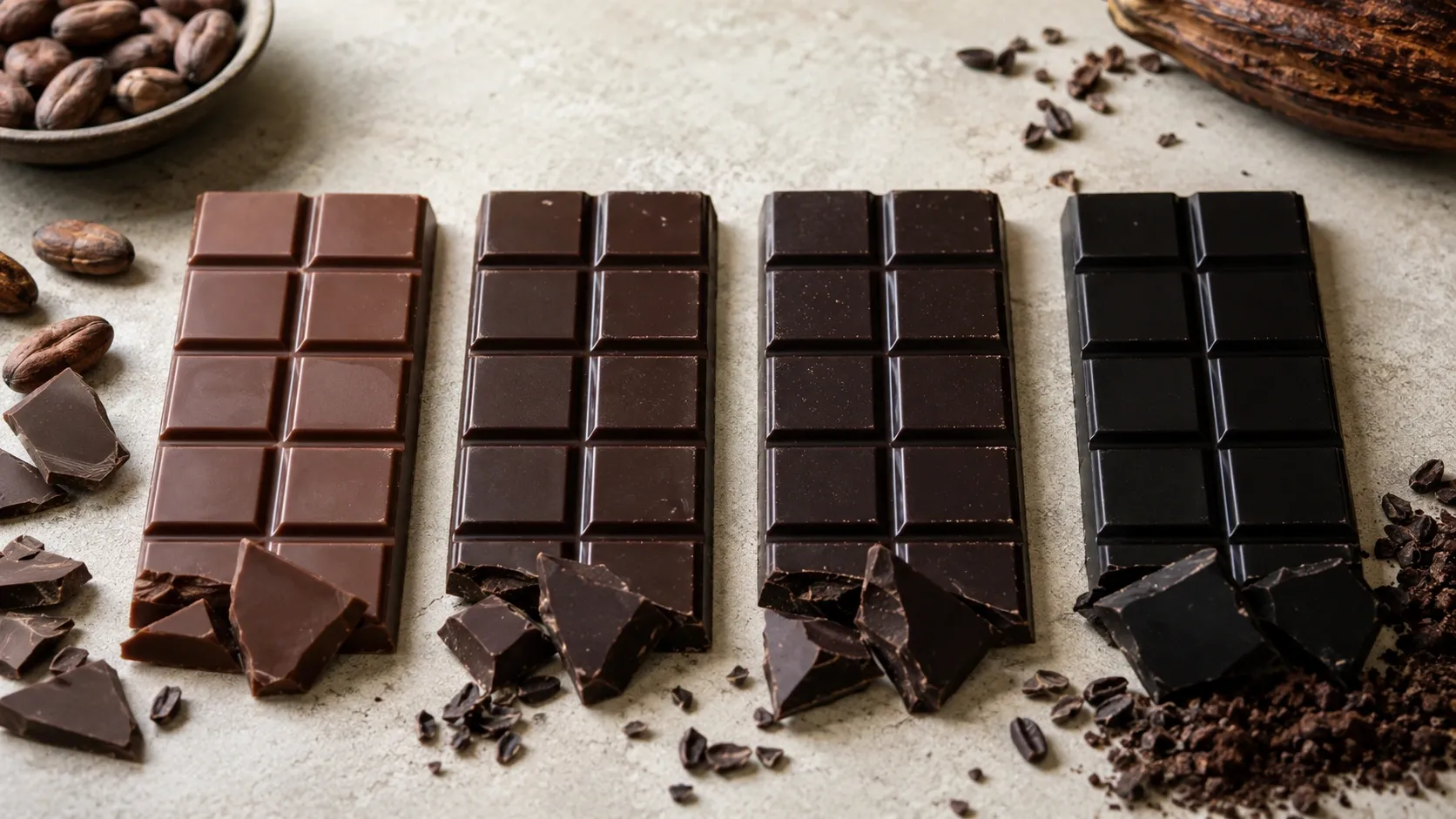
A practical comparison is more useful than treating one percentage as medically superior.
| Cocoa content | General characteristics | Who might prefer it |
|---|---|---|
| 50%–69% | Usually sweeter, with a lower proportion of cocoa | People transitioning toward darker chocolate |
| 70%–84% | Balance of cocoa intensity and palatability | A practical starting point when prioritizing cocoa |
| 85%–99% | Stronger and usually less sweet | People who enjoy a more bitter flavor |
| 100% | Extremely intense; may contain no added sugar when made solely from cocoa | Culinary use or people who enjoy unsweetened chocolate |
These ranges are practical descriptions rather than therapeutic categories. Cocoa percentage also cannot be used to calculate flavanol content directly. (Harvard T.H. Chan)
How to choose dark chocolate
1. Use cocoa percentage as a starting point
If you want to prioritize cocoa, around 70% or higher is a reasonable practical benchmark. (Harvard T.H. Chan)
There is no need to force yourself to eat 90% chocolate if you dislike it, and a 70% bar should not be viewed as medicine simply because the number appears on the wrapper.
2. Compare added sugar
Two bars with similar cocoa percentages can have different nutrition profiles.
Brazilian nutrition labeling, for example, requires added sugars to be displayed and enables comparison per 100 g. Foods reaching the regulatory threshold for high added sugar must carry front-of-pack labeling. (Brazilian Ministry of Health)
Wherever you live, checking added sugar on the nutrition panel is more informative than relying only on front-of-package marketing.
3. Look at saturated fat too
Cocoa butter naturally contributes saturated fat to chocolate.
WHO recommends keeping saturated fat below 10% of total daily energy and prioritizing unsaturated fat sources within the overall diet. (WHO)
This does not mean a small amount of dark chocolate is unhealthy. It means that portion size and the rest of the diet still matter.
4. Do not assume “sugar-free” or “organic” means healthier
Sugar-free chocolate can still contain significant calories and fat.
Likewise, terms such as organic, premium, artisanal, or natural do not tell you how many cocoa flavanols a bar contains.
A useful comparison focuses on measurable information: cocoa percentage, added sugar, calories, saturated fat, and serving size.
How much dark chocolate should you eat?

There is no official therapeutic dose of dark chocolate for improving cardiovascular health.
Clinical trials have used highly variable cocoa products and flavanol concentrations, and some of the most influential studies used standardized extracts rather than chocolate. (PubMed)
As a practical moderation guideline, Harvard recommends limiting dark chocolate to approximately 1 ounce, or 28 g per day. (Harvard T.H. Chan)
That should not be interpreted as a daily requirement.
If a smaller amount satisfies you, there is no health reason to increase the portion simply to reach a supposed flavanol target.
Why do small portions make sense?
Dark chocolate is energy-dense.
Harvard estimates approximately 150–170 calories per ounce, or about 28 g, depending on the bar. (Harvard T.H. Chan)
A large 80- or 100-g bar can therefore contribute substantial energy very quickly.
This does not make chocolate forbidden. It simply means that using cardiovascular claims as a reason to eat large portions is inconsistent with the evidence.
WHO identifies moderation and energy balance as central principles of a healthy diet. (WHO)
Does dark chocolate contain too much sugar?
It depends on the product.
Higher-cocoa chocolate generally tastes less sweet, but cocoa percentage alone does not replace checking the nutrition facts. (Harvard T.H. Chan)
WHO recommends limiting free sugars to less than 10% of total daily energy, with potential additional benefits from reducing intake to 5% or less. (WHO)
Comparing added sugar between similar bars is therefore a useful purchasing strategy.
What about saturated fat?
Dark chocolate contains cocoa butter and therefore also provides saturated fat.
This is a good example of why foods cannot be reduced to a single nutrient or plant compound: the same product can contain potentially useful flavanols while also contributing calories and saturated fat. (Harvard T.H. Chan)
How much you eat matters.
Does dark chocolate contain caffeine?
Yes.
Cocoa naturally contains caffeine. Harvard reports that approximately 2 ounces, or 57 g, of 70% dark chocolate may provide about 50–60 mg of caffeine, although actual amounts vary. (Harvard T.H. Chan)
For most people, a small serving contributes relatively little. Highly caffeine-sensitive people may still prefer smaller portions or avoid dark chocolate close to bedtime.
What about lead and cadmium?
Cocoa and dark chocolate can contain small quantities of cadmium and lead.
Cadmium can occur naturally in soil, while lead contamination may also occur during production and processing. Concentrations vary according to growing region and manufacturing practices. (Harvard T.H. Chan)
Because dark chocolate contains more cocoa solids, this issue has received particular attention for high-cocoa products.
At the same time, assessments summarized by Harvard indicate that cocoa and chocolate are not major dietary sources of these metals for the general population. The issue therefore supports moderation rather than panic or complete avoidance. (Harvard T.H. Chan)
Can dark chocolate help with weight loss?
Dark chocolate should not be prescribed as a weight-loss food.
A small amount may be satisfying and can fit into a planned dessert, but chocolate remains energy-dense. Evidence about long-term effects on weight is uncertain. (Harvard T.H. Chan)
Weight management depends on total energy intake, overall food quality, physical activity, sleep, eating behavior, and long-term adherence.
Do you need dark chocolate every day?
No.
There is no health guideline requiring daily chocolate consumption.
WHO emphasizes dietary diversity and recommends patterns built largely around nutrient-dense foods such as vegetables, fruits, pulses, whole grains, nuts, seeds, and appropriate protein sources. (WHO)
Dark chocolate can be part of that diet because you enjoy it. It does not need to become a supplement.
A note for Brazilian readers
Brazil introduced a new cocoa and chocolate law in 2026.
Law No. 15,404/2026 will require products covered by the legislation to display their cocoa percentage prominently and introduces new composition requirements. (Presidency of the Republic)
The new rules take effect on May 6, 2027. As of August 2026, Anvisa is still developing complementary regulatory details for implementation. (Brazilian Ministry of Health)
Conclusion
Dark chocolate can fit into a healthy diet and provides cocoa flavanols that have shown interesting effects on vascular function and several cardiometabolic markers. (PubMed)
It is not, however, cardiovascular medicine. Even the FDA’s qualified claim for specially produced high-flavanol cocoa powder is based on very limited evidence and explicitly does not apply to ordinary chocolate. (U.S. Food and Drug Administration)
When choosing a bar, 70% cocoa or higher is a useful practical starting point if you want more cocoa, but also check added sugar, saturated fat, calories, and serving size. (Harvard T.H. Chan)
There is no therapeutic daily dose. For people who enjoy dark chocolate, a small portion — with about 28 g per day as a practical upper reference — can fit into a balanced diet, and there is no need to eat it every day. (Harvard T.H. Chan)
The best reason to eat dark chocolate remains simple: you enjoy it. Any potential benefit from cocoa is better viewed as a bonus than as a prescription.