Do Carrots Improve Eyesight? The Role of Beta-Carotene
Carrots provide beta-carotene, which the body can convert into vitamin A — a nutrient essential for normal vision. Learn what carrots can actually do for your eyes and where the familiar claim goes too far.
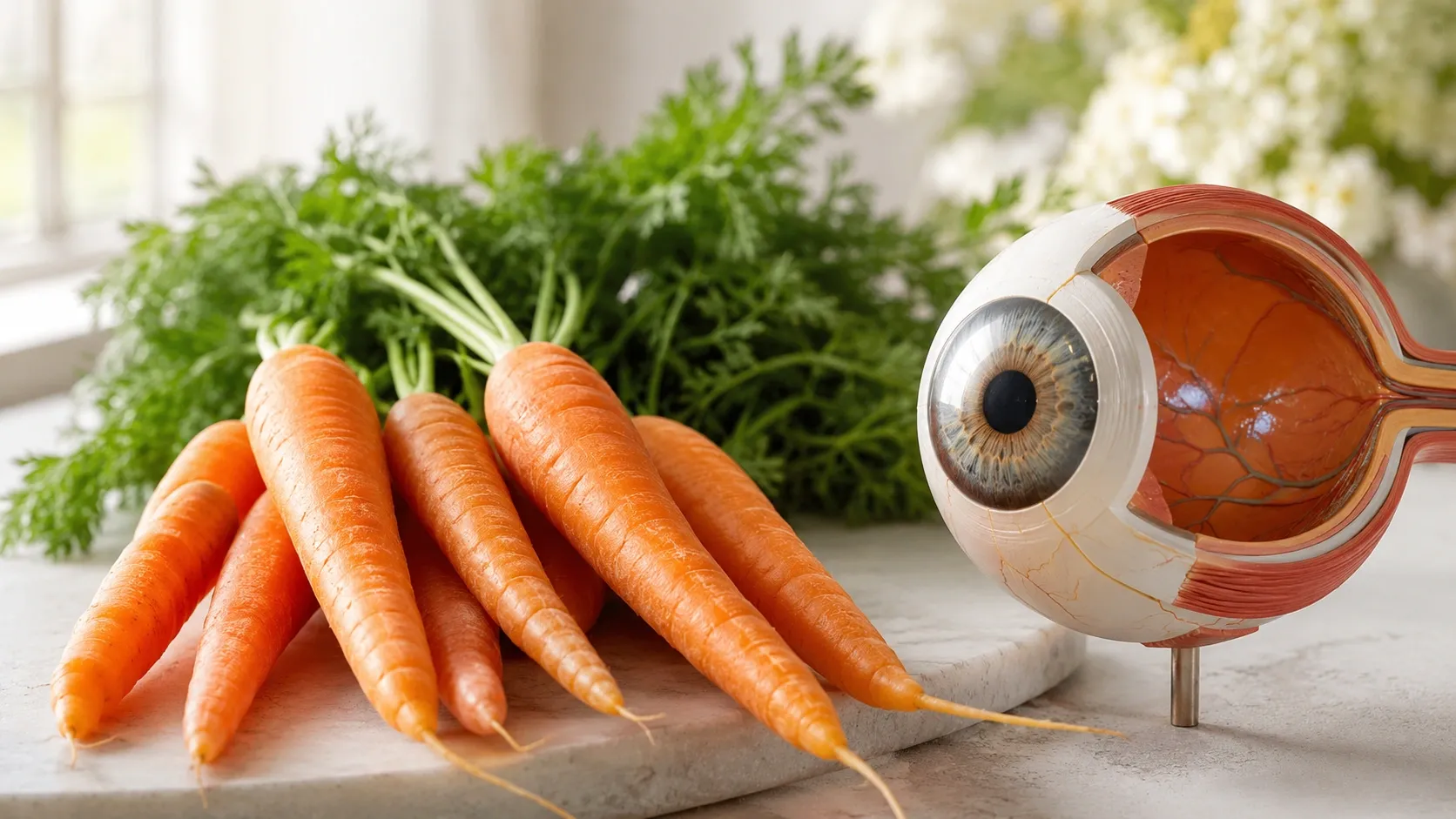
The familiar connection between carrots and good eyesight has a genuine scientific basis — but it is often overstated.
Carrots contain carotenoids, including beta-carotene, which the human body can convert into vitamin A. Vitamin A is genuinely essential for normal vision. It is a component of rhodopsin, a light-sensitive protein in the retina that helps the visual system respond to incoming light, particularly in dim conditions. (NIH ODS)
That does not mean eating more carrots will automatically make your vision sharper.
For a person who already has adequate vitamin A status, consuming increasingly large amounts of carrots has not been established as a way to improve visual acuity, correct nearsightedness or eliminate the need for corrective lenses.
A more accurate statement is: carrots provide nutrients that help maintain normal visual function.
Why are carrots associated with eyesight?
The key is beta-carotene.
Carotenoids are naturally occurring plant pigments. Several of them — including beta-carotene, alpha-carotene and beta-cryptoxanthin — are known as provitamin A carotenoids because the body can convert them into vitamin A. (NIH ODS)
Carrots contain substantial amounts of these compounds. For example, the Brazilian Food Composition Table reports approximately 3,840 µg of total beta-carotene and 399 µg retinol activity equivalents, or RAE, per 100 g in one tested sample of raw Imperador carrots. The exact value should not be generalized to every carrot because variety, growing conditions and preparation can influence composition. (TBCA)
The NIH also lists carrots among significant food sources of vitamin A activity from carotenoids. (NIH ODS)
What does vitamin A actually do in the eye?
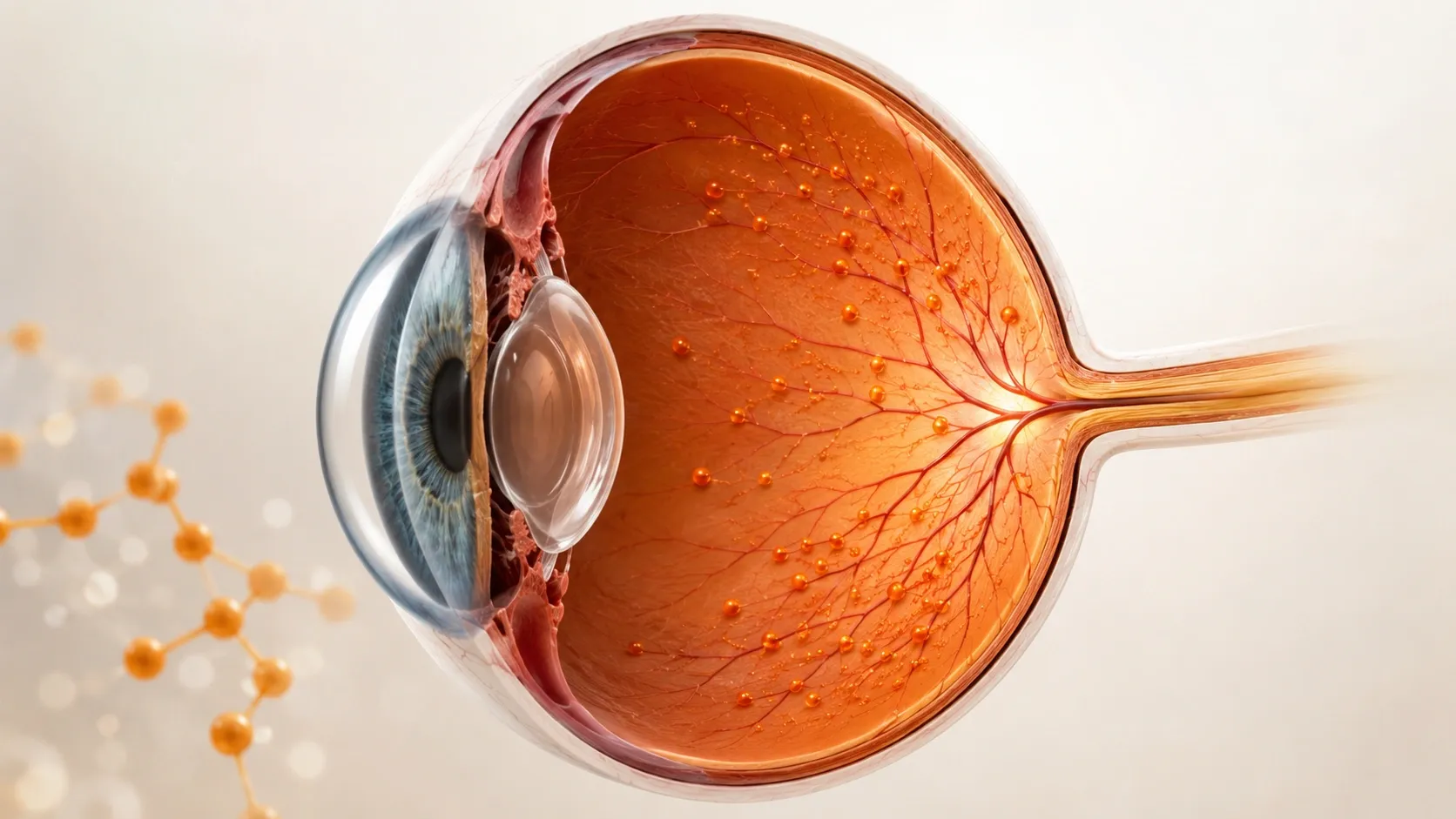
Vitamin A has a direct biological role in vision.
It is required for rhodopsin, a light-sensitive protein in the retina. Vitamin A also supports the normal function and differentiation of tissues in the conjunctiva and cornea. (NIH ODS)
When vitamin A stores become severely depleted, rhodopsin levels can fall. One of the earliest clinical effects can be night blindness, meaning difficulty seeing in dim light or darkness. (NIH ODS)
More severe deficiency can cause xerophthalmia, a spectrum of eye abnormalities that can damage the cornea and, in extreme cases, result in permanent blindness. (WHO)
That is the scientifically established link between vitamin A and eyesight.
So do carrots improve vision or not?
It depends on what “improve” means.
If a person is deficient in vitamin A and that deficiency is impairing visual function, restoring adequate vitamin A can improve manifestations caused by the deficiency, depending on their severity. (WHO)
That is very different from giving healthy eyes enhanced abilities.
The evidence reviewed here does not support the claim that increasing carrot consumption improves visual acuity beyond normal function in a person whose vitamin A status is already adequate. Official NIH guidance describes vitamin A as essential for normal vision, not as a nutrient that continuously boosts eyesight as intake rises. (NIH ODS)
What does “provitamin A” mean?
Vitamin A reaches the diet in more than one form.
Animal foods can provide preformed vitamin A, mainly retinol and retinyl esters. Plant foods can provide provitamin A carotenoids. Beta-carotene from carrots belongs to the second category. (NIH ODS)
After beta-carotene is absorbed, the body can convert it into vitamin A. The conversion is not one-to-one.
For this reason, nutritional recommendations use retinol activity equivalents (RAE). According to the NIH reference system, 12 µg of beta-carotene from food is equivalent to 1 µg RAE for dietary calculations. (NIH ODS)
How much vitamin A do adults need?
Requirements vary with age, sex and life stage.
The Dietary Reference Intakes cited by the NIH recommend 900 µg RAE per day for adult men and 700 µg RAE for adult women. Requirements differ during pregnancy and lactation. (NIH ODS)
That does not mean carrots need to provide the entire amount.
Vitamin A can come from a range of foods. Orange, yellow and dark-green plant foods contribute provitamin A carotenoids, while foods such as eggs, dairy products, fish and organ meats can provide preformed vitamin A. (NIH ODS)
Eye health is better approached through an overall dietary pattern than through one “eye food.”
Are raw or cooked carrots better?

Nutrient content tells only part of the story.
The TBCA reports approximately 3,840 µg of total beta-carotene per 100 g in one sample of raw Imperador carrots, compared with approximately 3,640 µg after eight minutes of cooking in a sample of the same variety. (TBCA)
But another concept matters: bioavailability — how much of a compound becomes available for absorption and use.
In a human study, beta-carotene was more available from meals containing cooked and processed carrots than from meals containing the raw vegetable. Processing can disrupt plant cell structures and help release carotenoids from the food matrix. (PubMed)
The NIH likewise notes that cooking and heat treatment can increase beta-carotene bioavailability from foods. (NIH ODS)
There is therefore no need to declare either raw or cooked carrots the universal winner.
A little dietary fat can help absorption
Beta-carotene and other carotenoids are fat-soluble, so the composition of a meal affects absorption.
In a small randomized clinical trial, seven adults consumed vegetable salads containing foods including carrots with dressings containing different amounts of oil. Carotenoid absorption was greater when dietary fat was present. (PubMed)
This does not mean carrots need to be drenched in oil.
They can simply be eaten as part of meals that naturally contain moderate amounts of foods such as olive oil, seeds, nuts, eggs or other fat sources.
Are carrots the only source of beta-carotene?
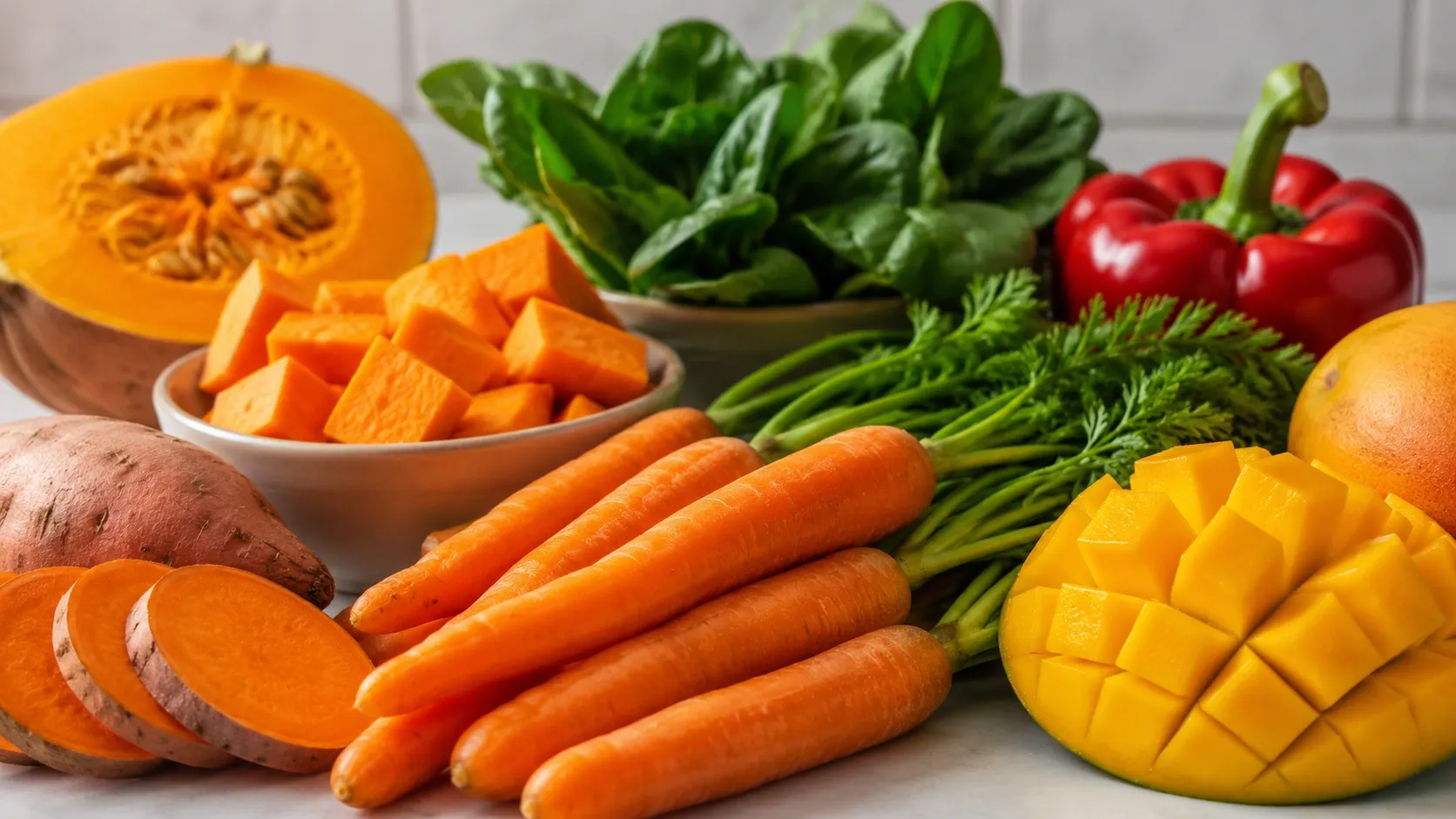
No.
The NIH identifies leafy green, orange and yellow vegetables as major dietary sources of provitamin A carotenoids. Foods such as sweet potatoes, spinach, pumpkin and red peppers can also contribute vitamin A activity or carotenoids to the diet. (NIH ODS)
Carotenoids also differ in their biological roles.
Lutein and zeaxanthin, for example, are not converted into vitamin A. They accumulate in the retina and have been studied in specific areas of eye health, particularly age-related macular degeneration. (NIH ODS)
What about age-related macular degeneration?
This is an area where food and therapeutic supplements are often confused.
The National Eye Institute conducted the large AREDS and AREDS2 trials to test nutrient combinations in people with age-related macular degeneration, or AMD. The original AREDS formula included beta-carotene along with other antioxidants and minerals. (National Eye Institute)
The newer AREDS2 formula replaced beta-carotene with lutein and zeaxanthin. This maintained the benefit for appropriate patients while addressing concerns related to beta-carotene exposure in smokers and former smokers. (National Eye Institute)
Importantly, AREDS and AREDS2 supplements did not prevent AMD from developing. Their benefit concerns progression to advanced disease in selected high-risk groups. (National Eye Institute)
These findings are not evidence that healthy people should take beta-carotene to improve their eyesight.
Can eating too many carrots be harmful?
Large amounts of beta-carotene from foods behave differently from excessive preformed vitamin A.
Long-term high beta-carotene intake can cause carotenodermia, in which the skin takes on a yellow-orange tone. The NIH describes this as harmless and reversible when excess intake stops. (NIH ODS)
Excess preformed vitamin A, especially from high-dose supplements, is a different issue because vitamin A is fat-soluble and can accumulate in the body, potentially causing toxicity. (NIH ODS)
More is not automatically better.
When should vision changes be evaluated?
Vision problems should not automatically be blamed on a lack of carrots or vitamin A.
Persistent blurred vision, new difficulty seeing at night, sudden vision loss, flashes of light, new blind spots or other significant visual changes can have many causes and warrant professional assessment.
Vitamin A deficiency is only one possible explanation for eye symptoms, and its diagnosis requires appropriate clinical evaluation rather than assumptions based on diet alone. (WHO)
Conclusion
So, do carrots improve eyesight?
The best answer is that carrots help supply nutrients needed to maintain normal vision, but they do not act as an eyesight enhancer.
Their beta-carotene can be converted into vitamin A, which is essential for the retina, rhodopsin, corneal health and normal adaptation to dim light. Vitamin A deficiency can impair vision and cause night blindness. (NIH ODS)
For someone who already has adequate vitamin A status, however, eating more carrots is not expected to correct refractive errors or produce supernormal eyesight.
Carrots remain a nutritious and useful food. They simply do not need a myth to make them worth eating.