Does Cinnamon Help Control Blood Sugar? What Science Says
Cinnamon may modestly lower blood glucose in some people, but it cannot replace diabetes treatment. Learn what studies show about glucose, HbA1c, dosage, cinnamon types and safety.
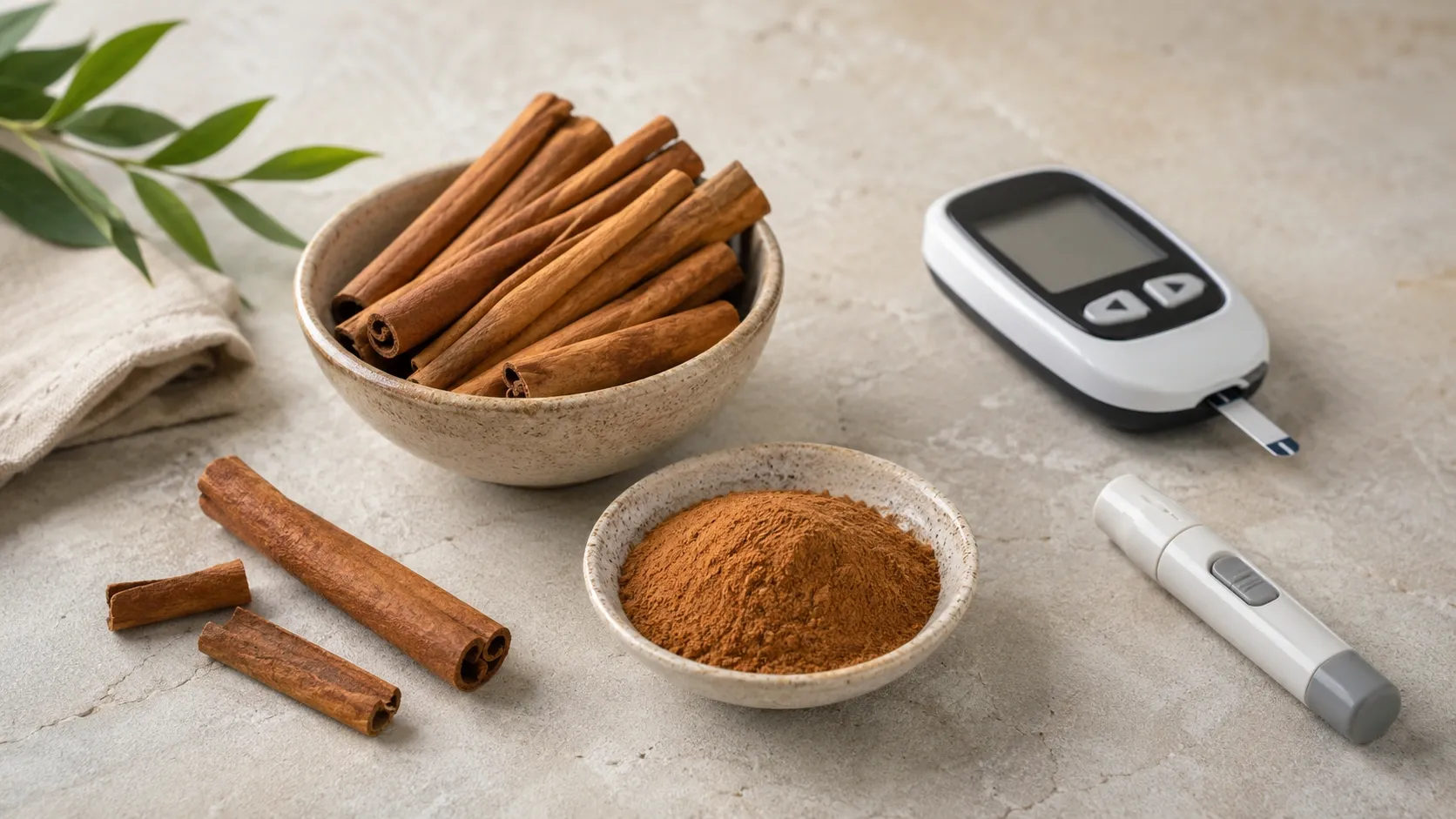
Cinnamon is frequently promoted as a natural way to lower blood sugar. Some online claims go further, suggesting that taking cinnamon every day can control prediabetes or type 2 diabetes.
Research tells a more nuanced story.
Several clinical trials and meta-analyses suggest that cinnamon may modestly reduce blood glucose, particularly fasting glucose, in some populations. However, results vary considerably and the evidence is not strong enough to treat cinnamon as an established diabetes therapy. (Nutrition Reviews)
Cinnamon can be part of a healthy diet. That is very different from using it as a replacement for medical treatment.
What does research show about fasting blood sugar?
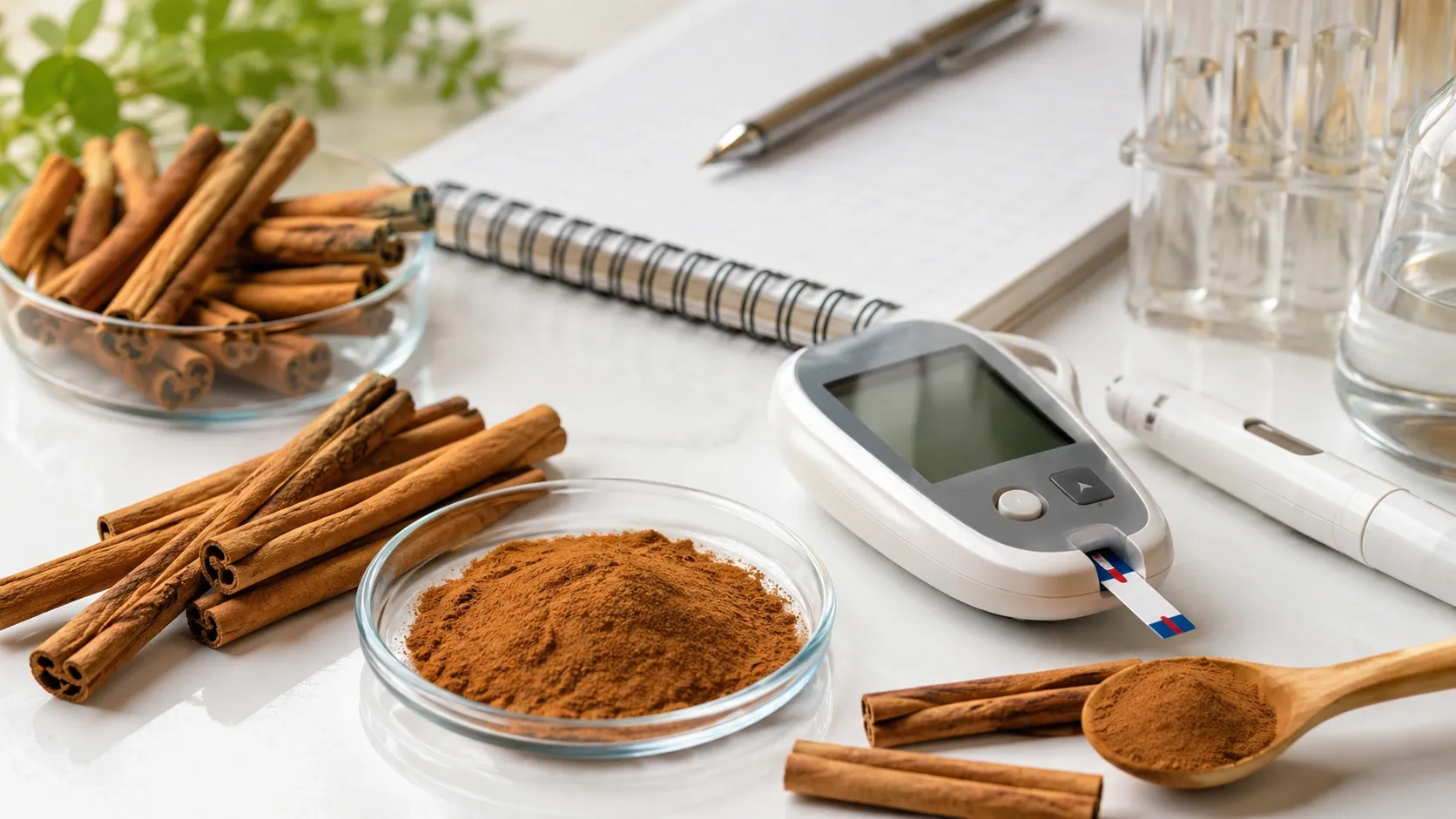
A 2025 systematic review and meta-analysis evaluated 28 randomized controlled trials involving 3,054 adults and older adults with type 2 diabetes. Trials lasted between 30 and 120 days. (Nutrition Reviews)
When the studies were pooled, cinnamon consumption was associated with an average reduction in fasting blood glucose of approximately 15 mg/dL compared with control groups. (Nutrition Reviews)
However, statistical heterogeneity was 88%, indicating substantial differences between individual trials. (Nutrition Reviews)
This means a 15 mg/dL reduction should not be interpreted as the effect an individual can expect after starting cinnamon.
What about post-meal glucose?
The same analysis reported reductions in postprandial glucose, but heterogeneity reached 100% for this outcome. (Nutrition Reviews)
That extreme variation makes a single pooled number difficult to apply clinically.
One reason is that studies have tested different cinnamon species, powders, extracts, capsule formulations, doses and treatment durations. NCCIH specifically identifies the lack of standardization as a major problem when interpreting cinnamon research. (NCCIH)
Does cinnamon lower HbA1c?
Some meta-analyses have reported reductions in HbA1c, but the evidence is considerably less straightforward.
The 2025 Nutrition Reviews analysis found a favorable pooled result, but heterogeneity for HbA1c was 94%. (Nutrition Reviews)
A 2025 umbrella review then examined 21 existing meta-analyses and evaluated the credibility of their findings.
Although an initial pooled analysis suggested an improvement in HbA1c, the authors identified evidence of small-study effects and excess significance in some comparisons. After they re-extracted and reanalyzed the original trials to address overlap, the overall effects on HbA1c and insulin resistance were no longer statistically significant. The evidence for these outcomes was characterized as weak. (Frontiers)
The evidence for fasting glucose was stronger. (Frontiers)
How strong is the overall evidence?
A useful summary is:
| Outcome | Current evidence |
|---|---|
| Fasting blood glucose | Possible modest reduction; most promising outcome |
| Postprandial glucose | Some positive results, but substantial inconsistency |
| HbA1c | Mixed and less robust |
| Insulin resistance | Possible effect, but weak evidence |
| Prevention of diabetes complications | Not established |
| Replacement for medication | Not supported |
This distinction explains why scientific papers may sound more optimistic than clinical guidelines.
A meta-analysis can identify an average statistical effect. A clinical recommendation requires evidence that is sufficiently reliable, reproducible, clinically meaningful and safe to justify routine use.
NCCIH currently states that it remains unclear whether cinnamon supplements are useful for diabetes and that better-quality research is needed. (NCCIH)
Why are the studies so inconsistent?
“Cinnamon” is not one standardized intervention.
Different species of Cinnamomum are used commercially and in research. Two well-known types are Ceylon cinnamon (Cinnamomum verum) and cassia cinnamon. (NCCIH)
Studies also differ in:
- daily dose;
- powder versus extract;
- duration;
- baseline glucose levels;
- medications;
- participant characteristics;
- cinnamon species;
- extraction methods;
- study quality.
These differences make it difficult to determine exactly which product, if any, should be recommended for blood-sugar management. (Nutrition Reviews)
What do diabetes guidelines say?
The American Diabetes Association’s Standards of Care in Diabetes—2026 remain cautious about herbal and other supplementation in diabetes when there is no underlying nutritional deficiency. (Diabetes Care)
NCCIH similarly states that reliable evidence does not show that herbal supplements control diabetes or its complications. (NCCIH)
These recommendations do not mean every positive cinnamon trial is invalid.
They mean the evidence is not sufficiently consistent to justify using cinnamon as standard diabetes therapy.
Can cinnamon replace diabetes medication?
No.
There is no evidence that cinnamon is equivalent to metformin, insulin or other established glucose-lowering medications.
NCCIH warns that replacing proven diabetes treatment with supplements can be dangerous because inadequate disease management increases the risk of serious complications. (NCCIH)
Is there an effective cinnamon dose?
No universal therapeutic dose has been established.
Trials and meta-analyses have investigated a wide range of preparations and amounts. A 2025 umbrella review found stronger fasting-glucose effects in some analyses using more than 1.5 g per day and shorter interventions, but this subgroup finding is not a recommendation to consume that amount. (Frontiers)
Higher intake also makes the type of cinnamon increasingly relevant because cassia cinnamon contains substantially more coumarin. (BfR)
Is cinnamon powder the same as an extract?
Not necessarily.
Products may contain ground bark, concentrated extracts or different cinnamon species. NCCIH notes that some products do not clearly identify the species or even the part of the plant used, despite meaningful differences in chemical composition. (NCCIH)
A result obtained with one standardized research extract therefore cannot automatically be applied to every supermarket cinnamon powder or supplement capsule.
Cassia vs. Ceylon cinnamon: why does it matter?
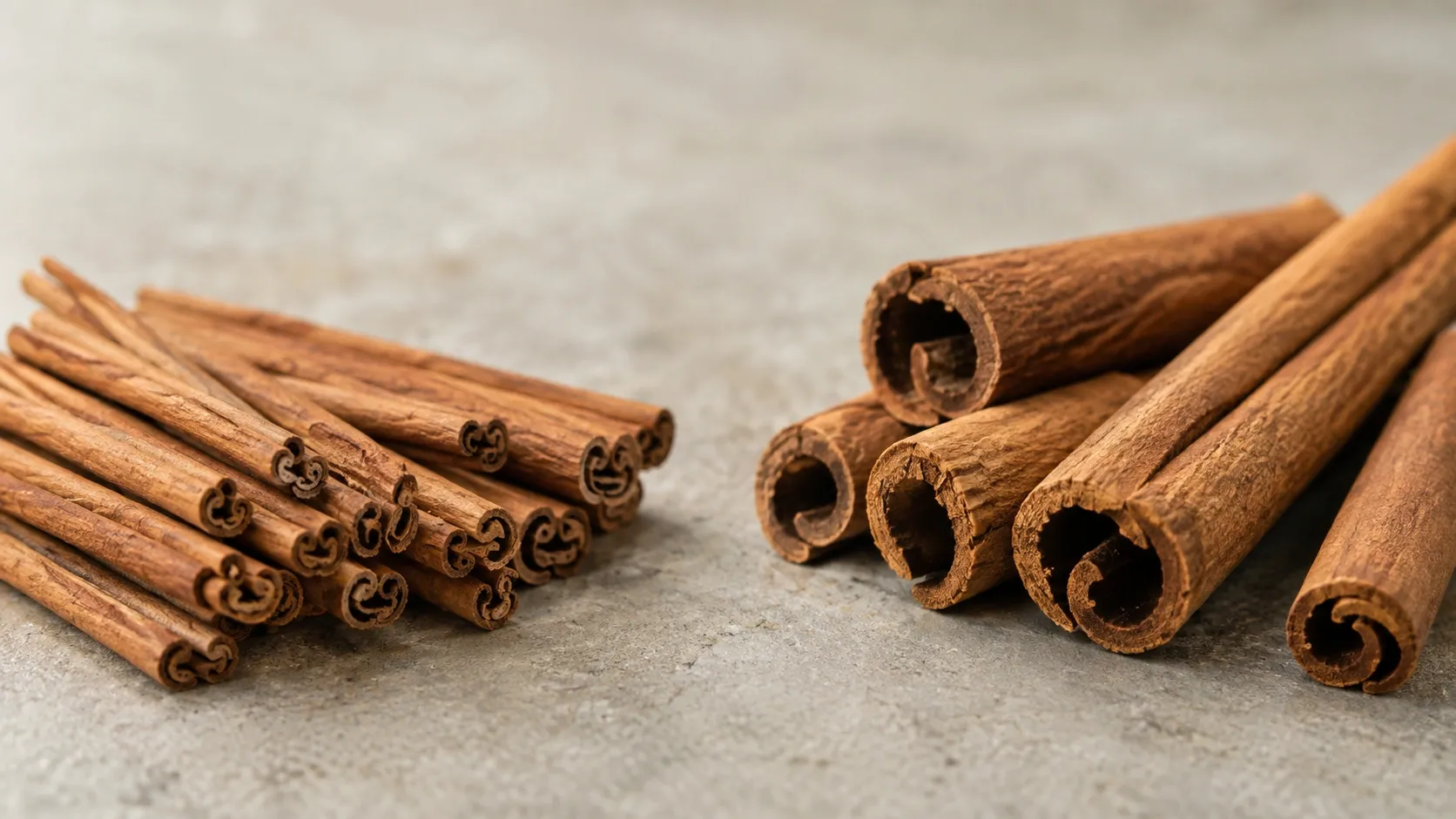
The biggest practical difference for frequent consumption involves coumarin.
Ceylon cinnamon contains low levels of coumarin, while cassia cinnamon can contain substantially higher concentrations. (BfR)
This does not establish Ceylon cinnamon as a better glucose-lowering treatment.
It does mean that Ceylon cinnamon can reduce coumarin exposure when someone frequently uses larger quantities.
How much coumarin is considered tolerable?
The German Federal Institute for Risk Assessment sets a tolerable daily intake of 0.1 mg of coumarin per kilogram of body weight per day. (BfR)
For example:
| Body weight | Tolerable daily coumarin intake |
|---|---|
| 50 kg | 5 mg |
| 60 kg | 6 mg |
| 70 kg | 7 mg |
| 80 kg | 8 mg |
These values are calculated from the BfR reference of 0.1 mg/kg/day. (BfR)
BfR monitoring data indicate that cassia cinnamon contains about 3,000 mg of coumarin per kilogram on average, although individual products can contain considerably more. (BfR)
At that average concentration, a 60 kg adult would reach the tolerable daily intake at roughly 2 g of cassia cinnamon per day. (BfR)
Occasionally exceeding that amount is not equivalent to chronic toxicity. The concern is repeated high exposure over long periods. (BfR)
Can cinnamon affect the liver?
Cinnamon in ordinary food amounts is considered likely safe for most people. Larger amounts or prolonged supplementation deserve more caution. (NCCIH)
Coumarin can cause liver injury in particularly susceptible individuals, which makes repeated high intake of cassia cinnamon a concern for people with existing liver disease. (BfR)
Higher cinnamon intakes have also been associated with gastrointestinal symptoms and allergic reactions. (NCCIH)
What about interactions with diabetes medicines?
People taking diabetes medication should tell their health care professionals about any herbal supplements they use because unwanted interactions can occur. (NCCIH)
This is particularly relevant when the intended purpose of the supplement is itself to lower glucose.
Insulin and certain glucose-lowering medicines can cause hypoglycemia, and glucose that drops too low can become a medical emergency. (NIDDK)
Adding supplements without appropriate monitoring can therefore complicate safe glucose management.
Does putting cinnamon on dessert cancel out the sugar?
No.
Carbohydrates in food still contribute to increased blood glucose. How quickly glucose rises depends partly on the food and what else is eaten with it, but cinnamon does not remove carbohydrate from a recipe. (CDC)
A cinnamon roll, sweetened coffee or sugary dessert does not become glucose-neutral simply because cinnamon has been added.
What has stronger evidence for blood-sugar management?
Healthy eating, appropriate portions, physical activity, weight management when indicated, glucose monitoring and evidence-based medications remain central components of diabetes care. (NIDDK)
The CDC notes that carbohydrate amount and type influence blood glucose and that combining carbohydrates with fiber, protein and fat can change how quickly glucose rises. (CDC)
Focusing too heavily on one spice can therefore distract from strategies with much stronger evidence.
So, is cinnamon worth using?

As a culinary spice, cinnamon can fit comfortably into a healthy eating pattern.
Using it specifically as a glucose-lowering treatment is a different proposition.
Current evidence suggests a possible modest improvement in fasting blood glucose, particularly among people with metabolic disorders. (Frontiers)
Important questions remain unanswered, including the best species, formulation, dose, long-term efficacy and whether small laboratory changes translate into fewer diabetes complications.
That uncertainty explains why cinnamon has not become a standard diabetes treatment. (NCCIH)
Conclusion
Cinnamon may modestly affect blood glucose, but it is not a proven treatment for diabetes.
Meta-analyses have reported reductions in fasting glucose and, in some analyses, postprandial glucose, HbA1c and insulin-resistance markers. However, substantial differences between trials and weaker evidence after more rigorous reanalysis limit how confidently those findings can be applied. (Nutrition Reviews)
Using cinnamon as a spice is reasonable for most people, but it should not replace nutrition therapy, physical activity, monitoring or prescribed medication. (NCCIH)
For people who consume larger amounts regularly, cinnamon type also matters: cassia contains considerably more coumarin than Ceylon cinnamon. (BfR)
The most accurate summary of the science today is therefore:
Cinnamon shows a possible small glucose-lowering effect—especially for fasting glucose—but current evidence is not strong enough to turn it into diabetes treatment.