Does Glutamine Work for Muscle, Gut Health, or Immunity?
Glutamine is marketed for muscle, gut health, and immunity, but supplementation benefits depend heavily on context. Here is what the evidence actually shows.
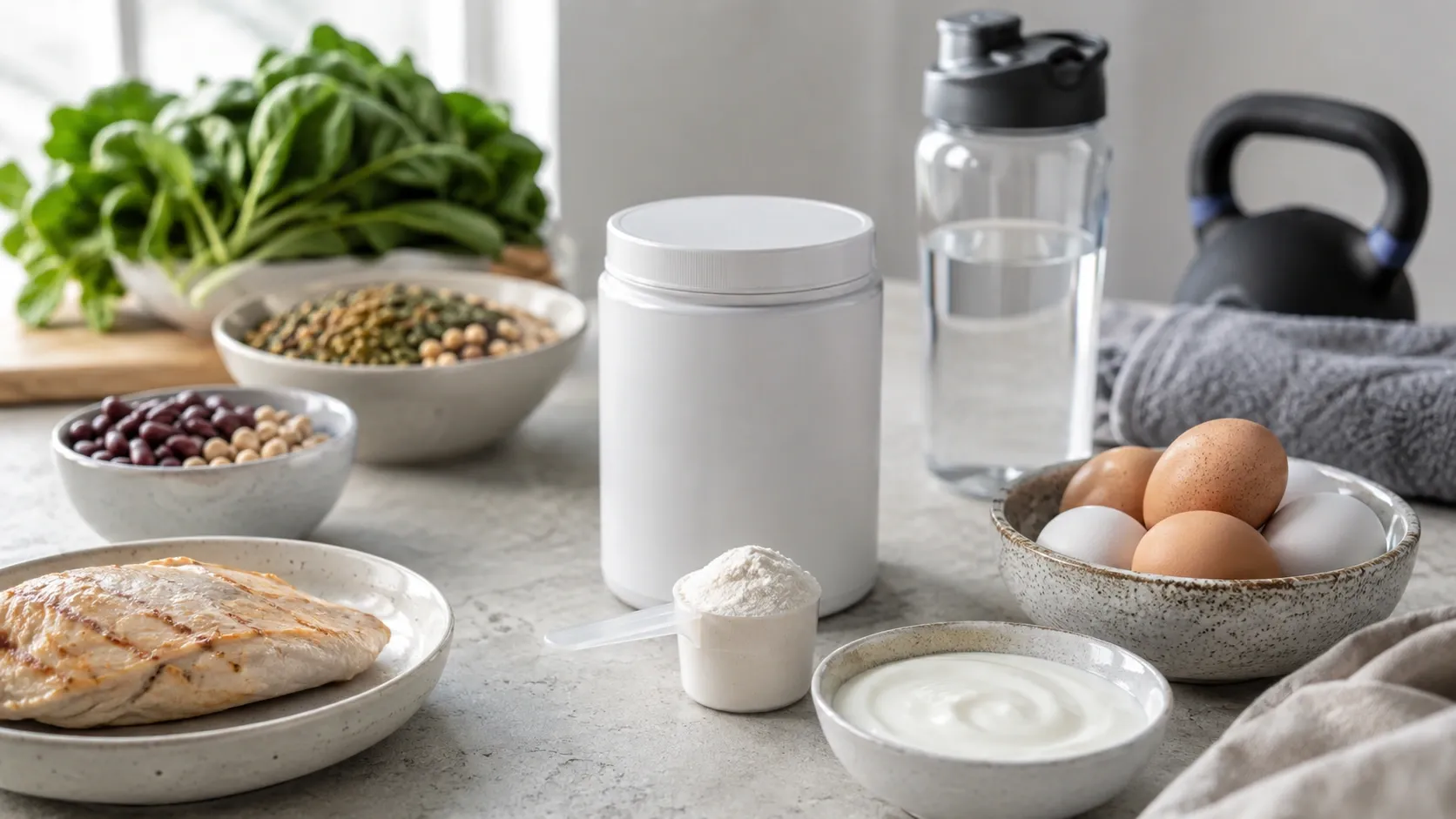
Glutamine occupies an unusual place in the supplement market. The same product is often promoted for muscle growth, exercise recovery, immune support, and gut health.
There is a biological reason for these claims. Glutamine is a highly abundant amino acid involved in skeletal muscle metabolism and provides important metabolic support to intestinal and immune cells. Its availability may also change during substantial physiological stress. (PubMed)
However, two statements are often confused: the body needs glutamine and taking extra glutamine improves health or performance. The first is well established. The second depends strongly on the population and outcome being studied. (PubMed)
What is glutamine?
Glutamine is an amino acid involved in nitrogen transport, energy metabolism, biosynthesis, redox balance, and the function of tissues with high metabolic activity. Skeletal muscle, intestinal tissue, and immune cells are all closely connected to glutamine metabolism. (PubMed)
Under ordinary conditions, however, the human body produces substantial amounts of glutamine, while dietary protein supplies additional amino acids.
That is why an important physiological role does not automatically establish a need for supplementation.
Does glutamine help build muscle?

For healthy people pursuing hypertrophy, current evidence does not support glutamine as an important muscle-building supplement.
A systematic review and meta-analysis of trials in athletes found no meaningful overall benefit for body composition. The same analysis did not identify consistent improvements in aerobic performance or the main immune-related outcomes studied. (Clinical Nutrition Journal)
Why the biological theory has not translated into clear muscle gains
Skeletal muscle plays a major role in glutamine metabolism, and laboratory research provides several plausible pathways through which glutamine could affect protein metabolism, oxidative stress, energy sensing, and recovery.
Human trials, however, have not consistently shown that oral glutamine produces greater muscle growth, strength, or athletic performance.
A 2026 review concluded that despite multiple plausible mechanisms, clinical outcomes remain heterogeneous and the evidence is insufficient to establish clear supplementation benefits or an optimal timing strategy. (PubMed)
For muscle gain, resistance training and sufficient protein intake remain far better-established priorities. (PubMed)
What about post-workout recovery?
The evidence is somewhat more nuanced.
Some studies have reported favorable changes in biomarkers related to exercise-induced muscle damage, inflammation, oxidative stress, or recovery. Other studies have found little or no meaningful effect. (PubMed)
Importantly, improving a laboratory marker does not necessarily mean that an athlete becomes stronger, gains more muscle, performs better, or experiences a meaningful improvement in recovery.
The 2026 review therefore describes several potential mechanisms while emphasizing that existing clinical data remain too inconsistent to define a clear recovery benefit. (PubMed)
Does glutamine improve gut health?
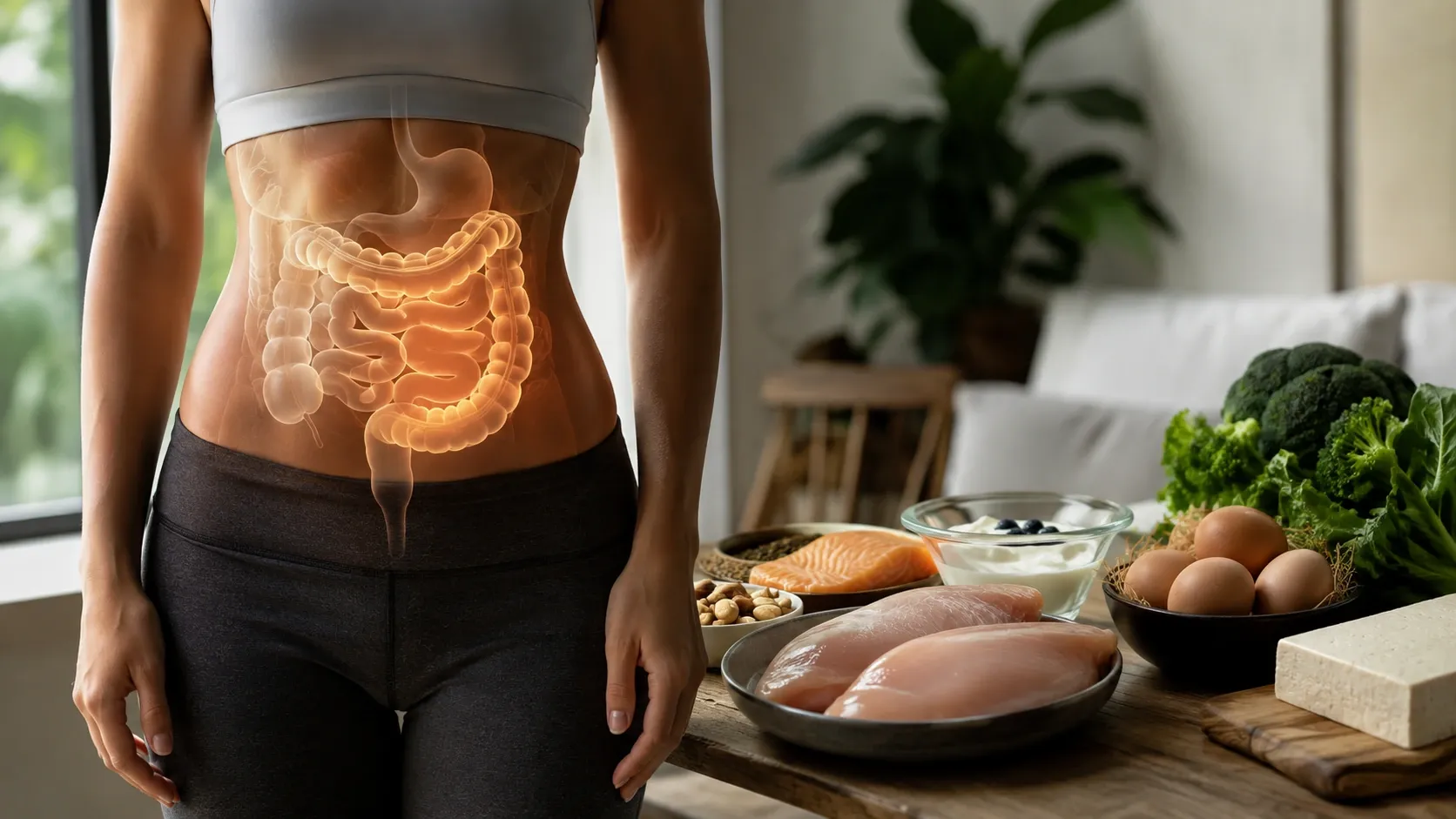
Gut health is currently one of the most common reasons people consider taking glutamine.
Intestinal cells use glutamine, and the amino acid has biological roles related to epithelial integrity and the intestinal barrier. This has led researchers to study whether supplements can reduce abnormal intestinal permeability. (PubMed Central (PMC))
The clinical evidence, however, is not straightforward.
What did the latest meta-analysis find?
A 2024 systematic review and meta-analysis examined randomized trials of oral glutamine supplementation and gastrointestinal permeability in adults.
When all studies were pooled, glutamine did not significantly improve intestinal permeability overall. (PubMed Central (PMC))
Certain subgroup analyses suggested a possible effect with higher doses and shorter interventions. Yet participants had widely differing health conditions, study protocols varied substantially, and the evidence does not justify turning those subgroup findings into a general recommendation for otherwise healthy people. (PubMed Central (PMC))
What about inflammatory bowel disease?
Evidence is also inconsistent in established gastrointestinal disease.
A systematic review of clinical trials in inflammatory bowel disease found no meaningful overall benefit for disease course, anthropometric outcomes, intestinal permeability, intestinal morphology, symptoms, oxidative stress, or inflammatory markers. (PubMed)
A Cochrane review addressing Crohn’s disease likewise concluded that available evidence was insufficient to draw firm conclusions about glutamine for induction of remission. (PubMed)
Claims that glutamine simply “repairs the gut” therefore overstate what human clinical research has demonstrated.
Is there any promising gastrointestinal evidence?
Yes, but it is population-specific.
A randomized placebo-controlled trial studied people with postinfectious diarrhea-predominant irritable bowel syndrome and documented intestinal hyperpermeability. In that selected population, oral glutamine improved several IBS-related outcomes compared with placebo. (PubMed)
That result is scientifically interesting and worth further investigation. It does not establish glutamine as a universal treatment for bloating, constipation, abdominal discomfort, IBS, or general “gut healing.”
Does glutamine support immunity?

Glutamine is metabolically important to immune cells. Changes in glutamine availability may also occur during substantial metabolic stress. (PubMed)
This prompted interest in glutamine supplementation among endurance athletes and people undergoing demanding training.
However, the distinction between supporting normal immune metabolism and boosting immunity through supplementation is crucial.
The athlete meta-analysis found no significant overall improvement in the major immune parameters examined, including leukocyte and lymphocyte counts. (Clinical Nutrition Journal)
For healthy adults, there is therefore no convincing evidence that routinely taking glutamine creates a stronger immune system.
Who might actually benefit from glutamine?
This question requires separating ordinary consumer supplementation from clinical nutrition.
Glutamine has been investigated in burns, trauma, cancer care, gastrointestinal diseases, critical illness, and other highly catabolic conditions. The results differ substantially between populations.
Current intensive-care recommendations illustrate how context-dependent glutamine can be. ESPEN provides specific recommendations for selected burn and trauma patients while advising against routine additional enteral glutamine in most other ICU patients. (Espen)
A treatment that may be considered in one clinical situation may therefore be inappropriate in another.
More glutamine is not always better
The REDOXS trial provides an important example.
In critically ill patients, the glutamine strategy evaluated in the study was associated with significantly higher in-hospital and six-month mortality compared with patients who did not receive glutamine. (PubMed)
This setting is completely different from a healthy person taking an oral sports supplement, so it would be inappropriate to claim that routine consumer supplementation carries the same risk.
The broader lesson is that biologically important nutrients are not automatically beneficial when supplied in additional amounts to every population.
The 2023 ESPEN guideline advises against additional enteral glutamine in most ICU patients outside specific burn and trauma settings and advises against parenteral glutamine dipeptide in unstable, complex ICU patients, particularly those with renal or liver failure. (Espen)
Is there an ideal glutamine dose?
There is no universally established evidence-based dose for a healthy person seeking muscle growth, stronger immunity, or nonspecific improvement in gut health.
Trials vary greatly in both dose and duration. The 2024 intestinal permeability meta-analysis, for example, detected possible subgroup effects with higher-dose, short-term interventions even though the overall pooled result was not significant. (PubMed Central (PMC))
That makes it inappropriate to convert a dose used in one subgroup into a routine recommendation for the general public.
So, is glutamine worth taking?
It depends on the goal.
| Goal | What current evidence suggests |
|---|---|
| Build muscle | No consistent benefit in healthy trained adults. (PubMed) |
| Improve exercise performance | No meaningful overall advantage has been established. (pubmed.ncbi.nlm.nih.gov) |
| Improve exercise recovery | Some promising findings, but clinical evidence remains inconsistent. (PubMed) |
| Boost immunity in healthy adults | No consistent evidence of a meaningful benefit. (PubMed) |
| Reduce intestinal permeability | No significant overall effect in the latest meta-analysis; selected subgroups may differ. (PubMed Central (PMC)) |
| Treat gastrointestinal disease | Highly condition-specific; there is no universal indication. (PubMed) |
| Use during critical illness | Must be determined by the clinical team; recommendations are condition-specific. |
Conclusion
Glutamine unquestionably works inside the human body. It participates in muscle metabolism, intestinal physiology, and immune-cell function. The more practical question is whether supplementing additional glutamine improves outcomes — and for most healthy adults, the evidence is much less impressive than supplement marketing may suggest.
For muscle growth and performance, no consistent benefit has been demonstrated. For immunity, an important physiological role does not translate into convincing evidence of an immune “boost” in healthy people. For gut health, there are intriguing findings in selected clinical situations, but current evidence does not support universal supplementation. (PubMed)
Glutamine may therefore have a place in selected situations, particularly within clinical nutrition, but that is very different from considering it an essential supplement for everyone who trains or wants better gut and immune health.