Fiber: why is it so important?
Soluble and insoluble fibers work in different ways on satiety, the gut, and blood sugar control — and most people consume less than half of the recommended amount.
Fiber is the part of plant food that the human intestine does not digest. Precisely because it is not digested, it influences intestinal transit, satiety, glucose absorption, and the microbiota — four effects that accumulate over the years.
The two types
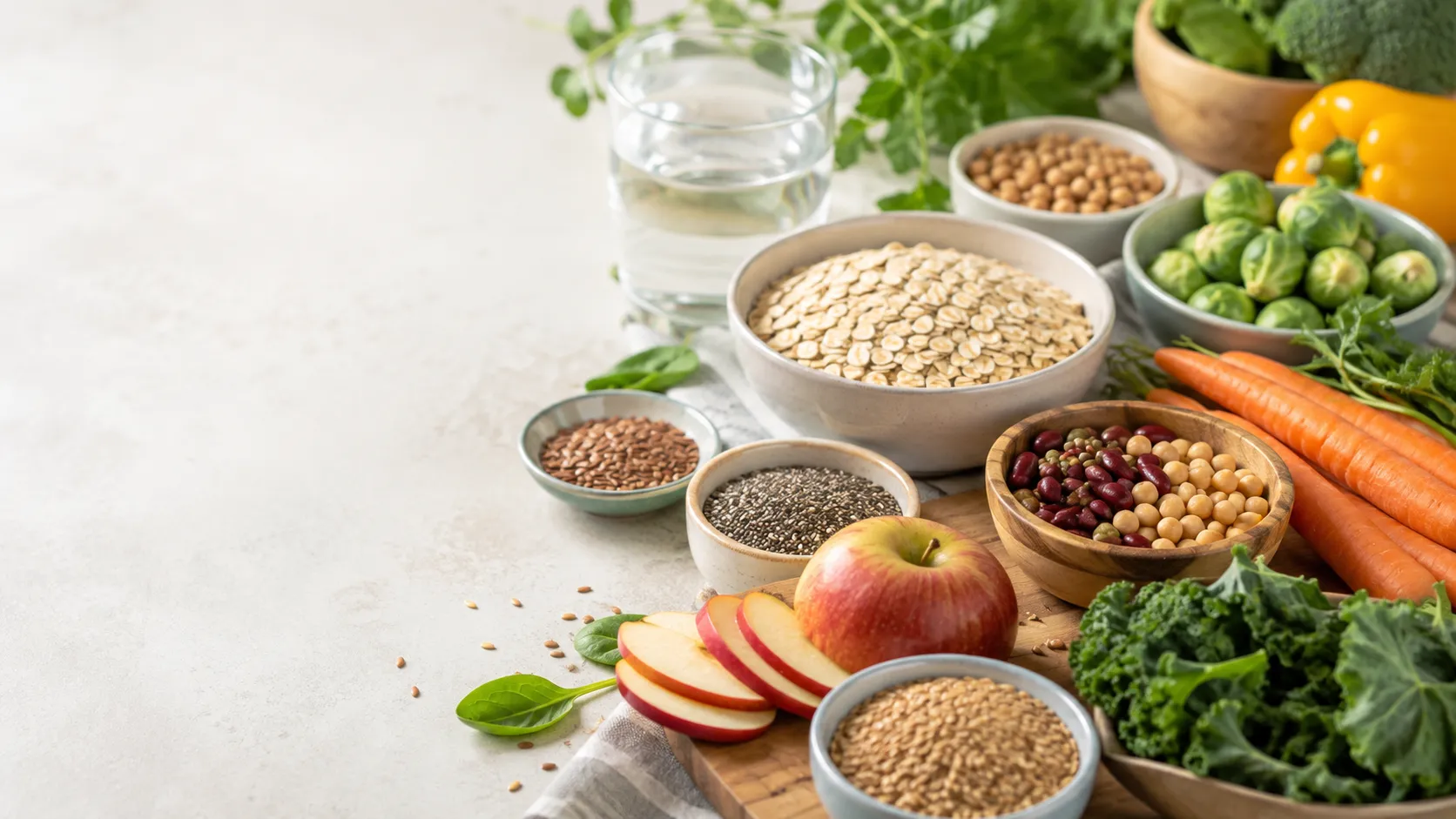
Soluble fiber forms a gel when it comes into contact with water. This gel slows gastric emptying, smooths the glucose curve after a meal, and helps reduce LDL cholesterol. It is found in oats, apples, carrots, legumes, and chia and flax seeds.
Insoluble fiber does not form a gel: it increases stool bulk and speeds up intestinal transit. It is found in wheat bran, fruit and vegetable peels, leafy vegetables, and whole grains.
What fiber does
- Satiety: increases the volume of the meal and prolongs the feeling of fullness, which helps with weight control
- Blood glucose: reduces the speed of glucose absorption and smooths post-meal spikes
- Intestine: improves stool consistency and bowel regularity
- Microbiota: serves as a substrate for bacteria that produce short-chain fatty acids, which are linked to the health of the intestinal lining
- Cardiovascular: higher intakes are associated with a lower risk of coronary heart disease in population studies
How to increase it without discomfort
Increasing fiber all at once often causes gas and abdominal bloating. The best approach is gradual:
- Increase by about 5 g per week, not all at once
- Increase water intake in the same proportion — fiber without enough fluid can worsen constipation
- Start with legumes: half a cup of beans already provides 6 to 8 g
- Prefer whole fruit over juice, and keep the peel whenever possible
Conclusion
Fiber is not a minor dietary detail: it is one of the few food components with consistent benefits in long-term outcomes. Reaching 25 to 30 g per day is less about discipline and more about how the plate is structured — legumes, fruits with the peel, vegetables, and whole grains present in most meals.