Flaxseed: Benefits, Nutrients, Golden vs. Brown
Flaxseed provides fiber, ALA omega-3 and lignans. Learn about its nutrients, evidence-based benefits, how to eat it, and whether golden or brown flaxseed is better.
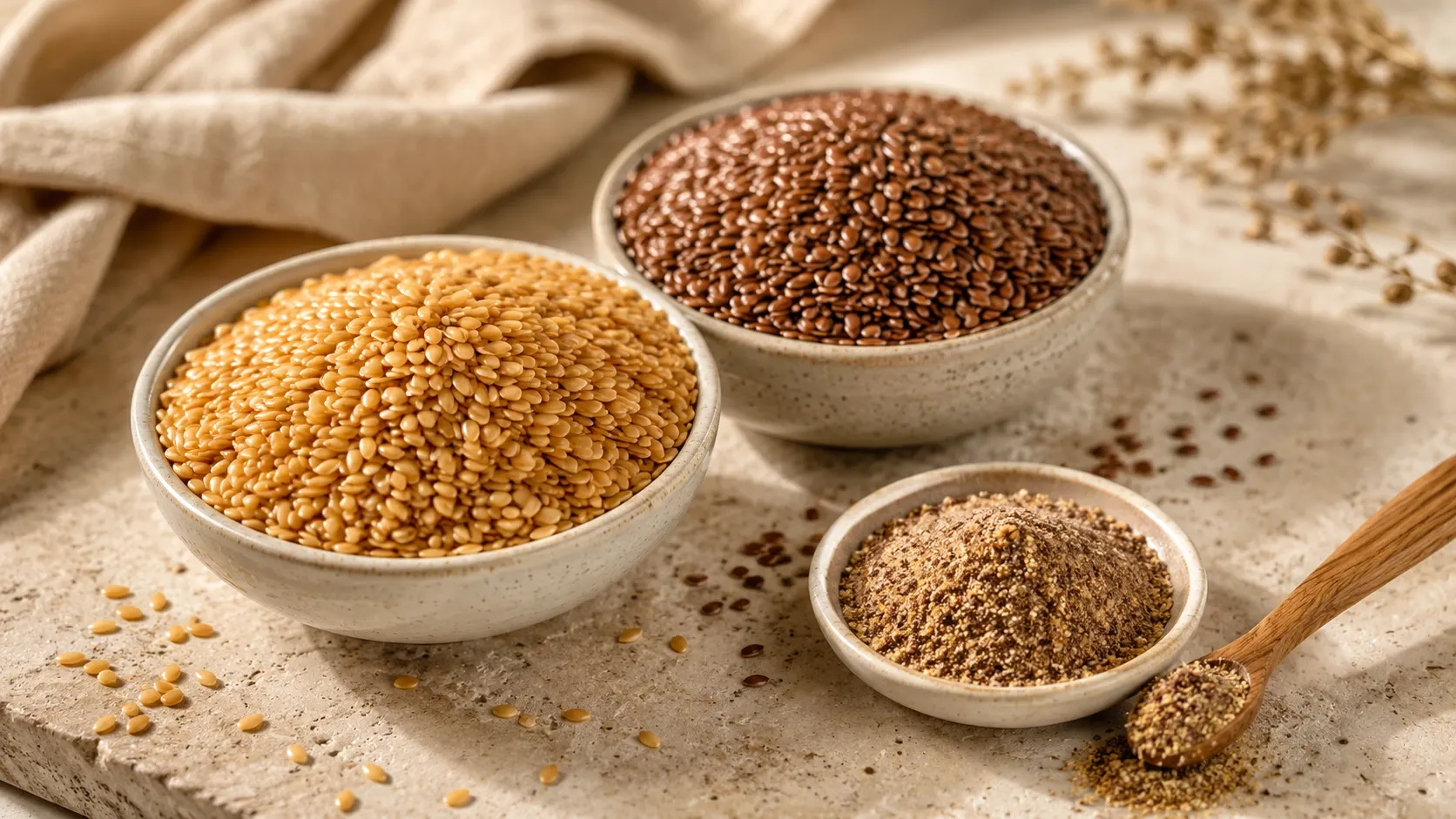
Small, versatile and easy to add to everyday meals, flaxseed combines dietary fiber, unsaturated fats and plant bioactive compounds in a compact seed. It is also one of the best-known plant sources of alpha-linolenic acid, or ALA, an essential omega-3 fatty acid. (ARS USDA)
Flaxseed is sometimes surrounded by claims that go well beyond the evidence. It does not cure disease, does not automatically cause weight loss, and golden flaxseed has not been shown to be universally healthier than brown flaxseed. A more evidence-based view is that flaxseed can help increase fiber and ALA intake and may modestly improve selected cardiovascular and metabolic markers when included in an overall healthy diet. (NCCIH)
What is flaxseed?
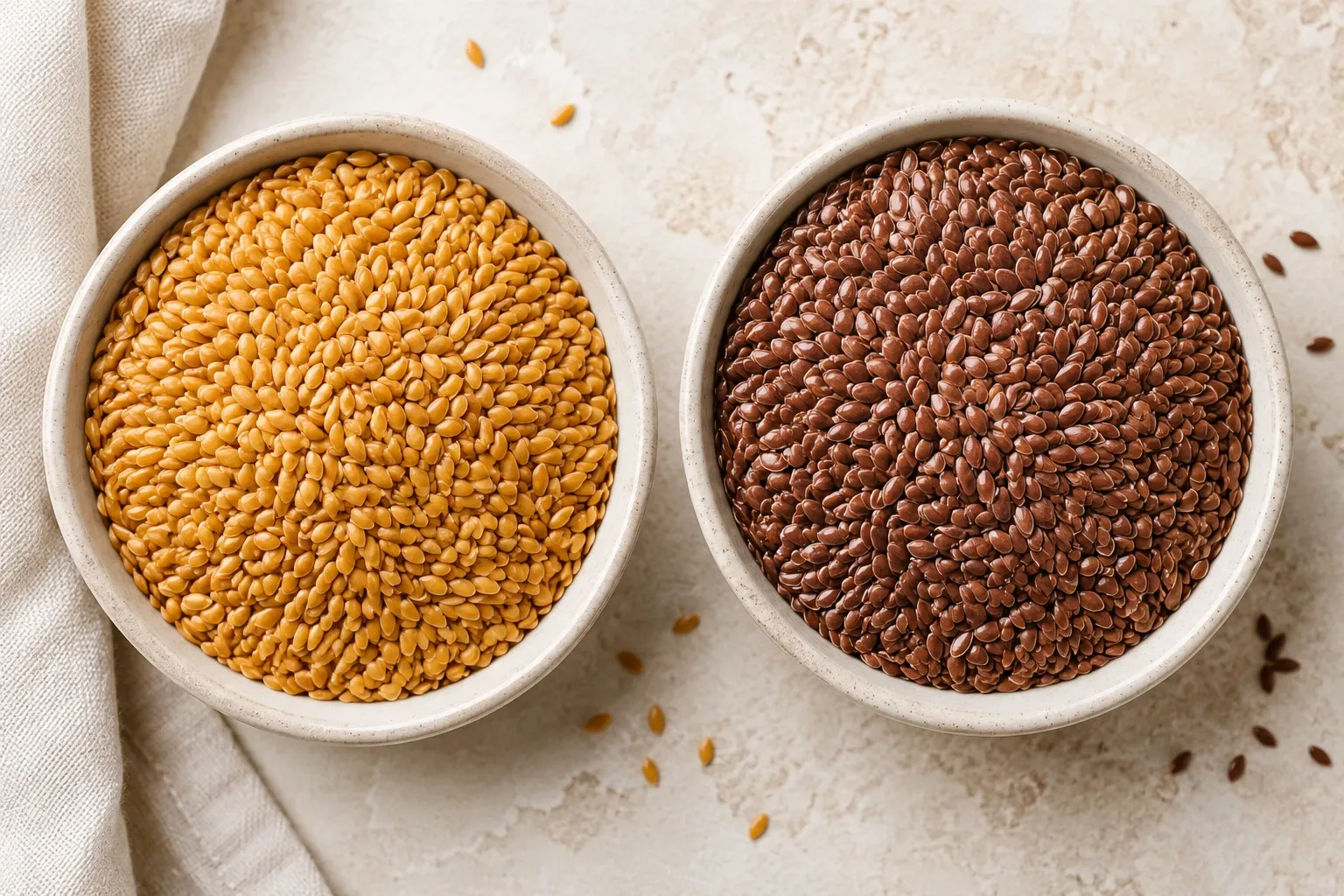
Flaxseed comes from the plant Linum usitatissimum. Several cultivars exist, but brown and golden flaxseed are the two colors most commonly sold as food.
Despite their different appearance, their general nutritional profiles are similar. The USDA describes the nutritional difference between golden and brown flaxseed as very small. (ARS USDA)
Flaxseed can be sold whole, ground, as meal, or processed into oil. These forms should not be treated as nutritionally identical because removing or processing parts of the seed changes the food matrix and, consequently, the nutrients being consumed. Research also suggests different flaxseed preparations can produce different clinical effects. (NCCIH)
What nutrients does flaxseed provide?

According to the USDA Agricultural Research Service, 100 g of ground flaxseed provides approximately:
| Nutrient | Approximate amount per 100 g |
|---|---|
| Energy | 450 kcal |
| Fat | 41 g |
| Dietary fiber | 28 g |
| Protein | 20 g |
These figures describe nutrient composition; they are not a recommendation to eat 100 g of flaxseed per day. (ARS USDA)
Flaxseed is also notable for its ALA, lignans and mucilage. The USDA estimates that one tablespoon of ground flaxseed contains approximately 1.8 g of omega-3 fatty acids. (ARS USDA)
ALA: the plant omega-3 in flaxseed
Alpha-linolenic acid is an essential fatty acid, meaning it must be obtained from the diet. The NIH lists an Adequate Intake for ALA of 1.6 g per day for adult men and 1.1 g per day for adult women. These values are ALA intake references rather than flaxseed serving recommendations. (ODS)
This makes flaxseed particularly useful as a plant source of omega-3. However, ALA should not be confused with EPA and DHA, the long-chain omega-3 fatty acids found mainly in fish and seafood.
The body can convert ALA to EPA and then DHA, but the conversion is limited. For that reason, flaxseed and fatty fish should not simply be described as interchangeable omega-3 sources. (ODS)
Fiber and mucilage
Fiber is another major nutritional feature of flaxseed. Its mucilage forms a gel-like material when exposed to water and contributes to the effects flaxseed can have on stool bulk and bowel function. (ARS USDA)
This helps explain the long-standing use of flaxseed for bowel regularity and also underscores the importance of adequate fluid intake when adding substantial amounts of fiber to the diet.
Lignans
Flaxseed also contains lignans, plant bioactive compounds that have been widely studied.
Research interest in lignans has led to claims involving cardiovascular health, hormones and cancer prevention. These claims require caution, however. Findings involving isolated compounds, laboratory models or observational associations cannot automatically be translated into a guaranteed disease-prevention effect from eating flaxseed.
What are the potential benefits of flaxseed?
It can increase dietary fiber intake
One of the most straightforward benefits of flaxseed is nutritional rather than therapeutic: it offers a convenient way to add fiber to foods such as yogurt, oatmeal, fruit dishes and smoothies.
There is also direct clinical evidence involving constipation. A randomized study of 90 adults with functional constipation compared flaxseed flour with lactulose for four weeks. Both groups improved, and the flaxseed group experienced favorable changes in bowel frequency and other constipation measures. (PubMed)
It may modestly improve cholesterol levels
A systematic review and dose-response meta-analysis of 62 randomized controlled trials found reductions in total cholesterol, LDL cholesterol and triglycerides following flaxseed supplementation. (PubMed)
The effect is not identical in every study or with every flaxseed preparation. NCCIH notes that whole flaxseed, lignans and flaxseed oil have produced different results, including less convincing lipid-lowering effects from flaxseed oil in some analyses. (NCCIH)
Flaxseed can therefore complement a heart-healthy eating pattern, but it should not be presented as a replacement for clinically indicated treatment.
It may have a modest effect on blood pressure
A 2025 systematic review and meta-analysis of randomized trials involving people with cardiovascular risk factors concluded that flaxseed supplementation can reduce blood pressure. (PubMed Central (PMC))
Blood pressure is influenced by many variables, including overall diet, sodium intake, physical activity, body weight, sleep, medications and underlying health conditions. Flaxseed is one dietary component rather than a stand-alone treatment for hypertension.
It may affect some measures of glucose control
Systematic reviews of randomized trials in people with prediabetes or type 2 diabetes suggest that flaxseed can improve selected markers of glycemic control or insulin resistance. However, findings are not consistent across every outcome or population. (PubMed)
People with diabetes should not replace medication or medical care with flaxseed.
Does flaxseed promote weight loss?
Flaxseed should not be marketed as a food that automatically causes weight loss.
NCCIH reports that one clinical trial involving flaxseed mucilage powder suggested an effect on body weight in adults with overweight or obesity, while flaxseed lignan extract and flaxseed oil supplements did not appear to produce the same result. (NCCIH)
Fiber-rich foods may help form a satisfying eating pattern, but long-term weight change depends on total energy intake, dietary quality, physical activity, sleep, behavior and individual factors.
Golden vs. brown flaxseed: which is better?

For most people, this distinction is less important than marketing sometimes suggests.
The USDA reports very little nutritional difference between golden and brown flaxseed. (ARS USDA)
| Feature | Golden flaxseed | Brown flaxseed |
|---|---|---|
| Appearance | Yellow to golden | Brown |
| Fiber | Meaningful source | Meaningful source |
| ALA | Present | Present |
| Lignans | Present | Present |
| Proven overall superiority | No | No |
| Practical choice | Based on cultivar, freshness, price and preference | Based on cultivar, freshness, price and preference |
A Brazilian randomized trial directly compared brown and golden flaxseed in adolescents with overweight. Participants were assigned 28 g per day of brown flaxseed, golden flaxseed or wheat bran for 11 weeks, although actual flaxseed intake was only about half of the amount provided. (PubMed)
Both flaxseed groups experienced a reduction in diastolic blood pressure, while the researchers found no differential effects between the brown and golden varieties on blood lipids, glucose or inflammatory markers. (PubMed)
Specific cultivars and processing methods can differ in fat, fatty-acid or mineral composition, so color alone is not a reliable way to predict the exact nutrient profile of every flaxseed product. (PubMed)
Which one should you buy?
If both products are fresh and from reliable sources, there is no strong evidence that consumers should routinely pay more for golden flaxseed because it is supposedly healthier.
Freshness, storage, processing, price and personal preference are more practical criteria.
Whole or ground flaxseed?
Ground flaxseed generally makes the components inside the seed more accessible.
The USDA notes that whole flaxseeds are more likely to pass through the digestive system without being completely broken down. Grinding the seeds can therefore improve access to their internal nutrients. (ARS USDA)
Whole flaxseed is not nutritionally useless, particularly as a source of fiber, but ground flaxseed is a practical option when the goal is to make better use of the fats and other compounds within the seed.
What about flaxseed oil?
Flaxseed oil is a concentrated source of ALA but is not nutritionally equivalent to ground flaxseed because it does not provide the same fiber-rich seed matrix.
Clinical research also suggests that flaxseed oil, whole flaxseed and isolated lignans can have different effects. NCCIH notes that flaxseed oil did not show the same lipid-lowering effects as other flaxseed preparations in some analyses. (NCCIH)
The seed and the oil should therefore be considered different foods rather than interchangeable products.
How much flaxseed should you eat?
There is no officially established amount of flaxseed that everyone needs to consume to obtain health benefits.
A USDA educational resource notes that one to two tablespoons of ground flaxseed per day is commonly suggested while explicitly stating that the optimal intake for health benefits is unknown. (ARS USDA)
This range is best treated as a practical food serving rather than a therapeutic dose.
Ground flaxseed can be mixed into yogurt, oatmeal, fruit, smoothies or baked goods. Because it is fiber-rich, it also makes sense to pay attention to adequate fluid intake.
Safety and precautions
NCCIH advises against eating raw or unripe flaxseeds, which may contain potentially toxic compounds. Higher doses of flaxseed and flaxseed-derived supplements can also cause gastrointestinal symptoms such as bloating, fullness and diarrhea. (NCCIH)
Like other concentrated fiber products, flaxseed should be consumed with adequate fluid because insufficient water intake can worsen constipation and, in rare circumstances, contribute to intestinal blockage. (NCCIH)
Conclusion
Flaxseed is nutritionally valuable primarily because it combines fiber, ALA, unsaturated fats and lignans. Clinical research suggests modest benefits for selected lipid and blood-pressure measures and provides some evidence for improved bowel function, while findings involving glucose control and body weight remain more dependent on population and preparation. (PubMed)
When comparing golden versus brown flaxseed, there is no clear overall winner. Both can provide similar key nutrients, and cultivar-specific differences matter more than seed color alone. (ARS USDA)
Ground flaxseed is usually the most practical form for accessing the components inside the seed. Its greatest value, however, comes from being part of an overall nutritious eating pattern rather than being treated as a single “superfood.”