Folate vs. Folic Acid: Are They the Same Thing?
Folate and folic acid are both forms of vitamin B9, but they are not exactly the same. Learn how they differ, where they are found, and when supplementation matters.
Folate and folic acid are closely related, but they are not exactly the same thing. Both belong to the vitamin B9 family, but folate is a broader term, while folic acid is a specific form commonly used in supplements and fortified foods. (ODS)
The distinction matters because different forms of vitamin B9 do not have identical bioavailability. It also explains why food labels and nutritional recommendations may refer to dietary folate equivalents, or DFE.
What is folate?

Folate is a water-soluble B vitamin, also known as vitamin B9. The body needs it for processes including DNA production and normal cell division. (ODS)
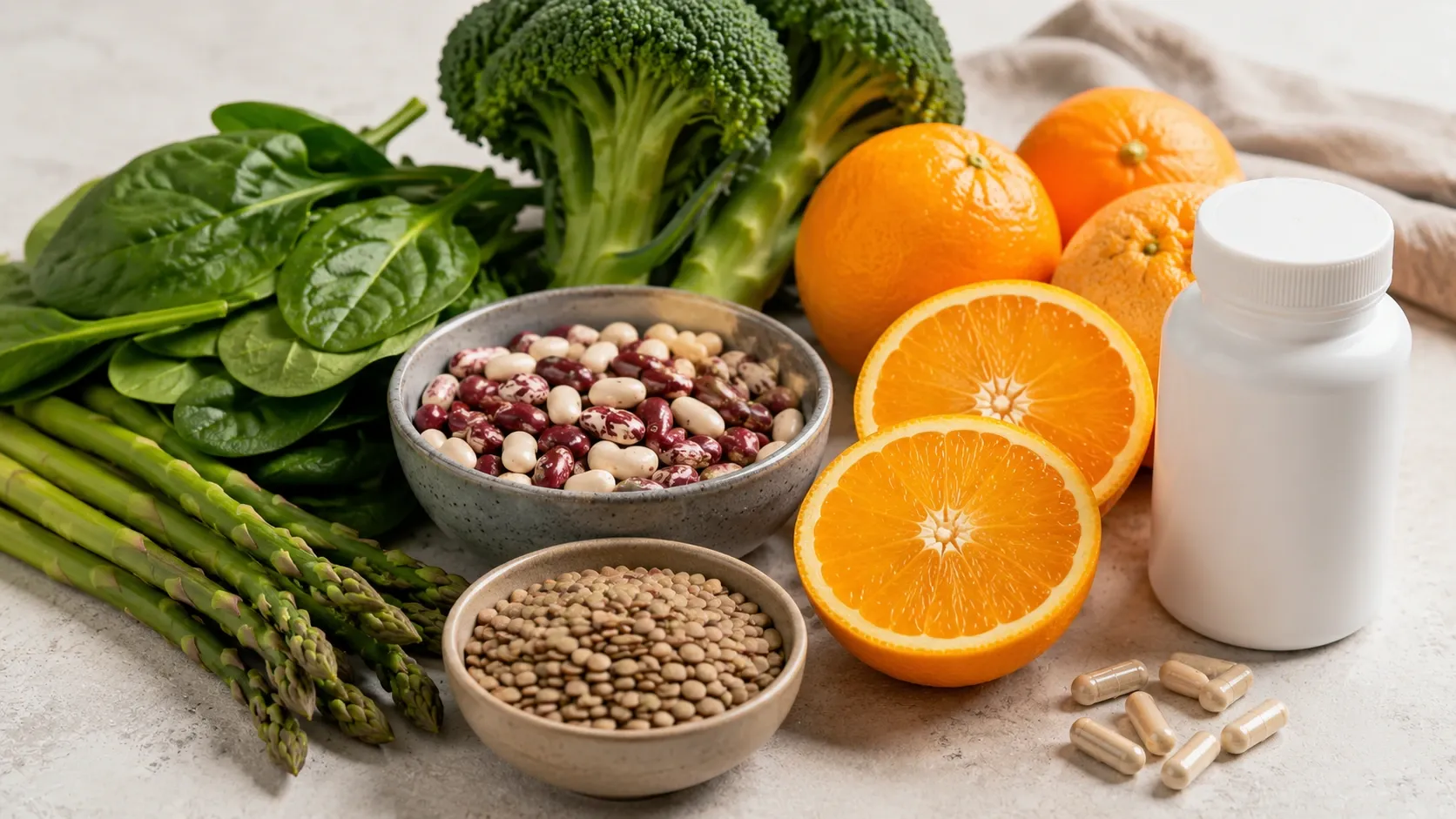
The term covers several chemically related forms of vitamin B9. Naturally occurring folates can be obtained from foods such as:
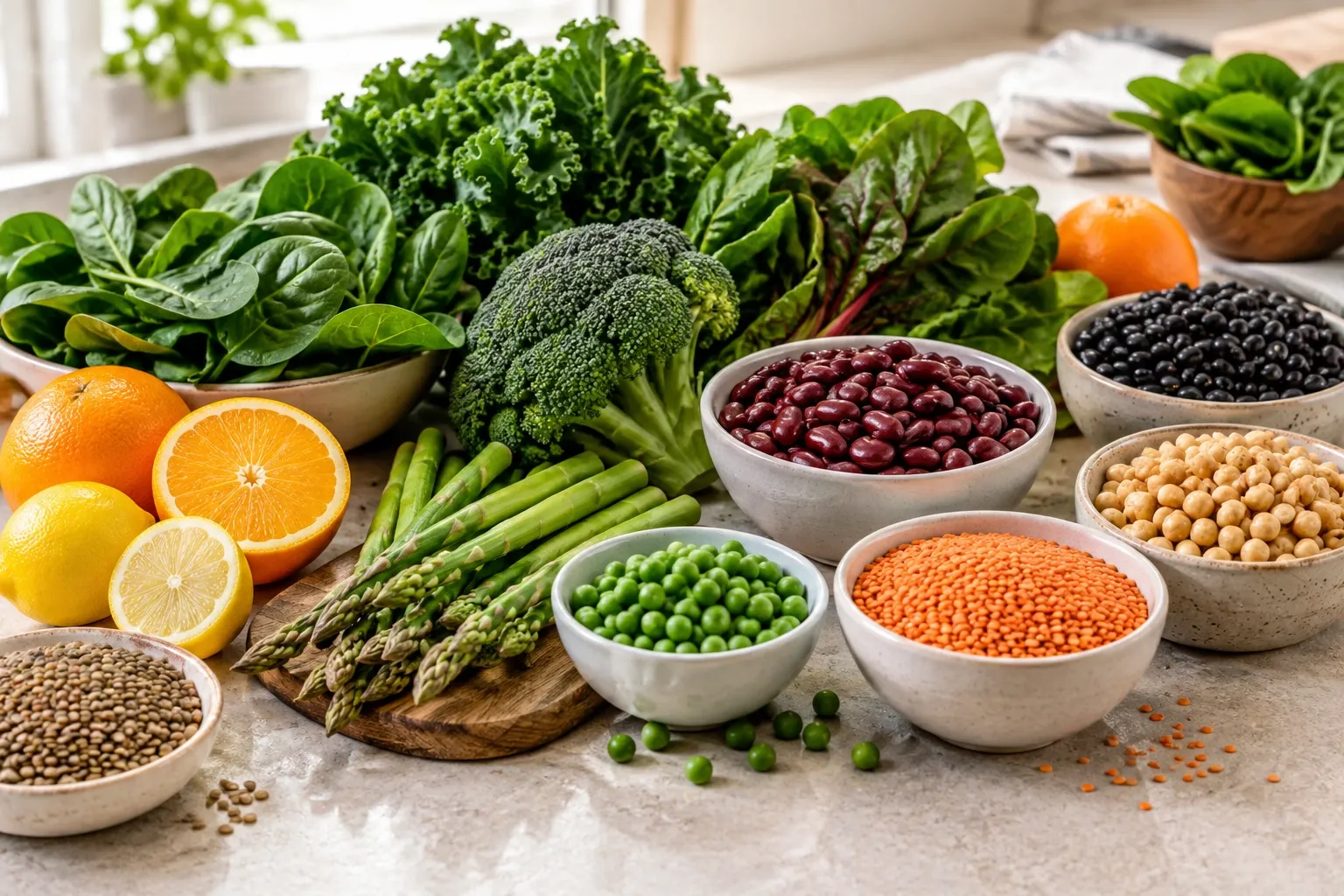
- dark green leafy vegetables;
- beans and peas;
- asparagus;
- Brussels sprouts;
- fruits and fruit juices;
- eggs;
- various grains and other foods. (ODS)
A varied diet can therefore make a substantial contribution to daily folate requirements.
What is folic acid?

Folic acid is a specific form of folate. It is widely used in dietary supplements and to fortify certain foods. (ODS)
So while folic acid can correctly be described as a form of folate, not every form of folate is folic acid.
| Term | Meaning | Common sources |
|---|---|---|
| Folate | Family of vitamin B9 compounds; commonly used for naturally occurring food folate | Vegetables, legumes, fruits and other foods |
| Folic acid | A specific form of folate | Supplements and fortified foods |
| 5-MTHF | A reduced folate form present in human metabolism and also available in supplements | Human metabolism and some supplements |
The NIH notes that supplemental 5-MTHF may have bioavailability equal to or greater than folic acid, although formal DFE conversion factors for 5-MTHF have not been definitively established. (ODS)
Are folate and folic acid absorbed in the same way?
Not quite.
Folic acid consumed with food is generally more bioavailable than naturally occurring food folate. The NIH estimates bioavailability at at least 85% for folic acid taken with food compared with roughly 50% for naturally occurring food folate. (ODS)
This difference is why nutritional recommendations use dietary folate equivalents (DFE):
- 1 mcg DFE = 1 mcg food folate;
- 1 mcg DFE = 0.6 mcg folic acid from fortified food or a supplement taken with food;
- 1 mcg DFE = 0.5 mcg folic acid from a supplement taken on an empty stomach. (ODS)
How much folate do adults need?
According to the Dietary Reference Intakes cited by the NIH, adults aged 19 and older need 400 mcg DFE per day. (ODS)
| Group | Daily reference intake |
|---|---|
| Adults aged 19+ | 400 mcg DFE |
| Pregnancy | 600 mcg DFE |
| Lactation | 500 mcg DFE |
These overall folate requirements should not be confused with the separate folic acid recommendations designed specifically to prevent neural tube defects.
Why is folic acid especially important before pregnancy?
The neural tube is an early embryonic structure that develops into the brain and spinal cord. Its development occurs very early in pregnancy, often before a person knows they are pregnant. (CDC)
For that reason, folic acid is most useful for prevention when adequate intake begins before conception.
WHO recommends 400 mcg of folic acid per day from the time a woman begins trying to conceive until 12 weeks of pregnancy. (Organização Mundial da Saúde)
The CDC recommends 400 mcg daily for women capable of becoming pregnant, while the USPSTF recommends a daily supplement containing 400–800 mcg for people planning or capable of pregnancy. (CDC)
Evidence supporting this recommendation is strong. A Cochrane review concluded that folic acid, alone or with other micronutrients, prevents both first occurrence and recurrence of neural tube defects. (Cochrane Library)
Do folate-rich foods still matter?
Absolutely.
Vegetables, legumes, fruit and other folate-containing foods also provide fiber, minerals and many other nutrients. A supplement is not a substitute for a balanced dietary pattern.
For the specific prevention of neural tube defects, however, public-health authorities emphasize folic acid, because it is the folate form with direct evidence for this outcome. (CDC)
What about folic acid fortification?
Folic acid is added to staple foods in a number of countries as a public-health strategy.
In Brazil, wheat and corn flours intended for human consumption are subject to mandatory fortification with iron and folic acid under RDC 604/2022. Brazil’s regulatory agency Anvisa reports a required folic acid range of 140–220 mcg per 100 g of flour through the product’s shelf life. (Serviços e Informações do Brasil)
Fortification policies differ between countries, so readers outside Brazil should check local regulations.
Is methylfolate better than folic acid?
Supplements containing 5-MTHF, often called methylfolate, are widely available.
The NIH notes that supplemental 5-MTHF can have bioavailability similar to or greater than folic acid. However, official conversion factors between 5-MTHF amounts and DFE have not been formally established in the same way as they have for folic acid. (ODS)
This does not establish 5-MTHF as universally superior.
For neural tube defect prevention specifically, the CDC continues to emphasize that folic acid is the form demonstrated to help prevent these birth defects. (CDC)
What if you have an MTHFR gene variant?
The MTHFR gene provides instructions for an enzyme involved in folate metabolism. Several common genetic variants can change the enzyme’s activity.
However, the CDC states that people with common MTHFR variants can process folic acid. It also reports that consuming 400 mcg of folic acid daily increases blood folate concentrations regardless of MTHFR genotype. (CDC)
A common MTHFR variant alone therefore is not considered a reason to avoid folic acid.
Is more folic acid always better?
No.
For adults aged 19 and older, the NIH sets a tolerable upper intake level of 1,000 mcg per day for synthetic folate from supplements and fortified foods. This limit does not apply to naturally occurring food folate. (ODS)
Higher therapeutic doses may be appropriate in particular medical circumstances but should be professionally supervised.
Folate supplements can also interact with medications. The NIH lists methotrexate, certain antiepileptic medicines and sulfasalazine among relevant examples. (ODS)
The key difference to remember
The simplest way to remember it is:
Folate is the vitamin B9 family. Folic acid is one specific form of folate.
Naturally occurring folates are found in many foods, while folic acid is widely used in supplements and fortified products. Although both contribute to vitamin B9 nutrition, their chemical forms and bioavailability differ. (ODS)
For most people, eating a varied diet helps provide folate. In specific circumstances — particularly before and during early pregnancy — ensuring an adequate intake of folic acid has a well-established public-health role. (Organização Mundial da Saúde)
Conclusion
Folate and folic acid are not perfect synonyms. Folic acid is one form of folate, and both belong to the vitamin B9 family.
Understanding the difference becomes especially important when interpreting supplement labels, fortified foods, dietary folate equivalents and pregnancy recommendations.
A balanced diet remains an important source of natural folate. When supplementation is specifically recommended — particularly around conception and early pregnancy — the form and dose should follow evidence-based recommendations and individual medical guidance when appropriate. (ODS)
This article is for educational purposes and does not replace individualized medical diagnosis, treatment or professional healthcare advice.