Iron: How Much Do We Need and What Are the Best Food Sources?
How much iron do you need each day? Learn about iron-rich foods, heme and non-heme iron, absorption, and practical ways to get enough from your diet.
Iron is an essential mineral. It is a component of hemoglobin, the protein in red blood cells that transports oxygen, and myoglobin, which helps supply and store oxygen in muscle tissue. Iron is also involved in several cellular and metabolic processes. (ODS)
Getting enough iron, however, involves more than simply choosing foods that contain it. Requirements vary with age, sex, and life stage, while absorption is strongly affected by the form of iron and the overall composition of a meal.
How much iron do we need each day?
U.S. Dietary Reference Intakes provide one widely used set of recommendations. They show substantial differences in adult requirements, particularly because of menstruation and pregnancy. (ODS)
| Group | Daily reference intake |
|---|---|
| Men ages 19–50 | 8 mg |
| Women ages 19–50 | 18 mg |
| Pregnancy | 27 mg |
| Lactating women ages 19–50 | 9 mg |
| Men ages 51+ | 8 mg |
| Women ages 51+ | 8 mg |
These figures are intended for healthy populations and should not be treated as individualized medical prescriptions.
Reference systems also differ internationally. The European Food Safety Authority, for example, established a population reference intake of 11 mg/day for adult men and 16 mg/day for premenopausal women. (AESA)
Heme vs. non-heme iron
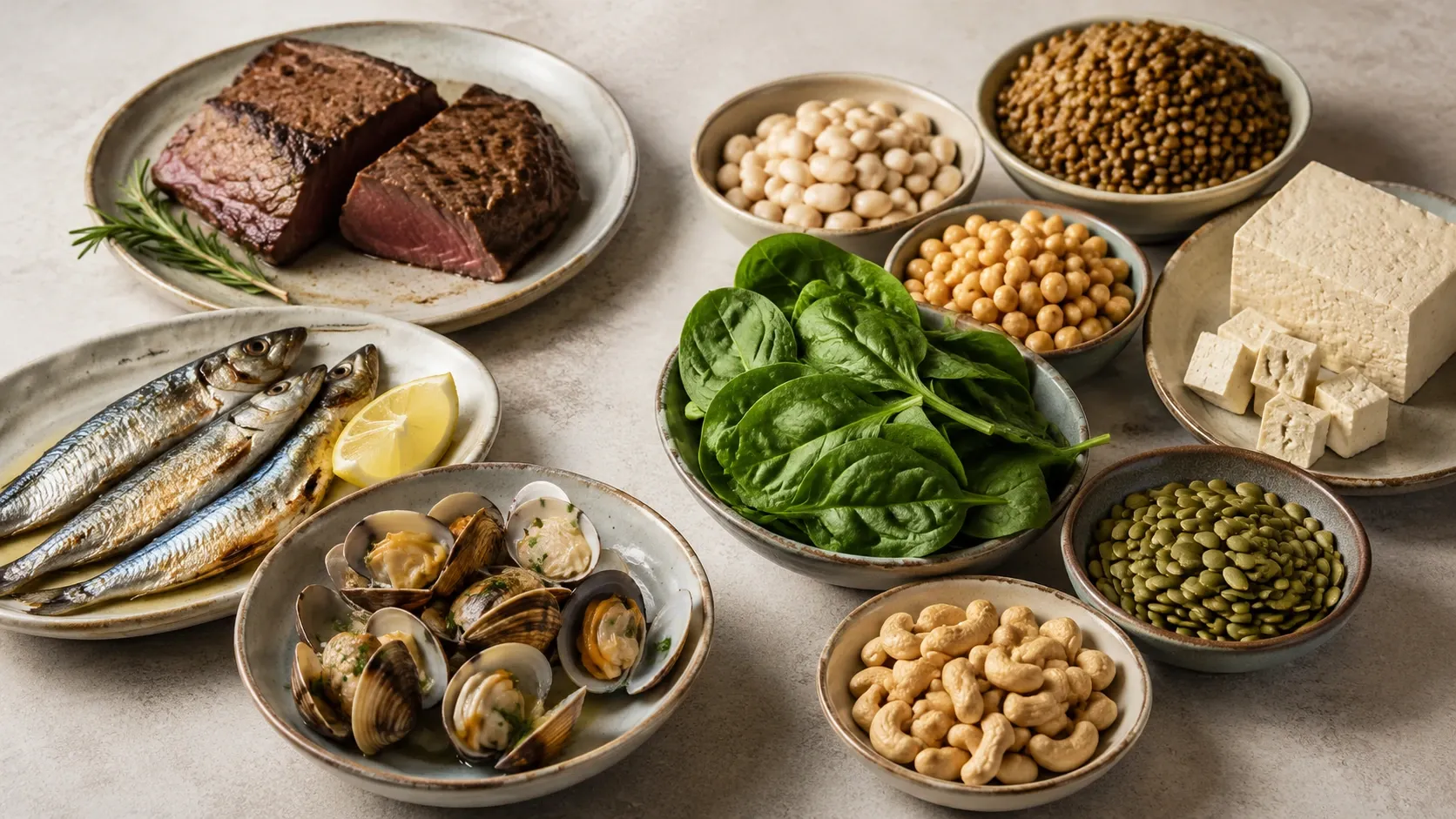
Dietary iron is commonly divided into heme iron and non-heme iron.
Heme iron is associated with animal tissues and is found in meat, poultry, and seafood. It generally has higher bioavailability and is less affected by other components of a meal. (ODS)
Non-heme iron is found in plant foods, fortified foods, and also accounts for some of the iron in animal foods. Its absorption is more sensitive to the composition of the meal. (ODS)
This means that the amount of iron printed in a food composition table is not the same as the amount the body will ultimately absorb.
What are the best food sources of iron?
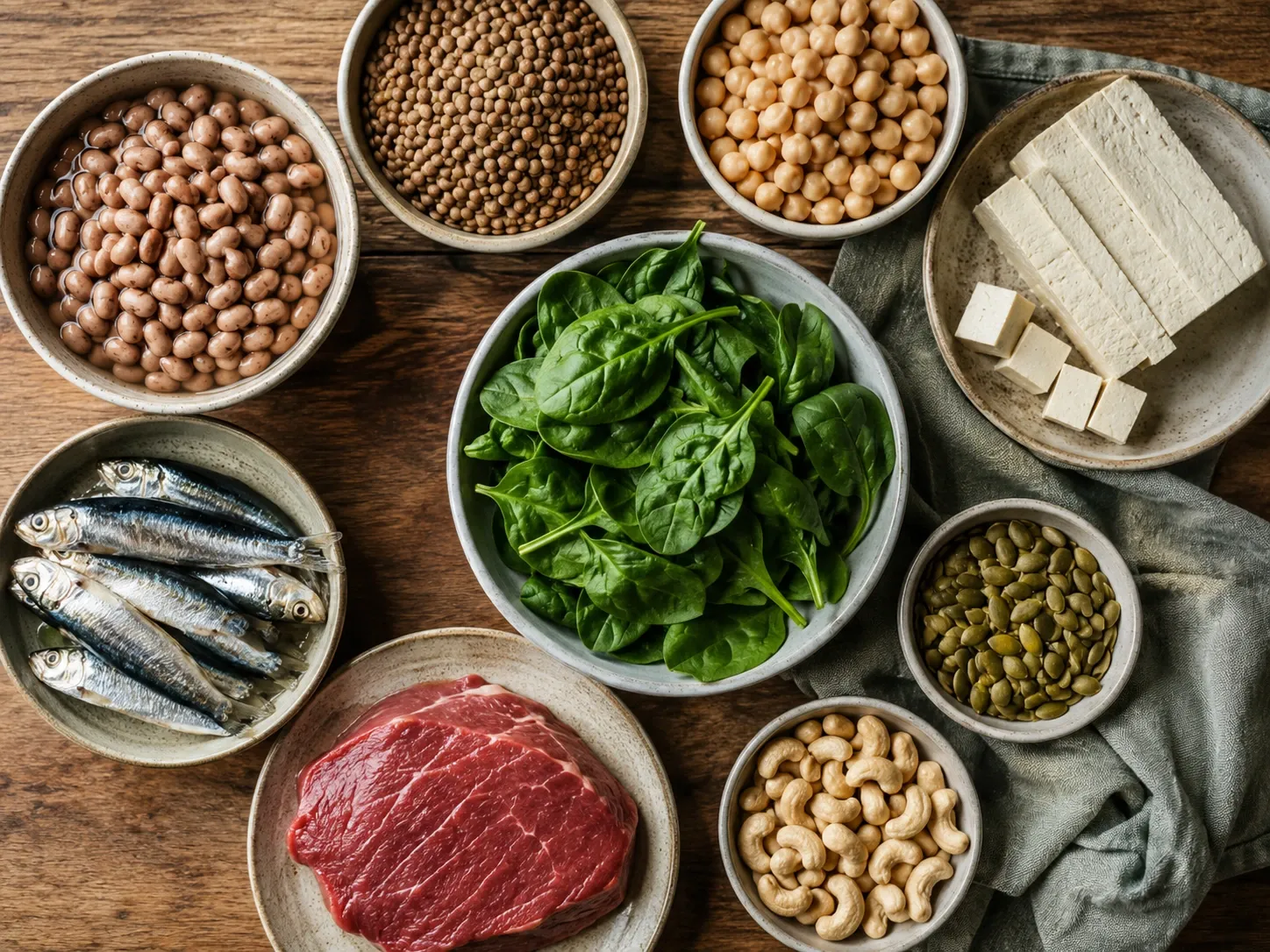
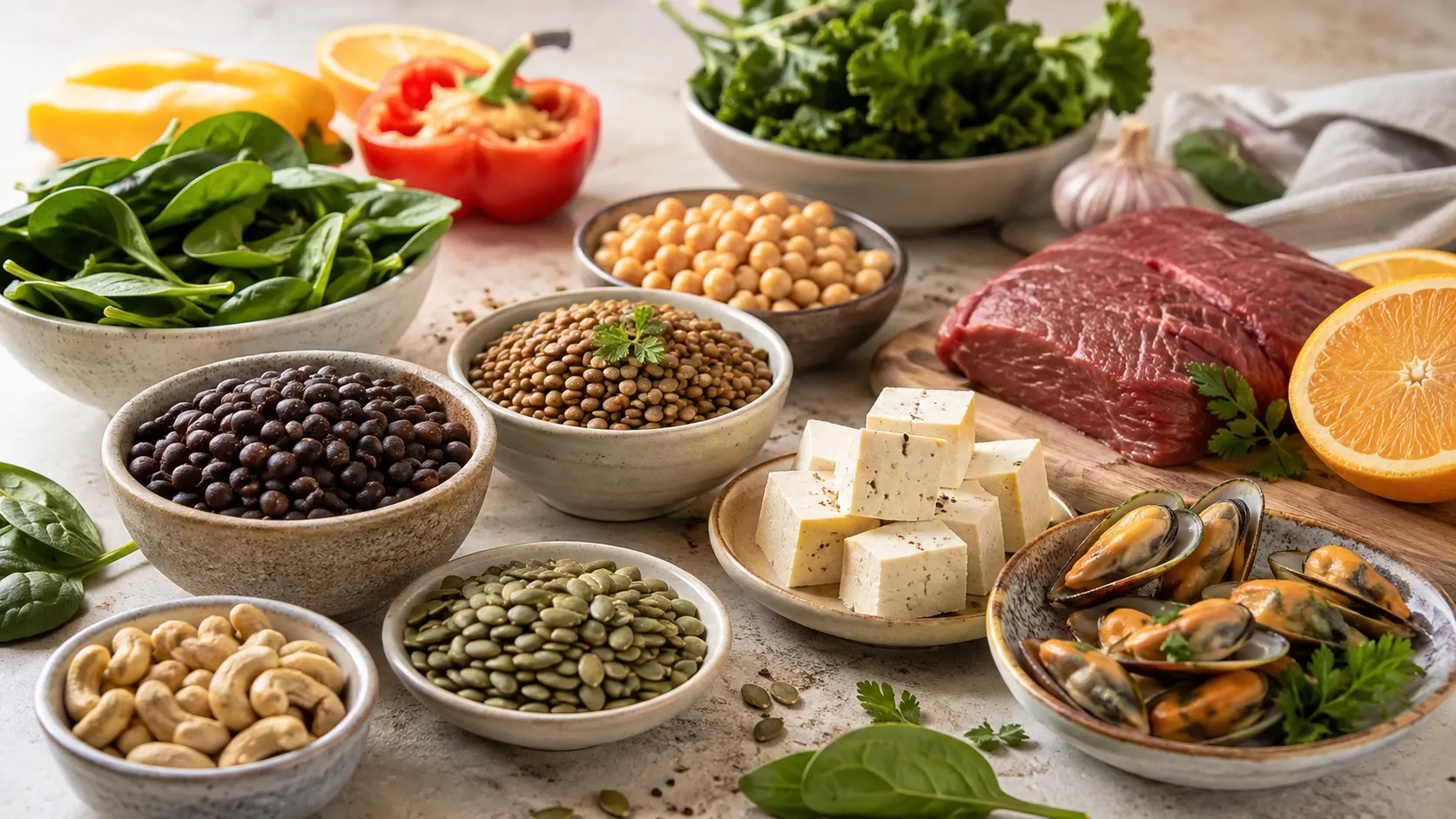
Heme iron sources include shellfish, meat, organ meats, sardines, poultry, and other seafood. Non-heme sources include legumes, tofu, nuts, seeds, leafy greens, and fortified grains. (ODS)
Examples reported by the NIH include: (ODS)
| Food | Approximate serving | Iron |
|---|---|---|
| Cereal fortified with 100% of the U.S. Daily Value | 1 serving | 18 mg |
| Cooked oysters | 3 oz / 85 g | 8 mg |
| Canned white beans | 1 cup | 8 mg |
| Beef liver | 3 oz / 85 g | 5 mg |
| Cooked lentils | 1/2 cup | 3 mg |
| Cooked spinach | 1/2 cup | 3 mg |
| Firm tofu | 1/2 cup | 3 mg |
| Canned kidney beans | 1/2 cup | 2 mg |
| Canned sardines | about 3 oz / 85 g | 2 mg |
| Cooked chickpeas | 1/2 cup | 2 mg |
| Cooked beef | about 3 oz / 85 g | 2 mg |
| Cashews | about 1 oz / 28 g | 2 mg |
Exact values vary with the food variety, preparation method, and brand.
How can you improve iron absorption?
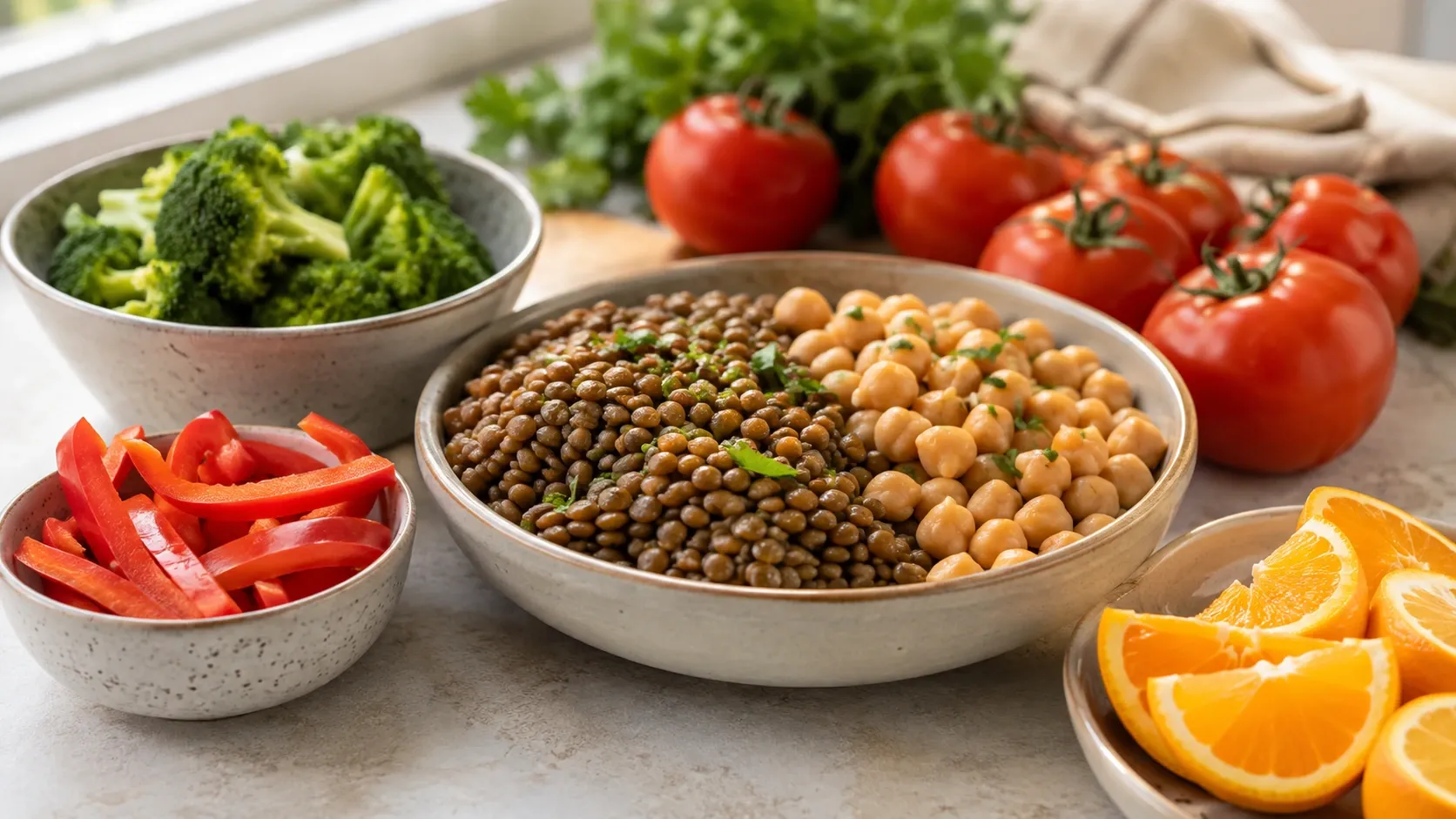
Pair plant iron with vitamin C
Vitamin C can enhance non-heme iron absorption. (ODS)
Practical combinations include:
- beans with tomatoes or bell peppers;
- lentils with a lemon-based salad;
- chickpeas with vitamin C-rich vegetables;
- tofu with broccoli and bell peppers;
- legumes accompanied by citrus fruit, kiwi, strawberries, or other vitamin C-rich foods.
There is no need to optimize every single meal. Repeating favorable combinations as part of an overall balanced diet is a more realistic approach.
Consider the timing of tea and coffee
Certain polyphenols can decrease non-heme iron absorption, and research has consistently demonstrated an inhibitory effect of tea when consumed with meals. (PubMed)
For most people with adequate iron stores, this does not necessarily justify avoiding tea or coffee. People who have iron deficiency or a high risk of developing it may benefit from consuming these beverages at a different time.
Can you get enough iron without eating meat?
Yes. Beans, lentils, chickpeas, tofu, seeds, nuts, vegetables, and fortified foods can all contribute meaningful amounts of iron. (ODS)
Plant-based diets, however, do not contain heme iron. Because non-heme iron has lower average bioavailability, U.S. Dietary Reference Intakes estimate iron requirements for vegetarians at approximately 1.8 times those of people who eat meat. (ODS)
This is a planning guideline rather than a precise individual requirement.
Who is at higher risk of iron deficiency?
Some groups deserve closer attention because their requirements are higher, their losses are greater, or absorption may be impaired.
These include:
- pregnant women;
- infants and young children;
- adolescents;
- people with heavy menstrual bleeding;
- frequent blood donors;
- people with certain gastrointestinal disorders or gastrointestinal surgery;
- people following highly restrictive diets. (ODS)
Identifying the reason for low iron is important because simply increasing dietary intake may not solve a problem caused by ongoing blood loss or impaired absorption.
What are the signs of iron deficiency?
Iron deficiency can develop gradually. As iron stores become depleted, some people may experience fatigue, weakness, difficulty concentrating, dizziness, or shortness of breath. These symptoms are nonspecific and can have many other causes. (ODS)
Ferritin is commonly used as part of the assessment of iron stores, while a complete blood count and other tests can help evaluate anemia and its cause. (The Nutrition Source)
Are iron deficiency and anemia the same thing?
No.
Iron stores can decline before hemoglobin becomes low enough to meet the definition of anemia. If iron depletion progresses, it can eventually result in iron-deficiency anemia. (ODS)
Conversely, anemia can occur without iron deficiency. WHO lists other nutritional deficiencies, infections, inflammation, chronic diseases, gynecological and obstetric conditions, and inherited red blood cell disorders among its possible causes. (Organização Mundial da Saúde)
This is why determining the cause of anemia matters before starting treatment.
Do you need an iron supplement?
More iron is not automatically better.
Iron-only supplements can provide much larger amounts than a typical serving of food, and higher supplemental doses can cause gastrointestinal side effects such as nausea and constipation. People with hereditary hemochromatosis and certain other conditions can also be vulnerable to excessive iron accumulation. (ODS)
When deficiency is suspected, supplementation should ideally follow an appropriate health assessment rather than being started simply because of fatigue or another nonspecific symptom.
Conclusion
Getting enough iron does not depend on a single “superfood.”
A varied diet can provide iron through meat and seafood, when included, as well as beans, lentils, chickpeas, tofu, seeds, vegetables, and fortified foods. Pairing plant sources with vitamin C-rich foods can improve non-heme iron absorption. (ODS)
Individual requirements still matter. Pregnancy, blood loss, childhood growth, frequent blood donation, and conditions that impair absorption can substantially change iron needs. When deficiency is suspected, identifying the underlying cause is more appropriate than automatically starting a supplement.