Is Cheese Bad for Cholesterol? What the Evidence Says
Cheese does not necessarily need to be avoided with high cholesterol. Saturated fat, cheese type, portion size, and the overall dietary pattern all matter.
If a blood test shows high LDL cholesterol, cheese is often one of the first foods people consider eliminating.
The evidence supports a more nuanced approach. Many cheeses contain substantial saturated fat, and excess saturated fat can raise LDL cholesterol. Yet dairy fat eaten as cheese does not appear to affect LDL in exactly the same way as the same amount of fat from butter, and long-term studies do not consistently associate moderate cheese intake with increased cardiovascular disease risk. (www.heart.org)
The more useful question, therefore, is not simply whether cheese is “good” or “bad,” but how much is eaten, which cheese is chosen, and what the rest of the diet looks like.
Dietary cholesterol and blood cholesterol are different
Dietary cholesterol is the cholesterol naturally found in animal foods.
Blood cholesterol is carried through the bloodstream in particles that include LDL and HDL and is measured with laboratory testing.
The two are related, but they are not interchangeable concepts. Contemporary cardiovascular guidance emphasizes the overall dietary pattern and the type of fat consumed rather than focusing exclusively on a fixed dietary-cholesterol number. (PubMed)
Elevated LDL is particularly important because LDL-containing particles play a causal role in atherosclerosis. (PubMed)
What about the saturated fat in cheese?
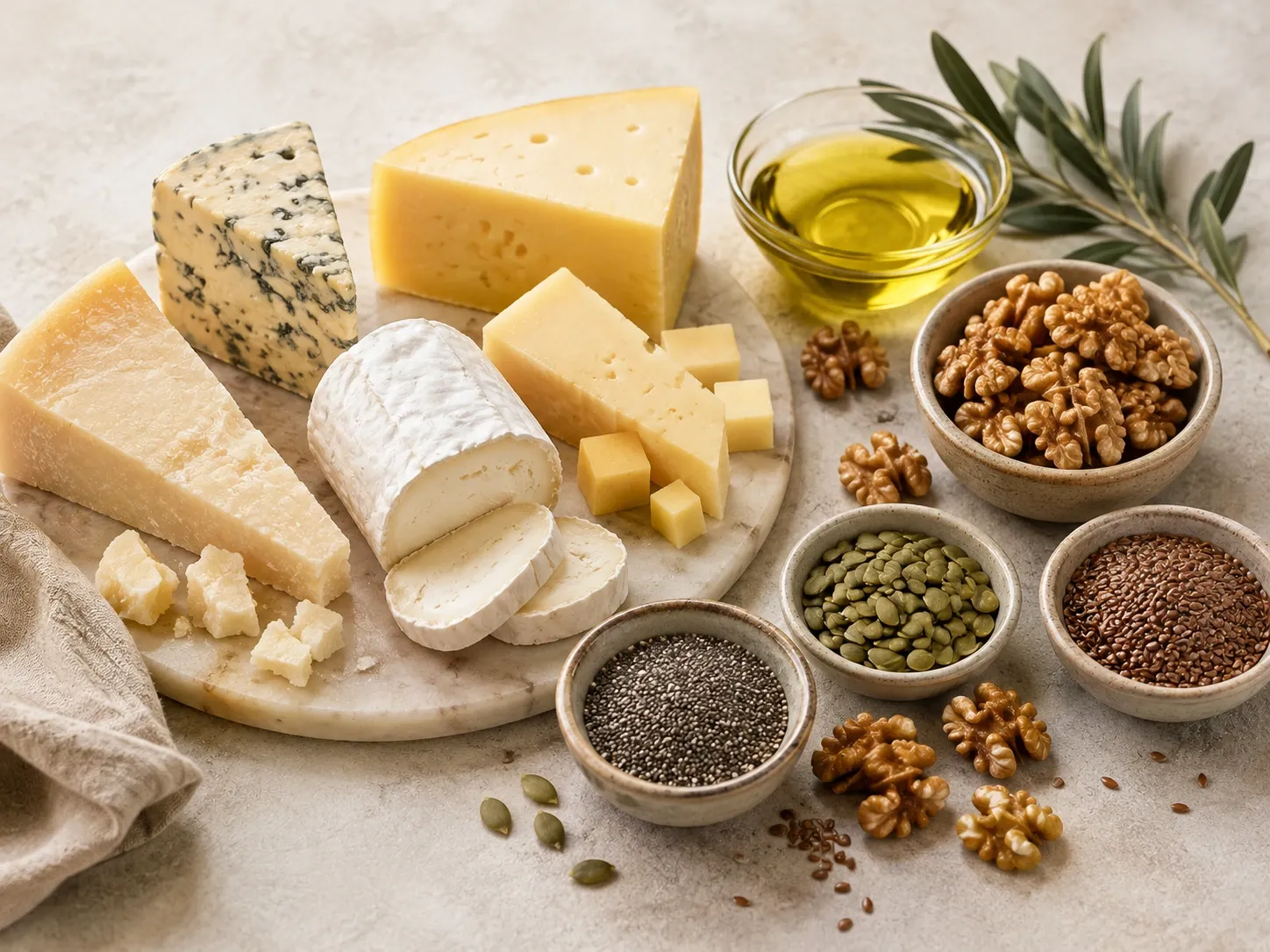
Many full-fat cheeses contain saturated fat.
The American Heart Association states that too much saturated fat can increase LDL cholesterol. Cheese, butter, fatty meats, and certain tropical oils are among common dietary sources. (www.heart.org)
The World Health Organization recommends that saturated fat provide less than 10% of total energy intake for people aged 2 years and older. When saturated fat is reduced, WHO recommends replacing it with unsaturated fats or carbohydrates from foods naturally rich in fiber, including whole grains, vegetables, fruit, and pulses. (WHO)
The American Heart Association uses a stricter target of less than 6% of total calories from saturated fat within its heart-healthy eating pattern. (www.heart.org)
Does cheese raise LDL cholesterol?
It can, depending on the amount, type of cheese, and the rest of the diet. However, the effect is not determined by saturated-fat grams alone.
A 2023 systematic review and meta-analysis of randomized controlled trials compared hard and semi-hard cheese with other dairy products. When cheese was compared with butter providing a similar amount of dairy fat, cheese resulted in lower fasting total and LDL cholesterol. (PubMed)
Earlier randomized-trial evidence found a similar effect. (PubMed)
This is one reason researchers have become interested in the food matrix.
What is the cheese food matrix?
People eat foods rather than isolated nutrients.
Within cheese, fat exists alongside:
- milk proteins;
- calcium;
- water;
- fermentation products;
- a particular physical structure;
- other components of the dairy matrix.
These components may influence digestion, absorption, and lipid metabolism. (PubMed)
That may partly explain why an equal amount of dairy fat can produce different LDL responses when eaten as cheese rather than butter.
Does cheese increase cardiovascular disease risk?
Long-term evidence is less alarming than might be expected from looking at saturated fat alone.
A 2024 scoping review developed for the Nordic Nutrition Recommendations found that milk and dairy intake overall was not consistently associated with increased cardiovascular disease risk. Several reviews suggested neutral or favorable associations for fermented dairy foods, including cheese. (Pesquisa Alimentar e Nutrição)
However, these findings do not prove that cheese prevents heart disease.
Much of the long-term evidence is observational, which means other differences in lifestyle and diet can influence the results.
A reasonable interpretation is that moderate cheese consumption can fit within a cardiovascularly healthy diet, while saturated-fat intake still deserves attention.
Do people with high LDL need to stop eating cheese?
Not necessarily.
The answer depends on factors such as:
- LDL level;
- established cardiovascular disease;
- family history;
- familial hypercholesterolemia;
- diabetes;
- high blood pressure;
- smoking;
- body weight;
- overall saturated-fat intake;
- the foods cheese is replacing or accompanying.
The American Heart Association currently recommends choosing lower-fat milk products, including lower-fat cheeses, as part of its heart-healthy pattern. (www.heart.org)
People with very high LDL or established atherosclerotic cardiovascular disease may require substantially more individualized nutrition and medical treatment.
Which cheese is better for high cholesterol?
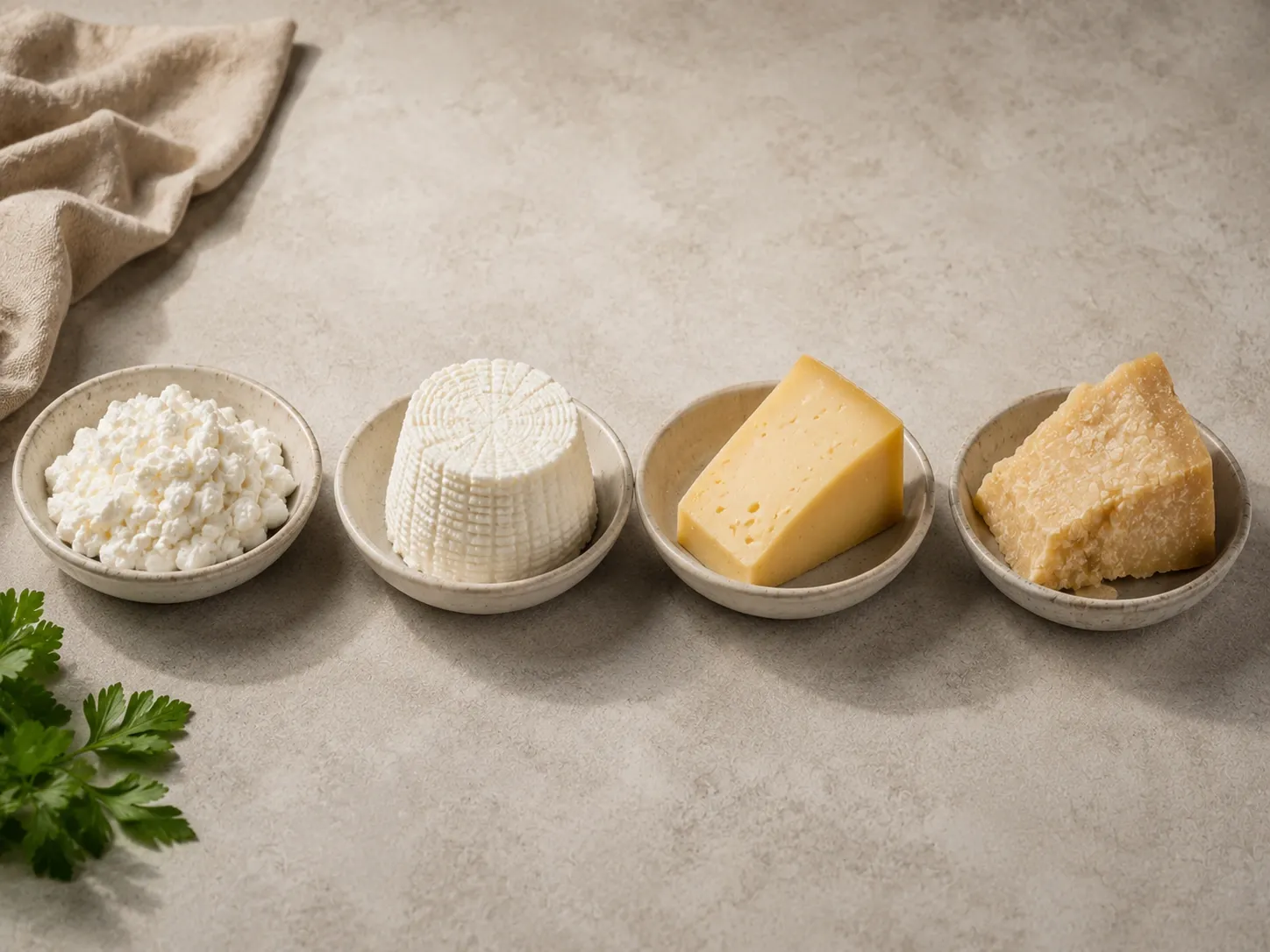
There is no universally best cheese.
For someone trying to reduce saturated-fat intake, comparing nutrition labels is more useful than relying on the name or color of the cheese.
Pay particular attention to:
| Label information | Why it matters |
|---|---|
| Saturated fat | Excess intake can contribute to higher LDL |
| Total fat | Helps indicate the overall fat density of the food |
| Sodium | Relevant to blood pressure and overall cardiovascular risk |
| Serving size | Small listed servings can make nutrient amounts appear lower |
| Ingredients | Helps distinguish simpler cheeses from more highly formulated products |
The American Heart Association favors lower-fat dairy choices within its cardiovascular dietary guidance. (www.heart.org)
Is white cheese always better?
No.
Some fresh cheeses may be relatively low in fat, but color is not a reliable indicator of saturated fat, sodium, or energy content.
Cottage cheese, ricotta, and certain lower-fat fresh cheeses can be useful options depending on the product, but labels should be compared rather than assuming that every pale-colored cheese has a favorable profile. (Serviços e Informações do Brasil)
Is light cheese better?
It can be useful when the product actually contains less total fat and saturated fat.
But the term on the label does not tell the whole story.
A lower-fat product can still contain a considerable amount of sodium. Formulations can also vary substantially between brands.
For someone concerned about cardiovascular health, it is worth comparing:
- saturated fat;
- sodium;
- calories, when relevant;
- ingredients;
- the actual serving size consumed.
Does sodium matter?
It does not directly explain an elevated LDL level, but it matters greatly for overall cardiovascular health.
Cheese can contain significant amounts of sodium because salt is commonly used during production.
The World Health Organization recommends that adults consume less than 2,000 mg of sodium per day, equivalent to less than 5 g of salt. Excess sodium increases blood pressure and cardiovascular risk. (WHO)
This is particularly relevant for people who have both high cholesterol and hypertension.
What replaces the cheese matters
Reducing a food always changes something else in the diet.
Replacing a source of saturated fat with nuts, seeds, olive oil, or other predominantly unsaturated-fat foods is very different from replacing it with refined bread, cookies, or foods rich in added sugars.
WHO specifically recommends replacing saturated fat with unsaturated fats or carbohydrates from naturally fiber-rich foods. (WHO)
This is why the overall dietary pattern provides more information than a simple “eat” or “avoid” list.
How to eat cheese in a more balanced way
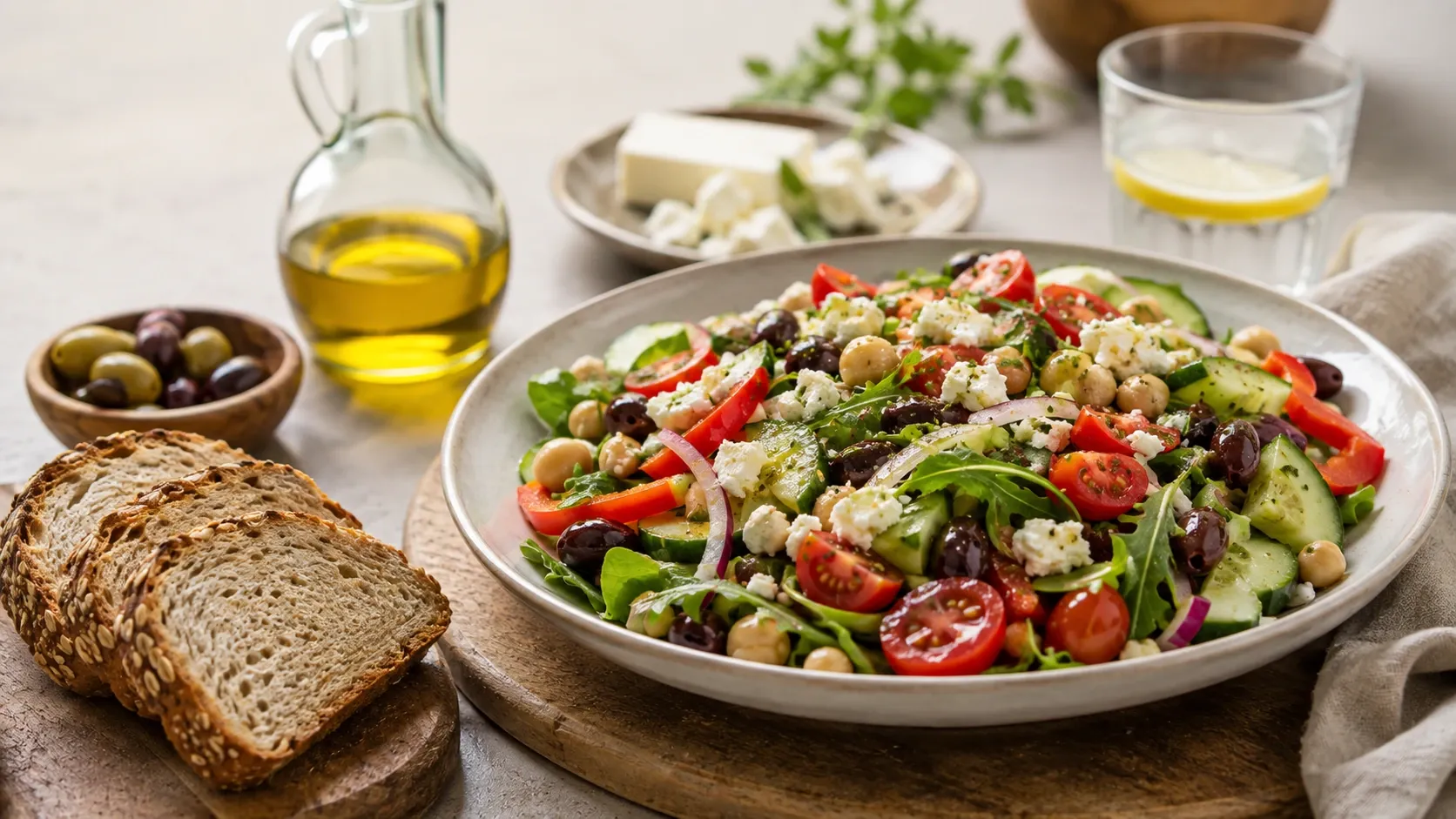
Instead of making cheese the centerpiece of every meal, it can be used as an accompaniment.
For example:
- a small amount over a salad;
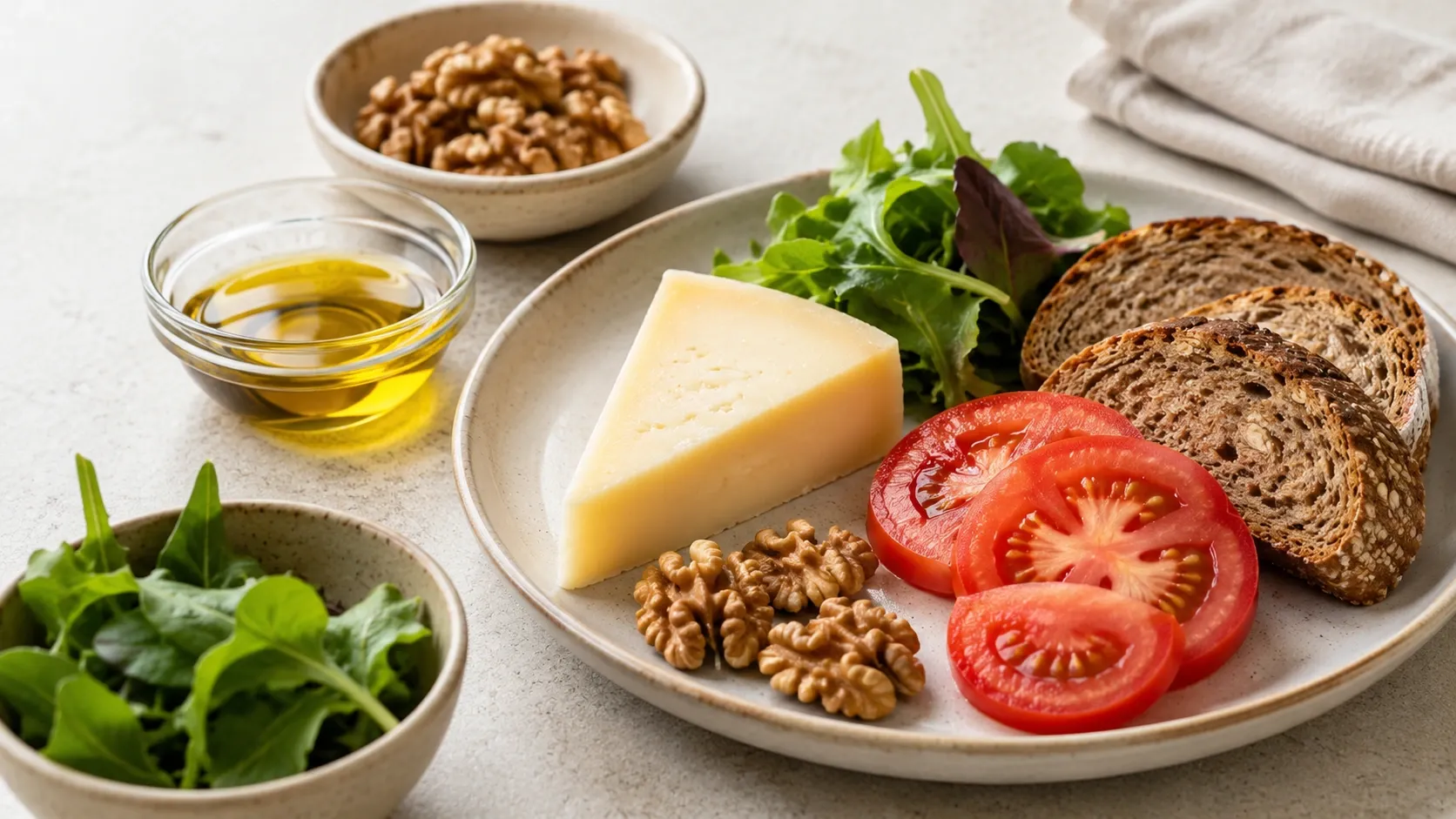
- cheese combined with tomatoes, leafy vegetables, and whole-grain bread;
- ricotta or cottage cheese with vegetables, when the product’s composition is appropriate;
- a small amount of cheese in omelets served with vegetables;
- cheese used to finish a dish instead of taking up a large part of the plate.
According to guidance published by Brazil’s Ministry of Health, the Brazilian Dietary Guidelines recommend using simple cheeses in small amounts, preferably alongside meals based on unprocessed or minimally processed foods. (Serviços e Informações do Brasil)
Cheese versus butter
Randomized trials show an important distinction.
When similar amounts of dairy fat are compared, LDL cholesterol tends to be lower when the fat is consumed within cheese rather than butter. (PubMed)
But there is another important comparison.
Replacing butter with cheese is not the same as replacing butter with olive oil, nuts, seeds, or other predominantly unsaturated-fat foods. Major cardiovascular guidance continues to favor unsaturated fats when saturated fats are replaced. (WHO)
In other words:
Cheese may have a more favorable LDL effect than butter, but that does not make cheese the optimal fat source for lowering LDL.
The whole diet matters most
Small amounts of cheese can fit into a diet built mainly around:
- vegetables;
- fruits;
- beans, lentils, and other pulses;
- whole grains;
- nuts and seeds;
- unsaturated fats;
- appropriate protein sources.
The American Heart Association emphasizes the overall eating pattern rather than judging cardiovascular health based on one individual food. (www.heart.org)
Someone who removes cheese but continues eating large amounts of butter, fatty meats, and other saturated-fat-rich foods may see relatively little benefit.
Conclusion
Cheese does not automatically need to be banned when LDL cholesterol is high.
Many cheeses do contain saturated fat, and excessive saturated-fat intake can raise LDL. Portion size, frequency, and cheese type therefore matter, particularly for people who already have elevated cholesterol. (www.heart.org)
At the same time, randomized trials indicate that dairy fat behaves differently when consumed within the cheese matrix than when consumed as butter, and long-term observational evidence does not consistently link moderate cheese intake with higher cardiovascular disease risk. (PubMed)
The most useful approach is to compare labels, pay attention to saturated fat and sodium, keep portions appropriate, and make cheese part of a broader dietary pattern rich in plant foods and unsaturated fats.
People with very high LDL, familial hypercholesterolemia, or established cardiovascular disease should discuss their individual dietary targets with a qualified health professional.