Is Soy Bad for You? What Science Says About Hormones and Health
Does soy raise estrogen, lower testosterone, or increase cancer risk? See what the evidence says about soy isoflavones, thyroid function, and health.
Soy is surrounded by unusually persistent hormone-related myths. Online claims frequently suggest that soy raises estrogen, lowers testosterone, feminizes men, harms the thyroid, or increases breast cancer risk.
Human research tells a much less alarming story. For most people, soy foods can be part of a healthy diet, and there is no consistent evidence that typical dietary intake causes harmful hormonal disruption. (The Nutrition Source)
Much of the confusion comes from isoflavones, naturally occurring compounds in soy that belong to a broader group known as phytoestrogens.
What are soy isoflavones?
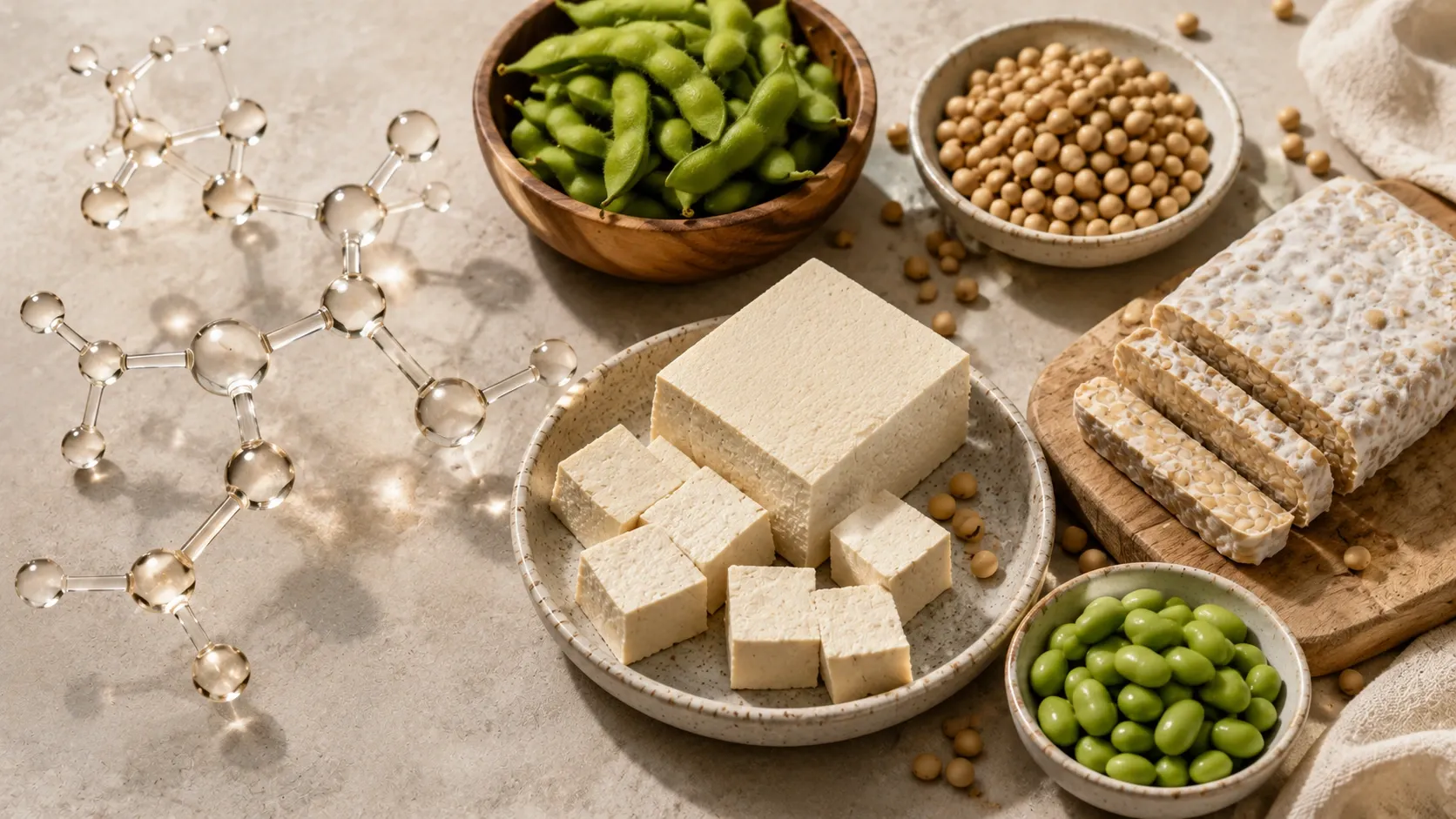
The major soy isoflavones include genistein and daidzein. Their chemical structures allow them to interact with estrogen receptors, but their biological activity is not the same as human estradiol.
Depending on the tissue and hormonal environment, isoflavones can produce weak estrogen-like effects or compete with more potent estrogens at receptors. This is one reason why describing soy as something that simply “raises estrogen” is biologically inaccurate. (The Nutrition Source)
It also explains why findings from cell or animal experiments using isolated compounds at high doses cannot automatically be applied to people eating tofu or edamame. The American Cancer Society specifically highlights differences in isoflavone metabolism and exposure when discussing older animal studies that raised concerns about soy and breast cancer. (Instituto Nacional do Câncer)
Does soy lower testosterone in men?

This question has been tested extensively.
A 2021 meta-analysis pooled 41 clinical studies examining soy foods, soy protein, or isoflavone exposure. It found no significant effects on total testosterone, free testosterone, estradiol, or estrone. Subgroup analyses based on dose and study duration did not change the conclusion. (PubMed)
The clinical evidence therefore does not support the claim that ordinary soy consumption lowers testosterone in men.
What about claims that soy “feminizes” men?
Individual case reports involving unusually large amounts of certain soy products exist, but a case report cannot establish what typically happens across a population.
When dozens of controlled studies are considered together, the expected pattern of lower testosterone or meaningfully higher estrogen is not seen. Using exceptional cases to claim that tofu, soy milk, or edamame feminizes men is therefore inconsistent with the broader evidence. (PubMed)
Does soy increase breast cancer risk?
The concern is understandable: many breast cancers are sensitive to estrogen, and soy isoflavones can interact with estrogen receptors.
But binding to a receptor does not mean that the biological effect is identical to human estrogen.
Studies of people eating soy foods do not show a consistent increase in breast cancer risk. The American Cancer Society considers soy foods safe as part of a normal diet and notes that human research generally shows either lower risk or no change in cancer risk. (Instituto Nacional do Câncer)
Evidence is also reassuring for breast cancer survivors. American Cancer Society guidance revised in July 2026 states that eating soy foods does not appear to increase recurrence risk, while some research suggests it might be associated with lower recurrence. (Instituto Nacional do Câncer)
A 2024 meta-analysis of dietary isoflavone intake among breast cancer survivors reported pooled hazard ratios of 0.81 for recurrence and 0.85 for all-cause mortality when comparing higher with lower intake categories. Because much of this evidence is observational, it shows an association and cannot prove that soy itself caused the better outcomes. (PubMed)
Does soy harm the thyroid?
For people with normal thyroid function, current evidence does not support routinely eliminating soy.
A systematic review and meta-analysis of 18 randomized studies found no significant effect on free T3 or free T4. It did identify a small average increase in TSH of about 0.25 mIU/L, but the clinical significance was uncertain, and substantial heterogeneity existed between studies. (PubMed Central (PMC))
People who already have impaired thyroid function deserve more individualized consideration. Some studies involving participants with subclinical hypothyroidism produced different findings, so the available evidence should not be interpreted as identical for every clinical situation. (PubMed Central (PMC))
Soy and levothyroxine
There is also a separate issue: medication absorption.
Reviews indicate that soy products can reduce levothyroxine absorption when consumed close to the medication. That does not necessarily mean patients with hypothyroidism need to stop eating soy, but consistent medication timing and eating patterns can matter when establishing an appropriate dose. (PubMed)
Anyone taking levothyroxine should follow their prescribed instructions and ask a clinician or pharmacist about appropriate spacing from meals and soy foods.
Is soy an endocrine disruptor?
The ability of a compound to interact with a hormone receptor is not, by itself, proof that typical exposure causes harmful endocrine disruption.
This distinction matters with soy. Isoflavones are biologically active, but human clinical outcomes must be considered alongside laboratory mechanisms.
Trials looking at male reproductive hormones and thyroid hormones illustrate the difference: plausible molecular effects do not consistently translate into clinically meaningful hormonal disruption in people consuming soy. (PubMed)
Are soy foods and supplements the same?
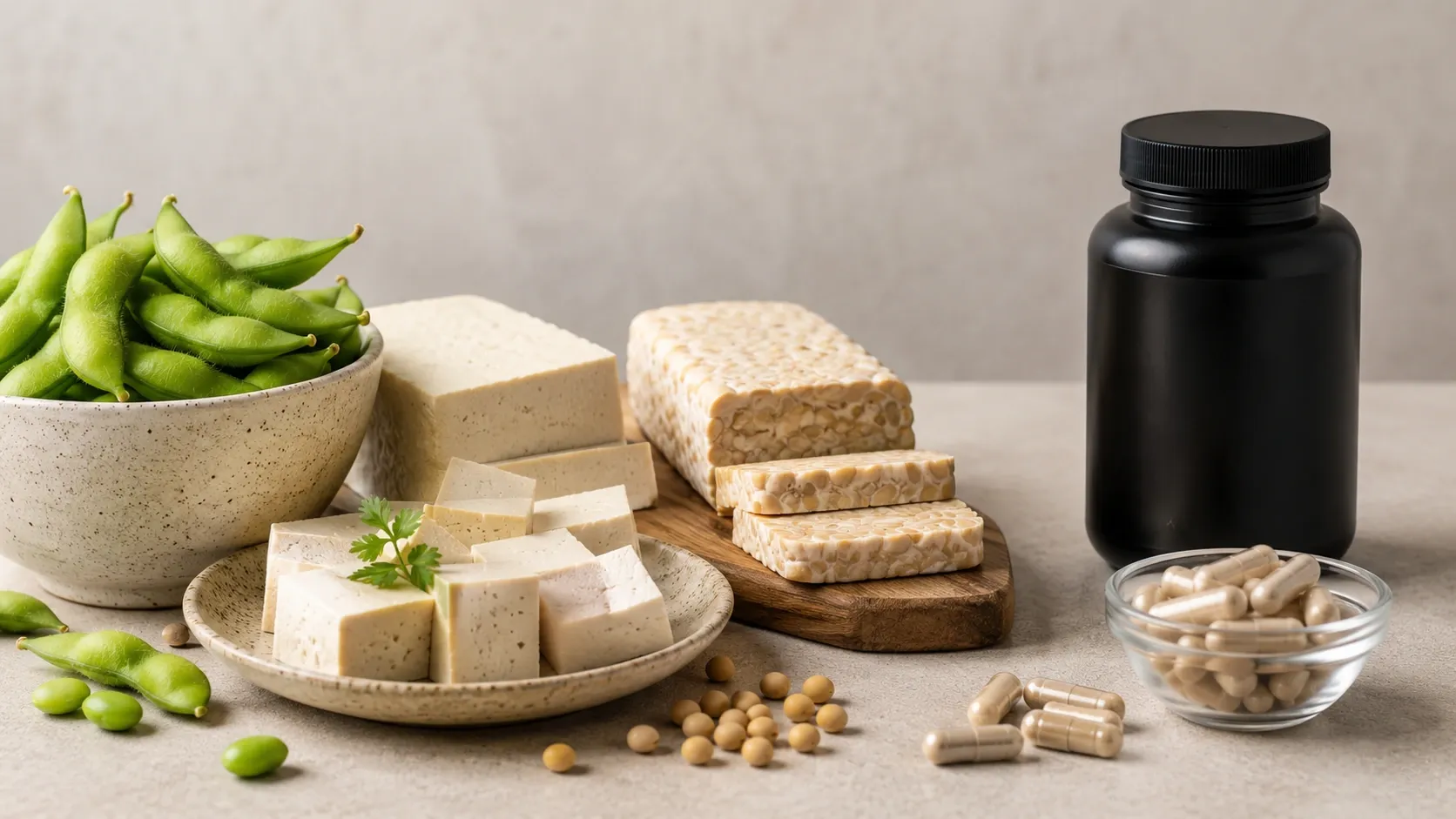
No, and this distinction is essential.
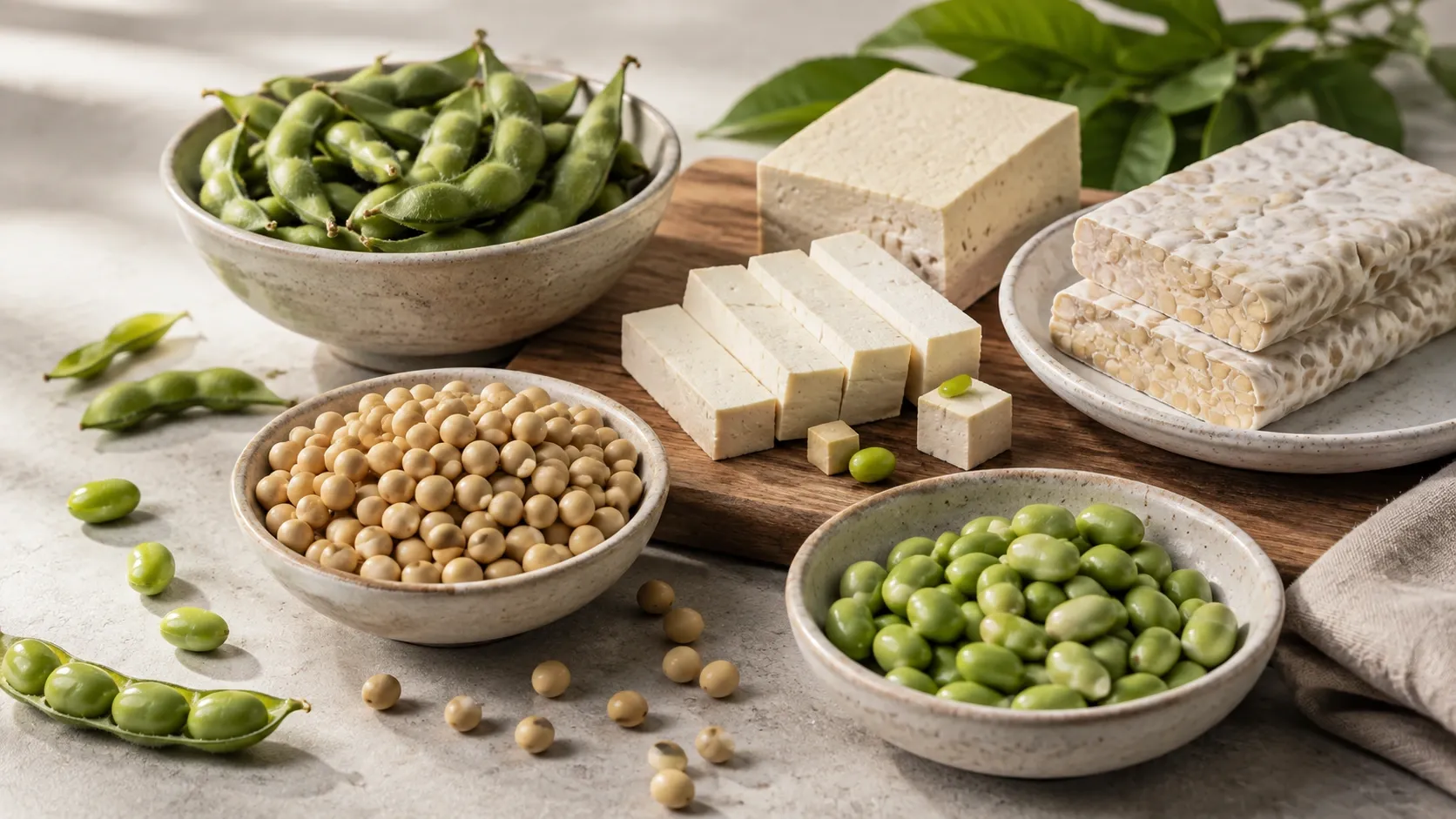
| Product | How to interpret it |
|---|---|
| Edamame | Whole or minimally processed soy food |
| Tofu | Traditional soy food |
| Tempeh | Fermented soy food |
| Soy beverage | Food; nutrient content varies by product and fortification |
| Soy protein isolate | More concentrated protein ingredient |
| Isoflavone supplement | Concentrated exposure to specific compounds |
Soy foods provide protein alongside other components of the food matrix. Harvard notes that soy protein supplies all nine essential amino acids, while NCCIH reports that replacing other protein sources with soy protein may produce a small reduction in cholesterol. (The Nutrition Source)
Concentrated supplements should not automatically be assigned the same benefits or safety profile. For cancer prevention, for example, the American Cancer Society favors getting nutrients through foods and does not recommend soy supplements as a cancer-prevention strategy. (Instituto Nacional do Câncer)
Can soy offer health benefits?
Soy does not need to be a “superfood” to be nutritionally useful.
Tofu, edamame, tempeh, and other soy foods can provide high-quality plant protein and fit well into dietary patterns rich in plant foods. When they replace foods high in saturated fat or processed meat, some of the potential benefit may come from the substitution itself rather than from isoflavones acting in isolation. (The Nutrition Source)
NCCIH concludes that substituting soy protein for other proteins may modestly lower cholesterol and notes potential benefits for several additional outcomes, although the size and consistency of those effects differ across products and populations. (NCCIH)
Who should be more cautious?
Soy is not appropriate for every person in every context.
Extra care may be warranted for:
- people with a soy allergy;
- people taking levothyroxine;
- patients with thyroid disease making a major change in soy intake;
- cancer patients considering concentrated isoflavone supplements;
- pregnant or breastfeeding people considering supplemental or unusually high-dose soy preparations;
- anyone planning to use concentrated soy extracts as treatment for a medical condition.
NCCIH lists soy allergy and gastrointestinal symptoms among potential concerns and notes that safety is less certain for amounts substantially above normal food intake during pregnancy and breastfeeding. (NCCIH)
So, is soy bad for you?
For most people, there is no consistent scientific evidence that ordinary soy food consumption is harmful because of hormonal effects.
Clinical studies do not show meaningful reductions in testosterone or increases in estrogen in men. Soy foods do not appear to increase breast cancer risk and are considered compatible with a healthy diet, including for many breast cancer survivors. Thyroid effects in healthy people appear small, although anyone taking levothyroxine should pay attention to medication absorption. (PubMed)
Conclusion
Much of the fear surrounding soy comes from an overly simplistic interpretation of the word “phytoestrogen.” Isoflavones can interact with estrogen receptors, but that does not turn soy foods into hormone therapy.
Overall, human evidence is reassuring for foods such as tofu, edamame, tempeh, and soy beverages. The main caution is not to automatically extend those findings to concentrated supplements or to people with specific medical circumstances.
For people without a contraindication, soy can simply be another nutritious protein source within a balanced diet — not a hormonal villain.