Mediterranean Diet: What It Is and Why It Is So Studied
The Mediterranean diet emphasizes vegetables, legumes, whole grains, olive oil, nuts and fish. Learn why it is so widely studied and what the evidence actually shows.
Few eating patterns have attracted as much scientific attention as the Mediterranean diet. Researchers have investigated it in relation to cardiovascular disease, diabetes, body weight, healthy aging and cognitive health.
Yet one of its defining features is that it is not a highly prescriptive diet.
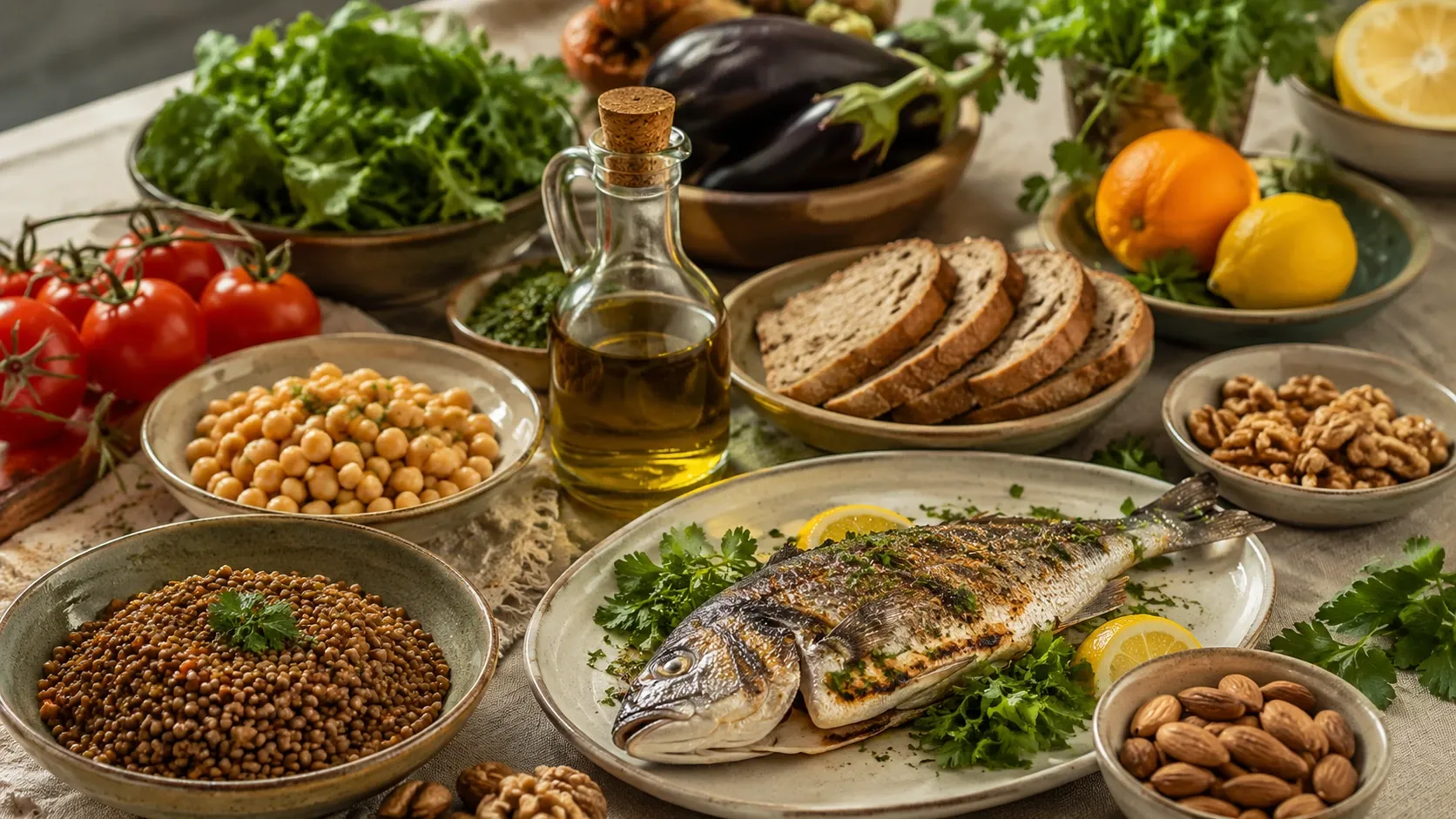
The Mediterranean diet is better understood as an overall eating pattern inspired by traditional diets in several regions surrounding the Mediterranean Sea. It emphasizes vegetables, fruit, legumes, whole grains, nuts, olive oil and fish rather than focusing on one nutrient or “superfood.” (The Nutrition Source)
That broader pattern is also one reason scientists find it so interesting.
What is the Mediterranean diet?
There is no single Mediterranean diet.
Greece, Italy, Spain and other Mediterranean countries have different cuisines. Researchers therefore use the term to describe common features that appeared across a number of traditional eating patterns. (The Nutrition Source)
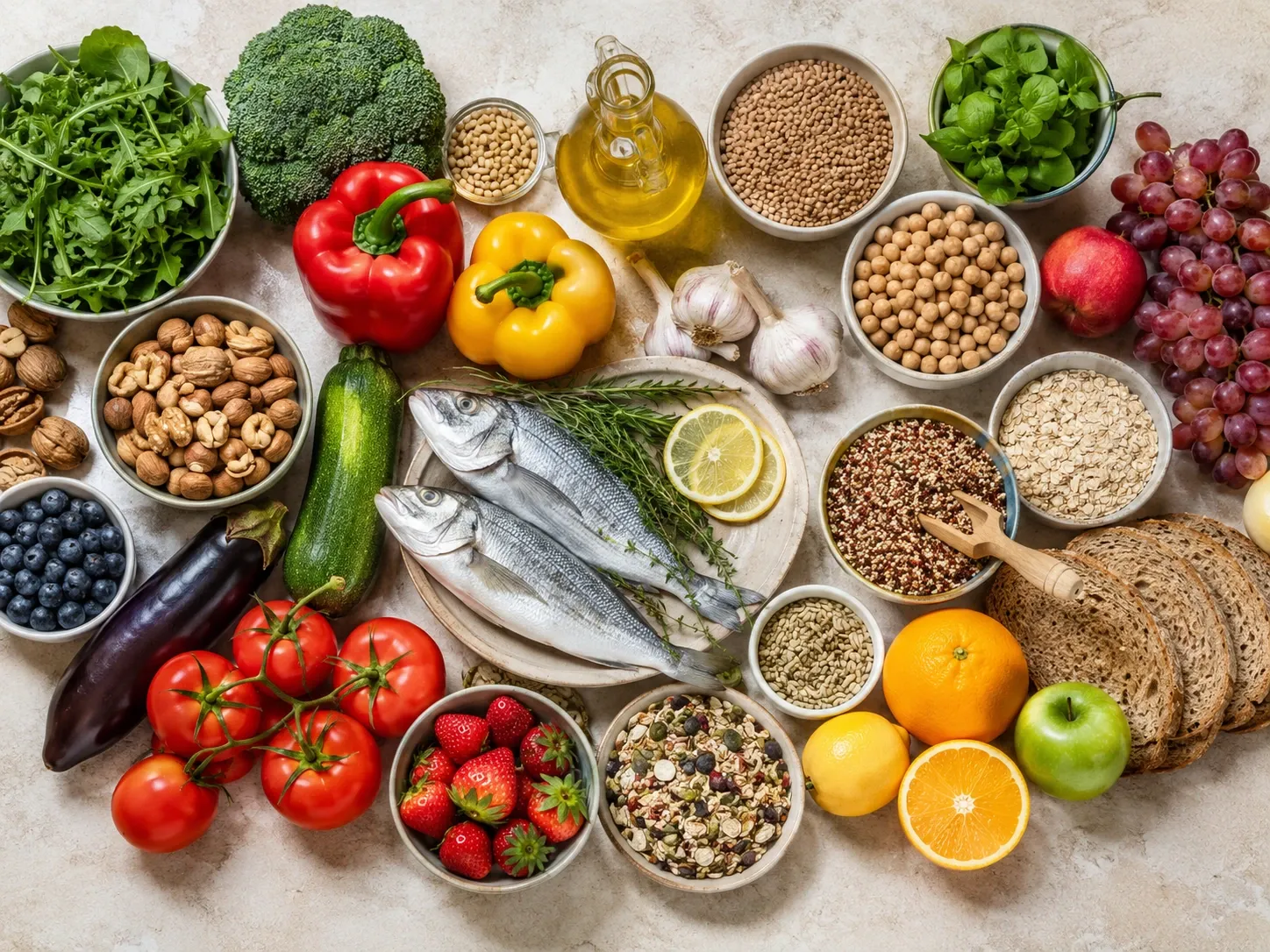
These commonly include:
- plenty of vegetables;
- fruit;
- beans, lentils, peas and chickpeas;
- whole grains;
- nuts and seeds;
- olive oil as an important added fat;
- fish and seafood;
- herbs and spices;
- smaller amounts of dairy, eggs and poultry;
- less red and processed meat;
- fewer sweets and highly refined foods.
Water remains the main everyday beverage.
Wine is mentioned in some historical Mediterranean models, but alcohol is not required. The American Heart Association currently advises people who do not drink alcohol not to start. (www.heart.org)
The overall pattern matters more than one ingredient
The Mediterranean diet is sometimes reduced to olive oil.
That misses the point.
Harvard’s review of the diet emphasizes that its potential benefits appear to come from the combination of foods within the overall dietary pattern rather than from simply adding a single ingredient such as olive oil or nuts. (The Nutrition Source)
Adding olive oil to a diet still dominated by sugary drinks, processed meats, refined foods and very few vegetables does not reproduce the Mediterranean pattern studied in research.
A broader shift toward vegetables, legumes, whole grains, fruit, fish, nuts and predominantly unsaturated fats is much closer to the dietary model being investigated.
Why did scientists become so interested in it?
Early interest was driven by observations of dietary habits and cardiovascular health in certain Mediterranean populations.
Over time, the evidence base expanded beyond observational research.
One of the most influential studies was PREDIMED, a large randomized trial conducted in Spain among people at high cardiovascular risk. Participants were assigned to a Mediterranean diet supplemented with extra-virgin olive oil, a Mediterranean diet supplemented with mixed nuts, or a control diet with advice to reduce dietary fat. (New England Journal of Medicine)
The republished analysis found a lower incidence of major cardiovascular events in the Mediterranean-diet groups than in the control group. (New England Journal of Medicine)
The PREDIMED controversy
PREDIMED also illustrates why major nutrition studies should not be accepted uncritically.
The original paper was retracted and republished after irregularities were identified in the randomization of some participants. The investigators reanalyzed the data, and the overall conclusion remained similar. (The Nutrition Source)
This methodological history does not erase the study, but it does matter when judging the certainty of its findings.
Where is the evidence strongest?
Cardiovascular health
Cardiovascular prevention is arguably the best-supported area.
A 2024 systematic review and meta-analysis of randomized controlled trials reported favorable effects on major cardiovascular outcomes, including cardiovascular events, myocardial infarction and stroke, while also noting that additional trials are needed to strengthen parts of the evidence base. (PubMed)
A Cochrane review was more cautious. It found promising findings but emphasized uncertainty around several clinical cardiovascular outcomes because of study limitations, heterogeneity and the relatively small number of trials contributing to some analyses. (Cochrane)
These findings are not necessarily contradictory.
The overall cardiovascular evidence favors Mediterranean-style eating, while the degree of certainty still differs from one outcome to another.
What about type 2 diabetes?
The Mediterranean diet has also been extensively investigated in type 2 diabetes.
A 2025 meta-analysis of randomized controlled trials found modest improvements in measures including HbA1c, fasting glucose, BMI, LDL cholesterol and blood pressure compared with control diets. (PubMed Central (PMC))
This does not mean that the diet can replace diabetes medication or individualized medical care.
People with diabetes may have different carbohydrate requirements depending on their medications, insulin use, physical activity, body weight and other health conditions.
Is the Mediterranean diet anti-inflammatory?
This description requires some nuance.
Vegetables, fruits, legumes, whole grains, nuts, fish and olive oil provide fiber, unsaturated fats, vitamins, minerals and a variety of bioactive compounds. Researchers continue to study how combinations of these foods affect metabolic and inflammatory pathways.
However, that does not make the Mediterranean diet a universal “anti-inflammatory treatment,” nor does any single Mediterranean food eliminate inflammation.
A more accurate interpretation is that this dietary pattern may contribute to a more favorable cardiometabolic environment.
What about the brain, cancer and longevity?
These are active areas of research, but the evidence needs to be interpreted carefully.
Observational studies often find associations between greater Mediterranean-diet adherence and favorable aging, mortality or cognitive outcomes. Recent Mediterranean-diet guidelines have also evaluated potential applications across a wide range of chronic diseases. (OUP Academic)
But observational research is vulnerable to confounding.
People who eat healthier diets may also:
- exercise more;
- smoke less;
- sleep better;
- have better healthcare access;
- have higher income or education;
- engage in other health-promoting behaviors.
Statistical models can attempt to account for those differences, but they cannot remove all uncertainty.
For that reason, emerging evidence on dementia, cancer or longevity should not automatically be placed on the same level as cardiovascular findings supported by randomized trials.
Does the Mediterranean diet cause weight loss?
Not automatically.
A Mediterranean-style diet can be part of a weight-management program, but energy balance still matters.
Foods such as olive oil, nuts and seeds are nutrient-dense and useful components of the pattern, but they are also energy-dense.
Simply adding them to an already high-calorie diet does not guarantee weight loss.
The more meaningful shift is changing the overall pattern: more vegetables, whole fruits, legumes and minimally processed foods, alongside an energy intake suited to the person’s needs.
Do Mediterranean foods need to be imported?
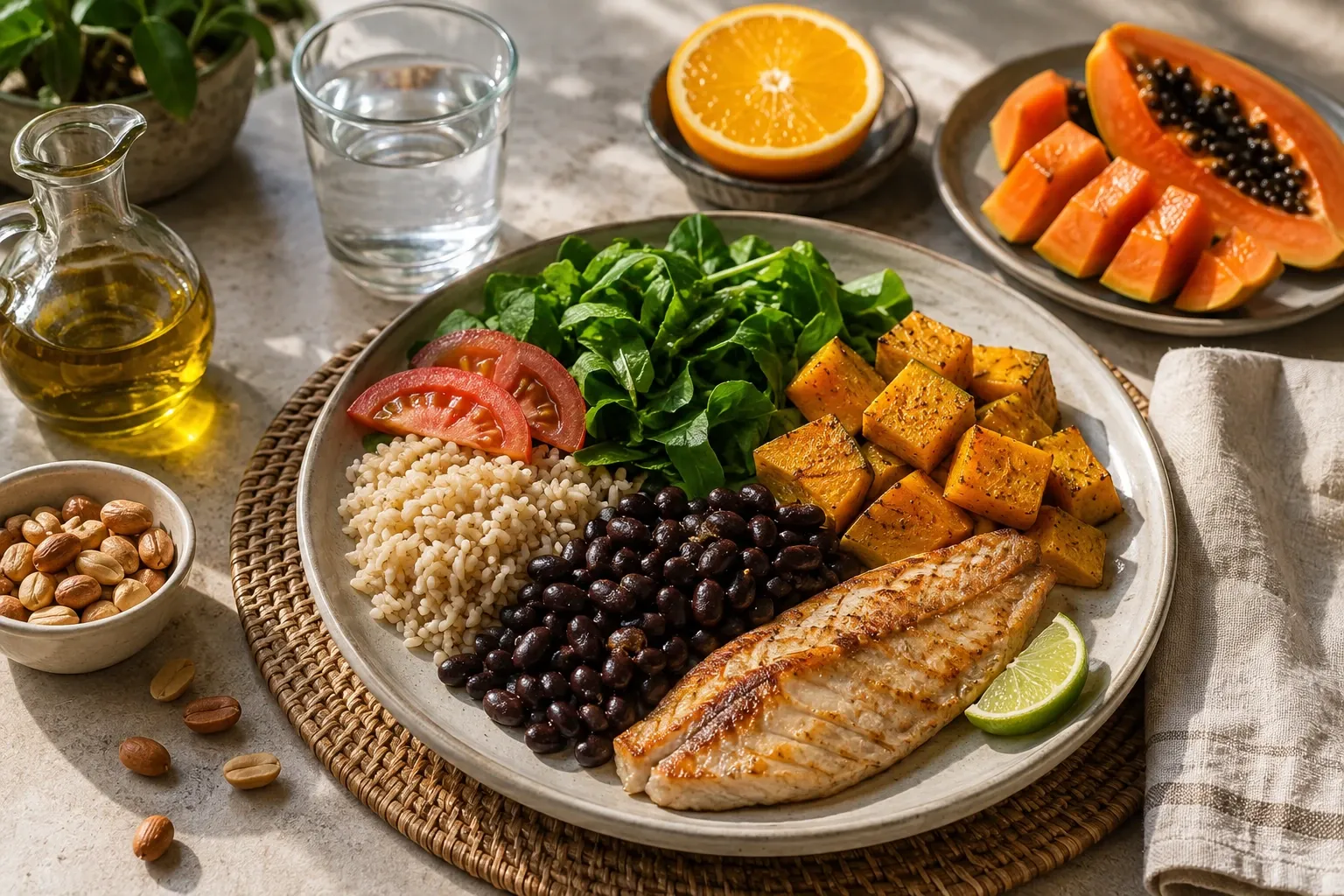
No.
The scientific concept can be adapted to local food cultures.
| Principle | Local options may include |
|---|---|
| Legumes | Beans, lentils, chickpeas, peas |
| Whole grains | Oats, corn, brown rice, whole-grain bread |
| Vegetables | Seasonal leafy greens and vegetables |
| Fruit | Fresh, locally available seasonal fruit |
| Unsaturated fats | Olive oil, nuts, peanuts, seeds |
| Protein | Fish, legumes, eggs and poultry |
| Flavorings | Herbs, garlic, onion, lemon and spices |
WHO’s current healthy-diet guidance also emphasizes dietary diversity, minimally processed foods, whole grains, fruits, vegetables, legumes, nuts and appropriate sources of protein and unsaturated fats. These principles strongly overlap with Mediterranean-style eating. (Organização Mundial da Saúde)
How to move toward a Mediterranean-style diet

There is no need to transform every meal at once.
Practical steps include:
- Add more vegetables to lunch and dinner.
- Eat beans, lentils or other legumes regularly.
- Use whole fruit for snacks or desserts.
- Replace some refined grains with whole-grain options.
- Include fish when available and appropriate for your preferences.
- Include moderate portions of nuts or seeds.
- Favor unsaturated fats over frequent use of butter, fatty meats and highly processed foods.
- Gradually reduce processed meats, sugary drinks, sweets and highly refined products.
The American Heart Association similarly emphasizes the overall dietary pattern, with vegetables, fruit, whole grains, legumes, nuts, fish, minimally processed foods and unsaturated fats playing central roles. (www.heart.org)
What the Mediterranean diet is not
The Mediterranean diet is not:
- a pasta-based diet;
- a diet built around cheese and wine;
- permission to consume unlimited olive oil;
- a rapid-weight-loss program;
- a detox;
- a substitute for medication;
- a collection of magical superfoods.
Its scientific interest comes largely from the opposite idea: health may be influenced by the long-term combination of many foods and habits rather than one isolated ingredient.
Why does it remain so widely studied?
There are several reasons.
The diet is flexible and includes a broad range of foods.
It has decades of observational research behind it.
Unlike many popular diets, it has also been tested in randomized clinical trials.
And many of its defining characteristics overlap with modern evidence-based dietary recommendations: more plant foods, whole grains, legumes and unsaturated fats, and less reliance on processed meats, added sugars and highly processed foods. (who.int)
Conclusion
The Mediterranean diet is not a single recipe and it is not based on miracle foods. It is a predominantly plant-forward eating pattern in which vegetables, fruit, legumes, whole grains, nuts, olive oil and fish play prominent roles.
Its strongest evidence relates to cardiovascular health, while researchers continue to investigate type 2 diabetes, aging, cognition, cancer and other outcomes. The quality and certainty of the evidence are not identical across all of these areas. (PubMed)
Its most useful lesson may therefore be broader than any individual Mediterranean food: long-term dietary quality matters more than searching for one ingredient capable of transforming health on its own.