Saturated Fat: How Much to Eat and Which Foods to Watch
Learn how much saturated fat to eat, which foods provide the most, and how replacing it with unsaturated fats and fiber-rich foods can improve diet quality.
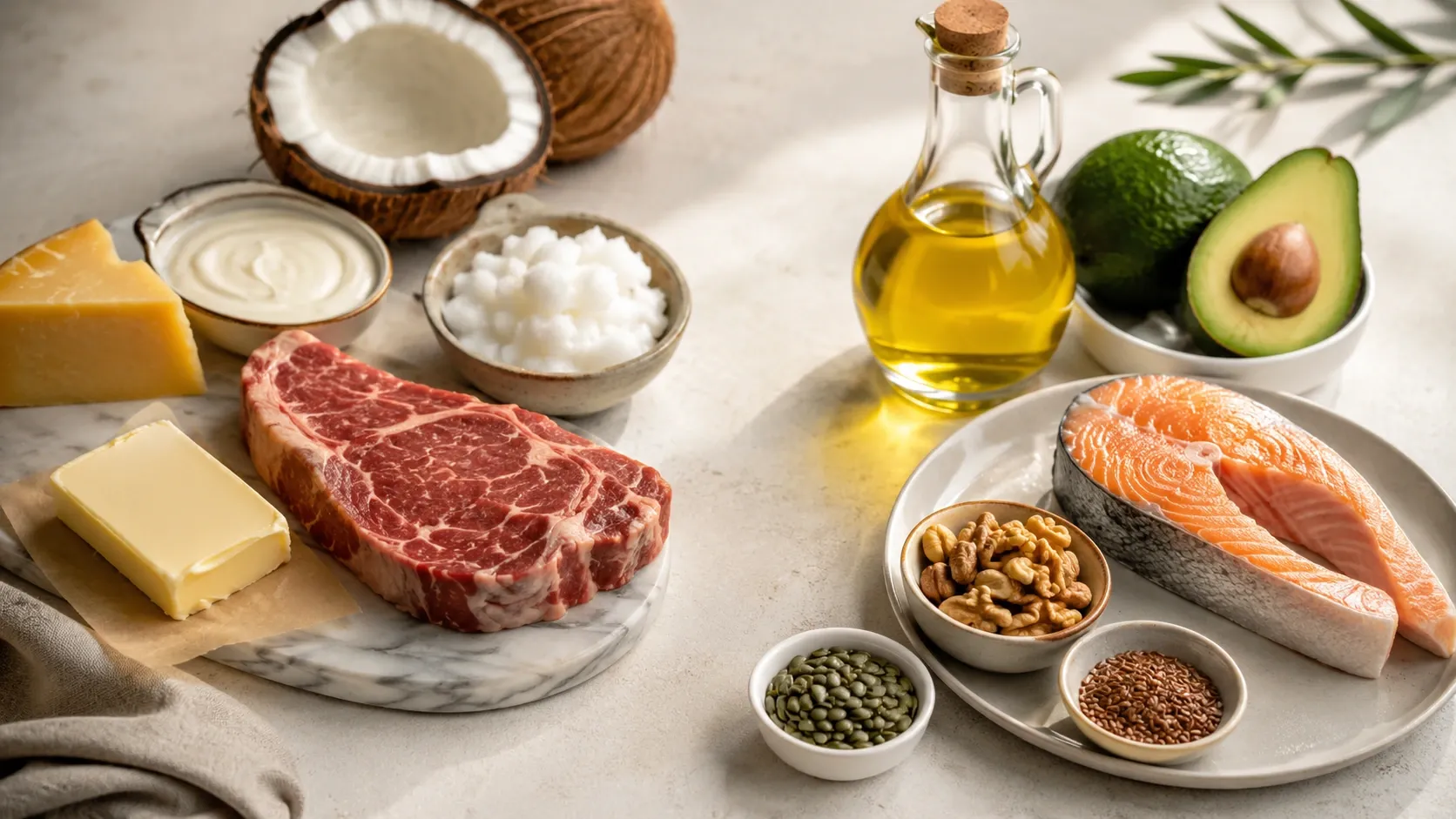
Saturated fat does not need to disappear completely from your diet, but the amount you eat—and especially what you replace it with—matters. The World Health Organization recommends keeping saturated fat below 10% of total daily energy while prioritizing unsaturated fats. (Organização Mundial da Saúde)
In practical terms, this means paying more attention to foods such as butter, fatty meats, lard, cream, some cheeses, coconut oil and palm oil, along with processed foods that may combine substantial amounts of fat, refined carbohydrates, sugars and sodium. (Organização Mundial da Saúde)
What is saturated fat?
Saturated fat is a type of dietary fat found naturally in many animal foods as well as some plant foods. Meat, full-fat dairy products, butter, cream and lard can provide it, while coconut, palm and palm-kernel oils are notable plant sources. (Organização Mundial da Saúde)
That does not mean every food containing saturated fat is nutritionally identical. Whole foods contain combinations of protein, vitamins, minerals, fiber and many other compounds, so judging a food solely by one type of fatty acid can oversimplify nutrition.
Still, high saturated fat intake can raise LDL cholesterol, which is why public-health and cardiovascular organizations recommend limiting it. (www.heart.org)
How much saturated fat should you eat?
WHO recommends that less than 10% of total daily energy come from saturated fat. (Organização Mundial da Saúde)
Because each gram of fat provides about 9 calories, 10% of a 2,000-calorie diet corresponds to roughly 22 grams of saturated fat per day.
| Guideline | Share of energy | Approximate amount on 2,000 kcal |
|---|---|---|
| WHO — general population | Less than 10% | Less than about 22 g/day |
| American Heart Association — heart-healthy pattern | Less than 6% | About 13 g/day |
The American Heart Association recommends a pattern containing less than 6% of calories from saturated fat, or approximately 13 grams on a 2,000-calorie diet. This more restrictive target is particularly relevant in heart-health and LDL-lowering strategies and should not be interpreted as an individualized prescription for every person. (www.heart.org)
The recommended maximum is also not a target you need to reach. There is no reason to deliberately add saturated fat simply to approach the upper limit.
Why does LDL cholesterol matter?
LDL cholesterol is a major reason saturated fat receives so much attention. Higher saturated fat intake can increase LDL, whereas replacing some saturated fat with unsaturated fat tends to produce a more favorable blood-lipid profile. (www.heart.org)
However, changing a risk marker and preventing clinical events are not exactly the same question, and the magnitude of benefit is unlikely to be identical for everyone.
A 2026 systematic review of 17 randomized trials involving 66,337 participants found important differences according to baseline cardiovascular risk. Among people at low risk, absolute benefits from reducing or modifying saturated fat over roughly five years were small. Among higher-risk participants, low- to moderate-certainty evidence suggested potentially meaningful reductions in clinical outcomes, particularly when saturated fat was replaced with polyunsaturated fat. (University of Johannesburg)
This helps explain why apparently conflicting headlines about saturated fat can coexist: removing one nutrient is only part of the dietary change.
What you replace saturated fat with matters
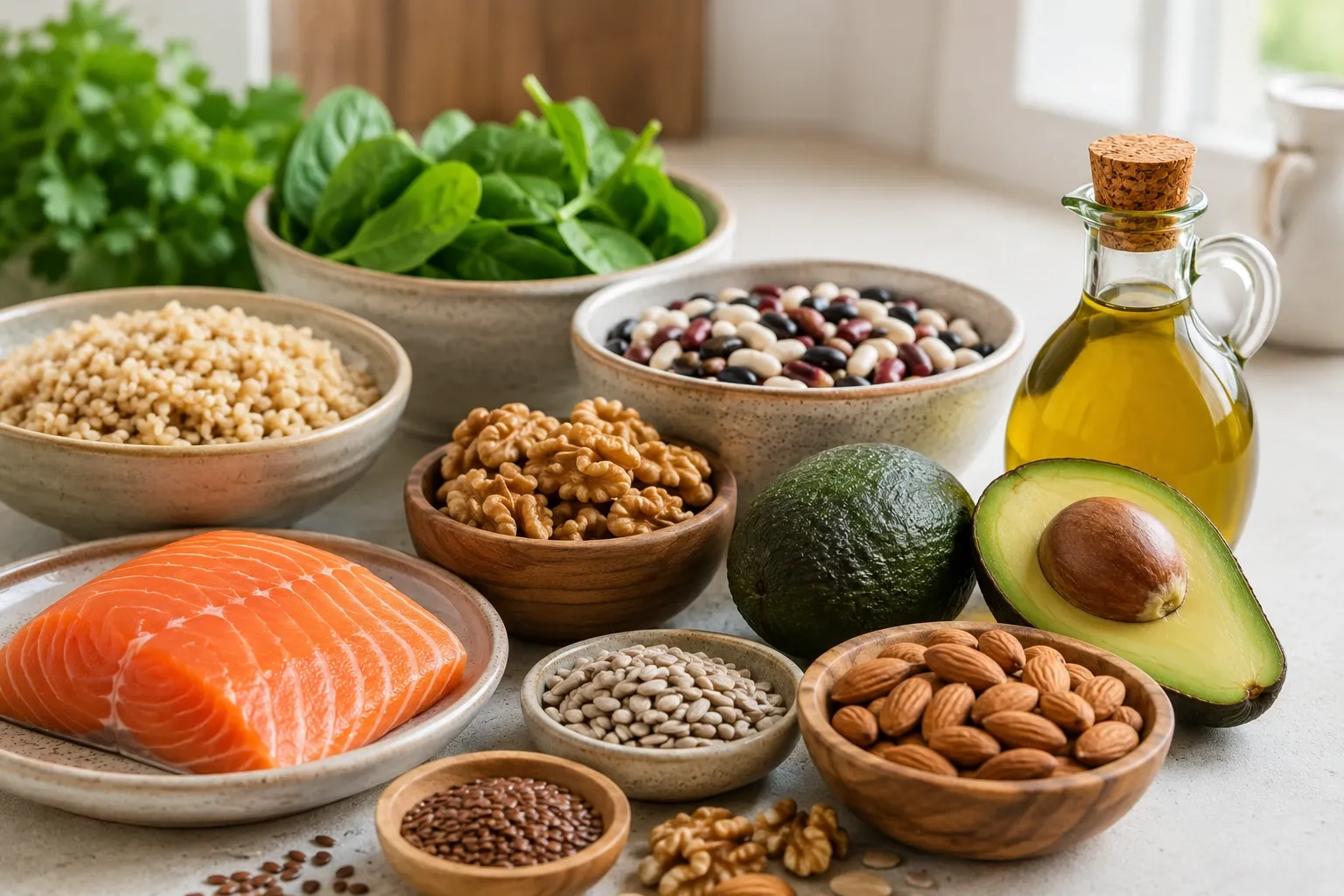
Consider two people who both reduce butter and fatty meat.
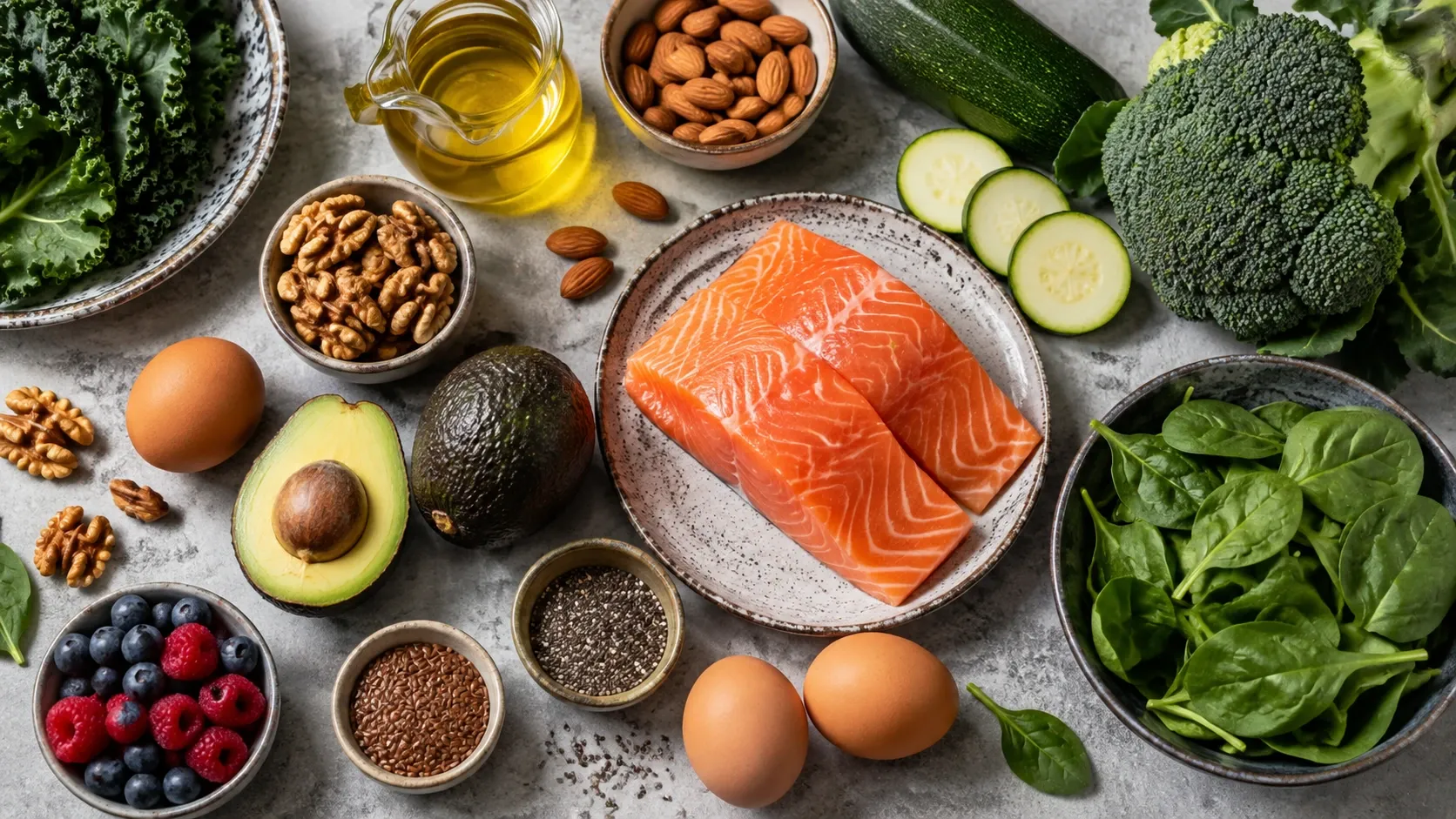
One begins eating more olive oil, nuts, seeds, legumes, fish and whole grains. The other reduces fat but adds more cookies, white bread, desserts and refined carbohydrates.
Both have reduced saturated fat, but they have made very different nutritional changes.
WHO recommends replacing saturated fat with polyunsaturated fats, monounsaturated fats from plant sources, or carbohydrates from foods naturally rich in dietary fiber, including whole grains, fruits, vegetables and pulses. (Organização Mundial da Saúde)
Harvard also emphasizes that replacing saturated fat with refined carbohydrates does not provide the same advantages as replacing it with healthier unsaturated fats. (The Nutrition Source)
The more useful question, therefore, is not just “How much saturated fat am I removing?” but also “What am I eating instead?”
Which foods deserve the most attention?

A food does not automatically become unhealthy because it contains a small amount of saturated fat. It is more useful to focus on sources that can contribute substantial amounts when eaten frequently.
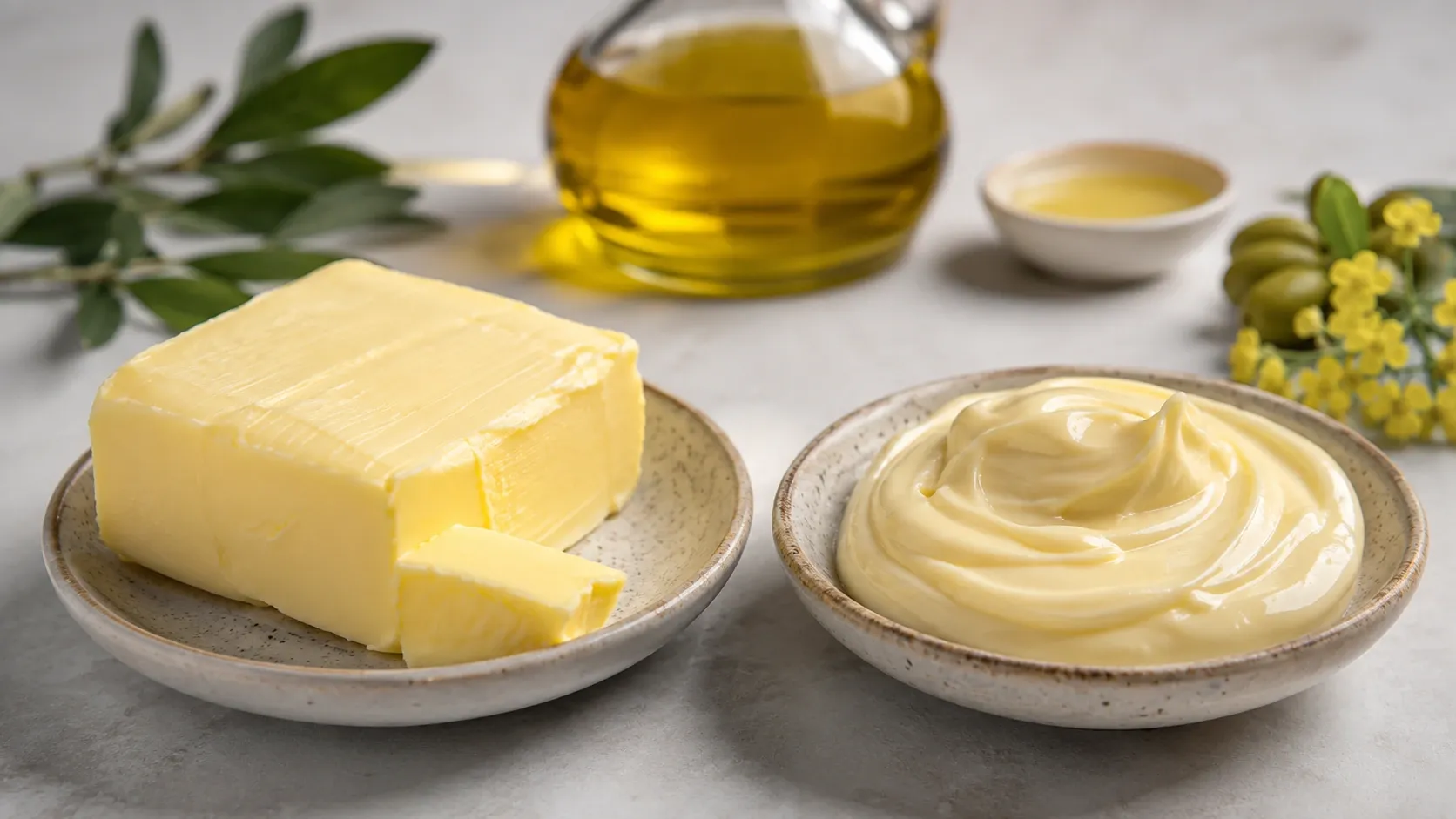
Butter, lard and animal fats
These are concentrated sources of fat and can quickly increase saturated fat intake. For routine cooking, replacing some of them with oils rich in unsaturated fats is consistent with WHO guidance. (Organização Mundial da Saúde)
Fatty meats
Fatty cuts and preparations containing large amounts of animal fat can contribute considerable saturated fat. Choosing leaner cuts and trimming visible fat when appropriate can lower intake without requiring complete avoidance of meat. (Organização Mundial da Saúde)
Cheese, cream and higher-fat dairy foods
Some dairy products can contribute significantly to saturated fat intake, especially if several high-fat options are eaten throughout the same day. Portion size, frequency and the rest of the diet should all be considered. (Organização Mundial da Saúde)
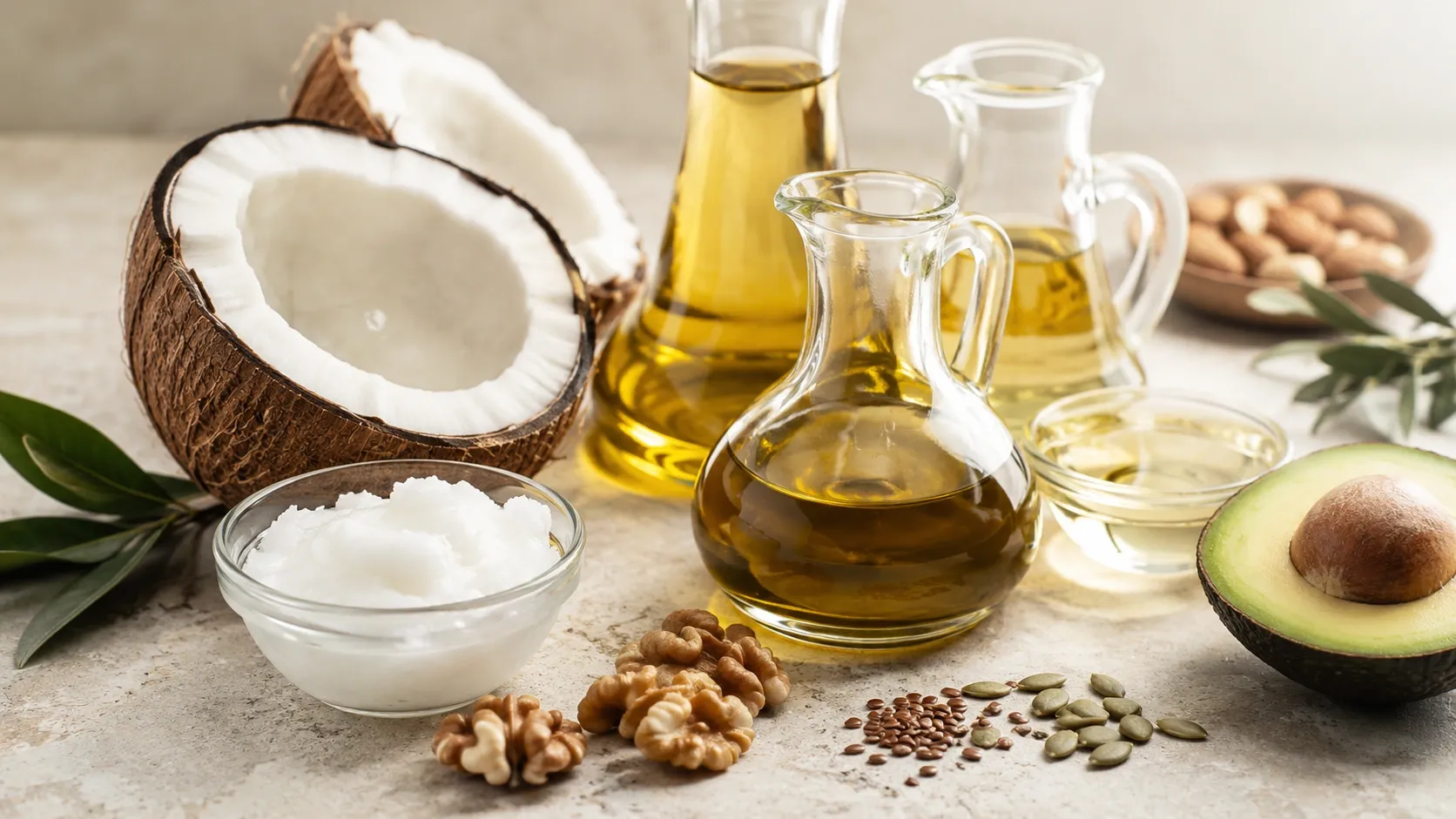
Coconut and palm oils
Being plant-derived does not automatically mean a fat is predominantly unsaturated. Coconut and palm oils are rich in saturated fat. Coconut oil can raise LDL cholesterol compared with predominantly unsaturated vegetable oils. (The Nutrition Source)
For regular use, olive, canola, soybean and other predominantly unsaturated oils remain more favorable choices when the goal is to improve the overall fatty-acid profile of the diet. (Organização Mundial da Saúde)
Baked foods, desserts and fried products
Cakes, pies, cookies, desserts, pastries, some fast foods and fried products may combine saturated fat with substantial calories, refined carbohydrates, sugars or sodium. Their composition varies widely, making the nutrition label particularly useful. (Organização Mundial da Saúde)
How to read saturated fat on Brazilian food labels

Brazilian nutrition labels provide saturated fat information and require nutrient values per 100 g or 100 ml, which makes it easier to compare similar products even when their stated serving sizes differ. (Serviços e Informações do Brasil)
Under Anvisa’s front-of-pack labeling rules, high saturated fat content is identified using the following thresholds:
| Food type | High saturated fat threshold |
|---|---|
| Solid and semi-solid foods | 6 g or more per 100 g |
| Liquids | 3 g or more per 100 ml |
These are regulatory labeling thresholds, not personal daily intake recommendations. (Serviços e Informações do Brasil)
When comparing similar products, the values per 100 g or 100 ml can therefore be more informative than looking only at the manufacturer’s suggested serving.
Simple ways to reduce saturated fat
Eating less saturated fat does not mean following a fat-free diet. Fat is an essential nutrient, and the quality of the fat sources you choose matters. (Organização Mundial da Saúde)
Practical substitutions include:
- using olive oil or other predominantly unsaturated vegetable oils more often instead of butter or lard;
- alternating fatty meats with fish, legumes and leaner cuts;
- including nuts, seeds and avocado as sources of unsaturated fat;
- moderating frequent intake of cream, high-fat cheeses, desserts and pastries;
- comparing nutrition labels between similar products;
- choosing whole grains, vegetables, fruits and legumes more often instead of refined carbohydrate foods.
These strategies focus on improving the overall dietary pattern rather than targeting one nutrient in isolation. (Organização Mundial da Saúde)
Who should pay particular attention?
People with elevated LDL cholesterol, established cardiovascular disease or other major cardiovascular risk factors may need more individualized dietary targets. Evidence suggests that the absolute benefit of modifying saturated fat intake may differ substantially between people at low and high baseline cardiovascular risk. (University of Johannesburg)
In these situations, appropriate intake should be discussed with a physician or registered dietitian in the context of laboratory results, medications, family history, usual diet and overall cardiovascular risk.
This article is for educational purposes and does not replace individualized diagnosis, treatment or professional nutrition care.
Conclusion
For the general population, a widely used international reference is to keep saturated fat below 10% of total daily calories. On a 2,000-calorie diet, that corresponds to approximately 22 grams per day. (Organização Mundial da Saúde)
But counting grams is only part of the picture. The food sources of saturated fat and, especially, what replaces them matter.
Replacing some butter, lard, fatty meats and other concentrated saturated-fat sources with unsaturated oils, nuts, seeds, fish, legumes and naturally fiber-rich foods generally makes more nutritional sense than simply replacing fat with refined foods. (Organização Mundial da Saúde)
Rather than treating one nutrient as a universal villain, the more useful goal is an overall dietary pattern in which unsaturated fats predominate and concentrated sources of saturated fat are consumed in moderation.