Butter or Margarine: Which Is the Better Choice?
Butter is high in saturated fat, while modern margarines can provide more unsaturated fats. Learn what the evidence says and what to check on the label.
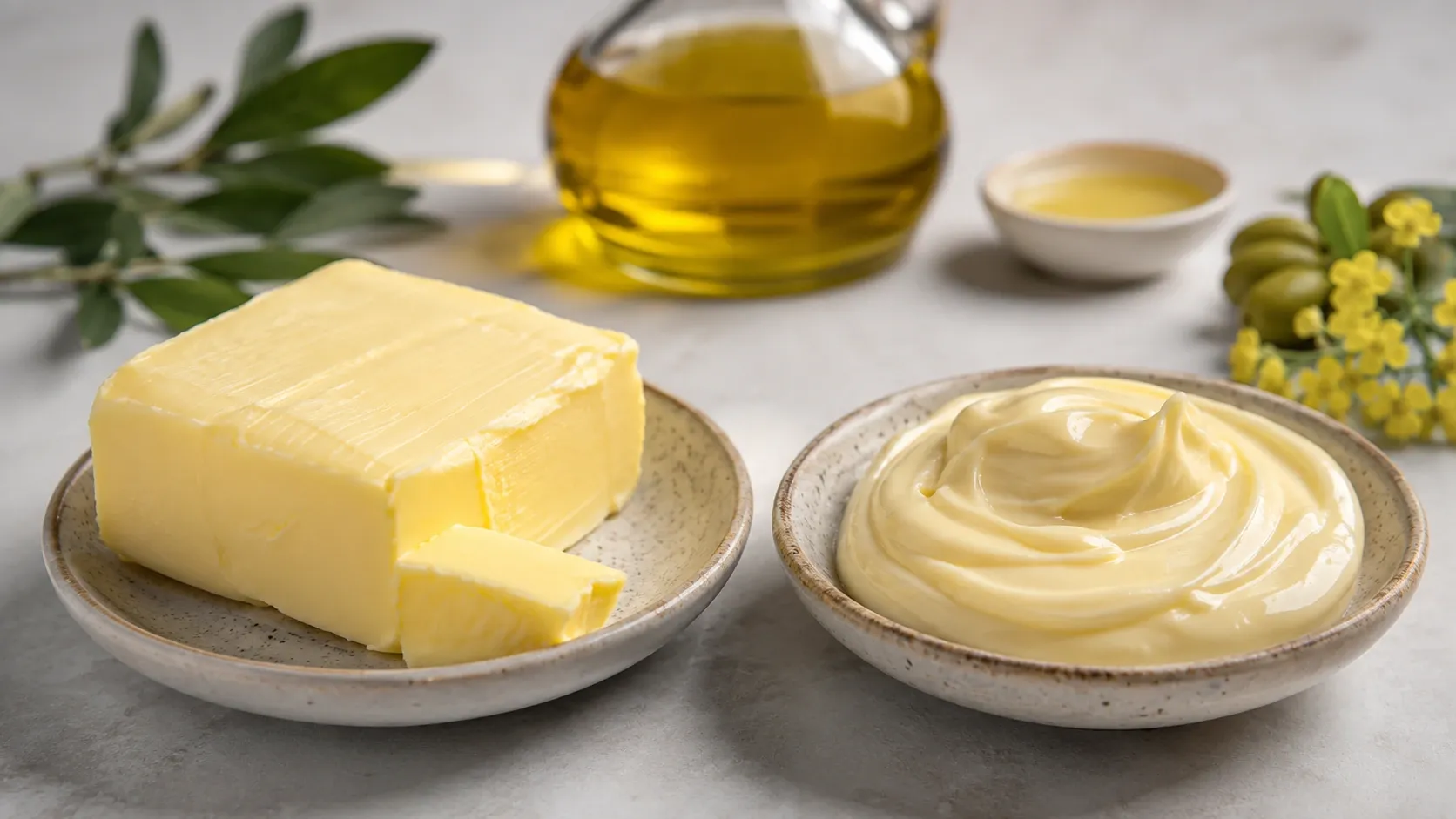
Butter and margarine have repeatedly traded places in popular nutrition advice.
Butter was once widely portrayed as the obvious problem because of its saturated-fat content. Then the risks of industrial trans fats became clearer, and older margarines made with partially hydrogenated oils developed a poor reputation.
Modern evidence requires a more nuanced answer.
When the comparison is between butter and a modern margarine that is high in unsaturated fats and relatively low in saturated fat, the margarine generally has the more favorable cardiovascular fat profile. (WHO)
That does not mean every margarine is automatically healthy.
For many cooking applications, liquid plant oils rich in unsaturated fats may be an even better option. (WHO)
The main difference is the type of fat
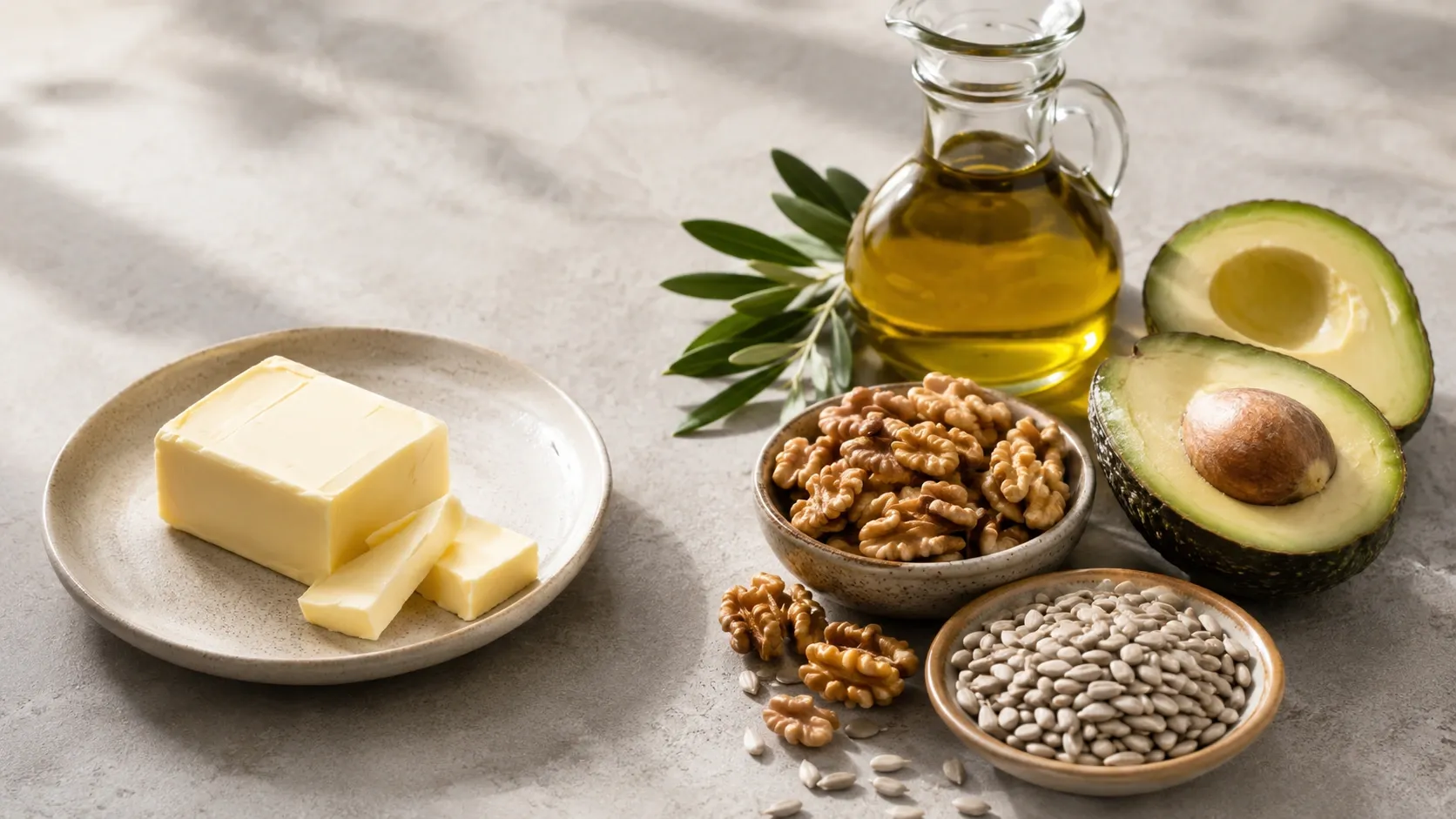
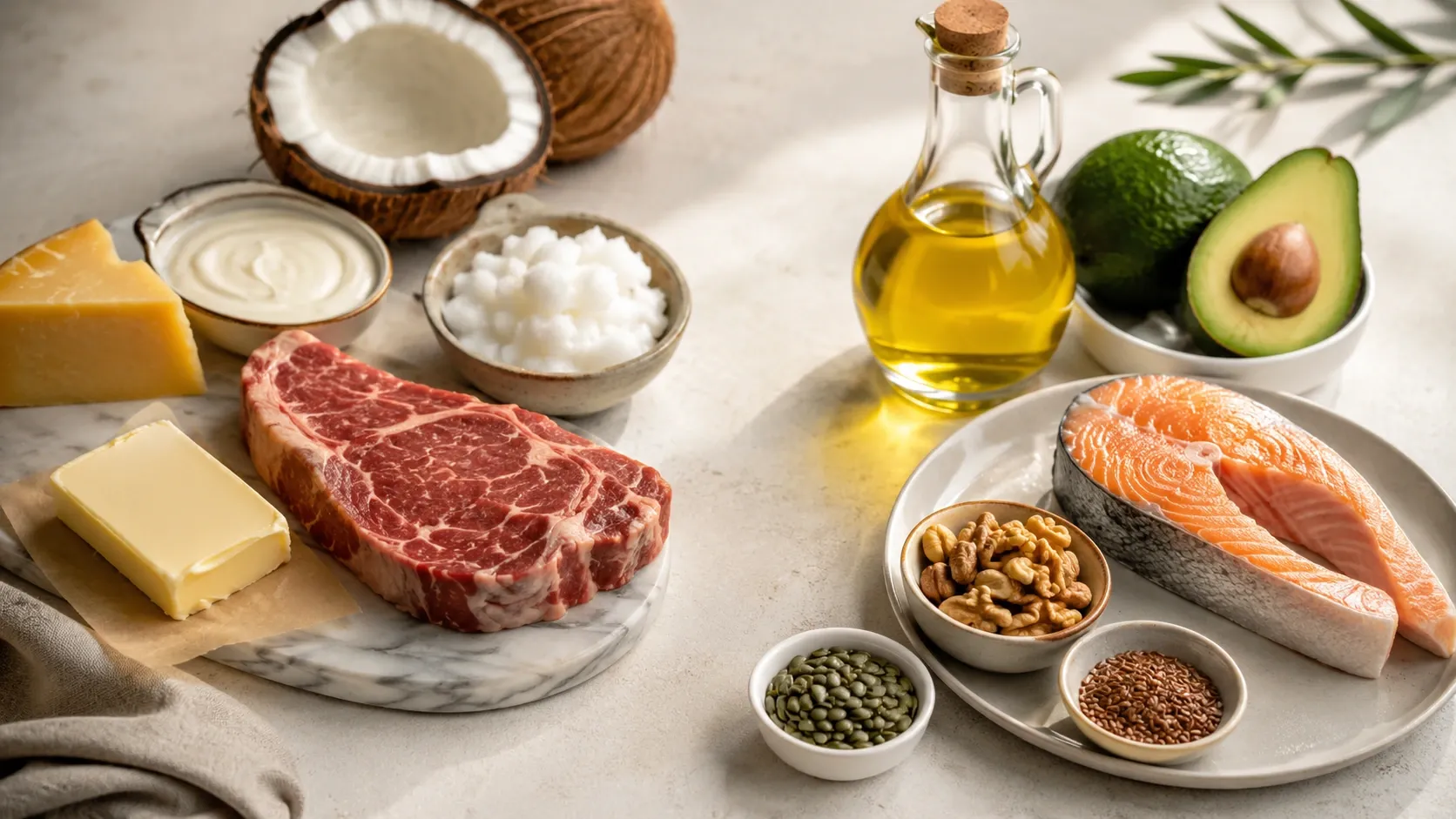
Butter is made from milk fat and contains a high proportion of saturated fatty acids.
Margarine is formulated from oils and fats, usually of plant origin, and its fatty-acid profile depends on the ingredients used.
A Brazilian salted-butter entry in the TBCA contains approximately 82.3 g of total fat and 49.2 g of saturated fatty acids per 100 g. A 10 g serving therefore provides about 4.9 g of saturated fat. (TBCA)
This concentrated saturated-fat content explains why major dietary guidelines generally prefer unsaturated fat sources.
Why does saturated fat matter?
Saturated fat does not need to be described as a poison to justify moderation.
The more important point is what happens when saturated fat is replaced with unsaturated fat.
WHO recommends that dietary fat consist primarily of unsaturated fatty acids and that saturated fat provide less than 10% of total energy. (WHO)
A 2020 Cochrane review including more than 56,000 adults found that reducing saturated fat for at least two years lowered combined cardiovascular events by about 17%, while producing little or no clear reduction in total or cardiovascular mortality. (PubMed)
This supports moderation without overstating the evidence.
What replaces butter matters
Replacing butter with olive, soybean, canola or another unsaturated plant oil is not nutritionally equivalent to replacing it with refined starch or sugar.
WHO recommends replacing saturated fats with polyunsaturated fats, plant-derived monounsaturated fats or carbohydrates from foods naturally rich in fiber. (WHO)
So the most useful question is often not simply:
“Is butter bad?”
It is:
“What am I replacing it with?”
Why did margarine develop such a bad reputation?
Historically, there was a good reason.
Partial hydrogenation was once widely used to turn liquid vegetable oils into firmer, more stable fats. The process could generate substantial amounts of industrial trans fatty acids.
Industrial trans fats adversely affect cardiovascular health and should be avoided. (WHO)
Because margarine was one major use of partially hydrogenated oils, it became strongly associated with trans fat.
Modern formulations and regulations, however, have changed that comparison.
Modern margarine is not necessarily the margarine of the past
Brazil provides a clear example.
Under rules consolidated by Anvisa’s RDC 632/2022, partially hydrogenated oils and foods containing them have been prohibited from being offered since January 1, 2023. (Serviços e Informações do Brasil)
Therefore, evidence about high-trans-fat margarines from previous decades should not automatically be applied to products sold legally in Brazil today.
Does that make every modern margarine healthy?

No.
Removing partially hydrogenated fat solves one important problem, but different formulations can still have very different saturated and unsaturated fat contents.
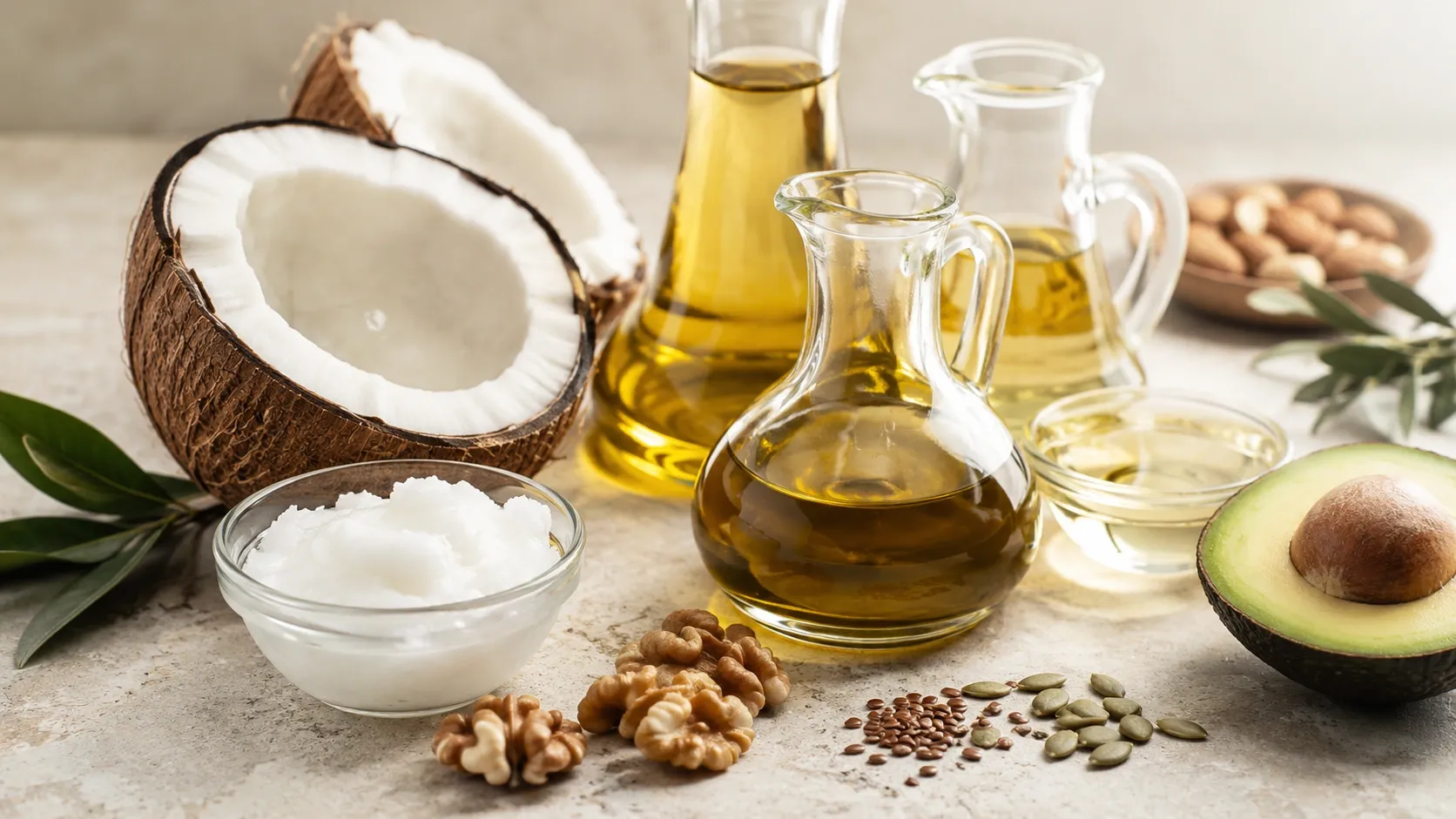
WHO identifies butter, palm oil and coconut oil as relatively high in saturated fat, while olive, soybean, canola, corn and sunflower oils contain larger proportions of unsaturated fatty acids. (WHO)
The principle is therefore more useful than the label:
A product that replaces more saturated fat with unsaturated fat generally has the more favorable fatty-acid profile.
Butter vs margarine at a glance
| Feature | Butter | Modern margarine |
|---|---|---|
| Main source | Milk fat | Usually plant oils and fats |
| Saturated fat | Generally high | Highly variable |
| Unsaturated fat | Lower proportion | Can be substantially higher |
| Industrial trans fat | Not the main issue; small amounts of natural ruminant trans fat occur | Partially hydrogenated oils are prohibited in Brazilian foods |
| Cholesterol | Present | Usually absent or very low when entirely plant-based |
| Expected LDL effect | Less favorable when replacing unsaturated fats | Potentially more favorable when rich in unsaturated and low in saturated fats |
| Does the label matter? | Yes | Especially |
These are general tendencies rather than specifications for every individual product. (TBCA)
What about the argument that butter is more “natural”?
Degree of processing is a relevant consideration in overall dietary quality, but it does not by itself determine how a specific fat affects blood lipids.
When the question concerns fatty-acid quality, WHO guidance clearly favors unsaturated over saturated and trans fats. (WHO)
You also do not have to eat margarine to reduce butter intake.
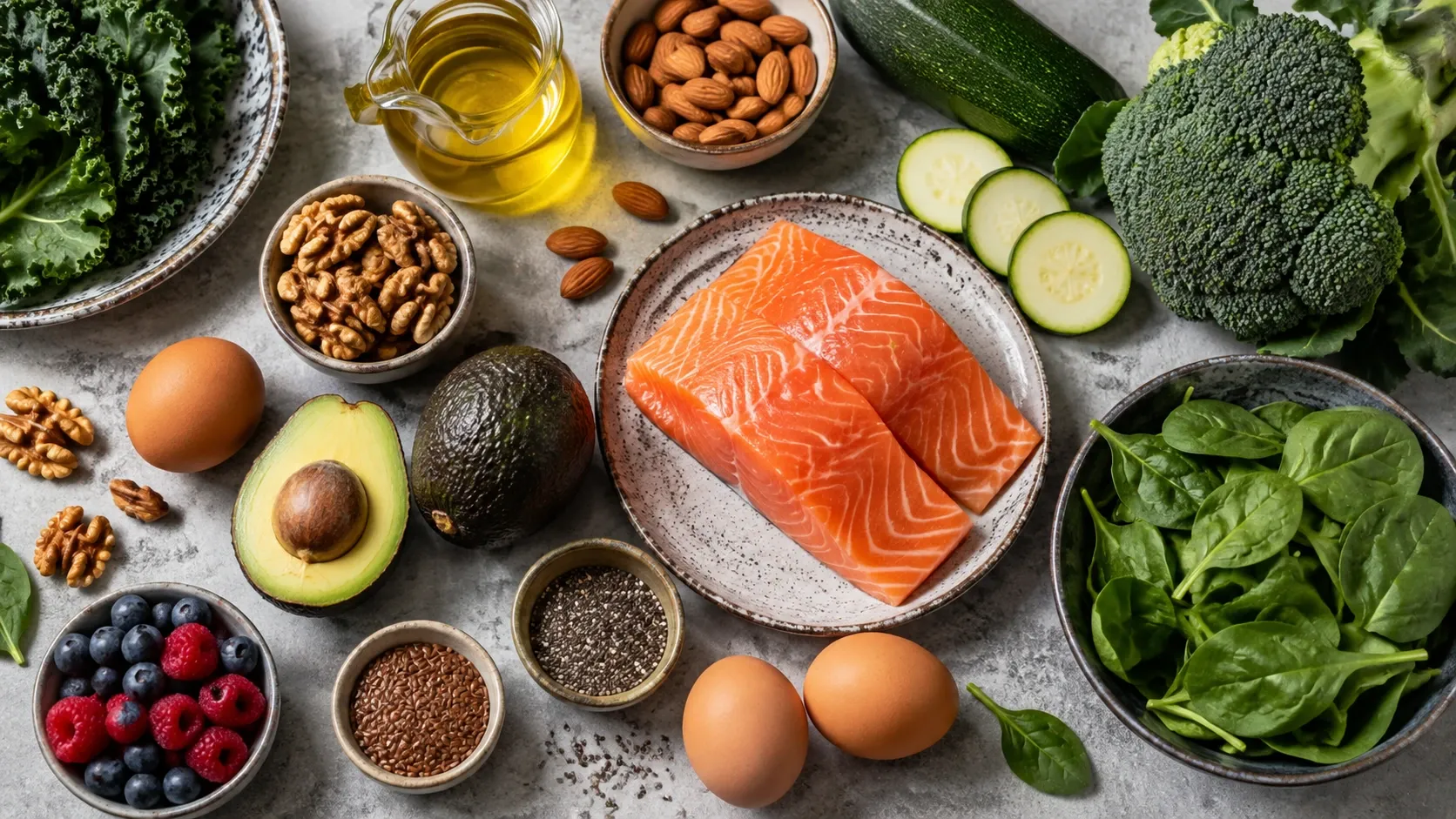
Olive oil, other plant oils, nuts, seeds, avocado and nut butters can provide unsaturated fats in different meals and recipes. (The Nutrition Source)
What does recent research say about butter?
A 2025 JAMA Internal Medicine cohort study examined more than 200,000 adults.
Higher butter intake was associated with 15% higher total mortality compared with the lowest intake category, while higher plant-oil intake was associated with lower mortality. Statistically replacing 10 g of butter per day with 10 g of plant oils was associated with an estimated 17% lower risk of total mortality. (PubMed)
These findings do not prove that butter caused premature deaths.
The study was observational and therefore remains vulnerable to residual confounding and other limitations.
Its findings are nevertheless consistent with broader evidence favoring unsaturated plant fats over concentrated sources of saturated fat. (WHO)
What about randomized trials?
A small randomized crossover trial published in 2025 compared periods of extra-virgin olive oil and butter consumption.
LDL cholesterol increased during the butter period but not during the olive-oil period, with an average LDL increase of about 6.5 mg/dL during the butter intervention. (PubMed)
Because this was a pilot trial, it should not be treated as definitive on its own.
Its importance lies mainly in its consistency with the larger body of research on replacing saturated fats with unsaturated fats.
How should you choose margarine?
Rather than choosing a specific brand, compare:
- saturated fat per serving and per 100 g;
- whether unsaturated plant oils are the main fat sources;
- the ingredient list;
- sodium when products differ substantially;
- the amount you realistically use.
The goal is not to find a magically “healthy” spread. It is to choose a fatty-acid profile that relies more on unsaturated and less on saturated fat. (WHO)
What is best for cooking?
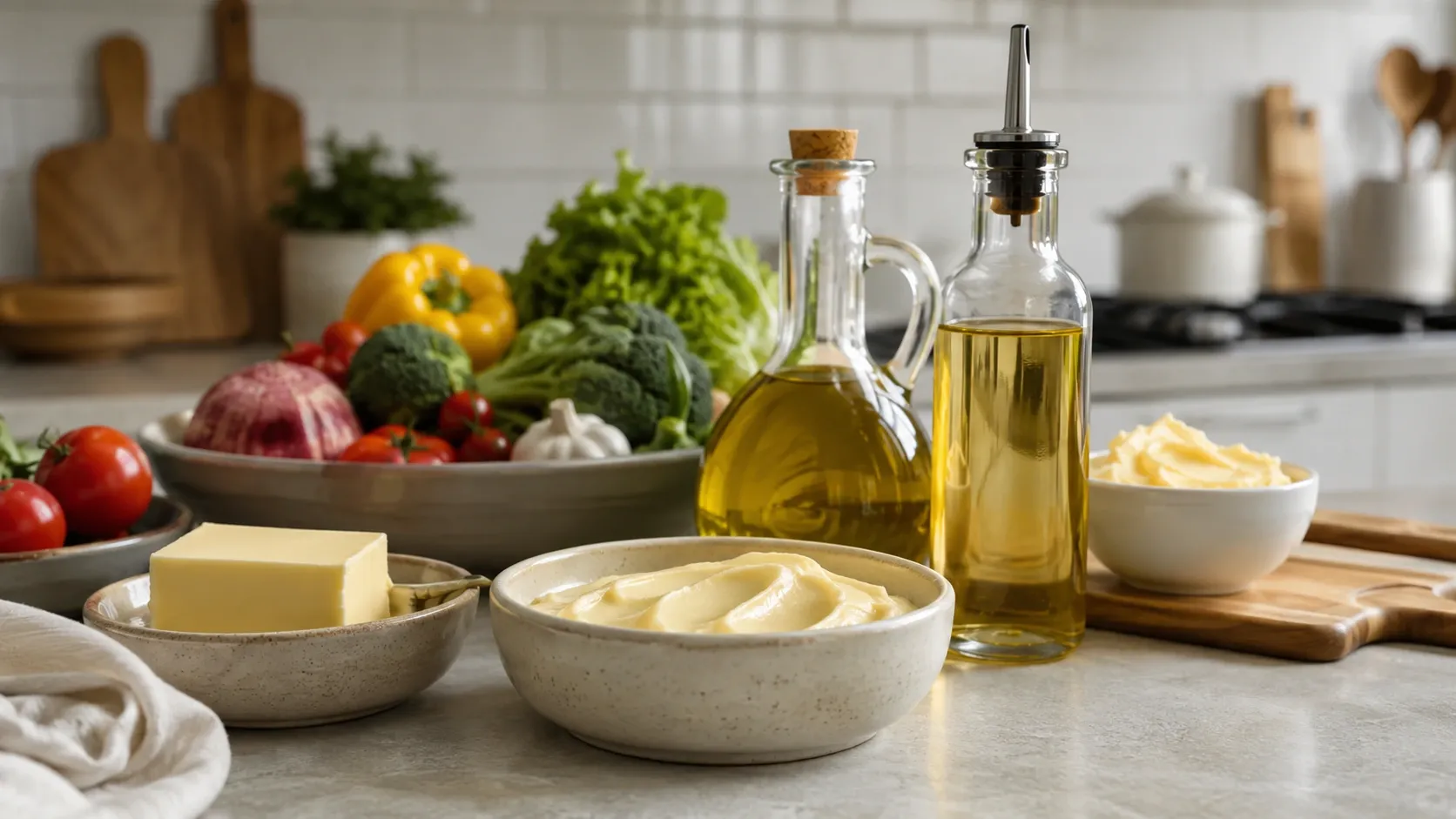
In many recipes, liquid plant oils are a useful third option.
WHO recommends replacing saturated-fat sources such as butter with oils high in unsaturated fatty acids, including soybean, canola, corn, sunflower and similar plant oils. (WHO)
Olive oil is also predominantly monounsaturated. (The Nutrition Source)
Butter can still be used in smaller amounts when its flavor or culinary properties are important.
Can a little butter fit into a healthy diet?
Yes.
WHO’s guidance is to keep saturated fat below 10% of total daily energy rather than requiring its complete elimination. (WHO)
The key is that the limit applies to saturated fat from the entire diet.
Cheese, fatty meat, cream, coconut oil, palm oil and other foods can all contribute alongside butter. (WHO)
So which is better: butter or margarine?
If a direct answer is required:
A modern margarine that is predominantly made with unsaturated fats and is relatively low in saturated fat is generally a more favorable cardiovascular choice than butter. (WHO)
But the answer is not “all margarine is healthy” or “butter is forbidden.”
Formulation matters, quantity matters, and in many cooking situations liquid plant oils provide another useful option.
Conclusion
The butter-versus-margarine debate has changed as both science and food manufacturing have evolved.
Butter remains a concentrated source of saturated fat. Older margarines could contain substantial industrial trans fat, but partially hydrogenated oils have been prohibited in Brazilian foods since January 2023. (TBCA)
The most useful question today is therefore not which product looks more natural.
It is which type of fat is replacing which.
The overall evidence favors replacing saturated fat with mono- and polyunsaturated fats. A well-formulated modern margarine can therefore have an advantage over butter, while olive oil and other unsaturated plant oils remain valuable alternatives whenever they fit the recipe. (WHO)