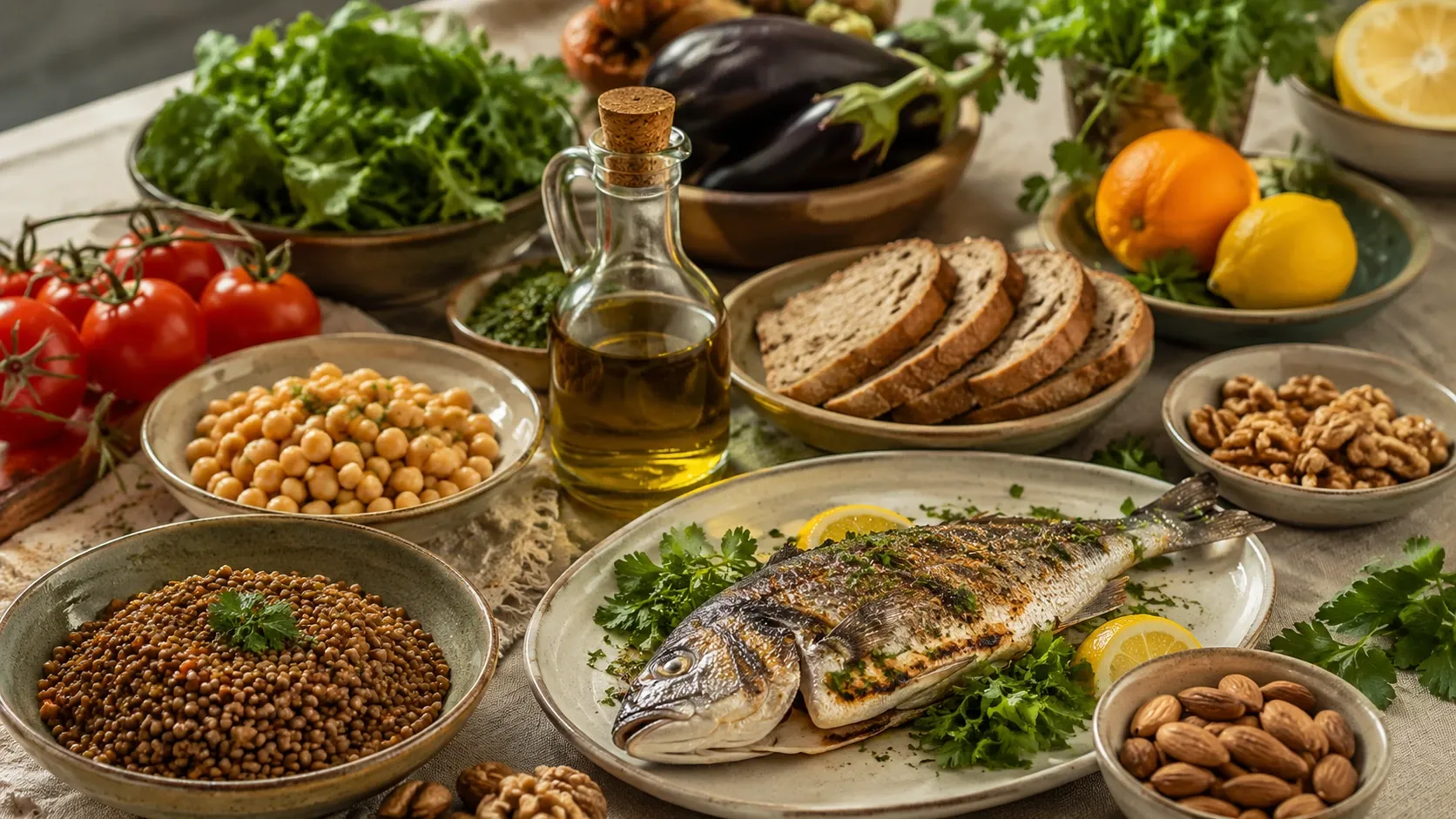
Nordic Diet vs. Mediterranean Diet: Which Is Healthier?
The Nordic diet emphasizes vegetables, whole grains, berries, fish and unsaturated fats. See how its health evidence compares with the Mediterranean diet.
The Mediterranean diet has become one of the best-known healthy eating patterns in the world. A different regional model, however, has been attracting increasing scientific attention: the Nordic diet, based on traditional and locally available foods from countries such as Denmark, Finland, Iceland, Norway and Sweden.
The short answer is that a healthy Nordic diet may offer many of the same cardiometabolic advantages, but current evidence does not prove that the two diets are equivalent across every health outcome. Evidence for the Nordic diet is expanding, while the Mediterranean diet still has a more mature body of long-term clinical research. (PubMed)
What is the Nordic diet?

The modern Nordic diet should not be confused with popular images of a meat-heavy “Viking diet.”
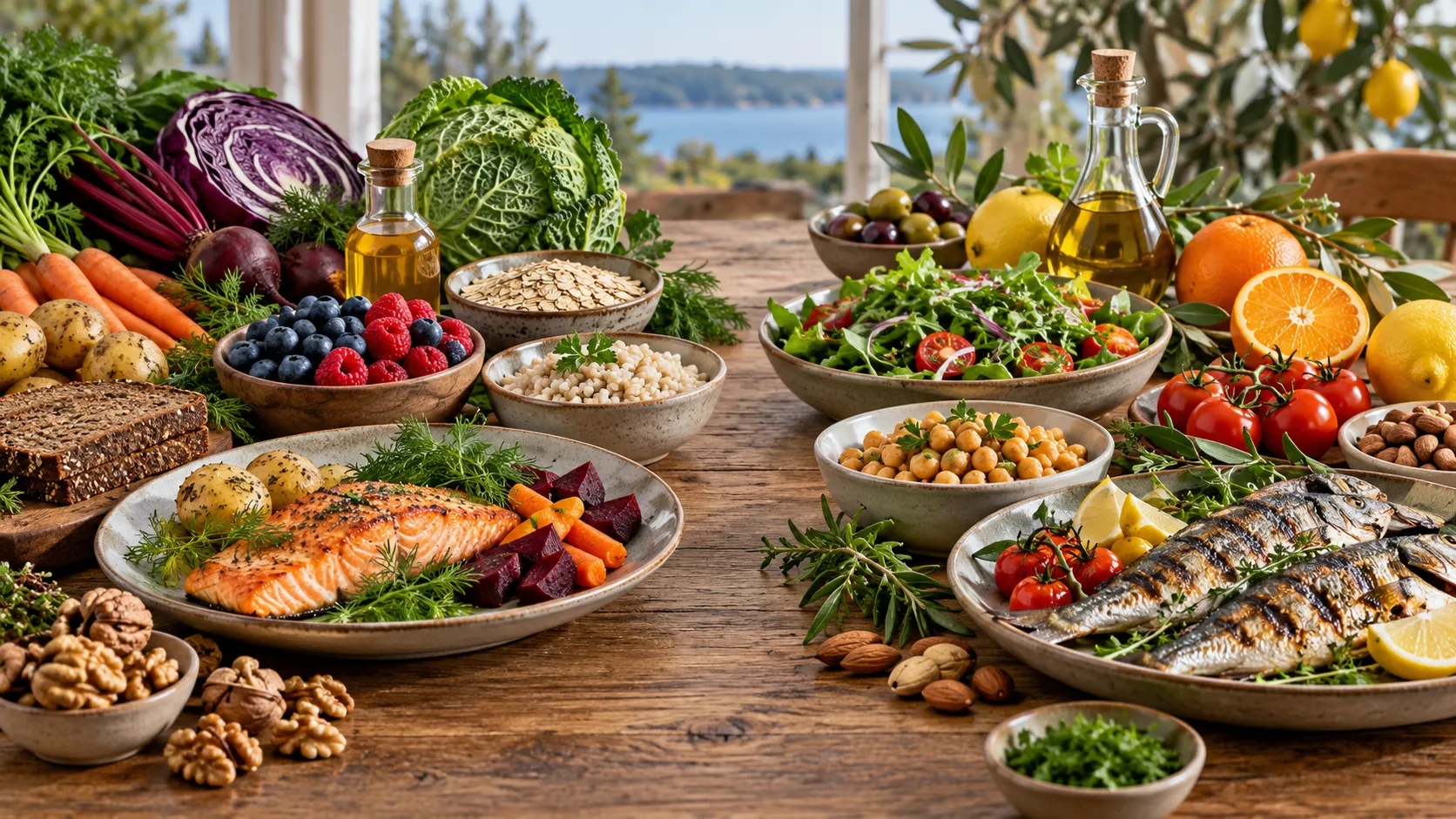
The Nordic Nutrition Recommendations 2023 support a predominantly plant-based pattern rich in vegetables, fruit, berries, pulses, potatoes and whole grains, along with ample fish and nuts. Low-fat dairy is consumed in moderation, while red meat and poultry are limited and processed meat, alcohol and foods high in added fat, salt or sugar are minimized. (Norden)
Foods commonly associated with the pattern include oats, rye, barley, cabbage, root vegetables, apples, pears, berries, legumes, salmon and other fish, nuts, seeds, potatoes and rapeseed or canola oil.
Sustainability and the use of local, seasonal foods are also central to the modern Nordic framework. (Norden)
The Nordic and Mediterranean diets have a lot in common

Despite their different culinary traditions, their nutritional foundations are remarkably similar.
| Feature | Nordic diet | Mediterranean diet |
|---|---|---|
| Plant-food emphasis | High | High |
| Vegetables and fruit | Abundant | Abundant |
| Whole grains | Oats, rye and barley prominent | Various whole grains |
| Legumes | Encouraged | Encouraged |
| Fish | Regular | Regular |
| Nuts | Included | Included |
| Traditional primary oil | Rapeseed/canola | Olive oil |
| Red and processed meat | Limited | Limited |
| Highly processed foods | Discouraged | Discouraged |
| Regional origin | Northern Europe | Mediterranean region |
A review comparing the two concluded that they share more similarities than differences. Their most recognizable nutritional distinction is the main culinary fat: olive oil in the Mediterranean diet and rapeseed/canola oil in the Nordic model. (Frontiers)
What does the cardiovascular evidence show?
Research on Nordic dietary patterns is increasingly encouraging.
A 2022 systematic review and meta-analysis included 15 prospective cohort studies with more than one million participants as well as six randomized controlled trials. Greater adherence was associated with a modestly lower incidence of cardiovascular disease. The randomized trials also suggested improvements in LDL cholesterol, non-HDL cholesterol, apolipoprotein B, body weight, BMI, insulin and systolic blood pressure. (PubMed)
Importantly, the authors rated the certainty of evidence as low for some outcomes, including total cardiovascular disease incidence and LDL cholesterol, largely because of imprecision and inconsistency.
A larger meta-analysis published in 2025 included 32 prospective studies and 15 randomized trials. In the observational data, greater Nordic diet adherence was associated with approximately 8% lower cardiovascular disease incidence, 11% lower coronary heart disease incidence and 12% lower stroke incidence. Randomized trials also showed improvements in blood pressure and several lipid measures. (PubMed)
What about type 2 diabetes?
The evidence is also encouraging, but it requires similar caution.
The 2025 meta-analysis found that greater adherence to Nordic dietary patterns was associated with roughly 12% lower incidence of type 2 diabetes in prospective studies. Randomized trials also showed favorable changes in fasting glucose and insulin. (PubMed)
An earlier meta-analysis found improvements in insulin and insulin resistance but did not find consistent improvements across all markers of glucose control. (PubMed)
The Nordic diet should therefore be viewed as a healthy dietary pattern that may contribute to better metabolic health, rather than a stand-alone treatment for diabetes.
Can it support weight management?
Possibly.
In a 26-week randomized trial involving 181 adults with central obesity, participants who completed the intervention and were assigned to a New Nordic Diet lost an average of 4.7 kg compared with 1.5 kg among participants assigned to an average Danish diet. Blood pressure also fell more in the Nordic group. (PubMed)
One trial does not establish a universal weight-loss effect. Energy balance, portion sizes, physical activity, sleep, eating behavior and long-term adherence all remain important.
So, is the Nordic diet as healthy as the Mediterranean diet?
They appear comparable in several cardiometabolic areas
Available research supports favorable effects or associations involving:
- blood pressure;
- LDL and other lipid markers;
- insulin and glucose metabolism;
- body weight in some interventions;
- cardiovascular disease risk;
- type 2 diabetes risk. (PubMed)
WHO Europe has also identified both Mediterranean and Nordic approaches as region-specific healthy dietary patterns relevant to noncommunicable disease prevention. (WHO)
The Mediterranean diet has the more mature long-term evidence base
The difference becomes important when looking at harder clinical endpoints such as heart attacks, strokes and cardiovascular deaths over several years.
A 2024 meta-analysis of Mediterranean diet trials included four randomized studies with 10,054 participants followed for approximately two to seven years. The pooled analysis found reductions in major cardiovascular events and cardiovascular mortality, although heterogeneity and other limitations mean additional trials are still valuable. (PubMed)
The Nordic diet has fewer long-term randomized studies measuring those outcomes directly.
A more accurate conclusion is therefore:
The Nordic diet is a well-supported healthy eating pattern and a reasonable alternative to the Mediterranean diet, but the Mediterranean pattern still has stronger and more mature evidence for long-term clinical cardiovascular outcomes.
Does using canola oil make the Nordic diet less healthy?
There is no sound basis for reaching that conclusion simply because olive oil is associated with the Mediterranean diet.
Olive oil is the traditional main fat in Mediterranean eating, while rapeseed or canola oil fills that role in the Nordic model. Both dietary patterns emphasize unsaturated plant fats as part of an overall healthy eating pattern. (Frontiers)
Someone who already enjoys olive oil does not need to replace it solely to conform to the Nordic label.
Can the Nordic approach be adapted outside Northern Europe?

Yes, although an adaptation should not be confused with the exact dietary protocols tested in Scandinavian research.
The Nordic concept itself emphasizes local and seasonal foods. Importing expensive Scandinavian ingredients is therefore unnecessary for adopting its broader principles.
A Nordic-inspired pattern can focus on:
- whole grains such as oats;
- beans, lentils and other pulses;
- a wide variety of vegetables;
- fruit consumed regularly;
- fish according to availability and preference;
- nuts and seeds;
- mostly minimally processed foods;
- fewer processed meats, sweets, sugary drinks and highly processed products.
In practice, people do not need to choose exclusively between a “Nordic” and a “Mediterranean” camp. The shared principles matter more than the label.
What may matter most about both diets
The strongest overlap is also their greatest practical strength: both emphasize plant foods, whole grains, legumes, fish, nuts and unsaturated fats while limiting processed meat and highly processed foods. (Norden)
This makes another question more useful than simply asking which diet wins: Which healthy dietary pattern can you realistically maintain over the long term?
Food availability, cultural preferences, budget, individual nutritional needs and adherence all matter. A theoretically ideal pattern offers little practical advantage if it cannot be sustained.
Conclusion
The Nordic diet is a credible and potentially very healthy alternative to the Mediterranean diet. Research supports benefits involving lipids, blood pressure, metabolic health and several chronic-disease outcomes, and the evidence base has expanded considerably. (PubMed)
However, saying that it has been proven to be “equally healthy” across all outcomes would go beyond the available evidence. The Mediterranean diet continues to have an advantage in long-term randomized research assessing major cardiovascular events. (PubMed)
The practical lesson from both patterns is remarkably similar: build most meals around minimally processed plant foods, whole grains, legumes, fruit, vegetables, fish, nuts and unsaturated fats while keeping processed meats and highly processed foods relatively limited.