Protein: how much do we really need?
Find out how much protein the body actually requires, which sources are worth building meals around, and where the benefit of eating more stops.
Protein is probably the most discussed and least understood nutrient on the plate. Some people eat far less than they need; others spend money on supplements chasing targets that were never necessary. Here is what the evidence actually supports.
What protein is
Proteins are chains of amino acids and form the structural basis of the body: muscle, skin, hair, enzymes, hormones and antibodies. Of the twenty amino acids we use, nine are essential — the body cannot produce them, so they have to come from food.
That structural role is why protein is not a topic reserved for people who lift. It underpins tissue repair, immune response and hormone production at any age.
How much we really need
The minimum recommendation for healthy adults is 0.8 g per kilogram of body weight per day. That number is often misread: it is the amount that prevents deficiency, not the amount that is optimal for body composition, healthy aging or performance.
| Profile | Recommended protein |
|---|---|
| Sedentary adult | 0.8 g/kg of body weight |
| Physically active | 1.2 – 1.6 g/kg |
| Focused on muscle gain | 1.6 – 2.2 g/kg |
| Adults over 65 | 1.0 – 1.2 g/kg |
Good sources of protein
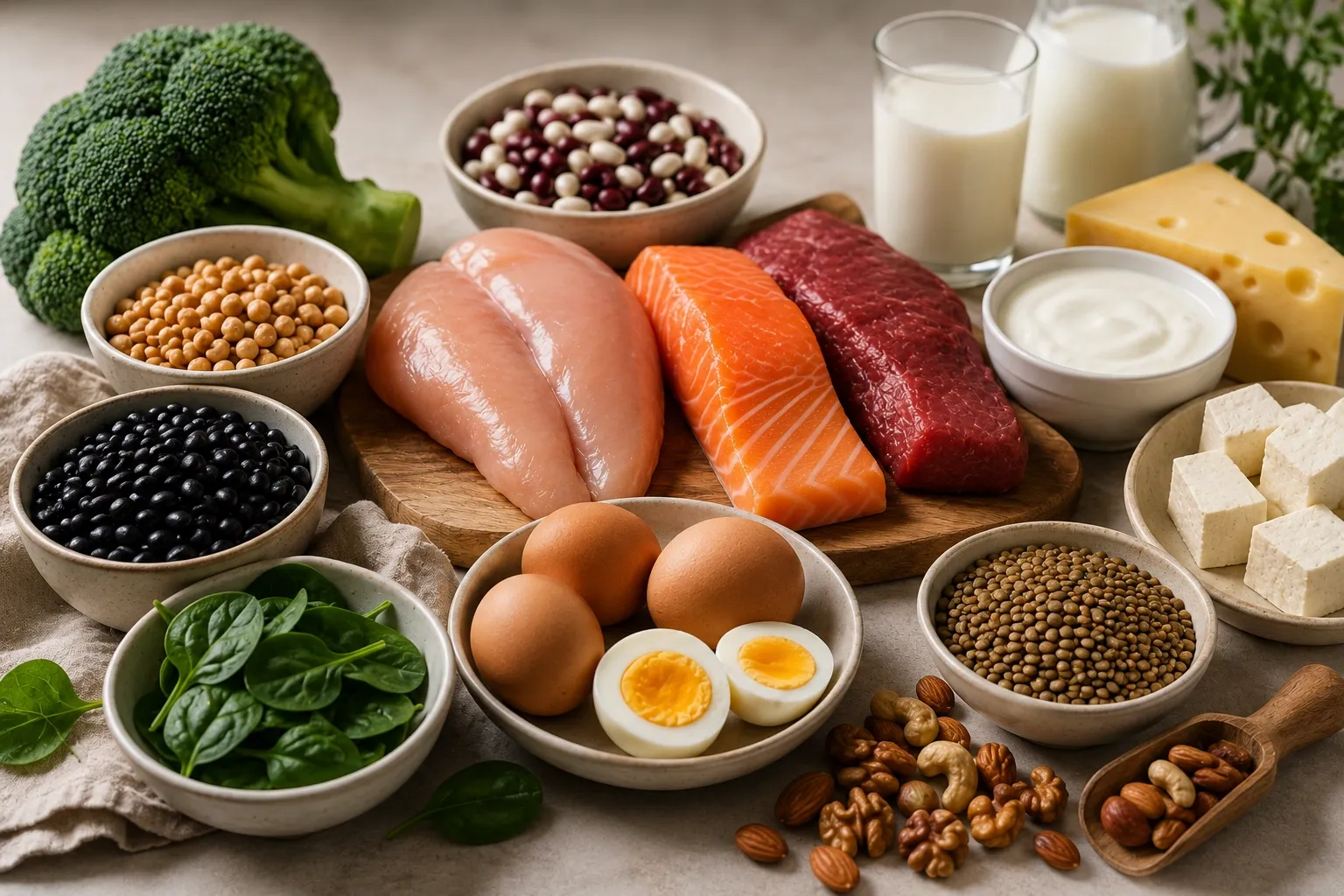
No single food solves the daily target. Variety covers not only the amount but also the amino acid profile and everything else that comes along with it.
- Animal sources: eggs, chicken, fish and lean meats
- Legumes: beans, lentils, chickpeas and peas
- Dairy: plain yogurt, cheese and milk
- Plant sources: tofu, tempeh, quinoa, nuts and seeds
Animal foods tend to concentrate more protein per serving and carry all essential amino acids in useful proportions. That does not make plant sources inferior: they simply require more attention to combination and volume across the day.
Protein and muscle gain
Protein alone does not build muscle. The stimulus comes from resistance training; protein supplies the material for repair. Without training, the surplus is used as energy or stored — it does not become muscle.
Two points hold up consistently in the literature:
- Distribution matters. 25 to 40 g per meal, across three to four meals, stimulates protein synthesis more effectively than loading everything at dinner.
- The daily total matters more. Hitting the day’s amount outweighs the exact timing of any single serving.
Common myths
The most persistent myth is that protein harms the kidneys. In people with preserved renal function, the available evidence does not support that link. Those living with kidney disease do need individual guidance — in that context, protein intake is part of the treatment.
The second frequent mistake is treating supplements as mandatory. Whey, casein and plant protein powders are convenient foods, useful when the routine gets tight. None of them is irreplaceable.
Conclusion
For most adults, 1.2 to 1.6 g of protein per kilogram per day, spread across meals and coming from varied sources, is enough. People training for hypertrophy benefit from the upper end of that range. Past it, the return disappears — while the cost, financial and nutritional, does not.