Vitamin C-Rich Fruits: 8 Options and How Much They Provide
Discover vitamin C-rich fruits, compare acerola, cashew apple, guava, papaya, kiwi, strawberries, oranges and pineapple, and learn how much vitamin C adults need.
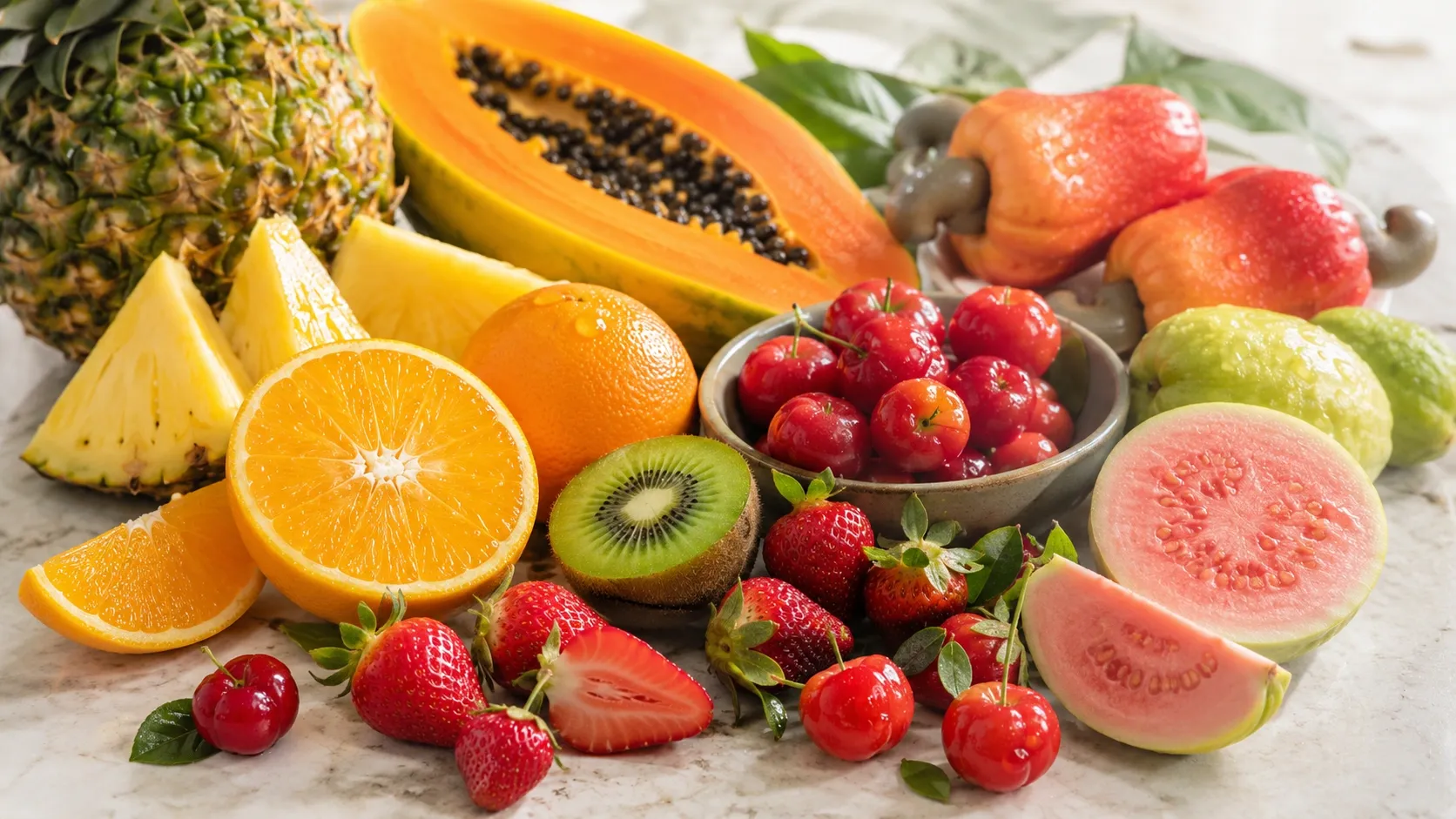
When people think of vitamin C-rich fruits, oranges are often the first food that comes to mind. Oranges certainly provide vitamin C, but they are not the only option — and they are not necessarily the richest source.
Acerola, cashew apple, guava, papaya, kiwi and strawberries can all provide substantial amounts. Some contain considerably more vitamin C per 100 grams than oranges. (TBCA)
Rather than focusing on a single “best” fruit, dietary variety is usually the more practical approach.
What does vitamin C do?
Vitamin C, also known as ascorbic acid, is a water-soluble nutrient involved in several important physiological processes.
According to the NIH, it:
- is required for collagen production;
- acts as an antioxidant;
- supports normal immune function;
- improves absorption of iron from plant foods;
- contributes to processes involved in wound healing. (ODS)
These roles make adequate intake important, but more vitamin C does not automatically mean proportionally greater health benefits.
How much vitamin C do adults need?
The reference values presented by the NIH include:
| Group | Vitamin C per day |
|---|---|
| Adult men | 90 mg |
| Adult women | 75 mg |
| Pregnant adults | 85 mg |
| Breastfeeding adults | 120 mg |
People who smoke require an additional 35 mg per day under these reference values. (ODS)
Individual needs can differ, so these figures should be viewed as population-level reference intakes rather than personalized prescriptions.
Which fruits are high in vitamin C?
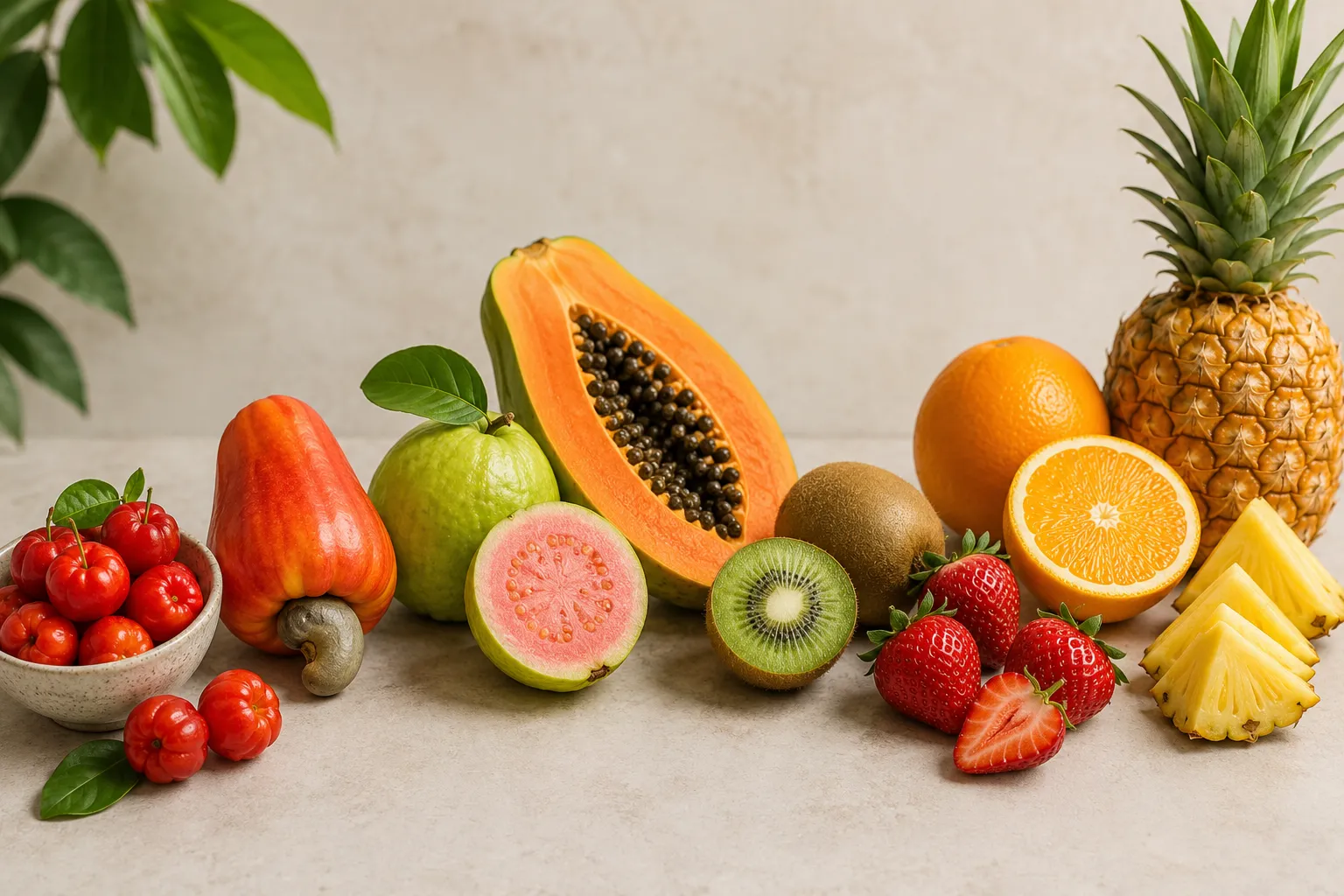
The following values come from Brazil’s TBCA food composition database and refer to approximately 100 g of the edible portion of specific fruit entries.
| Fruit | Approximate vitamin C per 100 g |
|---|---|
| Ripe acerola pulp | 1,505 mg |
| Cashew apple | 257 mg |
| Guava | 89.9 mg |
| Formosa papaya | 78.5 mg |
| Kiwi | 70.8 mg |
| Strawberries | 69.8 mg |
| Pera orange | 52.2 mg |
| Pineapple | 33.1 mg |
Food composition is naturally variable, so these figures should not be interpreted as fixed values for every cultivar or individual fruit. (TBCA)
1. Acerola
Acerola, sometimes called Barbados cherry, is one of the standout fruits for vitamin C.
One TBCA entry for ripe acerola pulp contains approximately 1,505 mg per 100 g. Other samples show different concentrations, illustrating why food composition figures should always be interpreted as estimates rather than universal constants. (TBCA)
Even a relatively small amount can therefore provide significant vitamin C.
2. Cashew apple
The cashew apple is the fleshy fruit attached to the cashew nut and is especially common in Brazil and other tropical regions.
TBCA data list approximately 257 mg of vitamin C per 100 g of raw cashew apple pulp. (TBCA)
This makes it one of the most concentrated options included in this comparison.
3. Guava
Guava is another useful source.
An average of different Brazilian samples in the TBCA provides approximately 89.9 mg per 100 g — almost exactly the NIH reference intake of 90 mg for an adult man and more than the 75 mg reference for an adult woman. (TBCA)
The same TBCA entry also contains approximately 5.78 g of dietary fiber per 100 g. (TBCA)
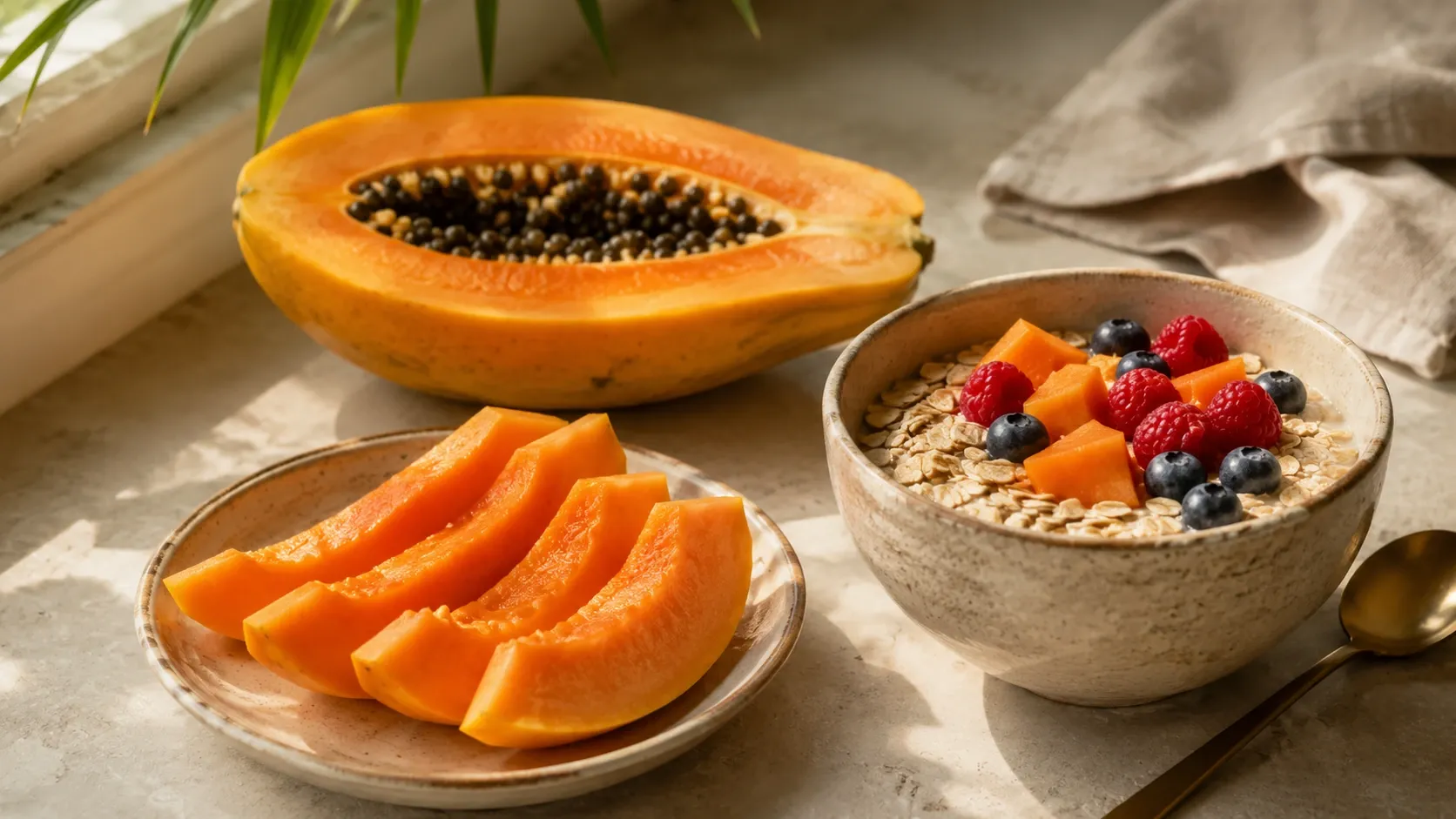
4. Papaya
Papaya demonstrates that a fruit does not need to taste particularly acidic to contain meaningful amounts of vitamin C.
Raw Formosa papaya in the TBCA provides approximately 78.5 mg per 100 g. A 170 g portion in the same entry provides about 133 mg. (TBCA)
5. Kiwi
Raw kiwi provides approximately 70.8 mg of vitamin C per 100 g in the Brazilian database. (TBCA)
It can be eaten on its own or combined with yogurt, oats and other fruits.
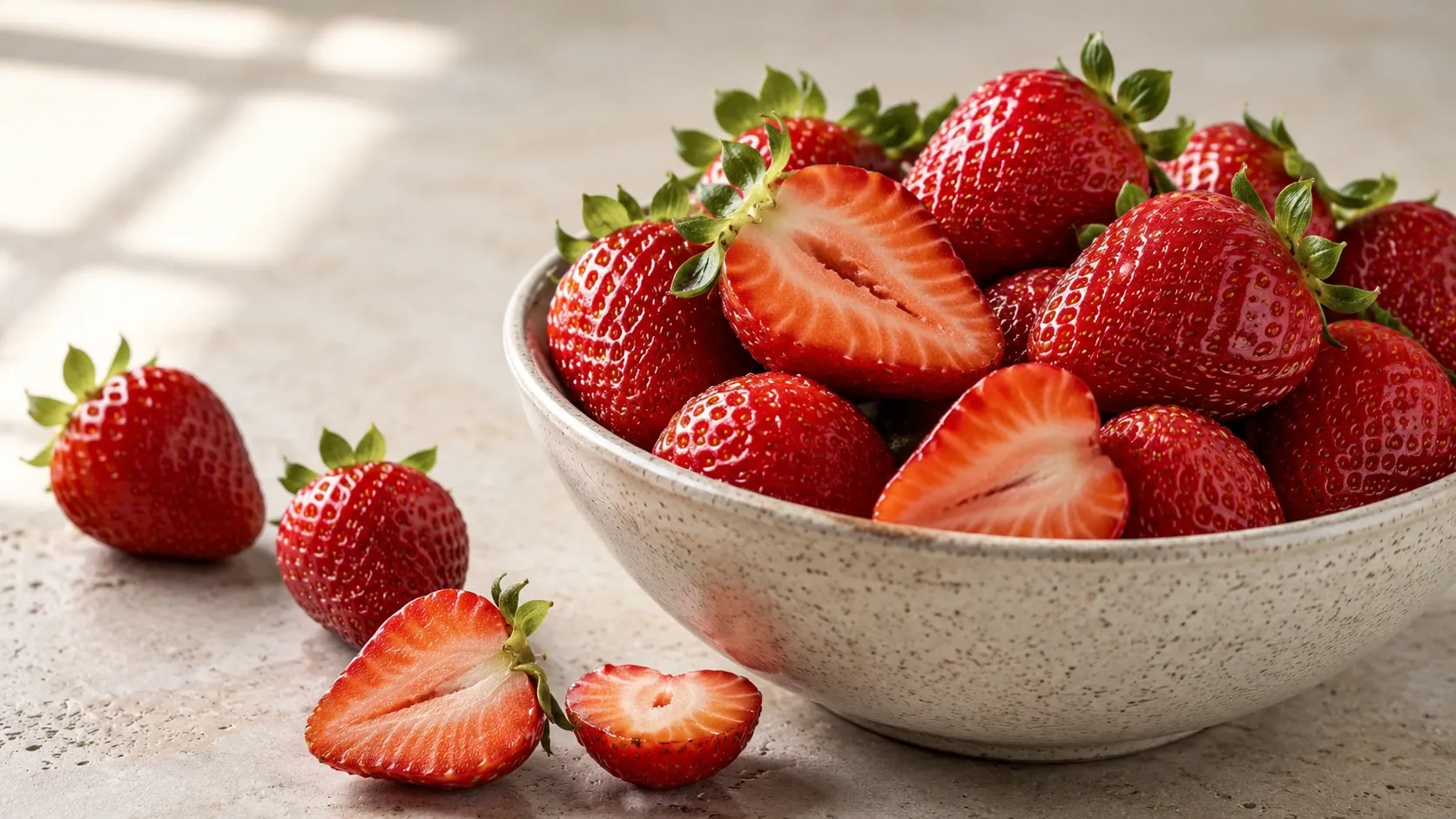
6. Strawberries
Strawberries are another non-citrus source of vitamin C.
An average of different Brazilian samples in the TBCA contains approximately 69.8 mg per 100 g. A 120 g serving provides roughly 83.8 mg according to the same entry. (TBCA)
7. Oranges
Oranges deserve their reputation as a source of vitamin C, even though they do not top this list.
Brazilian Pera orange contains approximately 52.2 mg per 100 g, while the 140 g medium portion listed by the TBCA provides around 73.1 mg. (TBCA)
That still makes oranges a convenient way to add vitamin C to the diet.
8. Pineapple
Pineapple provides a more moderate concentration but can still contribute meaningfully.
Raw pineapple contains approximately 33.1 mg per 100 g in the TBCA entry used here. (TBCA)
Combined with other fruits and vegetables eaten throughout the day, it can help support adequate intake.
Are oranges the best source of vitamin C?
Not if vitamin C concentration per 100 g is the only criterion.
In the Brazilian entries reviewed, acerola and cashew apple contain far more vitamin C than Pera orange. Guava, papaya, kiwi and strawberries also rank above it in this particular comparison. (TBCA)
In everyday life, however, availability, affordability, seasonality, enjoyment and overall dietary variety also matter.
Whole fruit or fruit juice?
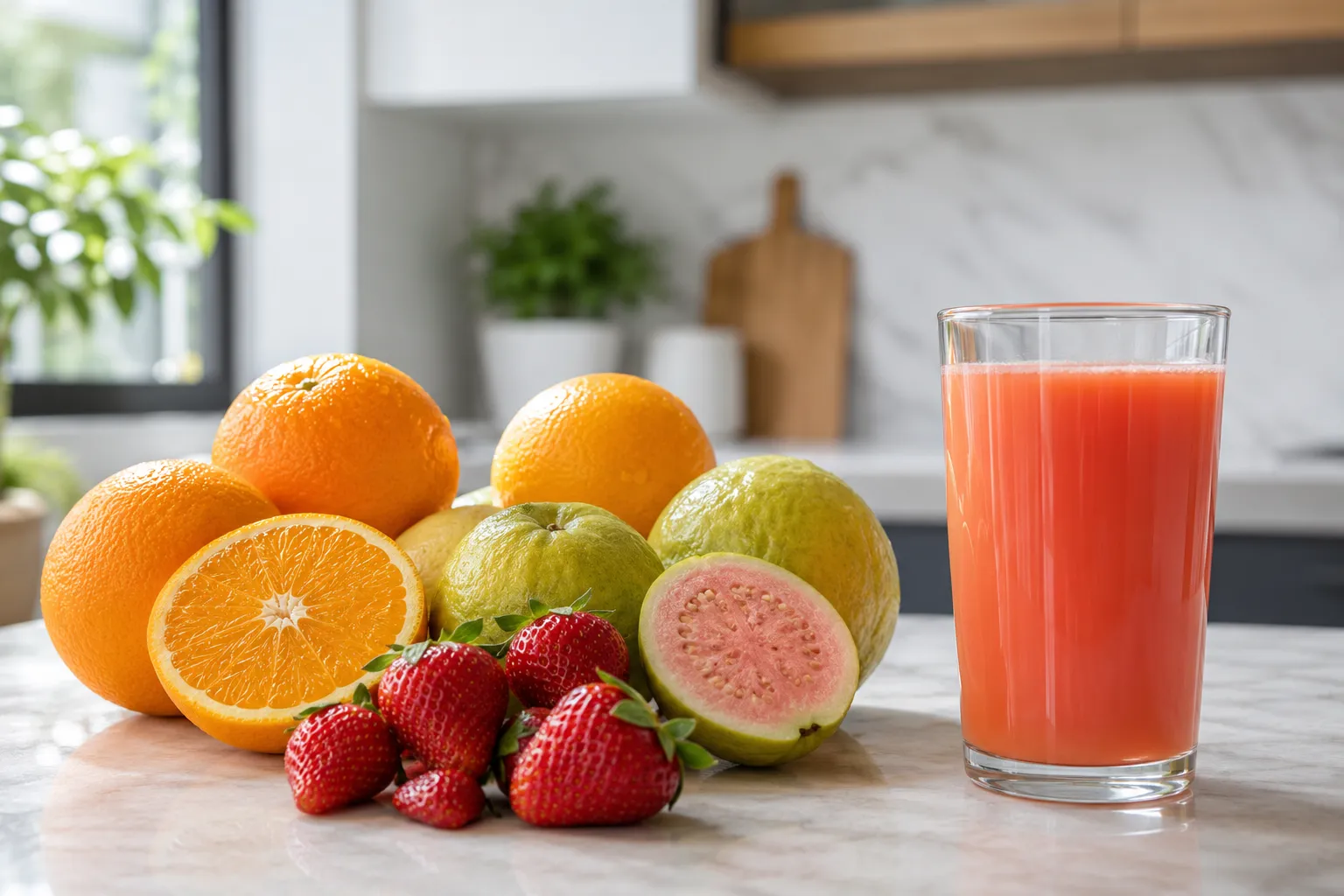
Whenever practical, whole fruit is a strong default choice.
Whole fruit provides fiber along with vitamins, minerals, water and other food components. Brazil’s Ministry of Health encourages the regular consumption of varied fresh fruits. (Serviços e Informações do Brasil)
The WHO also notes that most fruit juices — including those with no added sugar — contain significant amounts of free sugars and recommends limiting their consumption. (Organização Mundial da Saúde)
This does not mean fruit juice has to be completely avoided, but it does not need to routinely replace whole fruit.
Does storage affect vitamin C?
Yes.
The NIH notes that prolonged storage and cooking can reduce the amount of vitamin C in food. Many vitamin C-rich fruits have the advantage of being commonly eaten raw. (ODS)
Freshness and preparation methods can therefore influence actual intake.
Vitamin C and iron absorption
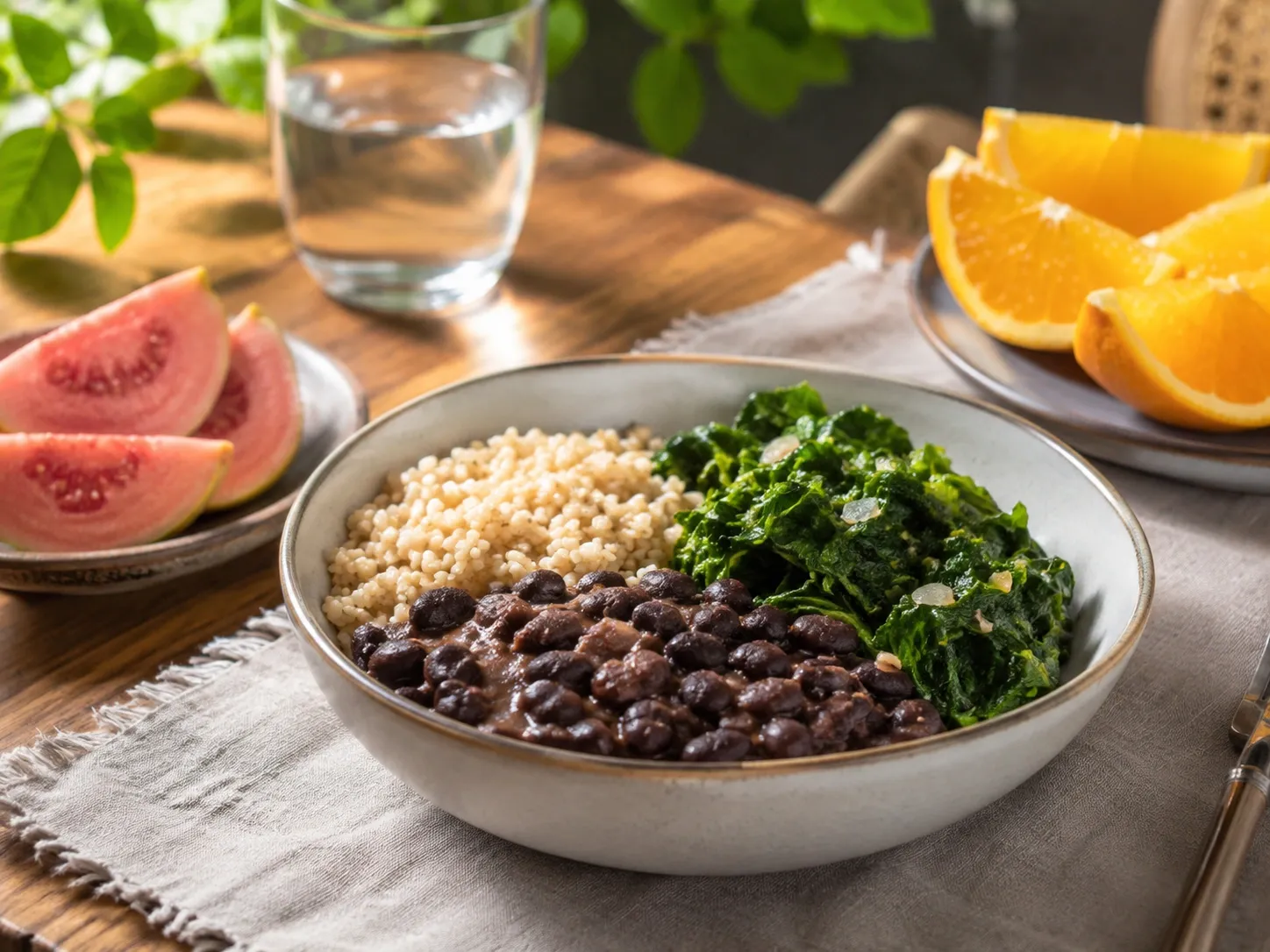
Vitamin C improves the absorption of non-heme iron, the form found in plant foods. (ODS)
Pairing beans, lentils or other plant-based sources of iron with guava, orange, acerola, cashew apple, papaya or another vitamin C-rich food can therefore be a useful meal-planning strategy.
Do you need a vitamin C supplement?
Not automatically.
A varied diet containing fruits and vegetables can provide meaningful amounts of vitamin C, and these foods are among the nutrient’s main dietary sources. (ODS)
High supplemental doses should not be taken simply under the assumption that more is always better. The NIH lists a tolerable upper intake level of 2,000 mg per day for adults from all sources. Excessive intakes can cause diarrhea, nausea and abdominal cramps. (ODS)
People with medical conditions, medication use or suspected deficiency should seek individualized professional guidance before using high-dose supplements.
Conclusion
There are plenty of vitamin C-rich fruits beyond oranges.
Acerola and cashew apple are exceptionally concentrated examples, while guava, papaya, kiwi, strawberries, oranges and pineapple can all contribute to daily intake.
Rather than relying on a single food, choose a variety of whole fruits, make use of seasonal produce and build vitamin C intake into an overall balanced eating pattern.