Bananas: Nutrients, Benefits, and Differences by Type
Bananas provide carbohydrates, fiber, potassium, and other nutrients. Compare common Brazilian varieties and learn how ripeness and type affect their nutritional profile.
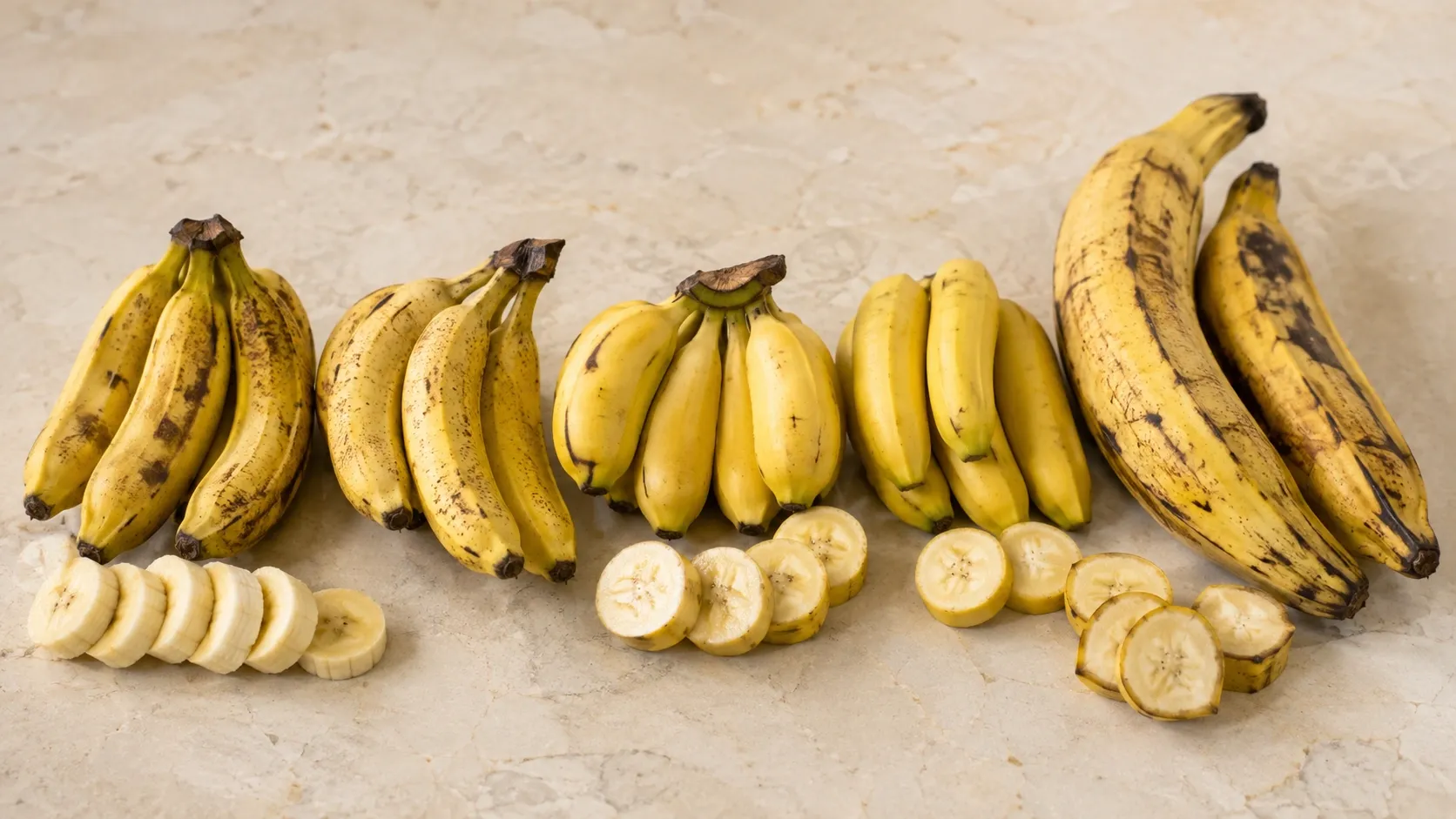
Prata, Nanica, Maçã, Ouro, and Terra bananas are familiar names in Brazil, but they are not nutritionally identical. Water content, carbohydrate, fiber, minerals, and vitamins vary among cultivars, while ripening further changes the composition of the fruit.
For international readers, these Brazilian market names should not always be translated literally. Nanica belongs to the Cavendish group, while Terra refers to a cooking banana or plantain-type fruit. Prata, Maçã, and Ouro are established Brazilian cultivar or market-group names. (Embrapa)
Despite their differences, bananas are whole fruits that can contribute carbohydrates, fiber, potassium, and other nutrients to a varied diet. This nutritional role is much better supported than claims that bananas alone can prevent or treat specific diseases. (WHO)
What nutrients do bananas provide?
Bananas consist mainly of water and carbohydrate. They also provide dietary fiber and several minerals and vitamins, while containing relatively little fat. Exact values vary by cultivar.
Brazilian TACO data make those differences easy to see when an equal amount of edible fruit is compared.
| Raw banana type | Energy (kcal/100 g) | Carbohydrate (g) | Fiber (g) | Potassium (mg) | Vitamin C (mg) |
|---|---|---|---|---|---|
| Terra / plantain type | 128 | 33.7 | 1.5 | 328 | 15.7 |
| Maçã | 87 | 22.3 | 2.6 | 264 | 10.5 |
| Nanica / Cavendish type | 92 | 23.8 | 1.9 | 376 | 5.9 |
| Ouro | 112 | 29.3 | 2.0 | 355 | 7.6 |
| Prata | 98 | 26.0 | 2.0 | 358 | 21.6 |
Source: Brazilian Food Composition Table — TACO, values per 100 g edible portion.
These values are best viewed as reference values rather than the exact composition of every banana. Cultivar, growing conditions, fruit size, and ripeness can all influence composition. (TACO)
What are the nutritional benefits of bananas?
They make it easier to include whole fruit
One of the clearest benefits of bananas is also one of the least sensational: they are an easy way to eat whole fruit.
WHO recommends obtaining carbohydrates primarily from foods such as whole grains, vegetables, fruits, and pulses. For people older than 10, current guidance calls for at least 400 g of fruits and vegetables and at least 25 g of naturally occurring dietary fiber per day. (WHO)
Bananas can contribute to those goals, but variety remains important because different fruits provide different combinations of nutrients.
They provide carbohydrates
The Brazilian varieties analyzed by TACO contain approximately 22.3–33.7 g of carbohydrate per 100 g, with Terra bananas providing the highest amount among the five compared.
That makes bananas a convenient carbohydrate-containing food. Having carbohydrate does not make a fruit unhealthy; WHO specifically identifies fruit as one of the preferred whole-food carbohydrate sources. (WHO)
They contribute potassium
Potassium is an essential electrolyte involved in normal cellular and muscular function and blood-pressure regulation. WHO recommends increasing dietary potassium and suggests an intake of at least 3,510 mg per day for adults. (WHO)
The five varieties in TACO contained between 264 and 376 mg per 100 g. Bananas can therefore contribute to daily potassium intake, but they are only one of many possible sources.
They provide dietary fiber
Fiber content among the five bananas ranged from about 1.5 to 2.6 g per 100 g, with Maçã having the highest value in this particular comparison.
WHO recommends at least 25 g of naturally occurring dietary fiber daily for people older than 10. Bananas can contribute, but reaching that target requires a broader pattern containing other fruits, vegetables, pulses, and whole grains. (WHO)
How do Brazilian banana varieties differ?
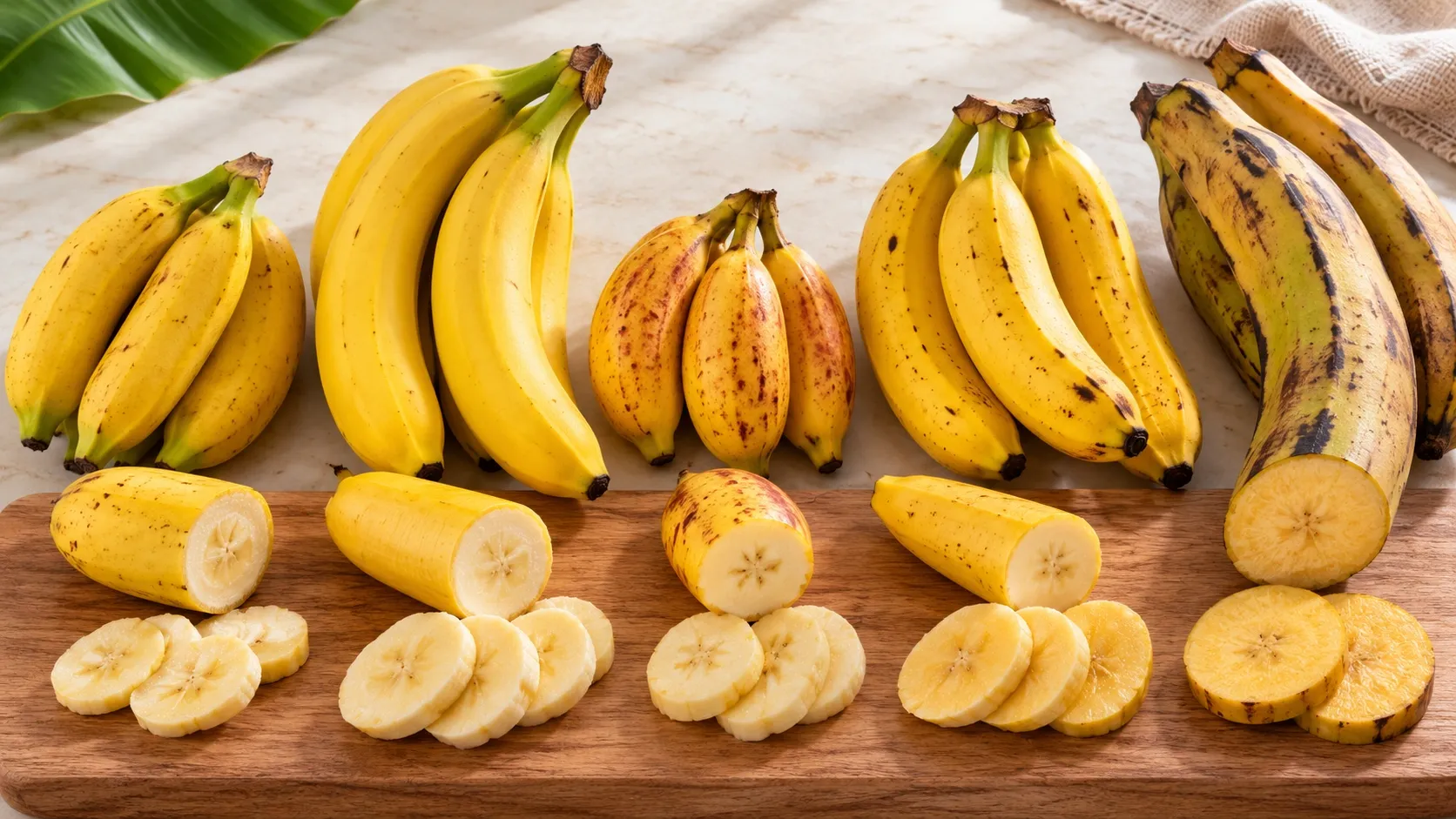
Prata
Embrapa describes Prata fruit as sweet to mildly acidic. TACO reports 98 kcal, 26 g carbohydrate, 2 g fiber, and 358 mg potassium per 100 g. (Embrapa)
Prata also had the highest vitamin C value among these five varieties, at 21.6 mg per 100 g.
Nanica
Nanica is a Cavendish-type banana and belongs to a group Embrapa describes as comparatively sweet. (Embrapa)
TACO reports 92 kcal and 23.8 g carbohydrate per 100 g. It also had the highest potassium level in this five-variety comparison, at 376 mg per 100 g.
Maçã
Brazilian Maçã-type bananas are valued for their sweet flavor, relatively low acidity, and soft pulp. (Embrapa)
In TACO, Maçã had the lowest energy value among the five varieties — 87 kcal per 100 g — and the highest fiber value, at 2.6 g.
That does not automatically make it the best banana for weight loss. Portion size and the overall dietary pattern remain more important than small calorie differences between cultivars.
Ouro
Ouro belongs to a banana group described by Embrapa as relatively sweet. TACO lists 112 kcal, 29.3 g carbohydrate, 2 g fiber, and 355 mg potassium per 100 g. (Embrapa)
Because Ouro bananas are often relatively small, comparing fruit by weight gives a more meaningful nutritional comparison than simply comparing “one banana” of each variety.
Terra, or plantain-type banana
Terra bananas contain less water and more starch than many dessert bananas and are particularly suitable for cooking. (Embrapa)
TACO reports 128 kcal and 33.7 g carbohydrate per 100 g, the highest values among the five varieties compared.
This does not make plantains inherently less healthy. They simply have a different nutritional profile and culinary role. Preparation matters as well: boiling, baking, or grilling without substantial added fat is nutritionally different from deep-frying or adding large amounts of sugar.
Which banana has the most potassium?
Among these five Brazilian varieties, TACO reports:
- Nanica: 376 mg/100 g;
- Prata: 358 mg/100 g;
- Ouro: 355 mg/100 g;
- Terra: 328 mg/100 g;
- Maçã: 264 mg/100 g.
The differences are real, but there is little reason for most people to choose a banana solely on potassium content. A varied diet provides potassium from numerous foods. (WHO)
Does ripeness change banana sugar?
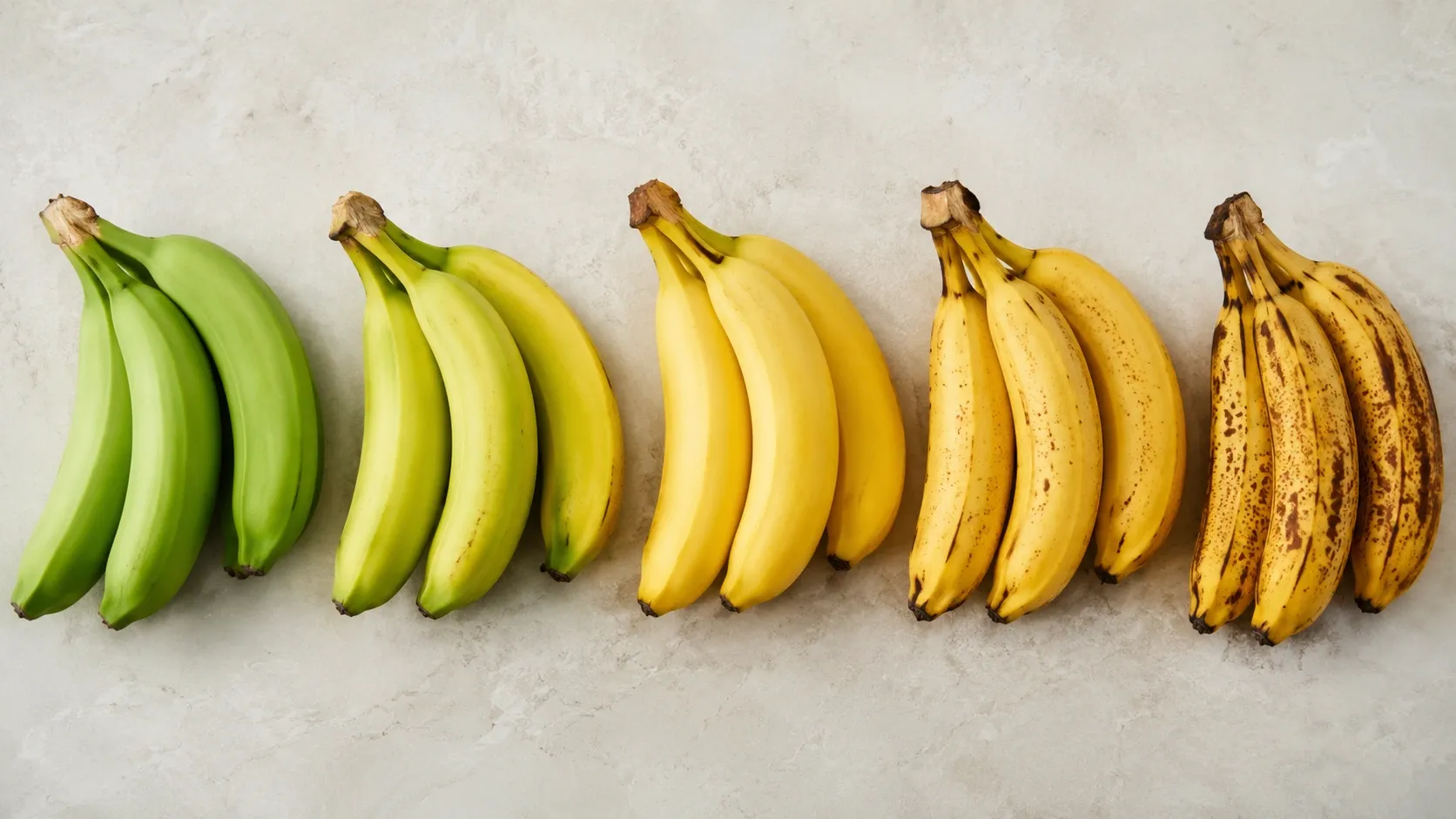
Yes, ripening substantially changes banana carbohydrate chemistry.
Green bananas store much of their carbohydrate as starch. During ripening, enzymes break down starch and produce sugars, contributing to the characteristic softer texture and sweeter flavor. (PubMed)
However, peel color is not an exact sugar meter. Research examining retail bananas found substantial variation among fruit from different lots and supply chains. (PubMed)
What is special about green bananas?
Before ripening, bananas contain more starch, including resistant starch. Resistant starch is not digested in exactly the same way as rapidly available starch. (PubMed)
Green banana pulp, flour, and other products have therefore been studied for gastrointestinal outcomes, satiety, and glucose metabolism.
A 2019 systematic review reported potentially beneficial findings in several studies but emphasized differences in products, doses, age groups, and study methods. More standardized research is needed before specific therapeutic effects or doses can be established. (PMC)
Can people with diabetes eat bananas?
Having naturally occurring sugar does not automatically make bananas unsuitable for diabetes.
The American Diabetes Association includes whole fruit among appropriate food choices while emphasizing that fruit contains carbohydrate and should be accounted for in meal planning. Portion size is especially relevant for people using carbohydrate counting or mealtime insulin. (American Diabetes Association)
Ripeness also changes the balance between starch and sugars, although individual glucose responses cannot be predicted simply by looking at peel color. (PubMed)
People who need individualized glucose targets should follow the portions and meal strategy agreed on with their diabetes care team.
Who needs to be cautious about banana potassium?
For most healthy people, potassium-containing foods are an important component of a balanced diet, and WHO encourages obtaining more potassium from food. (WHO)
Advanced kidney disease can be different. When the kidneys have difficulty removing potassium, blood potassium levels can become excessive.
NIDDK notes that some people with advanced chronic kidney disease may need to limit higher-potassium foods such as bananas. It also cautions against restricting healthy fruits and vegetables unnecessarily without professional guidance. (NIDDK)
Which type should you choose?
Nutritionally, there is no universal winner.
In this Brazilian comparison:
- Maçã had the lowest calories and highest fiber;
- Nanica had the most potassium;
- Prata had the most vitamin C;
- Ouro was relatively concentrated in carbohydrate;
- Terra had the most carbohydrate and energy and is particularly suited to cooking.
Those differences can be useful, but they do not turn one cultivar into a “good” banana and another into a “bad” one.
Flavor, price, local availability, desired ripeness, portion size, and preparation method are all reasonable considerations.
The banana’s most common companion in the bowl has a fiber with evidence of its own:
Oats: Nutrition, Benefits, and How to Add Them to Your Diet
Conclusion
Bananas are nutritious, but their composition differs by variety. According to Brazilian TACO data, 100 g of the five varieties compared provide approximately 87–128 kcal, 22.3–33.7 g carbohydrate, 1.5–2.6 g fiber, and 264–376 mg potassium.
Nanica stood out for potassium, Prata for vitamin C, Maçã for fiber and lower energy density, and Terra for carbohydrate and energy. None of those differences creates a universal nutritional ranking.
The broader value of bananas is straightforward: they are whole fruits that can contribute to a varied eating pattern built around fruits, vegetables, pulses, whole grains, and other minimally processed foods. (WHO)
People who need individualized carbohydrate or potassium management because of diabetes, kidney disease, or another medical condition may need specific portion guidance. (American Diabetes Association)