Oats: Nutrition, Benefits, and How to Add Them to Your Diet
Oats provide fiber, protein, and minerals, while their beta-glucan is linked to lower LDL cholesterol. Learn about oat nutrition, benefits, types, and practical ways to eat them.
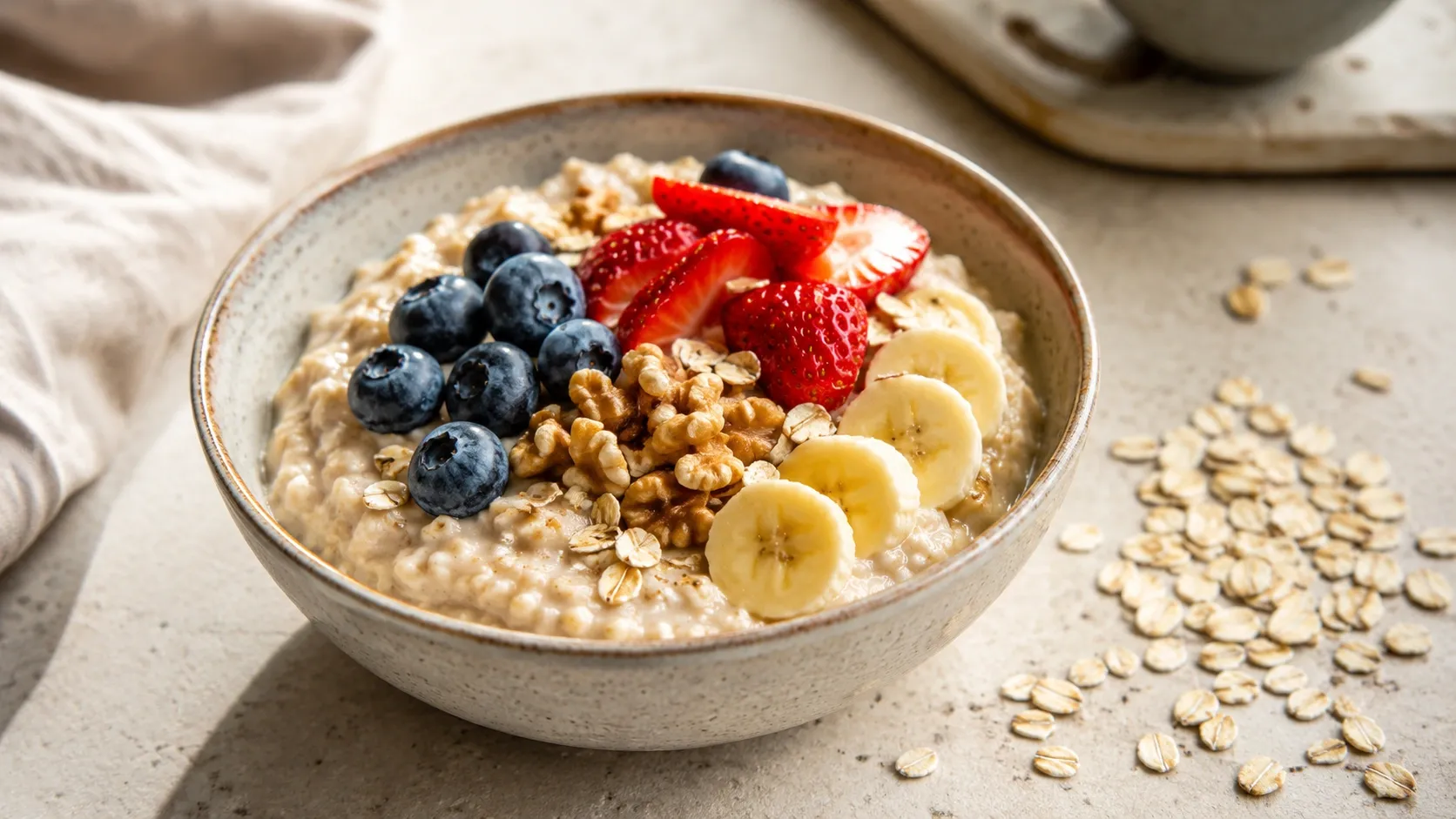
Oats are a simple food with an unusually useful combination of convenience, versatility, and nutrition. They can be cooked into oatmeal, mixed with yogurt and fruit, prepared as overnight oats, used in baking, or even added to savory dishes.
Their most distinctive nutritional component is beta-glucan, a soluble fiber extensively studied for its effects on blood cholesterol and post-meal glucose responses. Oats also provide plant protein, mostly unsaturated fats, fiber, and minerals including magnesium, phosphorus, iron, and zinc. (TBCA)
However, not every health claim surrounding oats is equally well established. Evidence for lowering LDL cholesterol is considerably stronger than claims that oats automatically cause weight loss, “control diabetes,” or treat digestive conditions.
What are oats?
Oats, scientifically known as Avena sativa, are cereal grains belonging to the grass family. Different processing methods produce oat groats, steel-cut oats, traditional rolled oats, quick oats, instant oats, oat bran, and oat flour. (Harvard T.H. Chan)
Processing changes the grain’s physical structure and cooking time. Traditional rolled and instant oats may have broadly similar nutrient profiles, but they do not necessarily produce identical metabolic responses.
Less processed forms such as oat groats and steel-cut oats generally take longer to digest and tend to have a lower glycemic impact than highly processed instant oats. (Harvard T.H. Chan)
Oat nutrition
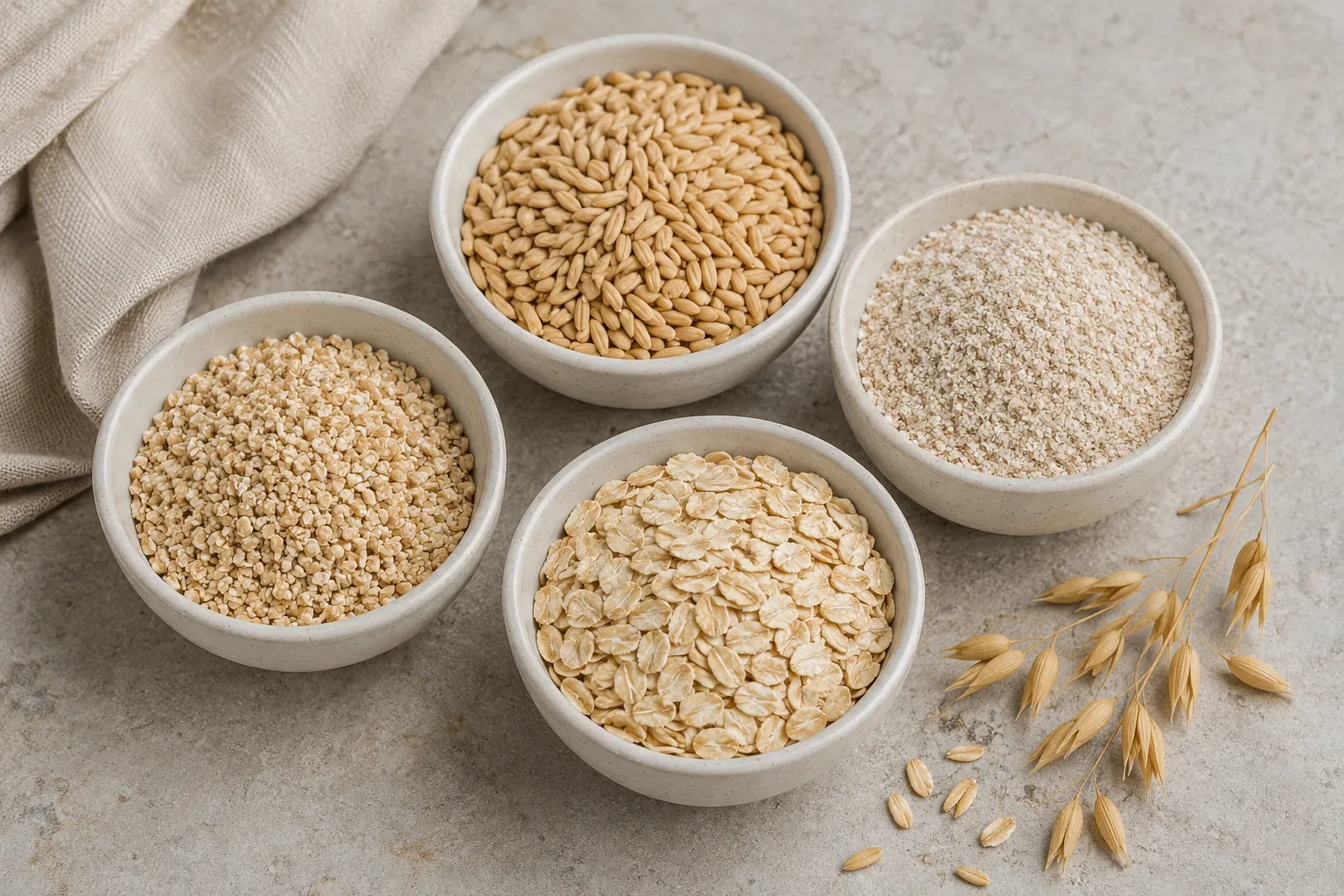
The Brazilian Food Composition Table reports that the average of several types of raw oats provides approximately 382 kcal, 15.4 g of protein, 8.7 g of fat, and 9.74 g of dietary fiber per 100 g. (TBCA)
Using 30 g as a practical reference serving, this works out to approximately:
| Nutrient | Approximate amount per 30 g |
|---|---|
| Energy | 115 kcal |
| Total carbohydrates | 19.6 g |
| Protein | 4.6 g |
| Fat | 2.6 g |
| Dietary fiber | 2.9 g |
| Magnesium | 35 mg |
| Phosphorus | 46 mg |
| Potassium | 101 mg |
| Iron | 1.34 mg |
| Zinc | 0.79 mg |
| Thiamin (vitamin B1) | 0.17 mg |
Values are calculated from TBCA’s data per 100 g for raw oats averaged across different types. Nutrient composition varies with variety, processing, and individual products. (TBCA)
What is oat beta-glucan?
Beta-glucan is a soluble fiber found naturally in oats and barley. In the digestive tract, it interacts with water and increases the viscosity of intestinal contents, a property that helps explain several of its physiological effects. (Harvard T.H. Chan)
One proposed mechanism for cholesterol reduction involves increased excretion of bile acids. The body then needs to use additional cholesterol to produce new bile acids.
It is important not to confuse grams of oats with grams of beta-glucan. EFSA’s evaluated cholesterol-lowering health claim is associated with an intake of 3 g of oat beta-glucan per day. That does not mean 3 g of oats provides the effect; beta-glucan concentration varies among oat products. (EFSA)
Can oats lower LDL cholesterol?
This is one of the best-supported health effects associated with oats.
A systematic review and meta-analysis of 58 randomized controlled trials involving 3,974 participants found modest improvements in LDL cholesterol, non-HDL cholesterol, and apolipoprotein B with diets enriched in oat beta-glucan. The median beta-glucan intake was about 3.5 g per day. (Cambridge University Press)
A 2024 systematic review and meta-analysis also concluded that oat-based foods may lower total and LDL cholesterol in people with dyslipidemia, while having little effect on HDL cholesterol or triglycerides. Evidence is not sufficient to claim that oats alone prevent major cardiovascular events. (PubMed)
Oats can therefore be a useful part of a heart-supportive dietary pattern, but they do not replace prescribed cholesterol-lowering medication or other recommended treatment.
Oats and blood sugar
Oats contain carbohydrates and therefore affect blood glucose. Their potential advantage is not that they are “carb-free,” but that beta-glucan can modify the speed and magnitude of the post-meal response.
A systematic review and meta-analysis of controlled feeding trials found that oat beta-glucan added to carbohydrate-containing meals reduced postprandial glucose and insulin responses. The size of the effect depended on factors including beta-glucan dose, molecular weight, and the characteristics of the comparison meal. (PubMed)
Processing also matters. Oat groats and steel-cut oats retain a larger physical structure and generally digest more slowly, whereas instant oats hydrate and digest more rapidly. (Harvard T.H. Chan)
People with diabetes should consider portions, the full composition of the meal, glucose monitoring when appropriate, and their individualized treatment plan.
Do oats keep you full?
There is a plausible physiological basis for this effect. By absorbing water and increasing viscosity, beta-glucan can slow parts of the digestive process and influence signals involved in fullness.
A review focused on oats and satiety found evidence that oat beta-glucan can enhance satiety under some conditions, although results vary according to dose and the characteristics of the fiber. (PubMed)
This supports saying that oats may contribute to fullness. It does not support promising that oats suppress appetite for everyone or automatically result in weight loss.
Combining oats with fruit, plain yogurt or milk, and nuts or seeds can also create a more nutritionally varied meal.
Oats and digestive health
Oats provide both soluble and insoluble dietary fiber. Fiber can contribute to bowel regularity as part of an overall diet containing adequate fiber and fluids. (Harvard T.H. Chan)
Some oat beta-glucan is fermented by intestinal microorganisms, and researchers are investigating its relationship with the gut microbiome. Current evidence, however, does not justify claiming that oats alone “balance the microbiome” or treat specific digestive diseases. (Harvard T.H. Chan)
People who substantially increase their fiber intake in a short period may experience gas or bloating, so a gradual increase can be more comfortable.
Steel-cut, rolled, instant, bran, or flour?
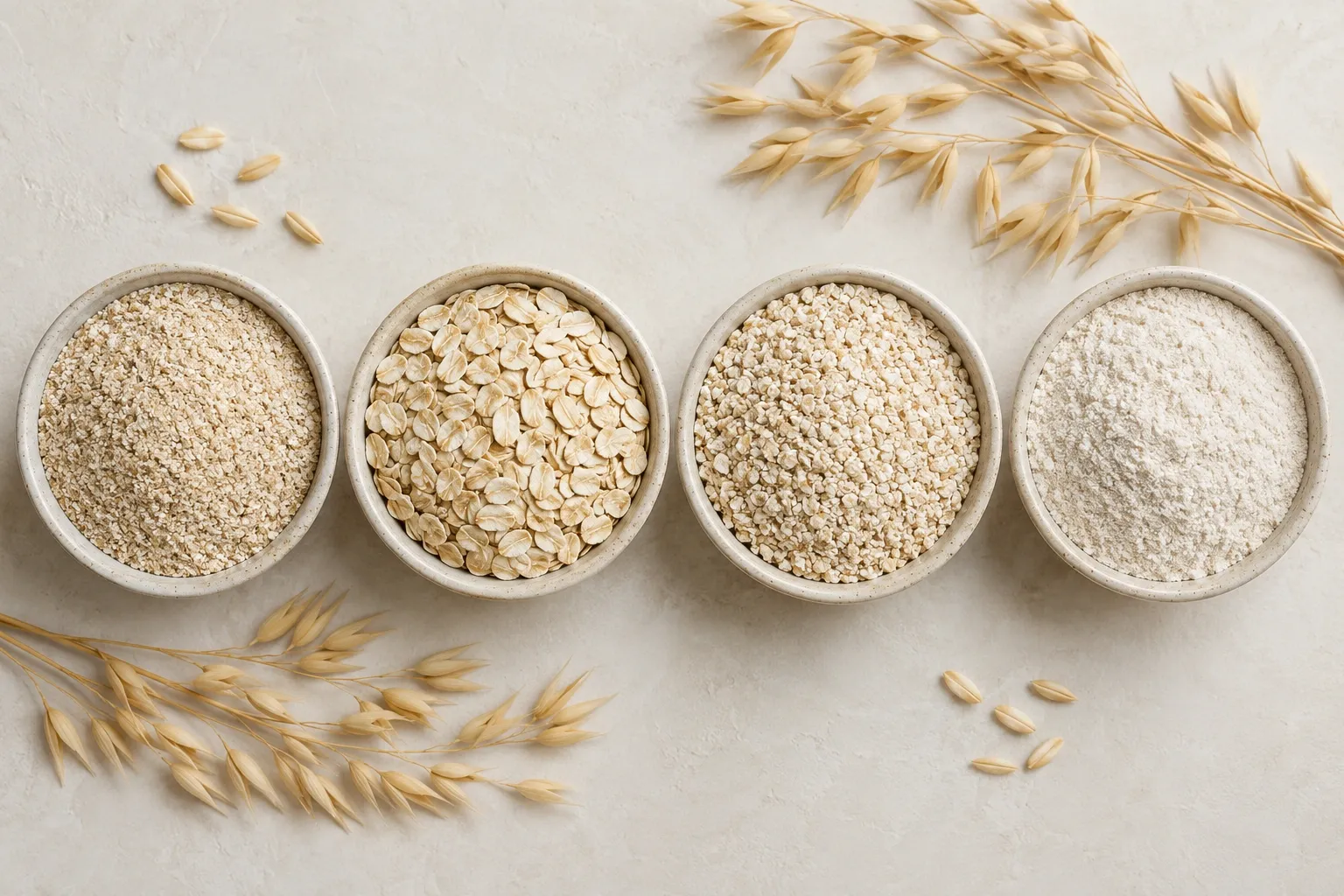
Different forms of oats can serve different purposes.
Oat groats and steel-cut oats
These are among the least processed forms. They retain larger pieces of the grain, require more cooking time, and generally digest more slowly. (Harvard T.H. Chan)
Rolled oats
Oat groats are steamed, rolled flat, and dried. Rolled oats are convenient for oatmeal, yogurt bowls, overnight oats, and baking.
Quick and instant oats
They are processed to absorb water and cook faster. Their smaller physical structure may result in a faster glycemic response. Flavored instant products may also contain added sugar, so checking the ingredient list is useful. (Harvard T.H. Chan)
Oat bran
Oat bran comes from the fiber-rich outer portion of the oat groat and can be used to increase the fiber content of meals and recipes. (Harvard T.H. Chan)
Oat flour
Oat flour is produced by grinding oats into a fine powder. It is useful in pancakes, muffins, breads, and other baked foods, although grinding reduces the grain’s physical structure.
There is no need to choose only one type. The most suitable option depends on cooking method, texture preference, and individual nutritional needs.
How much oatmeal should you eat?
There is no universal daily amount of oats that everyone needs to eat.
TBCA lists 30 g as a reference serving for the food entry consulted, but this should not be interpreted as an individualized prescription. Energy needs, fiber intake, diet composition, appetite, and medical conditions vary widely. (TBCA)
Likewise, a fixed number of tablespoons of oats cannot automatically be assumed to supply the 3 g of beta-glucan associated with cholesterol-related health claims. The product’s beta-glucan concentration must be known to make that calculation.
Practical ways to eat more oats
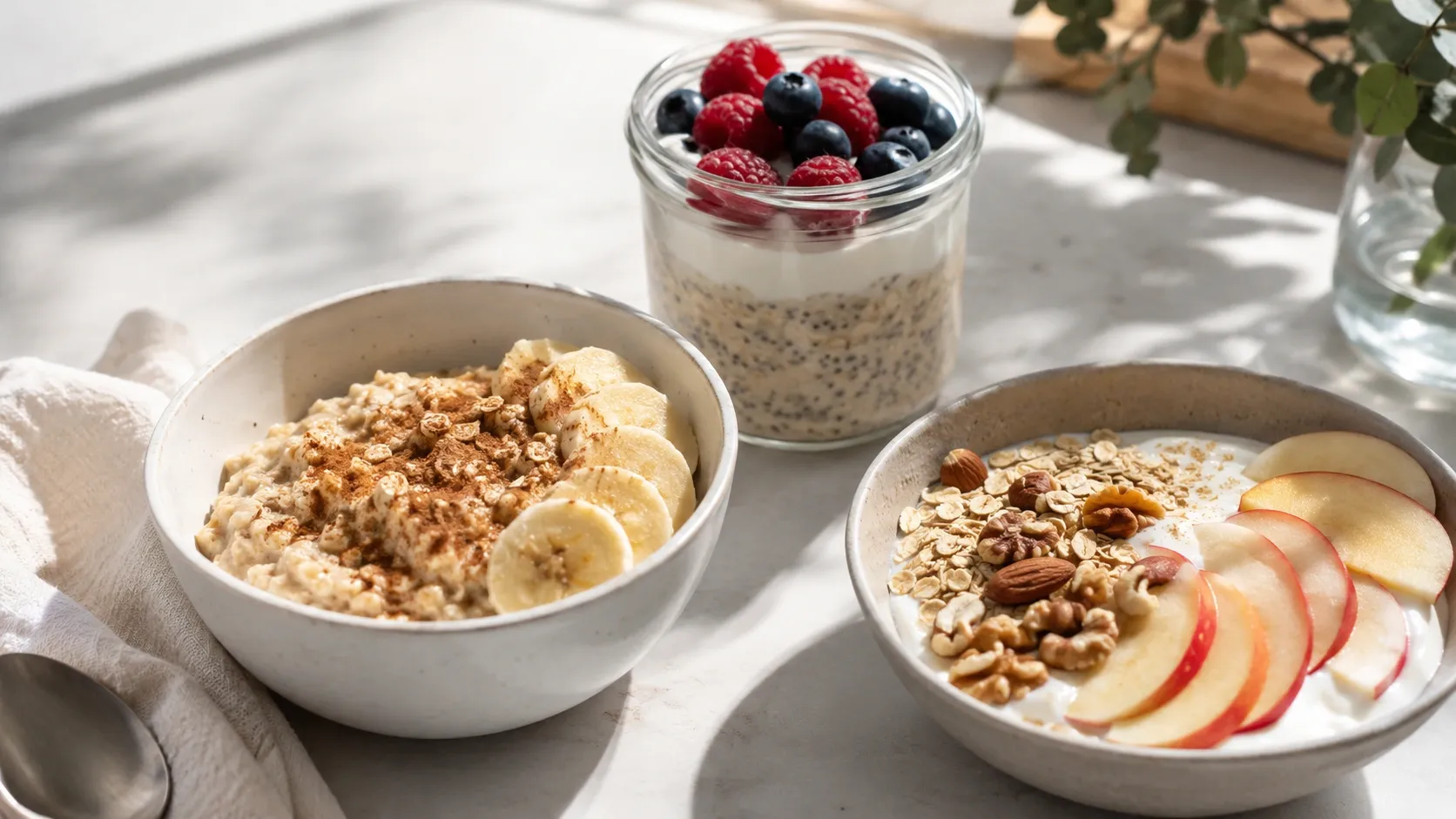
1. Add oats to yogurt and fruit
Combine rolled oats with plain yogurt and fresh fruit. Nuts or seeds add texture and additional nutrients.
2. Make oatmeal
Cook oats with milk, water, or an appropriate plant-based beverage. Banana, apple, cinnamon, or unsweetened cocoa can add flavor without requiring large amounts of added sugar.
3. Prepare overnight oats
Rolled oats can be soaked for several hours in the refrigerator with milk, yogurt, or another liquid base. Harvard lists overnight oats as a practical no-cook preparation. (Harvard T.H. Chan)
4. Use oats in pancakes and baking
Oat flour or finely rolled oats can be incorporated into pancakes, muffins, cakes, and breads alongside other ingredients.
5. Add oats to smoothies
Oats can be blended with fruit, milk, or yogurt to add grains and fiber to a smoothie.
6. Try savory oats
Oats can also be used in homemade burgers, meatballs, soups, and other savory recipes where their texture is useful.
How to choose oats at the store
For plain oats, a short ingredient list is often simplest — many products contain only oats.
For instant or flavored options, consider checking:
- added sugars;
- fiber content;
- listed serving size;
- additional ingredients;
- gluten-related labeling when medically necessary.
Marketing claims on the front of a package should not replace reading the ingredient list and nutrition information.
Are oats gluten-free?
Under FDA regulations, oats are not one of the gluten-containing grains wheat, rye, or barley. However, cross-contact can occur during crop rotation, harvesting, transportation, storage, or manufacturing. (FDA)
In the United States, oats carrying an FDA-regulated “gluten-free” claim must contain less than 20 parts per million of gluten. Labeling rules differ between countries. (FDA)
People with celiac disease should follow the labeling requirements applicable where they live and the guidance of their healthcare team.
Are there any downsides to eating more oats?
For most people, oats are a well-tolerated everyday food. However, rapidly increasing fiber intake can lead to gas, bloating, or changes in bowel habits.
People with celiac disease need to consider gluten cross-contact. Those with gastrointestinal disorders, diabetes requiring individualized carbohydrate management, or other medical conditions may benefit from personalized guidance from a dietitian or physician.
Oats usually show up at the first meal of the day — a meal whose reputation is worth examining:
Is Breakfast Really the Most Important Meal of the Day?
Conclusion
Oats combine carbohydrates, plant protein, fat, fiber, and several micronutrients in an affordable and versatile food. Their best-studied component is beta-glucan, with systematic reviews and regulatory scientific assessments supporting a modest LDL-cholesterol-lowering effect. (Cambridge University Press)
Oat beta-glucan may also reduce post-meal glucose and insulin responses and contribute to satiety, although these effects depend on dose, processing, and the broader meal. (PubMed)
There is no need to turn oats into a “superfood.” Their practical value is simpler: they are an easy whole-grain food that can fit naturally into meals alongside fruit, yogurt, seeds, nuts, and other minimally processed foods.