Copper: Why We Need It and How Much Is Too Much?
Copper supports energy production, iron metabolism, nerves and immunity. Learn how much we need, the best food sources and when copper intake may become excessive.
Copper is present in the body in very small amounts, yet it performs several essential functions. It is involved in energy production, iron metabolism, connective tissue formation and normal nervous and immune system function. (NIH ODS)
Copper also illustrates an important principle of micronutrient nutrition: both too little and too much can be harmful. The goal is therefore not to maximize copper intake, but to obtain enough while avoiding unnecessarily high exposure.
What does copper do in the body?
Copper acts as a cofactor for a group of enzymes known as cuproenzymes. These enzymes depend on copper to carry out several important biochemical reactions.
Copper contributes to:
- cellular energy production;
- iron metabolism;
- connective tissue formation;
- neurotransmitter synthesis;
- normal nervous system function;
- immune function;
- brain development;
- antioxidant defense systems. (NIH ODS)
The body also regulates copper by adjusting intestinal absorption and eliminating much of the excess through bile. This homeostatic system helps protect healthy people from both deficiency and excessive accumulation. (NIH ODS)
How much copper do we need?
The answer varies depending on the authority and the type of reference value being used.
In the United States, the RDA for men and women aged 19 and older is 900 mcg, or 0.9 mg, per day. The recommendation increases to 1.0 mg/day during pregnancy and 1.3 mg/day during lactation. (NIH ODS)
| Group | U.S. reference |
|---|---|
| Adults 19+ | 0.9 mg/day |
| Pregnancy | 1.0 mg/day |
| Lactation | 1.3 mg/day |
EFSA uses Adequate Intakes because the available biomarkers and balance studies were not considered sufficient to derive the usual average requirement and population reference intake.
| Group | EFSA Adequate Intake |
|---|---|
| Adult men | 1.6 mg/day |
| Adult women | 1.3 mg/day |
| Pregnancy | 1.5 mg/day |
| Lactation | 1.5 mg/day |
(EFSA)
Which foods contain copper?
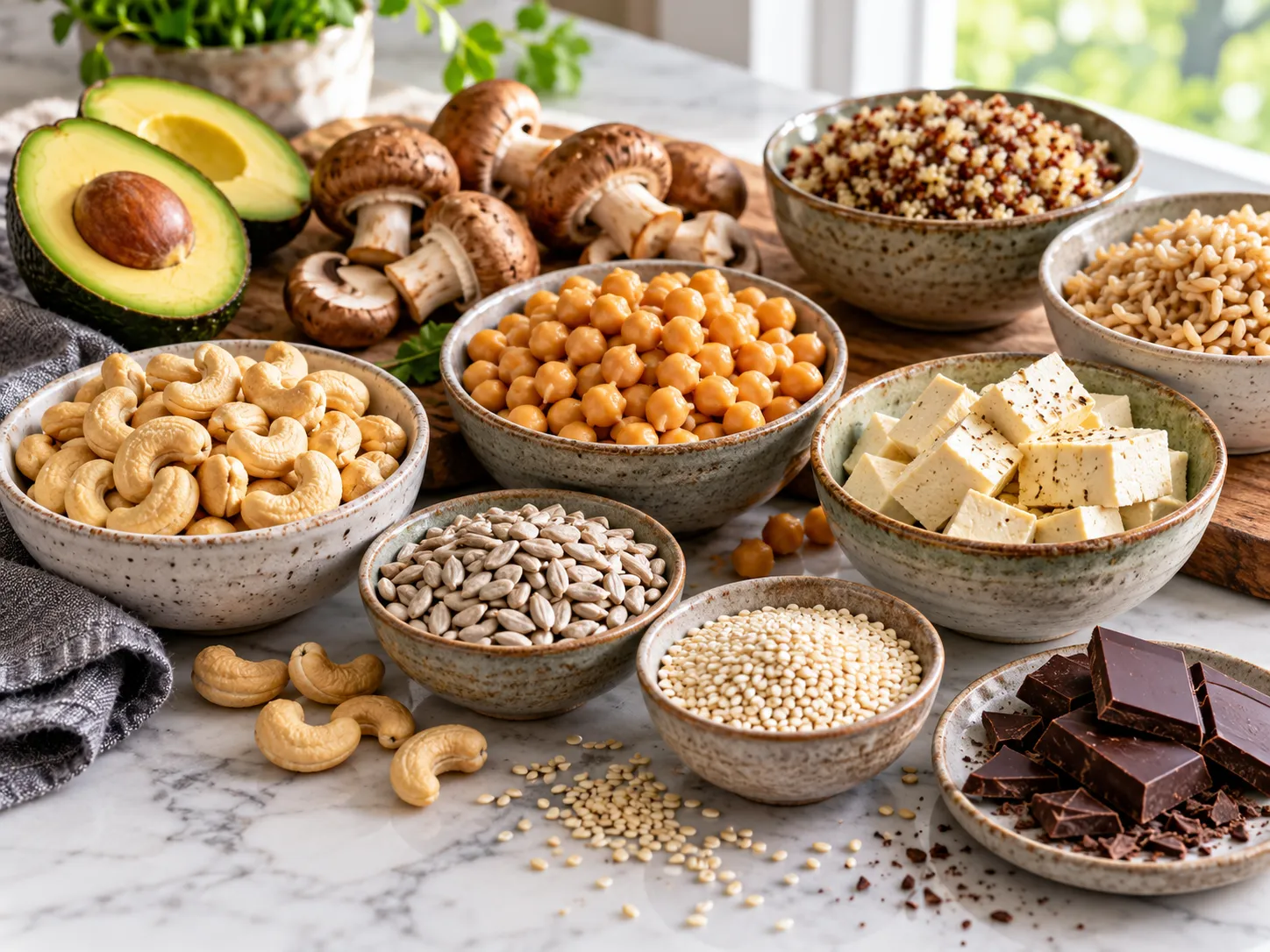
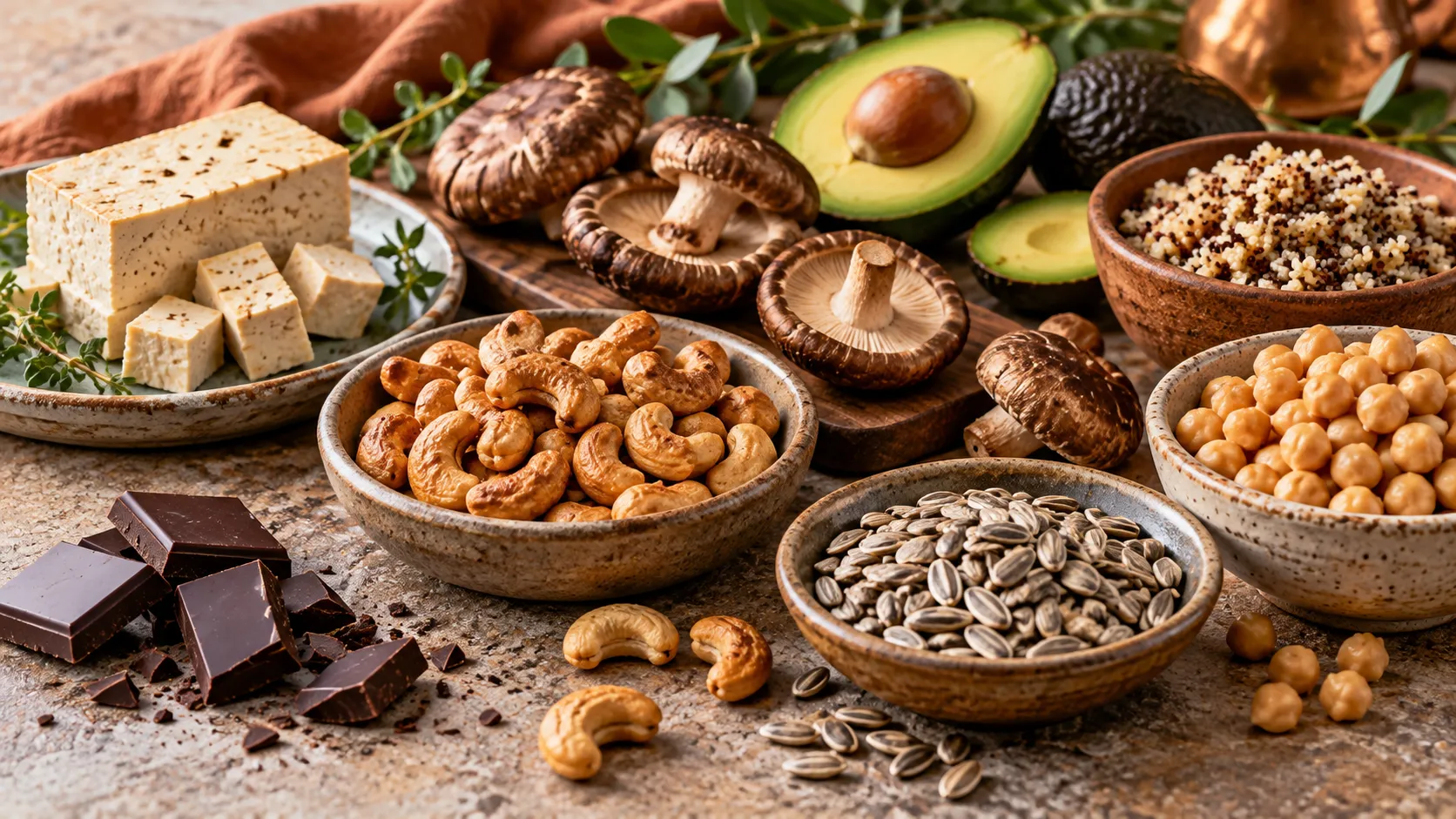
Copper is naturally present in both animal and plant foods.
Organ meats and certain shellfish are particularly concentrated sources. Nuts, seeds, cocoa, whole grains, legumes, mushrooms and several other plant foods also contribute meaningful amounts. (NIH ODS)
Examples from the NIH food table include:
| Food | Serving | Approximate copper |
|---|---|---|
| Roasted cashews | 1 oz / 28 g | 0.629 mg |
| Sunflower seed kernels | 1/4 cup | 0.615 mg |
| Dark chocolate, 70–85% cacao | 1 oz / 28 g | 0.501 mg |
| Firm tofu | 1/2 cup | 0.476 mg |
| Chickpeas | 1/2 cup | 0.289 mg |
| Cooked wild Atlantic salmon | 3 oz / 85 g | 0.273 mg |
| Avocado | 1/2 cup | 0.219 mg |
Actual values can vary with food variety, origin, processing and serving size. (NIH ODS)
A varied eating pattern containing legumes, nuts, seeds, whole grains, vegetables and appropriate protein sources will usually provide copper without the need to track the mineral at every meal.
Is copper deficiency common?

Copper deficiency is considered uncommon in otherwise healthy people, but some circumstances increase the risk. (NIH ODS)
Conditions associated with intestinal malabsorption, including celiac disease, can interfere with copper status. Certain bariatric procedures are another recognized cause of acquired deficiency because they can significantly reduce absorption. (NIH ODS)
High-dose zinc supplementation is another important factor. Large amounts of zinc can interfere with intestinal copper absorption and may eventually lead to deficiency. (NIH ODS)
What can copper deficiency cause?
Reported effects include:
- anemia;
- neutropenia;
- neurological abnormalities;
- impaired coordination in more severe cases;
- skeletal abnormalities;
- altered immune function;
- connective tissue and pigmentation changes. (NIH ODS)
These signs are not unique to copper deficiency.
Copper status is also difficult to assess with a single laboratory test. Serum copper and ceruloplasmin can provide useful information, but they are influenced by pregnancy, estrogen status, inflammation, infection and other factors. (NIH ODS)
Clinical context therefore matters when interpreting possible deficiency.
How much copper is too much?
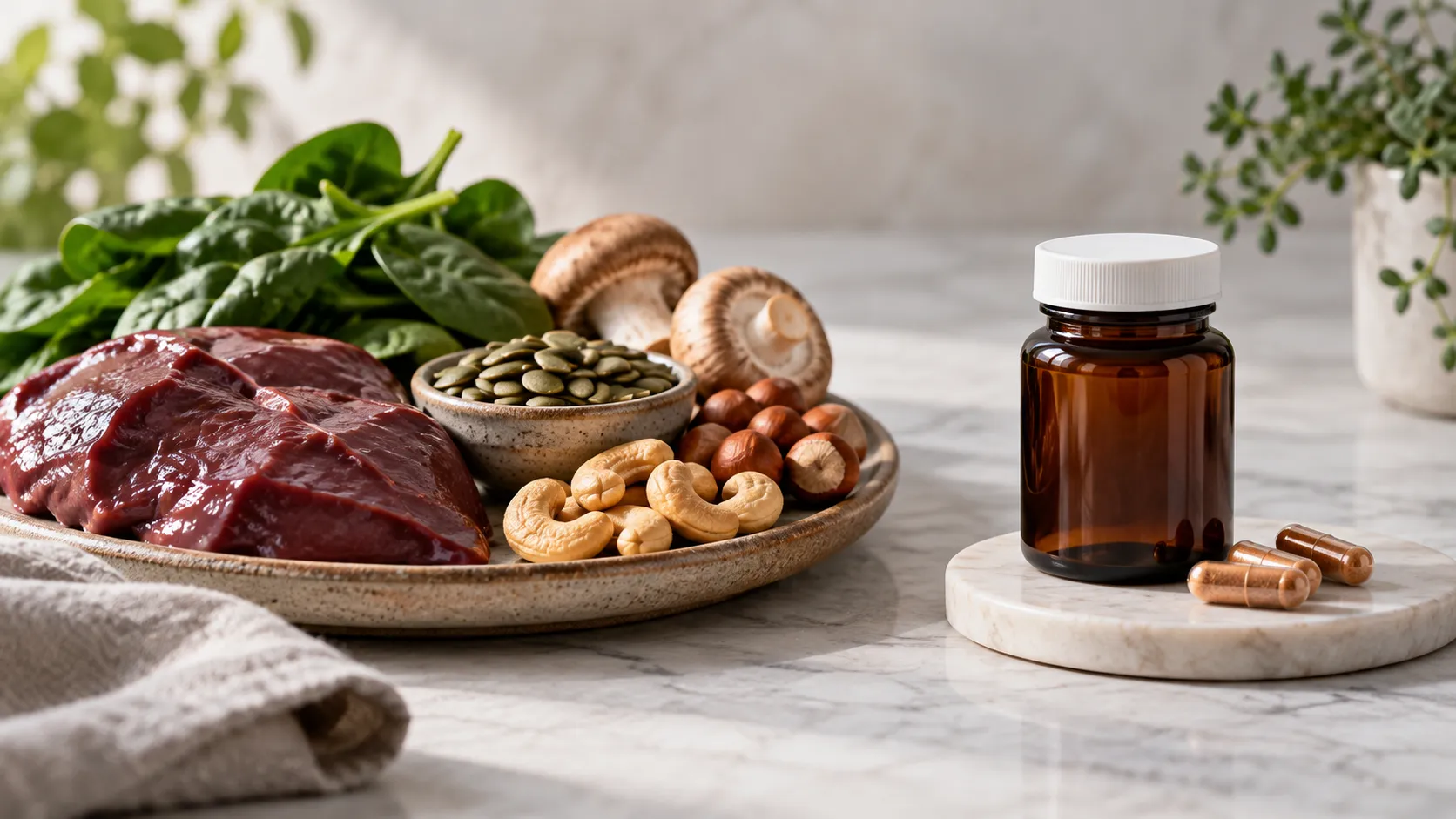
International authorities differ here as well.
The U.S. Food and Nutrition Board sets a tolerable upper intake level of 10 mg/day for adults, including copper from food, beverages and supplements. A UL is a safety boundary, not a recommended intake target. (NIH ODS)
EFSA uses a more conservative value.
In its 2023 reassessment, the EFSA Scientific Committee concluded that the former 10 mg/day reference point could no longer be regarded as a no-observed-adverse-effect level. It considered the existing adult UL of 5 mg/day sufficiently protective and established an acceptable daily intake of 0.07 mg/kg body weight. For a 70 kg adult, that corresponds to approximately 5 mg/day. (EFSA)
What happens with excessive copper intake?
High copper exposure can cause:
- nausea;
- vomiting;
- abdominal pain or cramps;
- diarrhea;
- and, with sufficiently high chronic exposure, liver damage. (NIH ODS)
Copper toxicity is uncommon in healthy people with normal copper metabolism.
One important exception is Wilson disease, an inherited disorder that impairs copper clearance and causes the mineral to accumulate in tissues, particularly the liver and nervous system. Population upper limits should not be used to guide copper intake in people with this condition. (NIH ODS)
Excessive exposure can also occur in specific circumstances when drinking water contains elevated copper released from plumbing systems. (NIH ODS)
Do we need copper supplements?
For most healthy people eating a varied diet, routine copper supplementation is unnecessary.
The NIH recommends meeting nutrient needs primarily through food whenever possible, while supplements can be useful when specific nutritional requirements cannot otherwise be met. (NIH ODS)
This distinction matters because dietary supplements can provide much larger amounts of copper than are required nutritionally.
In Brazil, Anvisa defines authorized supplement ingredients as well as minimum and maximum amounts for different population groups. The agency also emphasizes that dietary supplements are not medicines and are not intended to treat, prevent or cure disease. (Anvisa)
People with suspected deficiency, bariatric surgery, intestinal malabsorption, prolonged high-dose zinc use or disorders affecting copper metabolism should discuss supplementation with a qualified healthcare professional.
Does more copper mean more health benefits?
No.
Copper’s essential role in antioxidant defense, the nervous system or cardiovascular physiology does not mean that consuming extra copper will enhance those functions once nutritional needs are already being met.
For example, available evidence is not sufficient to conclude that copper supplementation prevents cardiovascular disease or Alzheimer’s disease. (NIH ODS)
The key distinction is simple: an essential nutrient is not automatically more beneficial at higher doses.
Conclusion
Copper is an essential trace mineral involved in energy production, iron metabolism, connective tissue formation and normal nervous and immune system function.
The amount required, however, is small, and a varied diet generally provides adequate copper for healthy people.
Reference values differ internationally. The U.S. adult RDA is 0.9 mg/day, while EFSA Adequate Intakes are 1.6 mg/day for men and 1.3 mg/day for women. For excessive intake, the U.S. UL is 10 mg/day, whereas EFSA uses a more conservative adult value of 5 mg/day. (ods.od.nih.gov)
In practical terms, those upper values should never be treated as nutritional targets. For most people, the most sensible approach is to obtain copper from food and avoid high-dose supplementation without a clear reason.