Magnesium: Benefits, Daily Needs, and Best Food Sources
Magnesium supports hundreds of processes in the body. Learn how much adults need, which foods provide it, who is at risk of deficiency, and when supplements require caution.
Magnesium often comes up in conversations about muscle cramps, sleep, or supplements, but its biological role extends far beyond these topics. It is an essential mineral involved in hundreds of processes that keep our cells, nerves, muscles, bones, and cardiovascular system functioning.
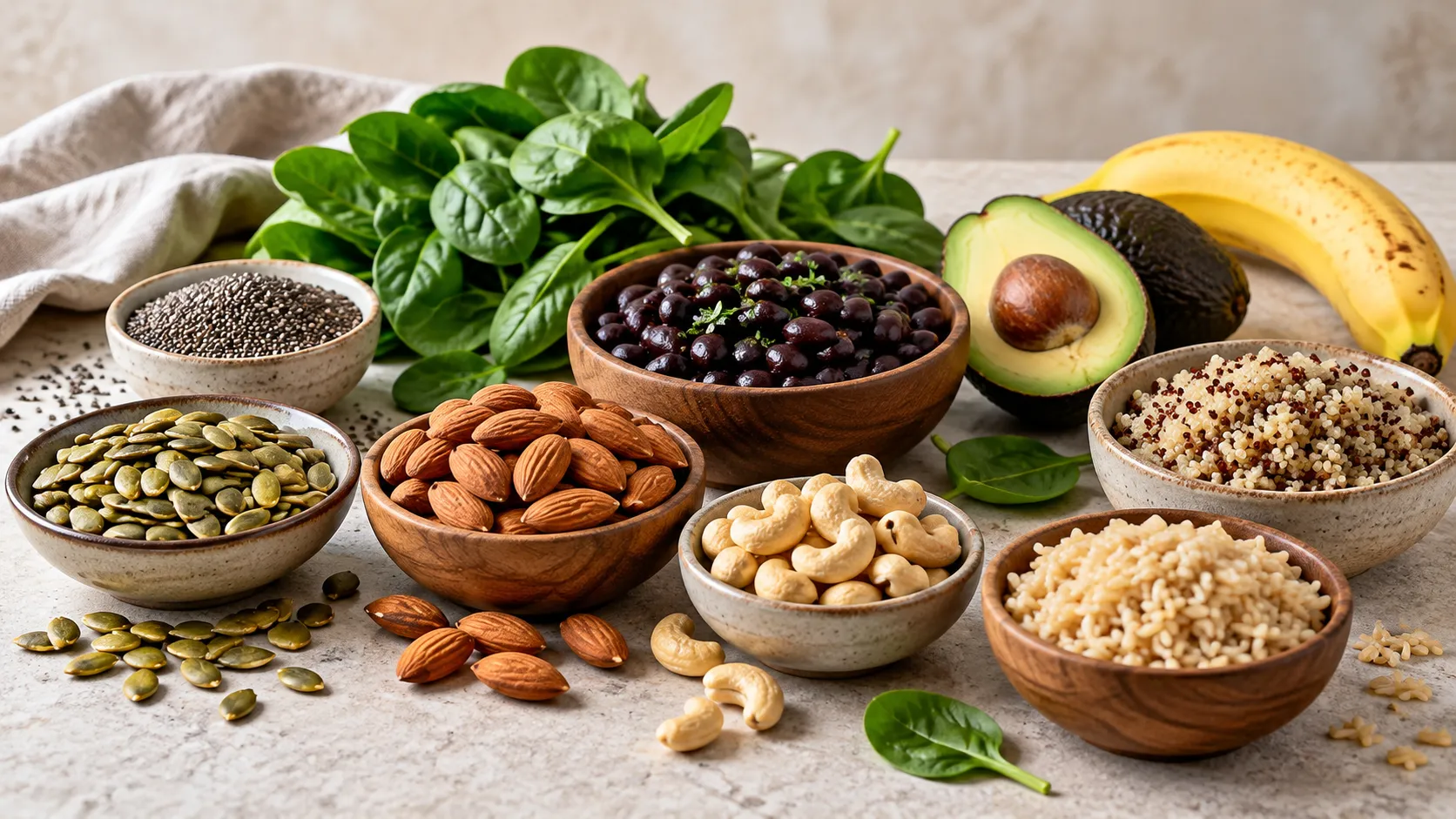
For many people, a varied diet can provide substantial amounts of magnesium. Seeds, nuts, beans, leafy green vegetables, and whole grains are particularly useful sources.
Confusion often arises when different daily intake numbers appear online or when supplements are promoted for sleep, blood pressure, glucose control, fatigue, or athletic performance. Understanding magnesium requires separating its well-established essential functions from therapeutic claims that remain under investigation.
What does magnesium do in the body?
Magnesium acts as a cofactor in more than 300 enzyme systems. In practical terms, numerous enzymes need magnesium to carry out normal biochemical reactions.
Its functions include:
- energy production;
- protein synthesis;
- muscle and nerve function;
- glucose metabolism;
- processes involved in blood pressure regulation;
- bone development and maintenance;
- DNA and RNA synthesis;
- transport of calcium and potassium across cell membranes;
- normal muscle contraction and heart rhythm. (ODS)
An adult body contains approximately 25 g of magnesium. About 50% to 60% is stored in bone, while most of the remainder is found in soft tissues. Less than 1% circulates in blood serum. (ODS)
So, while it is correct to associate magnesium with muscle function, describing it simply as a “muscle mineral” significantly understates its biological importance.
How much magnesium do we need?
There is no single intake target that applies equally to everyone.
The Dietary Reference Intakes used by the NIH vary according to age, sex, pregnancy, and lactation. (ODS)
| Group | Magnesium per day |
|---|---|
| Men aged 19–30 | 400 mg |
| Women aged 19–30 | 310 mg |
| Men aged 31–50 | 420 mg |
| Women aged 31–50 | 320 mg |
| Men aged 51+ | 420 mg |
| Women aged 51+ | 320 mg |
| Pregnant women aged 19–30 | 350 mg |
| Pregnant women aged 31–50 | 360 mg |
| Breastfeeding women aged 19–30 | 310 mg |
| Breastfeeding women aged 31–50 | 320 mg |
The European Food Safety Authority uses a different approach and sets an Adequate Intake of 350 mg per day for adult men and 300 mg per day for adult women. (EFSA)
Why does Brazil use 420 mg on food labels?
Brazil’s Anvisa establishes 420 mg as the adult Daily Value for magnesium used in nutrition labeling. (AnvisaLegis)
This is useful for interpreting the percentage Daily Value on packaged foods, but it should not be mistaken for a personalized requirement that applies identically to every adult.
Reference values for food labeling and individual nutrient requirements serve related but different purposes.
Which foods contain magnesium?
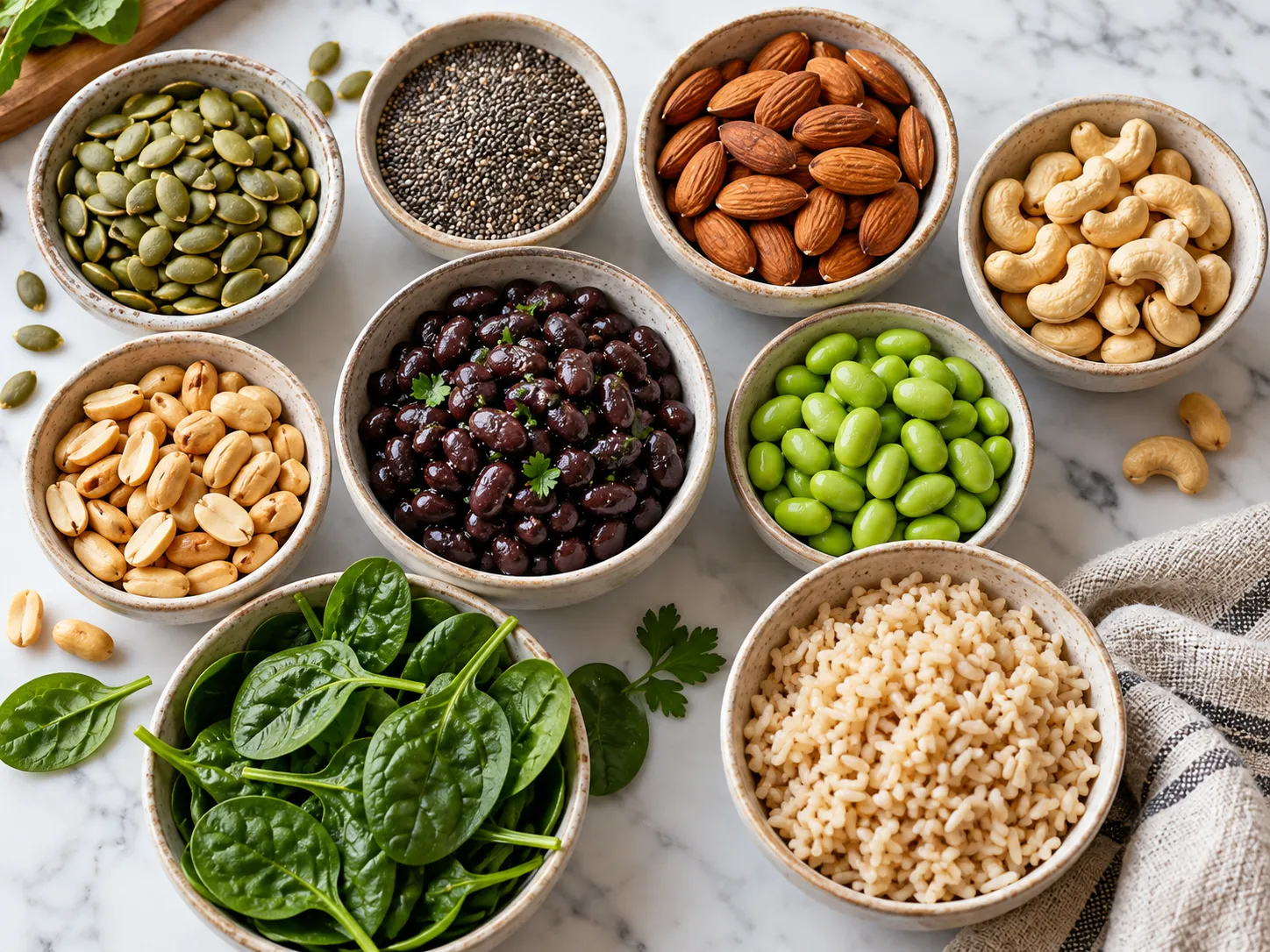
Magnesium occurs naturally in many foods, particularly plant foods.
Useful sources include:
- seeds;
- nuts and peanuts;
- beans and other legumes;
- dark leafy greens;
- whole grains;
- soy foods;
- some dairy foods;
- certain fish and other animal foods. (ODS)
Fiber-rich foods are also often good sources of magnesium. Refining grains can remove the nutrient-rich germ and bran and significantly reduce their magnesium content. (ODS)
How much magnesium is in common foods?
The values below are approximate and are based on serving sizes listed by the NIH. Actual content can vary with variety, preparation, processing, and brand. (ODS)
| Food | Serving | Approximate magnesium |
|---|---|---|
| Roasted pumpkin seeds | 1 oz / 28 g | 156 mg |
| Chia seeds | 1 oz / 28 g | 111 mg |
| Roasted almonds | 1 oz / 28 g | 80 mg |
| Cooked spinach | 1/2 cup | 78 mg |
| Roasted cashews | 1 oz / 28 g | 74 mg |
| Roasted peanuts | 1/4 cup | 63 mg |
| Cooked black beans | 1/2 cup | 60 mg |
| Cooked shelled edamame | 1/2 cup | 50 mg |
| Peanut butter | 2 tablespoons | 49 mg |
| Baked potato with skin | about 3.5 oz / 100 g | 43 mg |
| Cooked brown rice | 1/2 cup | 42 mg |
| Medium banana | 1 | 32 mg |
| Whole-wheat bread | 1 slice | 23 mg |
| Cubed avocado | 1/2 cup | 22 mg |
This illustrates why meeting magnesium needs does not require relying on one “superfood.” Several moderate sources eaten throughout the day can add up.
How can you get more magnesium from food?

A practical approach is to distribute magnesium-rich foods across meals.
For example, you can:
- add chia or seeds to oatmeal, fruit, or yogurt;
- eat beans, lentils, peas, or other legumes regularly;
- include dark leafy vegetables;
- replace some refined grains with whole-grain options;
- eat nuts or peanuts in appropriate portions;
- rotate different sources throughout the week.
These foods offer another important advantage: they often provide fiber, plant protein, unsaturated fats, vitamins, and other minerals in addition to magnesium.
That makes it difficult to attribute all health outcomes associated with magnesium-rich dietary patterns to magnesium alone.
How much dietary magnesium is absorbed?
The NIH estimates that approximately 30% to 40% of magnesium consumed from foods and beverages is typically absorbed. (ODS)
This does not mean people should multiply their recommended intake to compensate for incomplete absorption. Dietary reference values already account for human physiology when estimating population needs.
What happens when magnesium intake is too low?
Symptomatic magnesium deficiency caused solely by low dietary intake is uncommon in otherwise healthy people because the kidneys help conserve magnesium when body stores decline. (ODS)
However, chronically inadequate intake or excessive losses caused by health conditions or medications can eventually lead to deficiency.
Early symptoms may include:
- loss of appetite;
- nausea;
- vomiting;
- fatigue;
- weakness.
More advanced deficiency can cause:
- tingling or numbness;
- muscle contractions;
- cramps;
- seizures;
- abnormal heart rhythms;
- disturbances in other electrolytes, including calcium and potassium. (ODS)
These symptoms are not specific to magnesium deficiency. Muscle cramps or fatigue alone should not be used to self-diagnose a magnesium problem.
Who is at greater risk of inadequate magnesium?
Certain groups deserve particular attention.
People with gastrointestinal disorders
Chronic diarrhea and fat malabsorption associated with conditions such as Crohn’s disease and celiac disease can gradually reduce magnesium status.
Surgery that removes or bypasses parts of the small intestine can also lead to magnesium loss. (ODS)
People with type 2 diabetes
In some people with insulin resistance or type 2 diabetes, increased urinary magnesium losses can occur. (ODS)
This does not mean every person with diabetes should automatically take magnesium supplements.
Older adults
Older people tend to consume less magnesium than younger adults. Intestinal absorption can decrease with age, while renal magnesium excretion can increase.
Older adults are also more likely to use medications that affect magnesium status. (ODS)
People with chronic alcohol dependence
Poor dietary intake, gastrointestinal problems, and urinary magnesium losses can all contribute to deficiency in this population. (ODS)
Can a blood test diagnose magnesium deficiency?
Serum magnesium is the most commonly used test, but it has limitations.
Because less than 1% of the body’s magnesium is found in serum and most is stored within cells and bone, serum concentration does not always accurately represent total body magnesium stores. (ODS)
A meaningful assessment may therefore need to consider medical history, diet, medications, symptoms, and laboratory findings together.
Do you need a magnesium supplement?

Healthy people who obtain enough magnesium from food do not automatically need a supplement.
Anvisa emphasizes that dietary supplements should not replace a healthy, balanced, and varied diet and that whether someone needs supplementation depends on factors including health status and dietary intake. (Serviços e Informações do Brasil)
Supplements may be appropriate when deficiency has been identified, dietary intake remains insufficient, or a health condition increases magnesium losses or decreases absorption.
Are all magnesium supplements absorbed equally?
No.
The NIH notes that absorption differs among magnesium salts. Forms that dissolve better in liquid tend to be absorbed more completely.
Small comparative studies suggest that magnesium aspartate, citrate, lactate, and chloride are generally more bioavailable than magnesium oxide and sulfate. (ODS)
Higher absorption, however, does not automatically make one product appropriate for everyone. Elemental magnesium dose, gastrointestinal tolerance, medical conditions, medications, and the reason for supplementation all matter.
Can you consume too much magnesium?
Getting too much magnesium from food is unlikely to cause toxicity in healthy people because the kidneys can excrete excess amounts.
Supplements and magnesium-containing medications are different.
High supplemental intakes can cause:
- diarrhea;
- nausea;
- abdominal cramping.
Extremely high doses can cause serious magnesium toxicity, including low blood pressure, muscle weakness, difficulty breathing, and abnormal heart rhythms. The risk increases when kidney function is impaired. (ODS)
Does the 350 mg upper limit mean you should consume no more than 350 mg total?
No.
This is an important distinction.
The U.S. 350 mg per day Tolerable Upper Intake Level for adults applies only to magnesium from supplements and medications.
It does not include magnesium naturally present in food. (ODS)
That is why a dietary recommendation of 400 or 420 mg can coexist with a 350 mg supplemental upper limit.
Can magnesium interact with medications?
Yes.
Magnesium supplements can reduce the absorption of certain medications, including some tetracycline and quinolone antibiotics and oral bisphosphonates.
Some diuretics can also alter magnesium losses, while prolonged use of certain proton pump inhibitors has been associated with hypomagnesemia in some patients. (ODS)
Anyone taking medications regularly should consider possible interactions before starting high-dose magnesium supplementation.
Does more magnesium reduce the risk of disease?
This is where the evidence becomes more nuanced.
Observational studies have linked higher magnesium intake or magnesium status with favorable cardiometabolic outcomes. But people who eat more magnesium also tend to eat more vegetables, legumes, nuts, seeds, and whole grains.
It is therefore difficult to determine how much of an observed benefit is caused specifically by magnesium. Harvard notes that findings from supplementation trials are less consistent than some of the associations seen with magnesium-rich dietary patterns. (The Nutrition Source)
A 2025 meta-analysis found larger blood-pressure reductions among participants with hypertension or hypomagnesemia, but the researchers also reported substantial heterogeneity and no clear dose-response relationship. (PubMed)
Another 2025 meta-analysis in people with type 2 diabetes reported improvements in some metabolic outcomes with magnesium supplementation. These findings are clinically interesting, but they should not be interpreted as evidence that every healthy person should take magnesium to prevent or treat diabetes, hypertension, or cardiovascular disease. (PubMed)
For the general population, the most defensible approach remains obtaining enough magnesium through a nutrient-rich diet and treating therapeutic supplementation as an individualized decision.
Conclusion
Magnesium is essential for energy metabolism, muscle and nerve function, glucose metabolism, bone structure, and many other biological processes.
Depending on the authority and population group, adult reference intakes generally fall between approximately 300 and 420 mg per day. In Brazil, 420 mg is the Daily Value used for nutrition labeling.
Seeds, nuts, beans, dark leafy greens, and whole grains can provide substantial amounts, making it possible for many people to meet their needs through food.
Magnesium supplements can be useful in specific circumstances, but they are not automatically necessary for everyone. Rather than focusing on whichever magnesium compound is currently receiving the most attention online, the priority should be a nutrient-rich diet, recognition of genuine deficiency risk factors, and careful use of supplementation when it is actually indicated.