Monounsaturated vs. Polyunsaturated Fats: What's the Difference?
Monounsaturated and polyunsaturated fats are both unsaturated fats, but they differ in structure, food sources and essential fatty acids. Learn how each fits into a healthy diet.
When people talk about “healthy fats,” two categories frequently appear: monounsaturated and polyunsaturated fats. Both belong to the broader family of unsaturated fats, but they are not identical.
The fundamental difference is structural. Monounsaturated fatty acids have one carbon-carbon double bond, while polyunsaturated fatty acids have two or more. This structural difference also allows polyunsaturated fats to be classified into families such as omega-3 and omega-6. (NCBI)
From a practical nutrition standpoint, however, the goal is usually not to decide which one “wins.” Both can contribute to a healthy dietary pattern, particularly when they replace foods high in saturated or trans fats. (who.int)
What are unsaturated fats?
Dietary fats contain different fatty acids, including saturated, monounsaturated and polyunsaturated fatty acids.
Unsaturated fatty acids contain at least one double bond in their carbon chain. If there is one double bond, the fatty acid is monounsaturated. If there are two or more, it is polyunsaturated. (NCBI)
This classification does not mean that a food contains only one type of fat. Olive oil, for example, is predominantly monounsaturated but also contains smaller proportions of saturated and polyunsaturated fats. Nuts, seeds and other fat-containing foods contain mixtures as well. (The Nutrition Source)
What are monounsaturated fats?
Monounsaturated fats, or MUFAs, contain one double bond in their fatty acid chain.
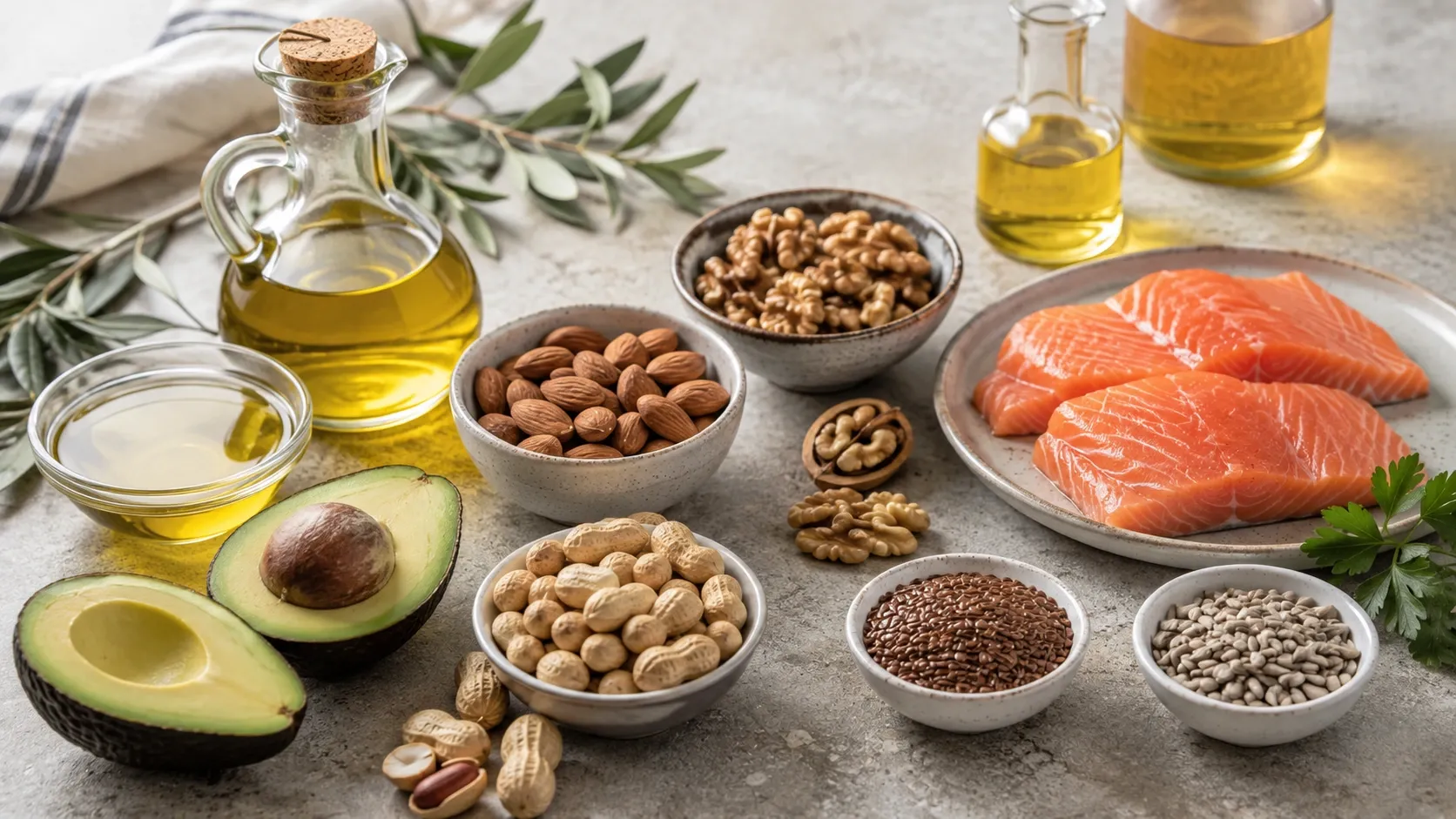
Common food sources include:
- olive oil;
- canola oil;
- peanut oil;
- avocado;
- almonds;
- hazelnuts;
- pecans;
- pumpkin seeds;
- sesame seeds. (The Nutrition Source)
These foods are not beneficial because monounsaturated fat is a “miracle nutrient.” Their value is better understood within the overall dietary pattern and in relation to the foods they replace.
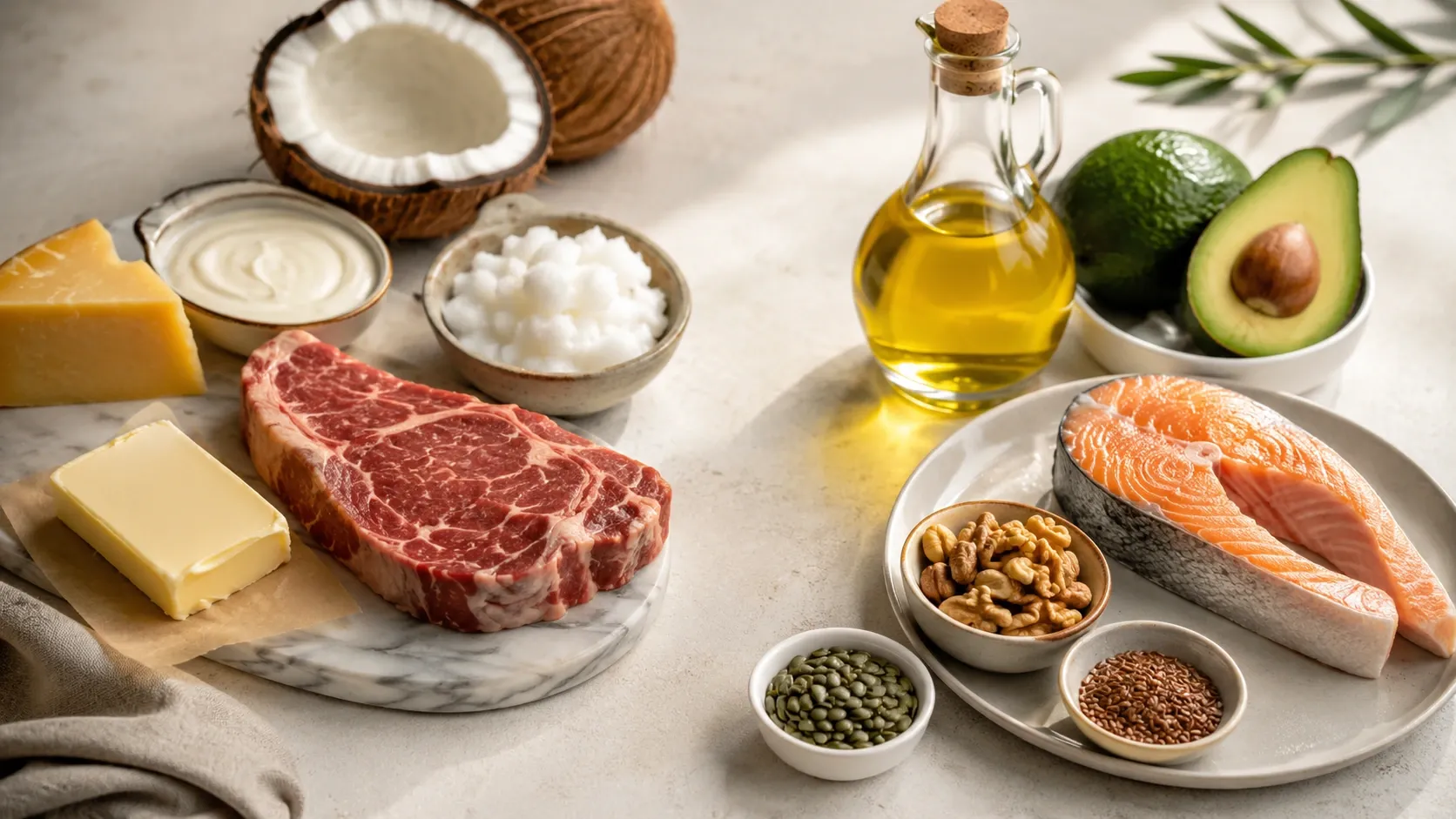
The American Heart Association recommends choosing foods containing monounsaturated and polyunsaturated fats instead of foods high in saturated and trans fats. When used as replacements for saturated fats, unsaturated fats can help lower LDL cholesterol. (www.heart.org)
What are polyunsaturated fats?
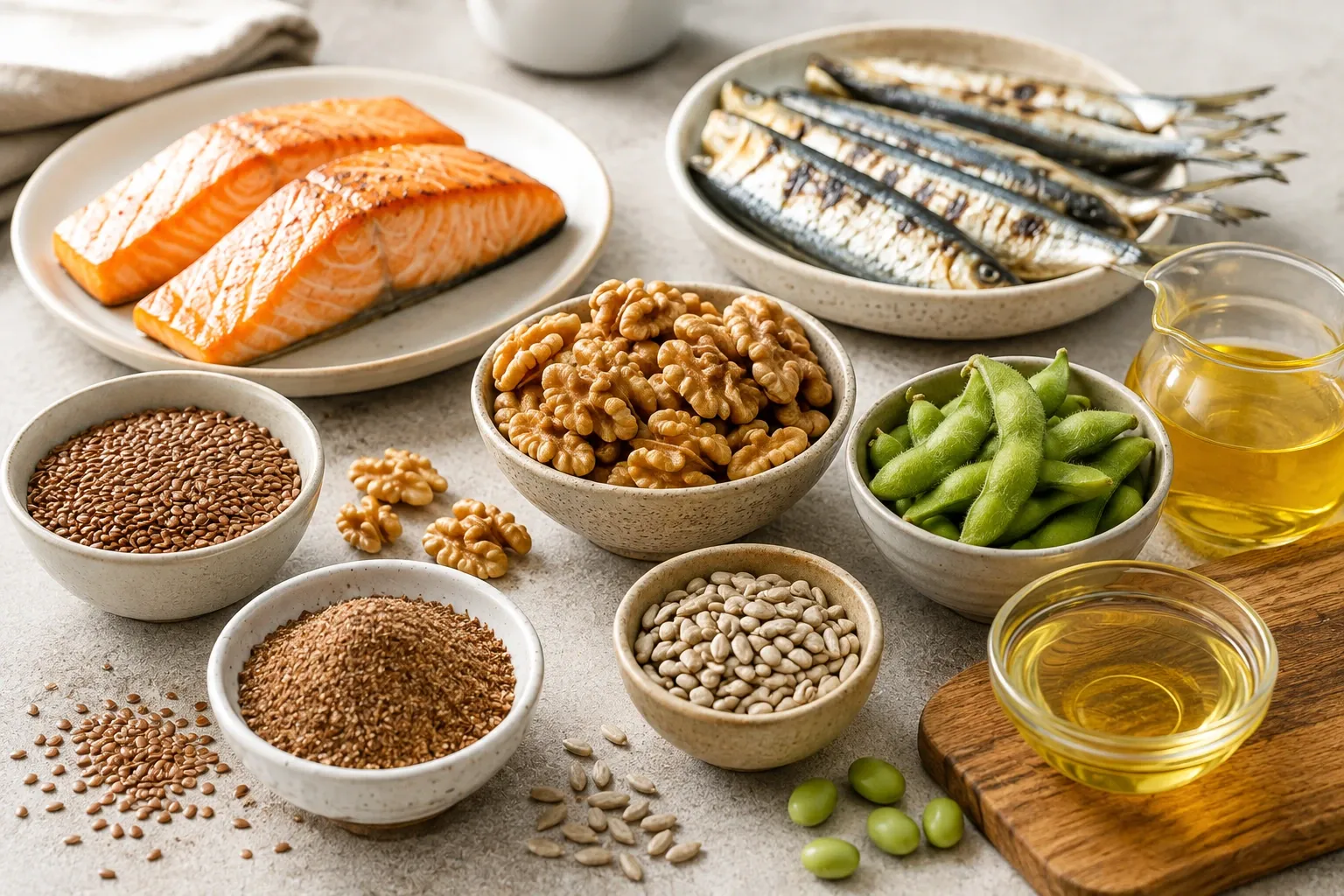
Polyunsaturated fats, or PUFAs, contain two or more double bonds. Their major families include omega-3 and omega-6 fatty acids. (ODS)
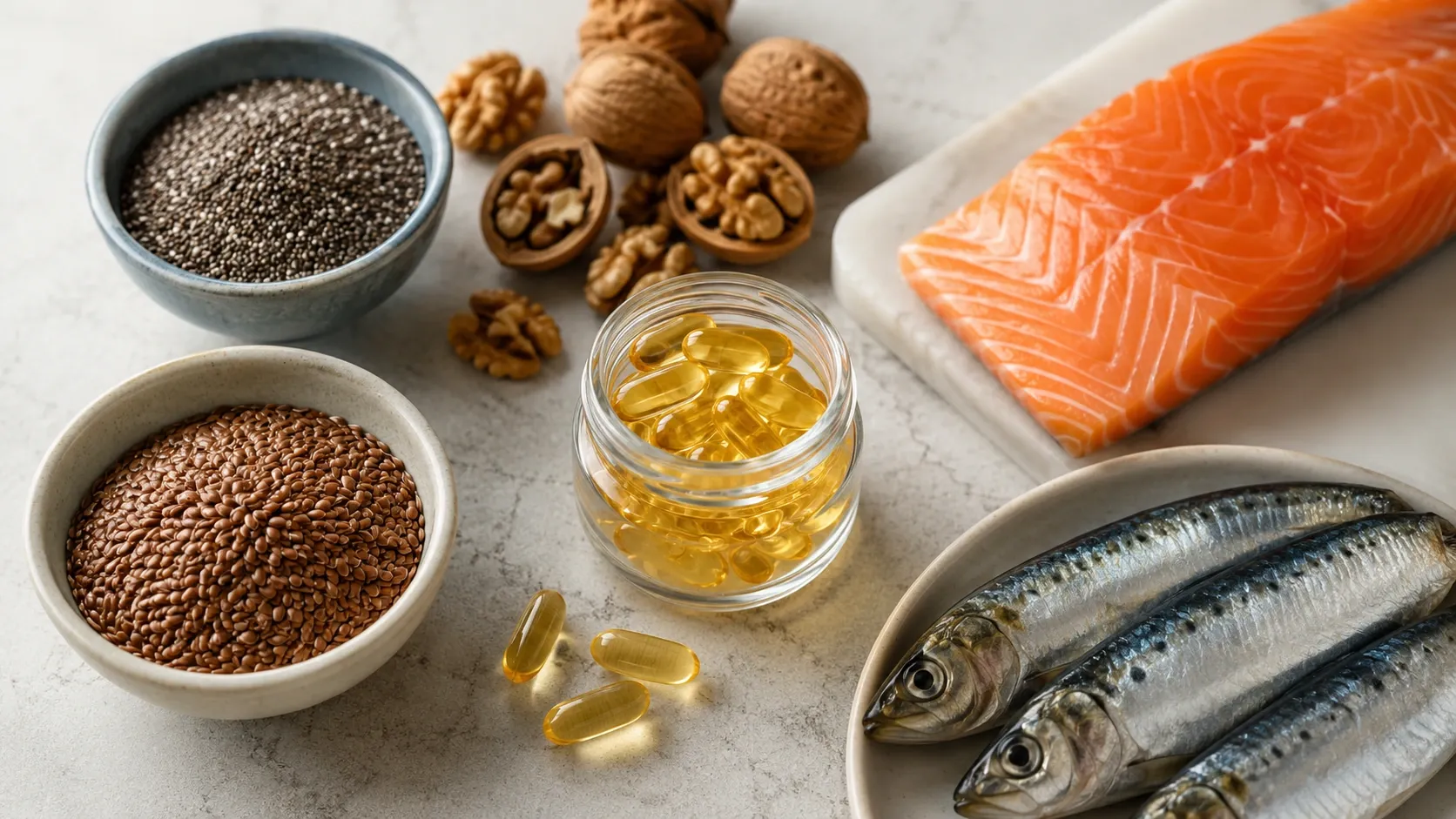
Important food sources include:
- fish;
- walnuts;
- flaxseed;
- flaxseed oil;
- soybean oil;
- corn oil;
- sunflower oil;
- canola oil. (The Nutrition Source)
Polyunsaturated fats have another important characteristic: some of them are essential fatty acids.
Humans cannot synthesize the omega-6 fatty acid linoleic acid or the omega-3 fatty acid alpha-linolenic acid, or ALA, in the amounts required. They therefore need to come from the diet. (ODS)
Omega-3 and omega-6 are polyunsaturated fats
Both omega-3s and omega-6s belong to the polyunsaturated fat family.
The most widely discussed omega-3 fatty acids include:
- ALA, found primarily in selected seeds, nuts and plant oils;
- EPA, found mainly in fish and other seafood;
- DHA, also found predominantly in marine sources. (ODS)
Linoleic acid is a major dietary omega-6 fatty acid and is also essential. (ODS)
This represents an important practical distinction: polyunsaturated fats include fatty acids that the human body must obtain from the diet.
Monounsaturated vs. polyunsaturated fats
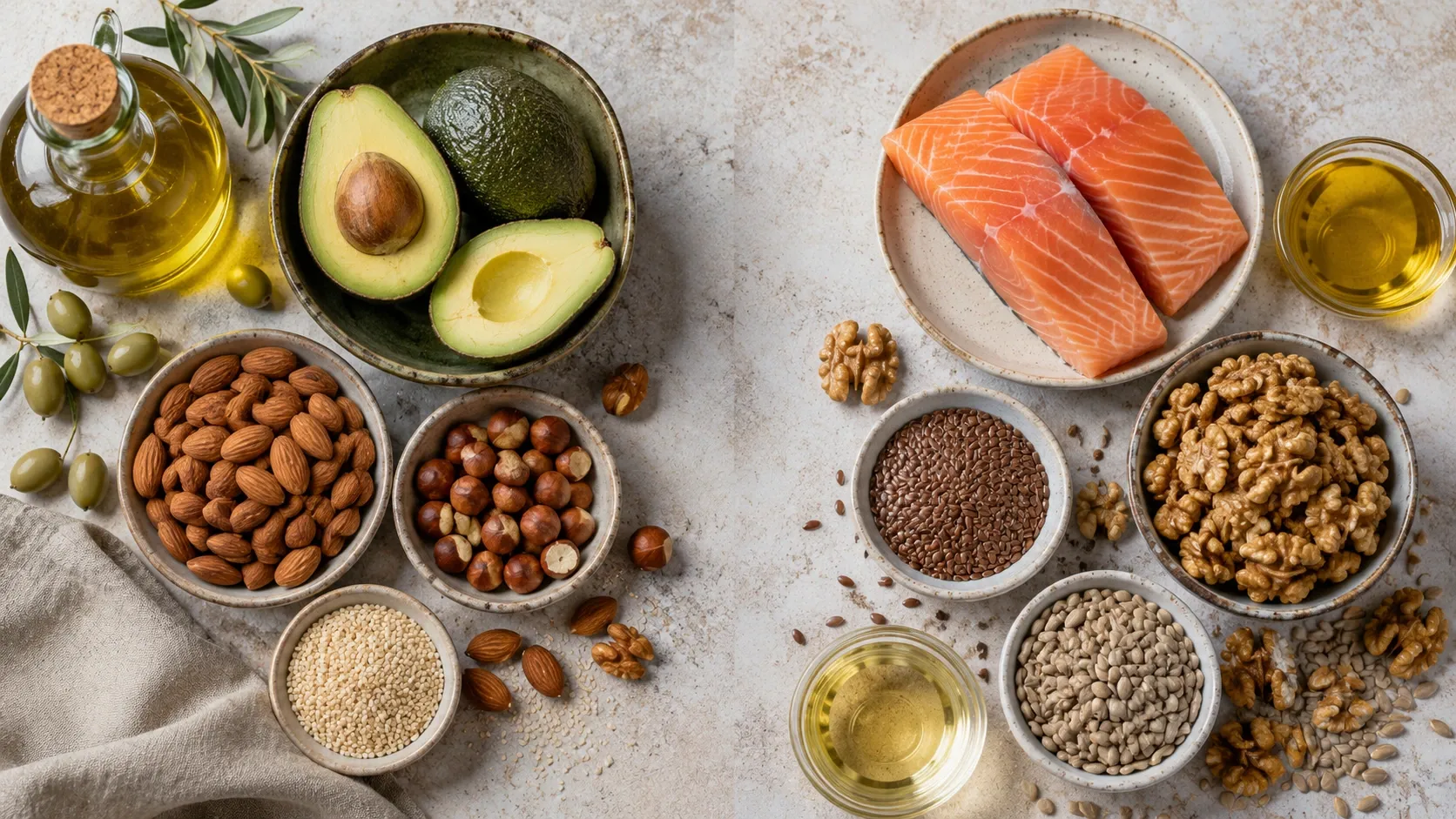
| Feature | Monounsaturated | Polyunsaturated |
|---|---|---|
| Double bonds | One | Two or more |
| Common sources | Olive oil, avocado, almonds, peanuts | Fish, walnuts, flaxseed, soybean, corn and sunflower oils |
| Includes omega-3 | No | Yes |
| Includes omega-6 | No | Yes |
| Includes essential fatty acids | Not the main source of essential fatty acids | Yes: ALA and linoleic acid |
| Can replace saturated fat | Yes | Yes |
These structural classifications and food sources are consistent with NIH, Harvard, WHO and American Heart Association references. (ODS)
Which is healthier?
For most people, there is no reason to select just one category.
Both the WHO and American Heart Association recommend prioritizing unsaturated fats over saturated and trans fats when making dietary substitutions. (who.int)
Evidence from trials evaluating cardiovascular outcomes is particularly supportive of replacing saturated fat with polyunsaturated fat. Both polyunsaturated and monounsaturated replacements can also lower LDL cholesterol compared with saturated fat. (NCBI)
For monounsaturated fats, the food source may also matter. Evidence considered by WHO found more favorable associations for plant-derived monounsaturated fats, while relatively few long-term randomized trials have directly tested monounsaturated-fat replacement strategies against cardiovascular events. (NCBI)
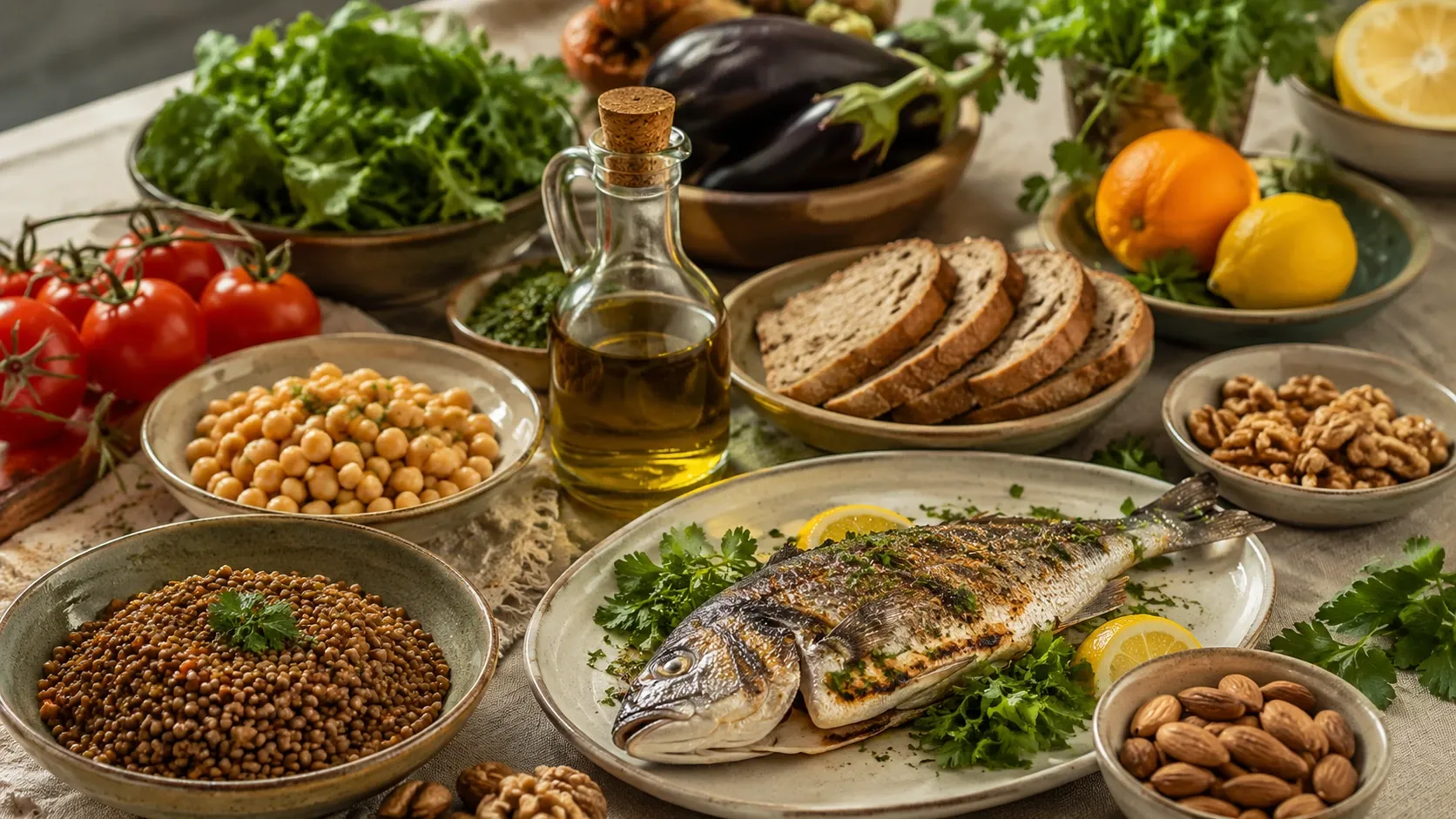
Olive oil, avocado and nuts therefore do not need to compete with fish, walnuts or seeds. A varied diet can provide both types.
What you replace matters
An important principle in nutrition research is that when one source of calories is reduced, something else usually takes its place.
Replacing saturated fat with unsaturated fat is not necessarily equivalent to replacing it with foods dominated by refined carbohydrates. Looking only at the amount of fat consumed without considering its quality and its replacement can therefore be misleading. (The Nutrition Source)
Current WHO guidance recommends that dietary fats be primarily unsaturated. For adults, saturated fat should generally provide no more than 10% of total energy and trans fat no more than 1%, with polyunsaturated fats or plant-derived monounsaturated fats among the preferred replacements. (Organização Mundial da Saúde)
Does omega-6 cause inflammation?
This question is often oversimplified.
Some molecules derived from omega-6 fatty acids participate in inflammatory pathways, which has led to concerns that dietary omega-6 itself may promote inflammation. That does not mean omega-6 foods should automatically be labeled inflammatory or unhealthy.
Linoleic acid is essential, and current WHO guidance continues to recommend polyunsaturated fats as suitable replacements for saturated fat. (ODS)
The NIH also notes that an optimal omega-6-to-omega-3 ratio has not been established. Rather than focusing on aggressively reducing all omega-6 intake, ensuring adequate essential fatty acids and including reliable omega-3 sources is a more evidence-aligned approach. (ODS)
How to include both types of fat

Most people do not need to calculate the grams of monounsaturated and polyunsaturated fat in every meal.
A practical approach is to vary food sources. For example:
- use olive oil or other unsaturated plant oils in place of some solid fats;
- include avocado or nuts in meals and snacks;
- add seeds such as flaxseed where appropriate;
- include fish according to your preferences and dietary pattern;
- rotate nuts, seeds and different plant oils;
- focus on the overall quality of the diet rather than a single nutrient. (The Nutrition Source)
For people who do not eat fish, plant foods such as flaxseed, walnuts, canola oil and soybean oil provide ALA, an essential omega-3. EPA and DHA, however, occur mainly in fish and other marine foods. (ODS)
Does “healthy fat” mean unlimited fat?
No.
The term “healthy fat” is a convenient shorthand used to distinguish unsaturated fats from fats that dietary guidelines recommend limiting or avoiding. It does not mean that increasing unsaturated fat indefinitely will continuously improve health.
Fat is an essential nutrient and an energy source, but total intake, individual energy needs, overall diet quality and the food being replaced all matter. WHO guidance emphasizes both the quantity and quality of dietary fat. (Organização Mundial da Saúde)
Conclusion
The central difference between monounsaturated and polyunsaturated fats is structural: monounsaturated fatty acids contain one double bond, while polyunsaturated fatty acids contain two or more.
Olive oil, avocado and many nuts are major sources of monounsaturated fats. Fish, walnuts, seeds and several plant oils provide polyunsaturated fats, including the omega-3 and omega-6 families. (The Nutrition Source)
There is no need to declare one category universally superior. A more evidence-based strategy is to eat a variety of unsaturated-fat sources and, where appropriate, use them to replace foods rich in saturated and trans fats as part of an overall healthy dietary pattern. (who.int)