Vitamin B2 (Riboflavin): What It Does and Top Food Sources
Vitamin B2, or riboflavin, supports energy metabolism and essential cellular reactions. Learn how much you need and which foods provide the most.
Vitamin B2, better known as riboflavin, is one of the water-soluble B vitamins. It may receive less attention than nutrients such as vitamin B12 or vitamin D, but it plays essential roles in normal cellular metabolism.
Riboflavin is needed to produce two important coenzymes: flavin mononucleotide (FMN) and flavin adenine dinucleotide (FAD). These compounds take part in numerous chemical reactions involved in cellular energy metabolism and other essential processes. (ODS)
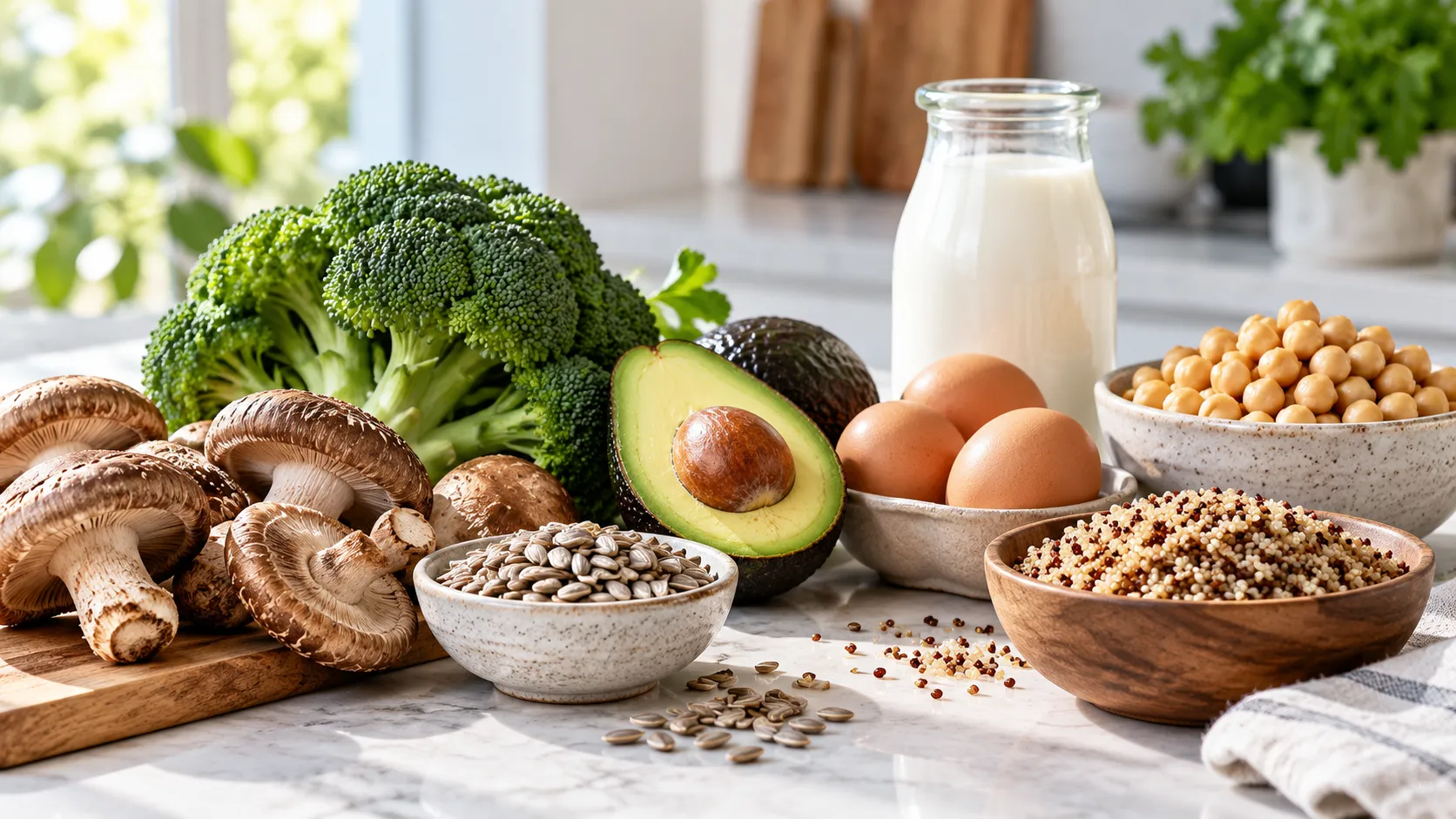
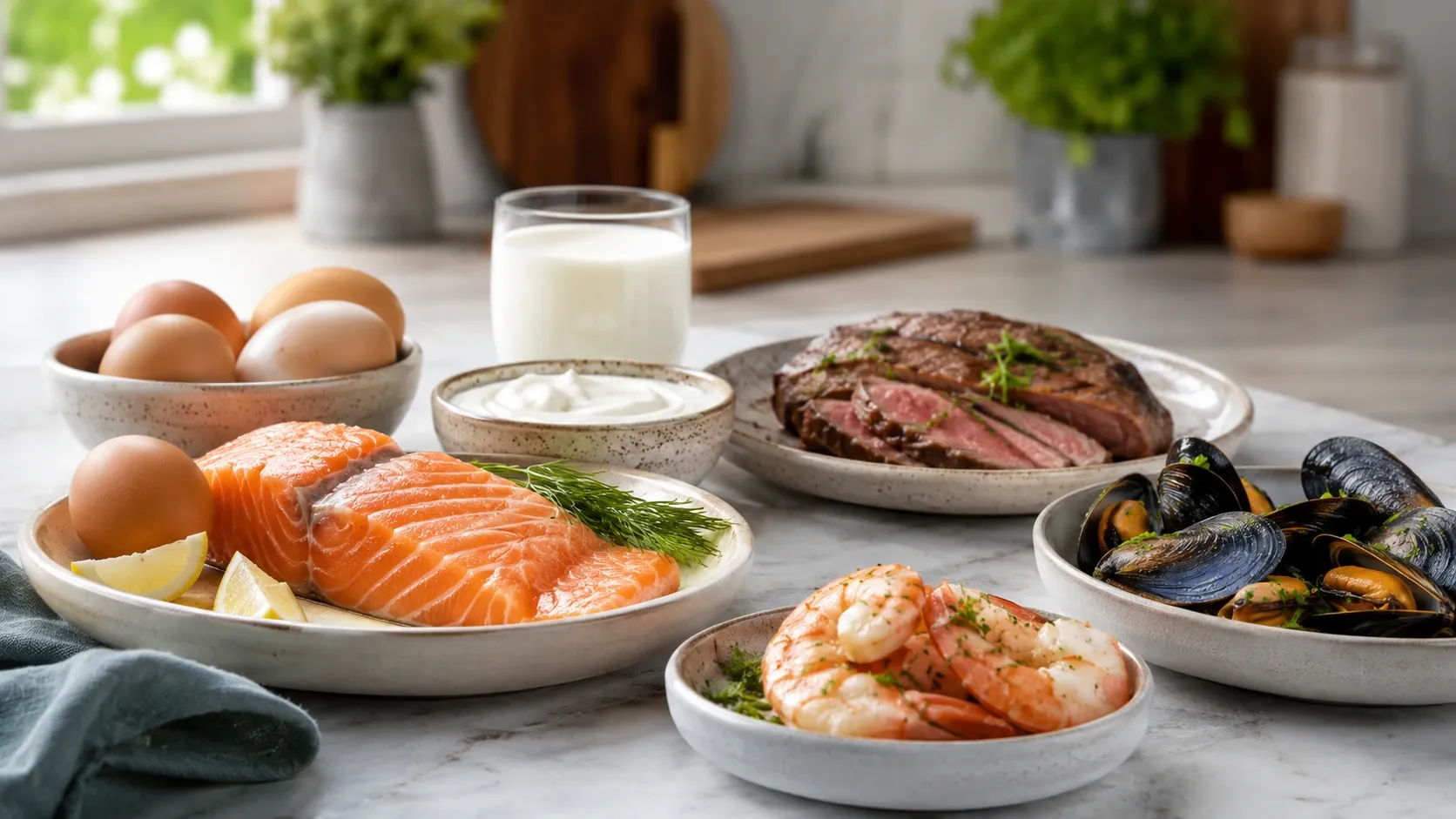
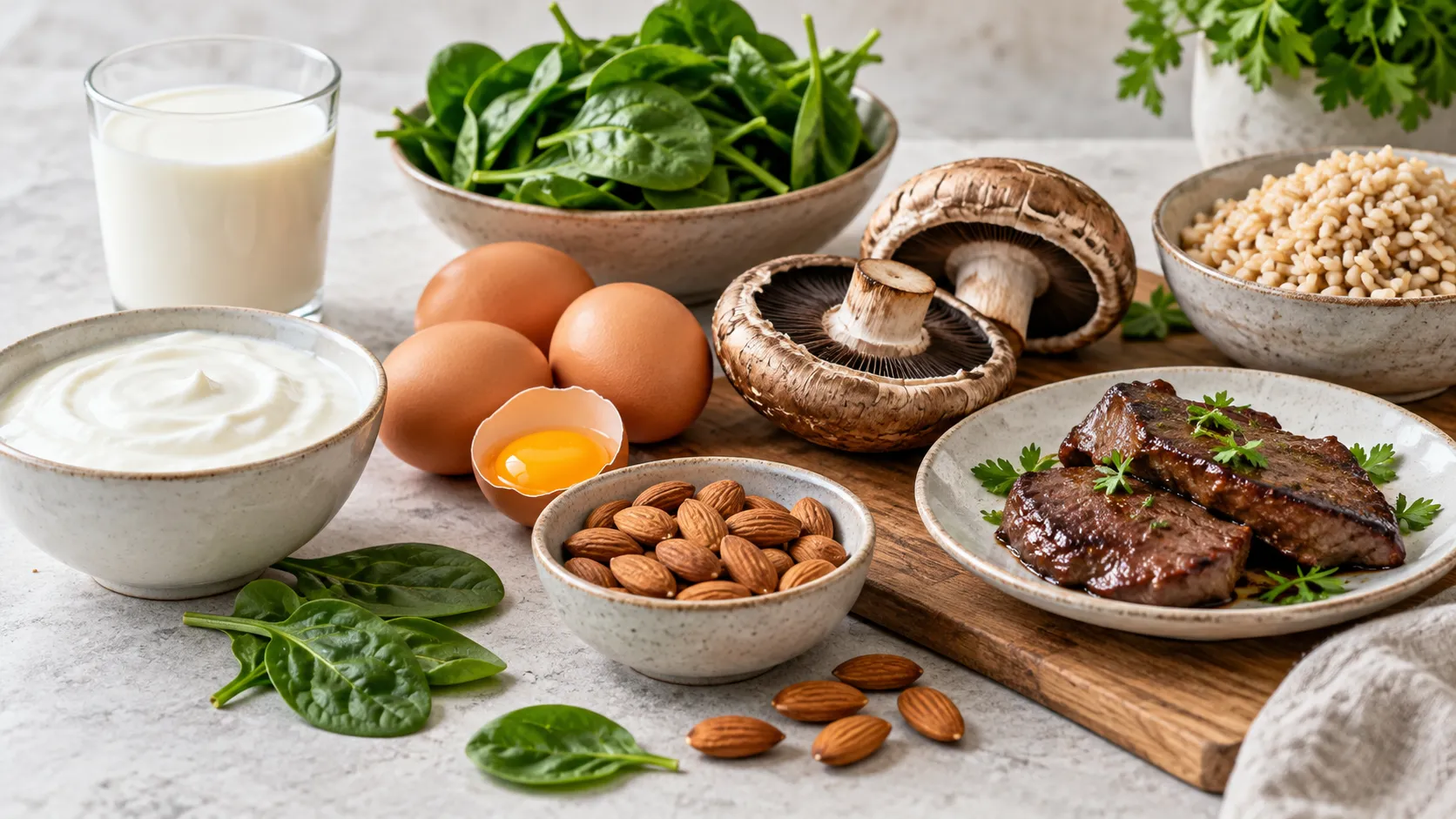
Fortunately, riboflavin is available from a variety of foods, including liver, dairy products, eggs, meat, almonds, mushrooms and fortified foods.
What does vitamin B2 do?
Riboflavin is not a source of energy itself. Instead, it helps the body carry out the chemical reactions required to use energy from food.
After absorption, riboflavin can be converted into FMN and FAD. These coenzymes participate in reactions related to cellular energy production and the metabolism of fats, proteins and carbohydrates. (ODS)
Vitamin B2 also interacts with other nutrients. FAD, for example, is required for the conversion of tryptophan into niacin, while FMN is involved in converting vitamin B6 into its coenzyme form. (ods.od.nih.gov)
These functions make riboflavin an essential micronutrient that needs to be supplied regularly through the diet.
How much riboflavin do you need?
Riboflavin requirements vary by age, sex and life stage.
According to the U.S. Dietary Reference Intakes summarized by the NIH:
| Group | Riboflavin per day |
|---|---|
| Adult men | 1.3 mg |
| Adult women | 1.1 mg |
| Pregnancy | 1.4 mg |
| Lactation | 1.6 mg |
European recommendations are somewhat different. EFSA sets a Population Reference Intake of 1.6 mg per day for adults, 1.9 mg during pregnancy and 2.0 mg during lactation. (EFSA)
Which foods contain the most vitamin B2?
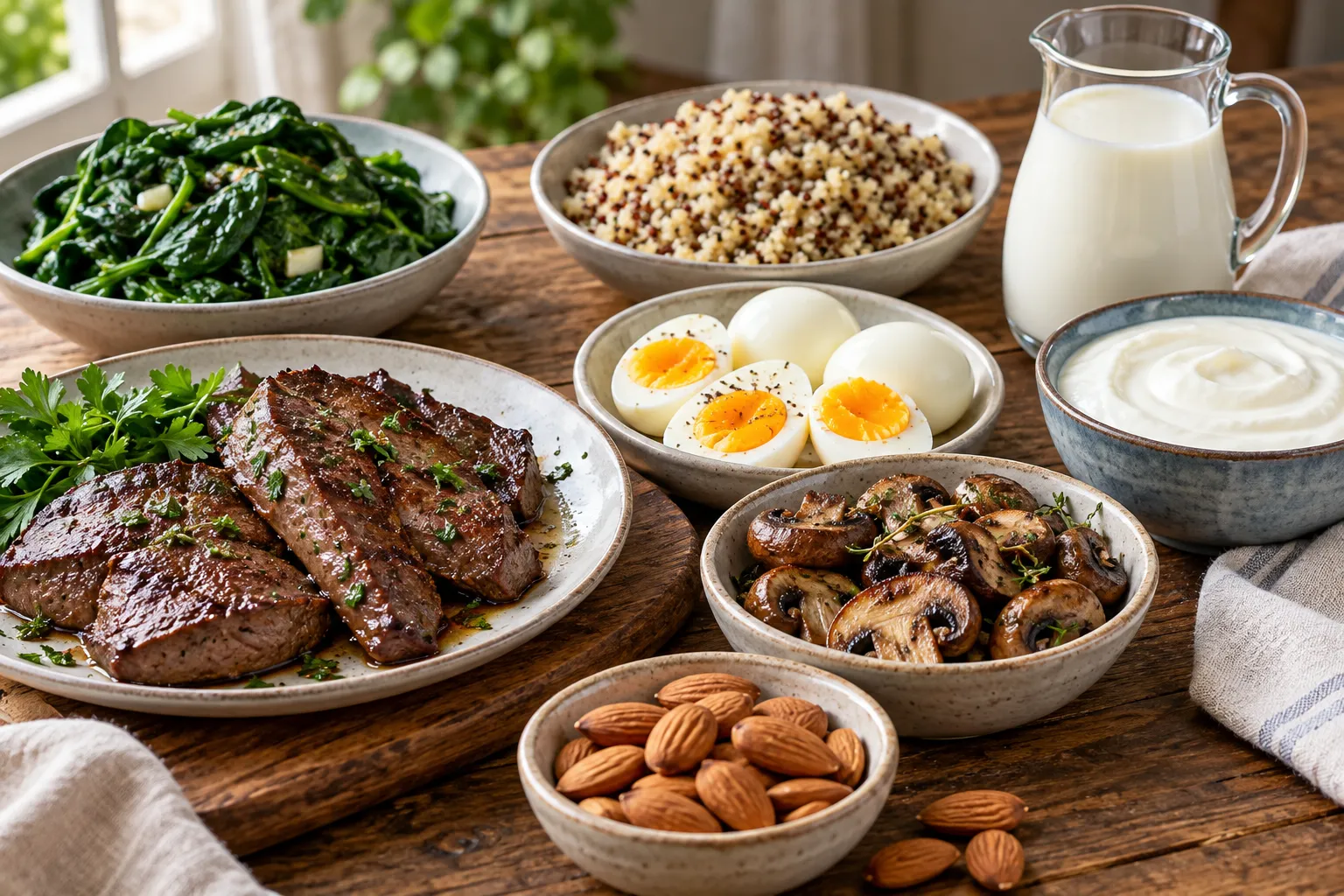
Riboflavin occurs naturally in both animal and plant foods. It is also added to some fortified grain and cereal products.
Examples listed by the NIH, using USDA food-composition data, include: (ods.od.nih.gov)
| Food | Serving | Riboflavin |
|---|---|---|
| Cooked beef liver | about 3 oz | 2.9 mg |
| Breakfast cereal fortified with 100% DV | 1 serving | 1.3 mg |
| Fortified instant oatmeal, cooked | 1 cup | 1.1 mg |
| Plain nonfat yogurt | 1 cup | 0.6 mg |
| 2% milk | 1 cup | 0.5 mg |
| Grilled beef tenderloin | about 3 oz | 0.4 mg |
| Dry-roasted almonds | about 1 oz | 0.3 mg |
| Grilled portabella mushrooms | 1/2 cup | 0.2 mg |
| Scrambled egg | 1 large | 0.2 mg |
| Cooked quinoa | 1 cup | 0.2 mg |
| Raw spinach | 1 cup | 0.1 mg |
Actual amounts can vary with preparation, serving size, food variety and fortification.
Liver is particularly concentrated
Among commonly listed foods, beef liver contains an especially high amount of riboflavin per serving.
However, eating liver is not necessary for meeting vitamin B2 requirements. A combination of less concentrated foods throughout the day can also provide adequate amounts.
Dairy foods can make a major contribution
Milk and yogurt provide substantial amounts of riboflavin in typical serving sizes.
People who avoid dairy may therefore benefit from paying closer attention to alternative sources, particularly if they also exclude eggs and meat. (ods.od.nih.gov)
Eggs, meat and fish contribute too
Eggs, meat and several types of fish contain varying amounts of vitamin B2.
A food does not need to be exceptionally high in riboflavin to matter. Foods eaten regularly can collectively make a meaningful contribution to total intake.
What about plant foods?
Plant sources include almonds, mushrooms, quinoa, spinach and other foods.
Fortified cereals and grain products can also provide substantial amounts, particularly in dietary patterns that exclude animal foods.
Because fortification policies and product formulations vary between countries and brands, the nutrition label is the best way to determine how much a specific product contains.
Can a vegan diet provide enough riboflavin?
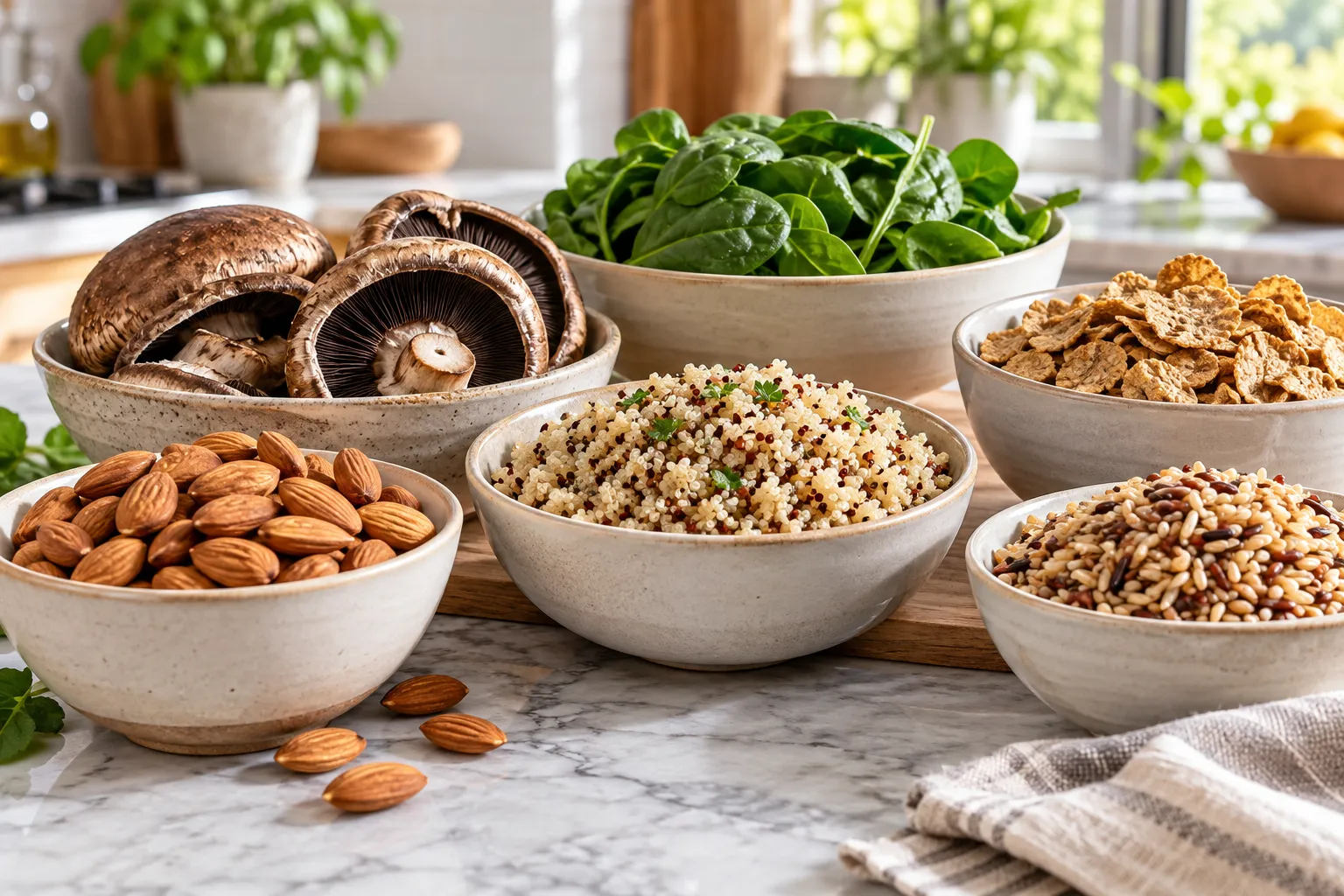
Yes, although careful food selection becomes more important.
The NIH identifies vegans and people who consume little milk as groups potentially at greater risk of inadequate riboflavin intake because dairy, eggs and meat make significant contributions in many dietary patterns. (ods.od.nih.gov)
A well-planned plant-based diet can use a combination of naturally occurring plant sources and fortified foods.
Being vegan does not automatically mean that a riboflavin supplement is required. The overall diet and individual circumstances should guide that decision.
Does cooking affect riboflavin?
It can.
Because riboflavin is water-soluble, some of it can be lost into cooking water. The NIH notes that losses during boiling can be about twice those seen with methods such as steaming or microwaving. (ods.od.nih.gov)
Riboflavin is also sensitive to light. Prolonged exposure can degrade the vitamin, which is one reason appropriate food storage matters. (ods.od.nih.gov)
For everyday nutrition, however, maintaining a varied diet is generally more practical than trying to preserve every milligram of a vitamin in every meal.
What happens if you do not get enough vitamin B2?
Riboflavin deficiency is sometimes called ariboflavinosis.
Possible manifestations include cracks or sores at the corners of the mouth, swollen or cracked lips, changes affecting the tongue and throat and certain skin problems. Severe and prolonged deficiency may contribute to anemia. (ods.od.nih.gov)
A 2023 review noted that severe clinical deficiency is concentrated mainly in nutritionally vulnerable settings, whereas less obvious subclinical deficiency could be more widespread and often goes undetected. (PubMed)
Riboflavin deficiency can also coexist with other micronutrient deficiencies, making self-diagnosis from symptoms unreliable.
Who may be at greater risk?
Groups identified by the NIH include some vegans, people who consume little or no dairy, pregnant or breastfeeding individuals with low dietary intake and people with rare genetic disorders affecting riboflavin transport. (ods.od.nih.gov)
Being part of one of these groups does not mean deficiency is inevitable.
Actual risk depends on dietary intake, nutritional status, individual needs and, in some cases, medical conditions affecting absorption or metabolism.
Food or supplements: which is better?
For routine nutrition, many people can obtain enough riboflavin through food.
Whole foods also provide protein, minerals, fiber and other nutrients, depending on the food itself.
Supplements can be useful when dietary intake is insufficient or when there is a specific indication. However, consuming far more riboflavin than the body requires does not automatically provide additional health benefits.
The U.S. Food and Nutrition Board has not established a Tolerable Upper Intake Level for riboflavin because available evidence has not demonstrated toxicity at the studied intakes. This should not be interpreted as evidence that unlimited high-dose supplementation is necessary or completely risk-free. (ODS)
Practical ways to get more riboflavin
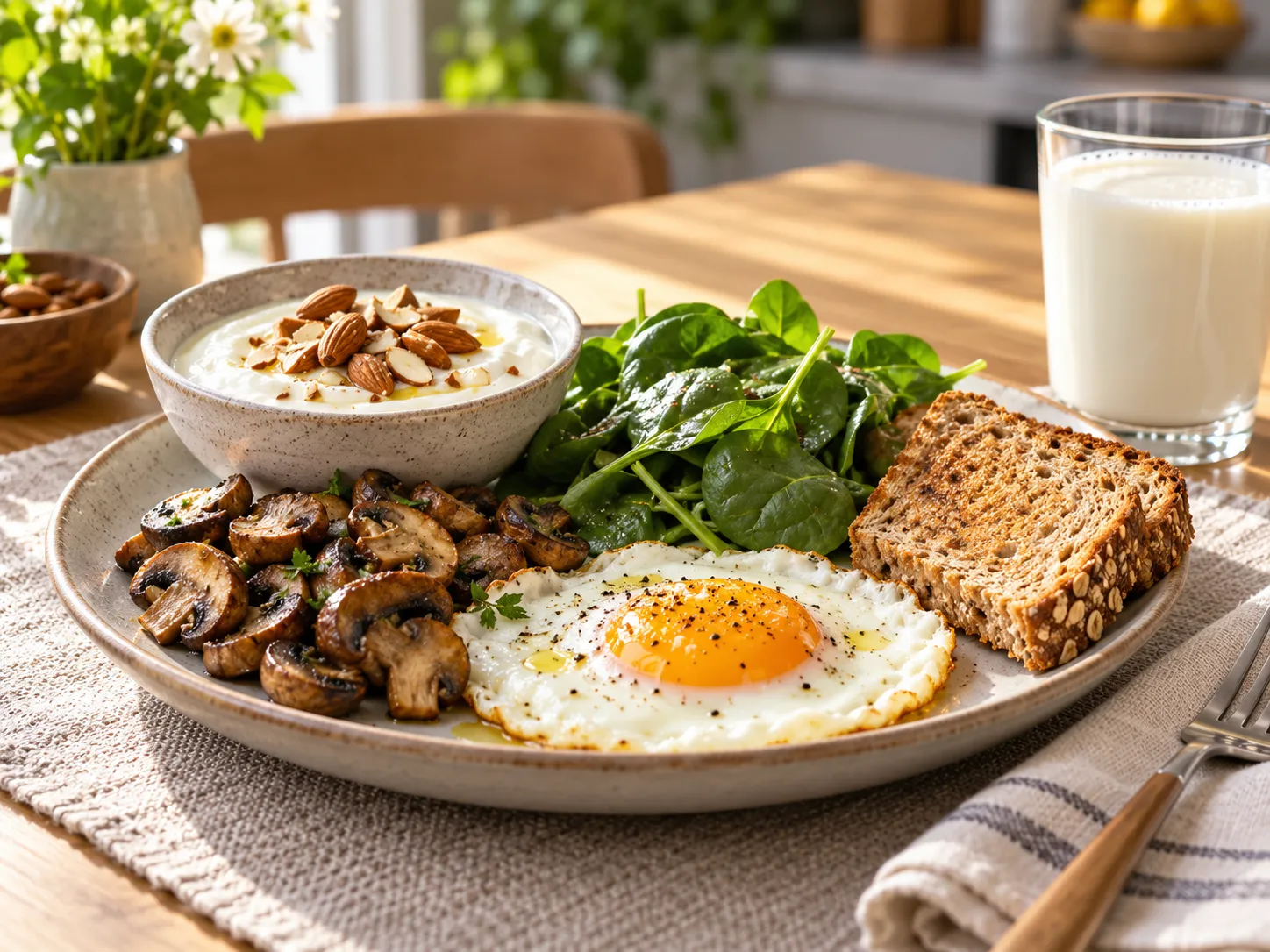
Meeting riboflavin needs does not require relying on a single exceptionally rich food.
A varied daily diet might include yogurt or milk, eggs, grains, mushrooms, leafy greens and a small portion of nuts.
People avoiding animal foods can emphasize plant sources and check labels for appropriately fortified foods.
The most useful strategy is usually a consistent dietary pattern that supplies a range of micronutrients rather than focusing on one isolated “superfood.”
Conclusion
Vitamin B2, or riboflavin, is essential for energy metabolism and numerous cellular reactions. The body uses it to form FMN and FAD, two coenzymes involved in fundamental metabolic pathways.
Liver is among the richest dietary sources, but it is far from the only option. Milk, yogurt, eggs, meat, almonds, mushrooms, leafy vegetables and fortified foods can all contribute.
For most people, the priority should be a varied diet. Anyone with suspected deficiency, a highly restrictive eating pattern or a reason to consider high-dose supplementation should seek individualized professional guidance rather than self-prescribing large doses.